

The insights and technical expertise in this article were provided by our Managing Partner – Business Development, Robin
The coffee industry is no longer just about the roast quality; it is an arms race over experience, sustainability, and how efficiently baristas use the products. As a packaging partner, we’ve observed a fundamental shift in how coffee is contained and communicated. In 2026, the industry is moving past simple shelf appeal toward a deeper integration with the people who make coffee.
Here are the four key trends we are tracking, and the packaging strategies required to master them.
1. Baristas as the Primary Target Audience
For years, coffee packaging was designed to catch consumers’ eyes in the grocery aisle. However, nowadays, the most influential customer is often the one behind the counter. A barista might interact with a coffee bag over 100 times a day in a high-pressure environment. If the packaging fails, the workflow fails.
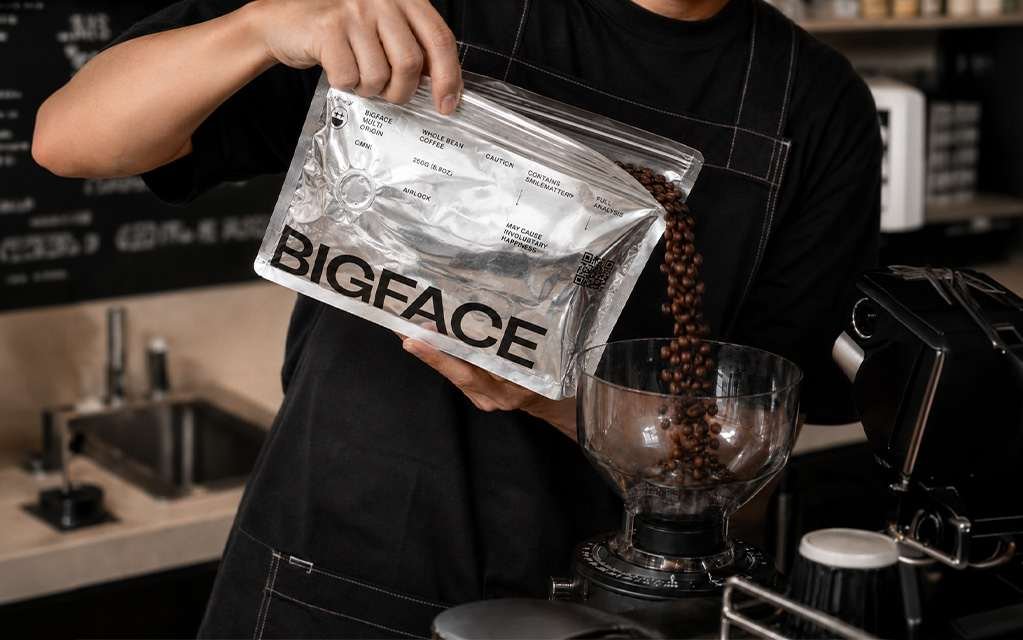
This shift has forced a transition from traditional “Shelf Appeal” to “Workflow Appeal.” To address this, the packaging is prioritizing flat-bottom pouches that provide the structural integrity needed to keep a bag upright and open on the counter during the scooping process.
Efficiency is further enhanced through ergonomic closures, moving from finicky standard zip locks to easy-rip or hook-and-loop (Velcro-style) fasteners that can be seamlessly operated with one hand.
Finally, many packaging incorporates tactile finishes, such as soft-touch or high-grip matte coatings, which allow baristas to grab and maneuver bags securely even when their hands are damp from steam wands and milk prep. By designing for the person making the coffee, the package becomes a functional tool rather than just a container.
2. Boldness in Branding and Flavor
As the market becomes saturated with minimalist designs, new players are using radical boldness to stand out. Brands like Daygolw are leaning into high-energy, vibrant identities that match their unique flavor infusions, such as mangosteen, pink guava, and watermelon candy.
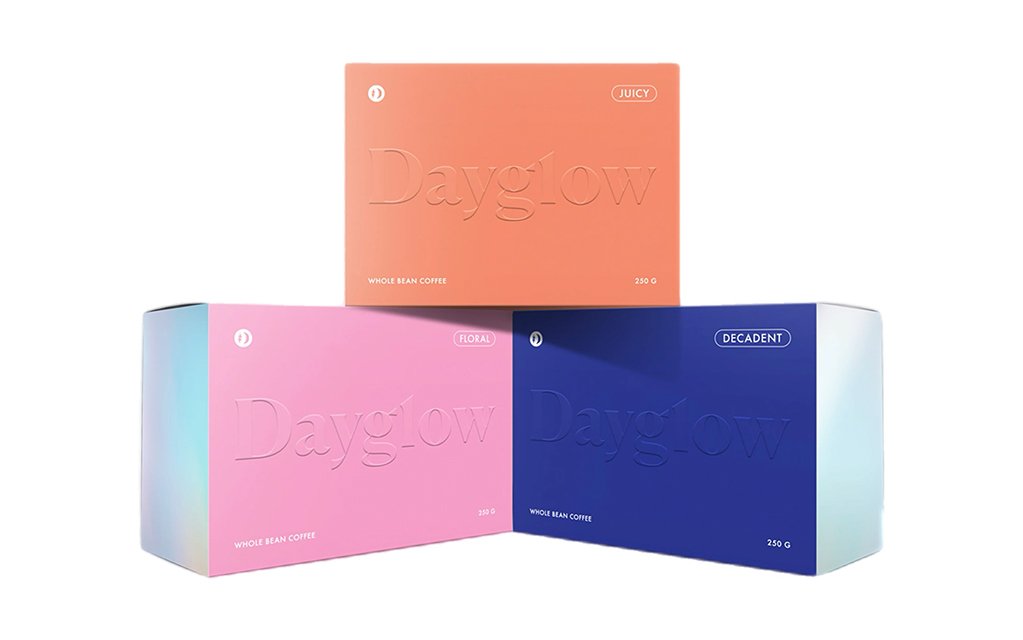
To convey these products’ loud personalities, many packaging companies prefer UV-cured inks for their superior color depth and saturation. And from a packaging structure standpoint, boldness must be durable, so many brands use advanced metallic foils, and flexible ink sets specifically formulated to remain intact without cracking.
3. K-Cup Sustainability & Innovation
K-Cups are the industry’s fastest path to market, but they are under intense scrutiny for their environmental footprint. Sustainability in the single-serve space is no longer a “nice-to-have” it is a regulatory and consumer requirement. This shift has turned the industry into a materials science battleground, prompting it to move toward Monomaterial designs, including patented #5 polypropylene or all-aluminum designs.
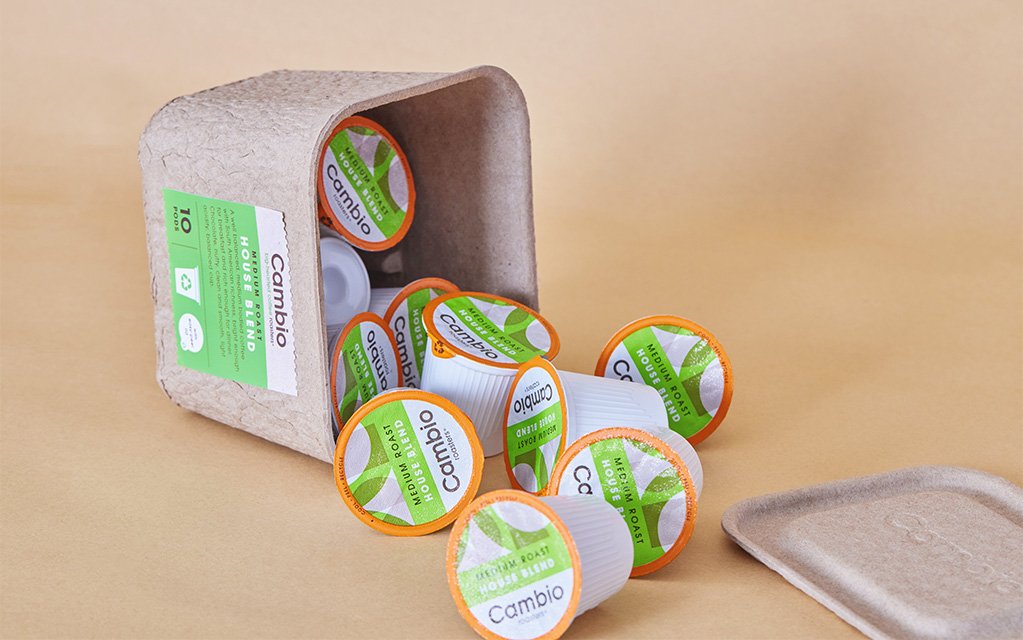
A notable case of this transition is Cambio Roasters‘ strategy. Instead of a traditional disposable box, they switched to a Monomaterial Molded Pulp Container that doubles as a functional tool. Once the customer begins using the pods, the secondary packaging transforms into a convenient countertop recycling bin. When full, the entire unit, including the pulp bin, can be tossed into the recycling or compost.
4. Establishing Coffee as a Lifestyle Object
Brands like VSSL and Kinto have proven that coffee gear is a lifestyle choice. Packaging for these brands has transformed from something you throw away to something you keep and display.
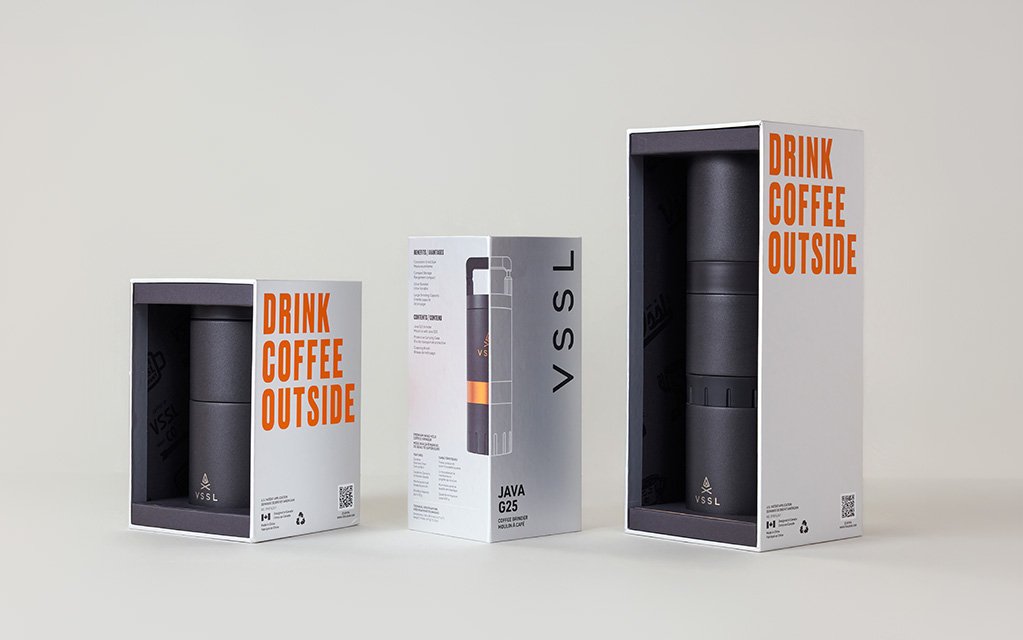
To make it more like a lifestyle object, the packaging must prioritize longevity and premium aesthetics. To address product security in premium formats, packaging is moving away from conventional foam or friction-fit inserts, which can often detract from a high-end feel. A more sophisticated approach uses custom magnetic embedded inserts that secure the product from both the top and bottom.
With the rise of e-commerce, the shipping box has become the primary touchpoint, leading to a high expectation for the unboxing experience. We see a move toward custom-molded pulp-and-sleeve & slide boxes that mimic high-end tech packaging to signal luxury and quality the moment the package arrives.
These large, rigid surfaces are also being used as a digital gateway, where oversized typography and integrated QR codes turn the physical package into a portal for brewing tutorials and brand storytelling. By treating the package as a collectible, brands successfully extend their presence in the consumer’s home far beyond the initial purchase.
Ready to bridge the gap between engineering and experience? At Zenpack, we help coffee brands navigate the complex intersection of packaging, sustainability, and brand identity. Let’s build your next-generation packaging together.
The post 2026 Coffee Packaging Trends for Roasters and Retailers appeared first on Zenpack Blog.


