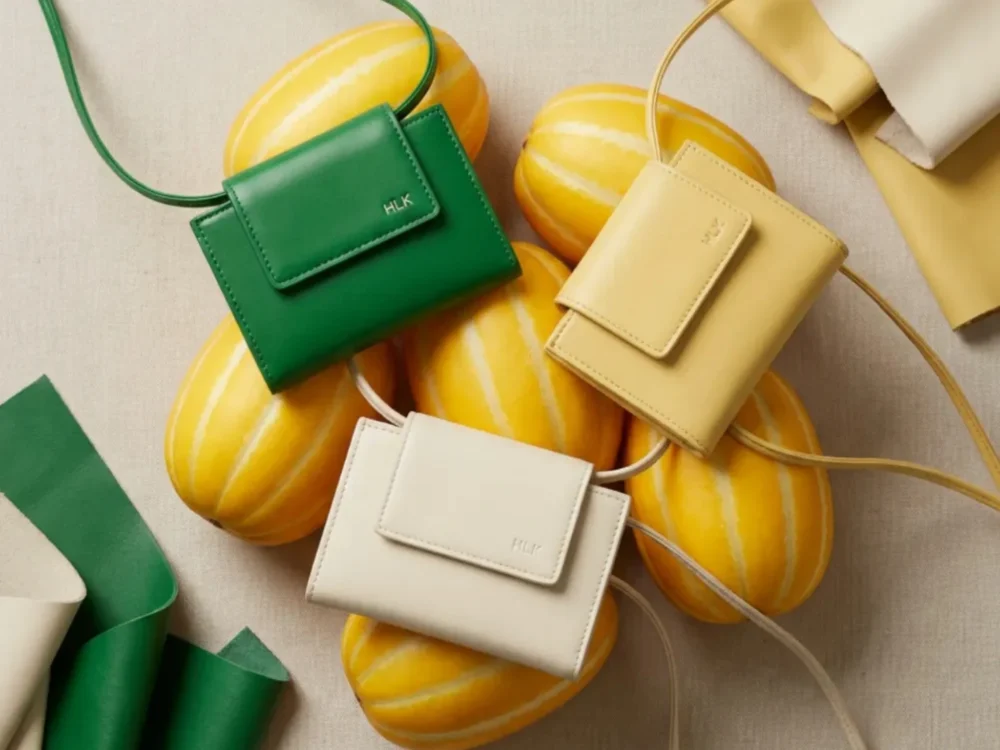
Chilgok County in South Korea has developed a plant-based leather alternative made from discarded melon peels, aiming to reduce agricultural waste while boosting the local economy. The county sits in North Gyeongsang Province, one of the country’s top melon-producing regions.
Each year, melons deemed too low in quality for sale are discarded during the rainy season. Many end up in the Nakdong River, causing environmental problems downstream. Even melons purchased simply to stabilize market prices often went to waste.
The county’s Agricultural Technology Center began researching melon leather in 2024. An early approach that dried whole melons ran into trouble, as the fruit’s high moisture and sugar content made it hard to achieve durable material. Researchers then shifted to using just the peel, setting the flesh aside for livestock feed. After dozens of experiments combining dried, powdered peel with plant-based fabrics, they produced a leather alternative containing 4% melon content.
The county partnered with fashion atelier Harlie K to create early prototypes, including bags, wallets, pen cases and business card holders. This year, researchers increased the melon content to 10%. The material has since earned accreditation from the Korea Vegan Certification Institute and met crowdfunding goals ahead of schedule.
Conventional leather production is energy and water intensive, and it generates hazardous chemicals during tanning. Leather accounts for a majority of the fashion industry’s methane emissions. It produces significantly more CO2 per square meter than plastic-based synthetic alternatives, though those carry their own environmental drawbacks tied to petrochemical origins and microplastic pollution.
Chilgok County’s material is currently produced at a local workshop and sold at Buksam Nonghyup’s Hanaro Mart. The county plans to raise the melon content to 22%, scale up production, and expand into industrial applications such as automotive interiors.
The post Melon peels turned into vegan leather appeared first on World Bio Market Insights.