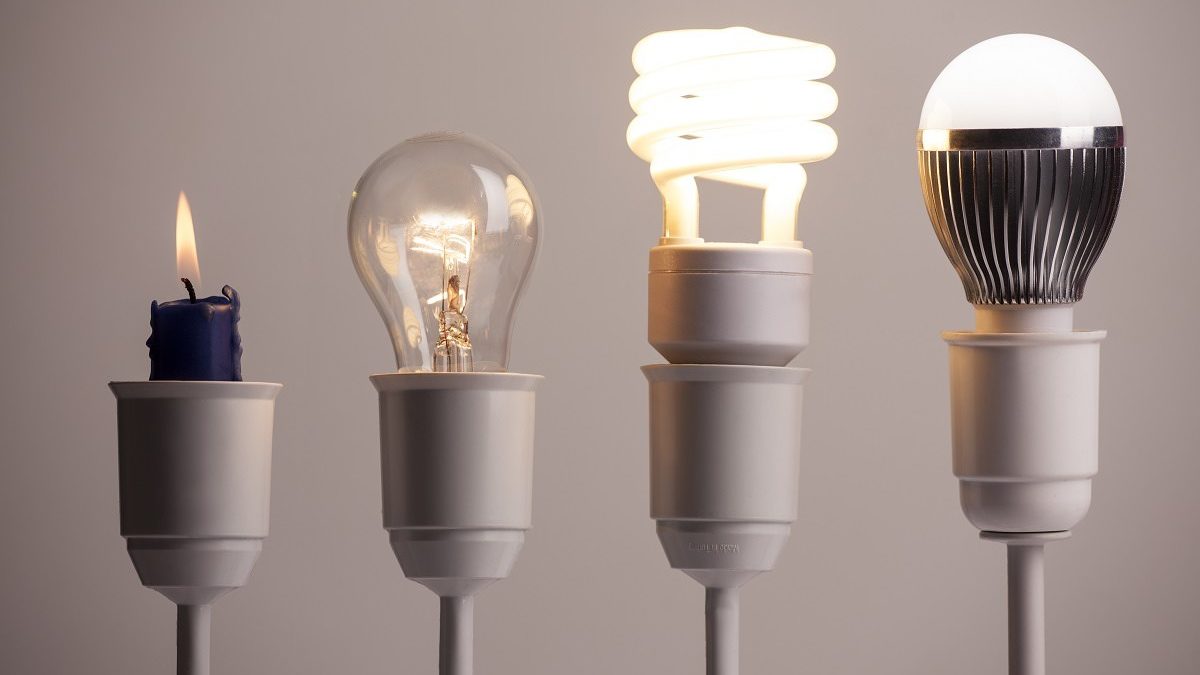
The first Earth Day was celebrated on April 22, 1970 — 56 years ago — and, goodness, how the world has changed since then. We’ve come a long way since the days of burning our trash and pumping our gas guzzlers with leaded gasoline. In honor of those 56 years, here are 56 important changes and milestones since the first Earth Day.
Legislation
The U.S. government has led much of the environmental charge, starting with the implementation of the EPA (1) in July 1970. Later that year, the Clean Air Act (2) targeted air pollutants, followed by the Clean Water Act (3) in 1972 and the Endangered Species Act (4) in 1973.
Some lesser-known national laws included the Safe Water Drinking Act (5) in 1974, the Resource Conservation and Recovery Act (6) in 1976, the Toxic Substances Control Act (7) in 1976, the National Energy Act (8) in 1978, and the Medical Waste Tracking Act (9) in 1988.
In some cases, states have led the charge. Oregon passed the first bottle bill (10) in 1971, Minnesota’s Clean Indoor Air Act (11) was the first law to restrict smoking in public places (1975), and Massachusetts required low-flush toilets (12) for construction and remodeling in 1988.
Green Innovations: The Early Years
In order to comply with all the laws from the 1970s, we needed new technology to ensure consumers could adhere to the new standards. Consider:
- The “Crying Indian” PSA debuts in 1971 (13)
- Dichlorodiphenyltrichloroethane (DDT) gets banned in 1972 (14)
- The energy-efficient compact fluorescent light bulb launches in 1973 (15)
- Cars begin displaying fuel economy labels in the mid-1970s (16)
- In 1975, all cars are manufactured with catalytic converters to limit exhaust emissions (17)
- Chlorofluorocarbons are banned from aerosol cans starting in 1978 (18)
- The first curbside recycling program begins in New Jersey in 1980 (19)
- In 1986, McDonald’s switches from foam to paper food containers (20)
- Mercury is removed from latex paint in 1990, providing a viable alternative to banned lead paint (21)
- Earth911 launches the first U.S. recycling directory in 1991 (22)
- Energy Star certification debuts in 1992 for appliances and electronics (23)
- The U.S. Green Building Council begins in 1993 (24)
The Political Movement
The Green Party (25) launched in 1984, which was just the beginning of green issues entering the mainstream. One Percent for the Planet (26) was founded in 2002 to challenge businesses to donate to environmental causes, and the ISO 14001 standard (27) established environmental management. Companies are now facing pressure to allow employee telecommuting (28).
Things really developed after the release of Al Gore’s An Inconvenient Truth (29) in 2006. NBC debuted Green Week (30) in 2007. Carbon offsets (31) alleviated corporate green guilt. Bisphenol A (32) made us all question plastic purchases. Hybrid vehicles (33) generated tax credits and gas savings. Plastic bag bans gave rise to a reusable bag (34) craze. Fracking (35) and the Dakota Access Pipeline (36) were two of the most hotly contested news stories of the decade, at least until the 2016 election.
Green Tech: The Next Wave

In the past 10 years, emerging green tech has made eco-friendly a way of life, including:
- LED light bulbs (37)
- Portable solar panels on backpacks and watches (38)
- Plant-based plastics (39)
- Motion sensor lighting (40)
- Faucets with automatic shut-off (41)
- Low volatile organic compound (VOC) paint (42)
- Recycled plastic clothing (43)
- Ride-sharing mobile applications (44)
- Natural cleaning products (45)
- Biodiesel engine vehicles (46)
- Food waste composting (47)
- Portable air purifiers (48)
- Europe’s Green Deal introduced global recyclables shipping regulations to reduce pollution in low-income nations (49)
- Corporate borrowers headed toward $500 billion in bond financings for the renewables transition (50)
- President Biden rejoins the Paris Climate Accord on his first day in office. (51)
The Latest Five: 2022–2026
The pace of innovation has not slowed. Five more milestones have reshaped the environmental landscape since that 51st Earth Day:
- The Inflation Reduction Act (52), signed into law in August 2022, became the largest climate investment in U.S. history, directing roughly $370 billion toward clean energy tax credits, EV incentives, methane reduction, and domestic clean manufacturing. Analysts projected it will drive more than $4 trillion in cumulative capital investment over a decade and put the U.S. on track for a 40% emissions reduction by 2030. Sadly, many of its key provisions have been defunded or eliminated by the Trump Administration.
- The Kunming-Montreal Global Biodiversity Framework (53), adopted by 188 governments in December 2022, set the most ambitious biodiversity protection commitment in history. Its headline “30×30” target calls for conserving 30% of the planet’s land, freshwater, and ocean areas by 2030, a goal that would require doubling current protected land coverage and quadrupling marine protections.
- America’s first commercial direct air capture plant (54), opened by Heirloom Carbon Technologies in Tracy, California in November 2023, marked the arrival of atmospheric carbon removal at commercial scale on U.S. soil. The plant uses limestone to absorb CO₂ directly from the air, with the captured carbon injected into concrete for permanent storage. In May 2024, Climeworks activated the world’s largest direct air capture facility, the Mammoth plant in Iceland, with a design capacity to remove 36,000 tons of CO₂ per year.
- Solid-state batteries (55), a next-generation alternative to conventional lithium-ion technology, moved from laboratory promise toward commercial reality between 2022 and 2026. Unlike liquid-electrolyte batteries, solid-state versions are less flammable, achieve higher energy density, and degrade more slowly. In early 2025, Mercedes-Benz began road-testing a prototype EV powered by a lithium-metal solid-state cell that extended driving range 25% over comparable liquid-battery models. Multiple automakers and cell manufacturers now target commercial production between 2027 and 2030.
- Perovskite and tandem solar cells (56), a new photovoltaic technology that pairs conventional silicon with thin perovskite layers, pushed solar efficiency into territory once considered theoretical. By 2024, tandem cells in laboratory settings exceeded 34% efficiency — well above the roughly 22% ceiling of standard silicon panels only a few years ago. manufacturers in Asia and Europe began scaling pilot production lines. Because perovskite cells can be printed on flexible substrates, they open the door to solar surfaces on buildings, vehicles, and everyday objects that conventional panels cannot reach.
The past 56 years have been huge when it comes to saving the environment. Expect more to come, including a resurgent EV industry, nuclear fusion, regenerative agriculture, restorative forestry, and more, as costs and the cool factor improve.
Editor’s Note: Originally published on April 18, 2018, this article was most recently updated in April 2026.<!–
You Might Also Like…
–>
The post 56 Environmental Innovations in the 56 Years Since Earth Day Began appeared first on Earth911.