
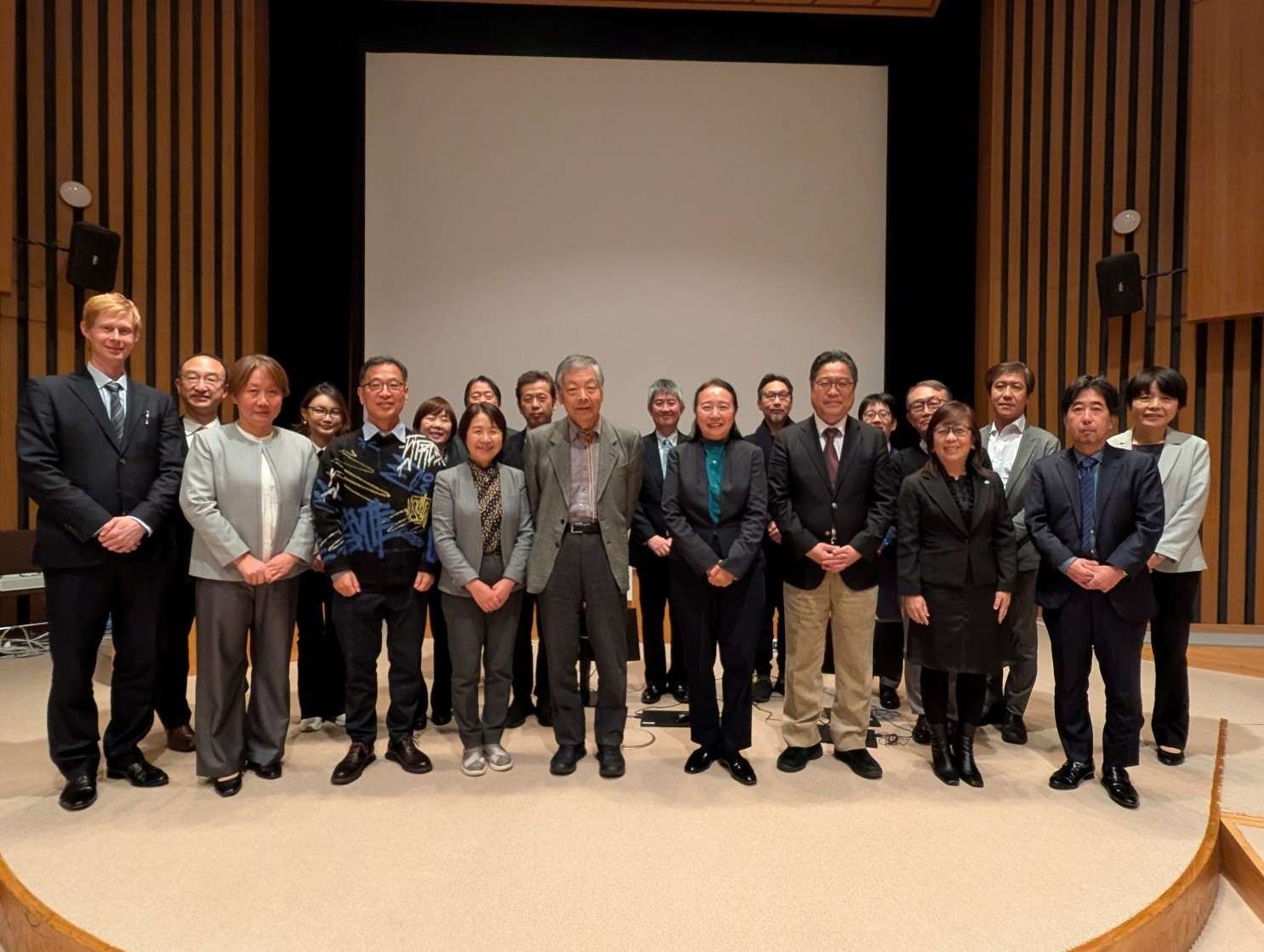
On 29 November 2025, an academic forum titled “Future Earth and the Decade of Global Environmental Upheaval: How Far Have We Come? What Should We Do Next?” was held in Tokyo with online participation. The forum marked ten years since the launch of Future Earth and provided an opportunity to review its achievements while exploring priorities for the coming decade.
The forum was organized by the Science Council of Japan, with support from the Ministry of Education, Culture, Sports, Science and Technology (MEXT), the Future Earth Global Secretariat Hub Japan, and the Future Earth Japan Committee. The event brought together researchers and stakeholders from across disciplines and sectors, with approximately 40 participants attending in person and around 180 registering online. Through keynote presentations and a panel discussion, participants revisited the original vision of Future Earth and examined how disciplinary, interdisciplinary, and transdisciplinary research, co-design, and co-production of knowledge have advanced over the past decade.
Discussions emphasized scientific integration and societal contributions through strengthened collaboration across natural sciences, social sciences, and societal practice. Key initiatives included integrated assessments like the Global Carbon Budget, the development of “Safe and Just Boundaries” by the Earth Commission, knowledge integration initiatives such as the 10 New Insights in Climate Science (10NICS), and a similar initiative on biodiversity and sustainability. Engagement in scientific and policy processes like the IPCC and UNFCCC was also highlighted.
Japan’s contributions were underscored as a particular strength of Future Earth. These include hosting part of the Global Secretariat Hub, strong participation by Japanese researchers across Global Research Networks, and Japan’s distinctive initiatives in fostering dialogue among academia, government, industry, and civil society. Further, the Science Council of Japan’s role in connecting researchers from different research fields and various stakeholders was noted as unique compared to other countries. Achievements from several GRNs were also highlighted, including but not limited to Future Earth Coasts, GCP, iLEAPS, IMBeR, Urban KAN, Finance and Economics KAN, and IGAC. Capacity-building initiatives, such as the TERRA+ School, were noted for their growing international recognition, alongside emerging efforts to connect global and local perspectives through Asia, including the Asia Science Mission.
At the same time, participants identified challenges for the next decade, including how to better evaluate and support transdisciplinary research, strengthen engagement with diverse societal actors, and balance deep disciplinary research with collaborative, solution-oriented approaches. Expectations were also expressed for Future Earth to set clearer intermediate milestones, expand private-sector engagement, and develop indicators that can anticipate long-term societal transformations.
Looking ahead, initiatives led from Japan are expected to play an increasingly important role. The Future Earth Japan Report 2026, scheduled for release in 2026, was highlighted as a key opportunity to synthesize insights from Japan’s research community and stakeholders and to articulate perspectives and actions that Japan can lead within the global Future Earth community.
The forum reaffirmed the importance of Future Earth as a platform for coordinating knowledge across disciplines and sectors, and for supporting collective efforts toward sustainability in a rapidly changing global environment.
Read the full report to learn more about the key discussions and insights from the forum HERE (coming soon).


