

Table of Contents
Turnip (Brassica rapa subsp. rapa) is a biennial root vegetable primarily cultivated for its fleshy taproot. Smaller varieties of turnip are suitable for human consumption, while larger ones are processed for animal feeds. Depending on the variety, the leafy greens that top the turnip taproot can be cooked as well.
Popular in the United States, the term “white turnip” can be misleading. Turnips come in various colors, such as purple and yellow. If you’re familiar with the bulbous or round turnips, prepare to be surprised — there are also cylindrical or elongated turnip varieties.
Even if you’re an amateur at gardening or have limited space, there’s a turnip variety for you to grow at home.
Common Turnip Types
Different types of turnips can be cultivated in fall and spring. Like other crops, turnips have their heirloom and hybrid varieties.
Heirloom and Hybrid Turnips
To be considered heirloom, a turnip variety should be at least 40 to 50 years free from crossbreeding. Heirloom turnip varieties are true to seed and excellent for seed saving as you get the same traits from a parent plant. Popular varieties of heirloom turnips include Kanamachi, Red Round, Seven Top, Shogoin, Snowball, and Sugukina. Traditionally, heirloom seeds are maintained by various ethnic, familial, or other social units in a geographic area. However, there are heirloom seeds maintained by some seed companies.
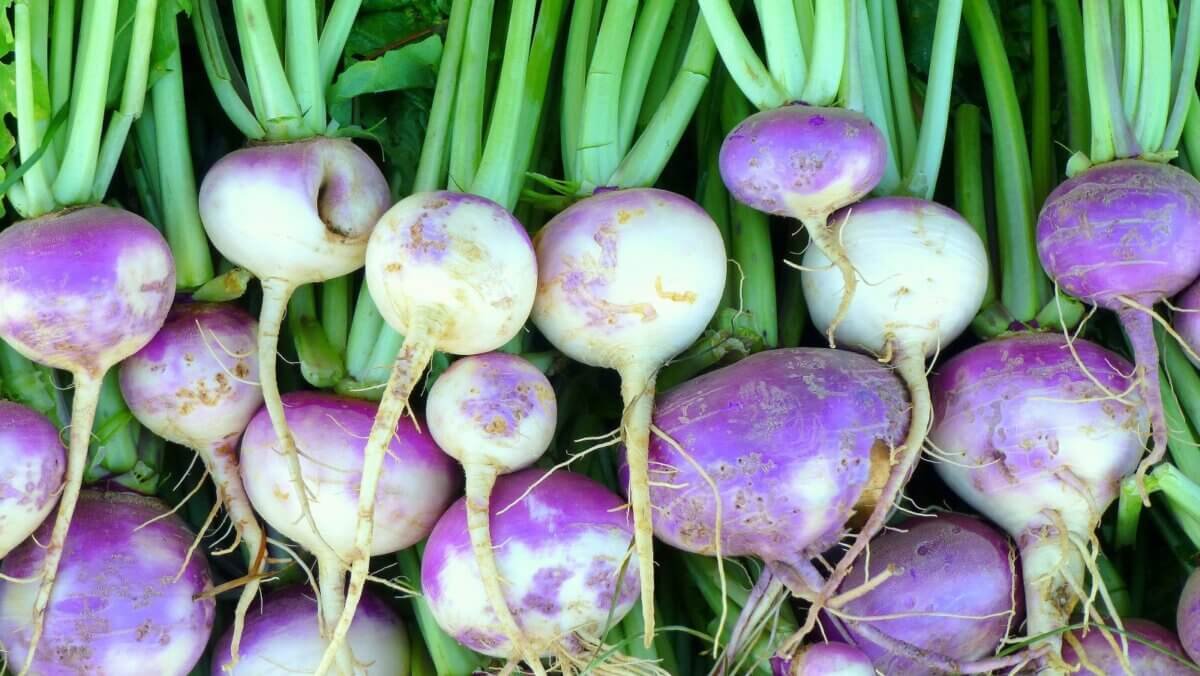
Hardier turnip varieties are results of modern-day crossbreeding. Agriculturists manually crossbreed two turnip varieties, resulting in a hybrid. These seeds can be made more resistant to diseases and pests. Enhancements in flavor, growth, and yield are also possible in hybridization. Examples of hybrid turnips include Hakurei, Pacer Forage Turnip, and Tokyo Silky Sweet.
Large-scale farmers tend to opt for hybrid turnip varieties due to these improvements.
Other Popular Turnips Groupings
Get to know more varieties of this cool season crop, classified by their unique traits.
Types of Turnip Skin Colors
Turnips come in different colors apart from the common white varieties.
| Turnip Skin Colors | Common Examples (Where to Buy) |
|---|---|
| Purple-Skinned Turnips | Nagasaki Akari Kabu (Rare Seeds) Purple Top White Globe (Eden Brothers, Territorial Seed Company, True Leaf Market) |
| Red-Skinned Turnips | Hidabeni or Hida Beni Red (True Leaf Market, Rare Seeds) Red Round (True Leaf Market) Tsugaru Scarlet (True Leaf Market) |
| White-Skinned Turnips | Hakurei (Territorial Seed Company, True Leaf Market) Oasis (True Leaf Market) Shogoin (Eden Brothers, True Leaf Market) Snowball (True Leaf Market) White Egg (Eden Brothers, True Leaf Market) |
| Yellow-Skinned Turnips | Aji Kogane (Rare Seeds) Golden Ball or Golden Globe (Eden Brothers, Territorial Seed Company, True Leaf Market) |
Types of Turnip Shapes
There are two primary shapes for turnips.
| Turnip Shapes | Common Examples (Where to Buy) |
|---|---|
| Elongated Turnips | Asuka Akane (Rare Seeds) Sugukina (True Leaf Market) |
| Bulbous Turnips | Hakurei (Territorial Seed Company, True Leaf Market) Shogoin (Eden Brothers, True Leaf Market) Tennouji Kabura (True Leaf Market) Tokyo Silky Sweet (Territorial Seed Company) White Egg (Eden Brothers, True Leaf Market) |
Types of Turnip Flavors
Turnips provide a hint of sweetness when used in recipes. Other varieties taste more robust than others.
| Turnip Flavors | Common Examples (Where to Buy) |
|---|---|
| Earthy/Nutty Turnips | Golden Ball or Golden Globe (Eden Brothers, Territorial Seed Company, True Leaf Market) Shogoin (Eden Brothers, True Leaf Market) Snowball (True Leaf Market) |
| Mild/Sweet Turnips | Hidabeni or Hida Beni Red (True Leaf Market, Rare Seeds) Oasis (True Leaf Market) Red Round (True Leaf Market) Tokyo Cross (True Leaf Market) White Egg (Eden Brothers, True Leaf Market) |
Types of Turnip Textures
Baby turnips can be eaten raw as a crunchy addition in salads, while mature ones tend to be firmer.
| Turnip Textures | Common Examples (Where to Buy) |
|---|---|
| Crisp Turnips | Hakurei (Territorial Seed Company, True Leaf Market) Red Round (True Leaf Market) Shogoin (Eden Brothers, True Leaf Market) Tokyo Cross (True Leaf Market) Tsugaru Scarlet (True Leaf Market) |
| Tender Turnips | Golden Ball or Golden Globe (Eden Brothers, Territorial Seed Company, True Leaf Market) Purple Top White Globe (Eden Brothers, Territorial Seed Company, True Leaf Market) Tokyo Silky Sweet (Territorial Seed Company) White Egg (Eden Brothers, True Leaf Market) |
Types of Geographic Origins
There are conflicting theories when it comes to the origin of turnips. Some studies claim the root vegetable is native to Western Asia and regions in Asia Minor and Eastern Europe.
| Geographic Origins | Common Examples (Where to Buy) |
|---|---|
| European and Mediterranean Turnips | Golden Ball or Golden Globe (Eden Brothers, Territorial Seed Company, True Leaf Market) Snowball (True Leaf Market) |
| North American Turnips | Seven Top (Eden Brothers, True Leaf Market) White Egg (Eden Brothers, True Leaf Market) |
| Asian Turnips | Aji Kogane (Rare Seeds) Asuka Akane (Rare Seeds) Hidabeni or Hida Beni Red (True Leaf Market, Rare Seeds) Miyama (Rare Seeds) Nagasaki Akari Kabu (Rare Seeds) |
Types of Culinary Uses
From raw to cooking applications, turnip roots can be enjoyed in many ways. Turnip leaves can be used in salads, soups, and stews.
| Culinary Uses | Common Examples (Where to Buy) |
|---|---|
| Turnips for Pickling | Oasis (True Leaf Market) Tennouji Kabura (True Leaf Market) Tokyo Cross (True Leaf Market) |
| Turnips for Salads | Namenia (True Leaf Market) Seven Top (Eden Brothers, True Leaf Market) Turnbroc Greens (True Leaf Market) |
| Turnips for Soups/Stews | Hakurei (Territorial Seed Company, True Leaf Market) Red Round (True Leaf Market) Shogoin (Eden Brothers, True Leaf Market) |
| Turnips for Sauté/Stir-fry | Hidabeni or Hida Beni Red (True Leaf Market, Rare Seeds) Sugukina (True Leaf Market) Tsugaru Scarlet (True Leaf Market) |
Types of Disease Resistance
Turnips differ in disease resistance, depending on the variety.
| Disease Resistance | Common Examples (Where to Buy) |
|---|---|
| Disease-Resistant Varieties | Oasis (True Leaf Market) Tokyo Cross (True Leaf Market) |
| Susceptible Varieties | Purple Top White Globe (Eden Brothers, Territorial Seed Company, True Leaf Market) |
Types of Preferred Growing Conditions
Smaller-sized turnips are suited for container planting with a well-drained soil. Consider your gardening resources and space before buying your turnip seeds.
| Preferred Growing Conditions | Preferred Growing Conditions |
|---|---|
| Container Turnips | Hakurei (Territorial Seed Company, True Leaf Market) Oasis (True Leaf Market) Purple Top White Globe (Eden Brothers, Territorial Seed Company, True Leaf Market) Tokyo Cross (True Leaf Market) White Egg (Eden Brothers, True Leaf Market) |
| Field and Greenhouse Turnips | Asuka Akane (Rare Seeds) Seven Top (Eden Brothers, True Leaf Market) Shogoin (Eden Brothers, True Leaf Market) |
Popular Varieties of White Turnips
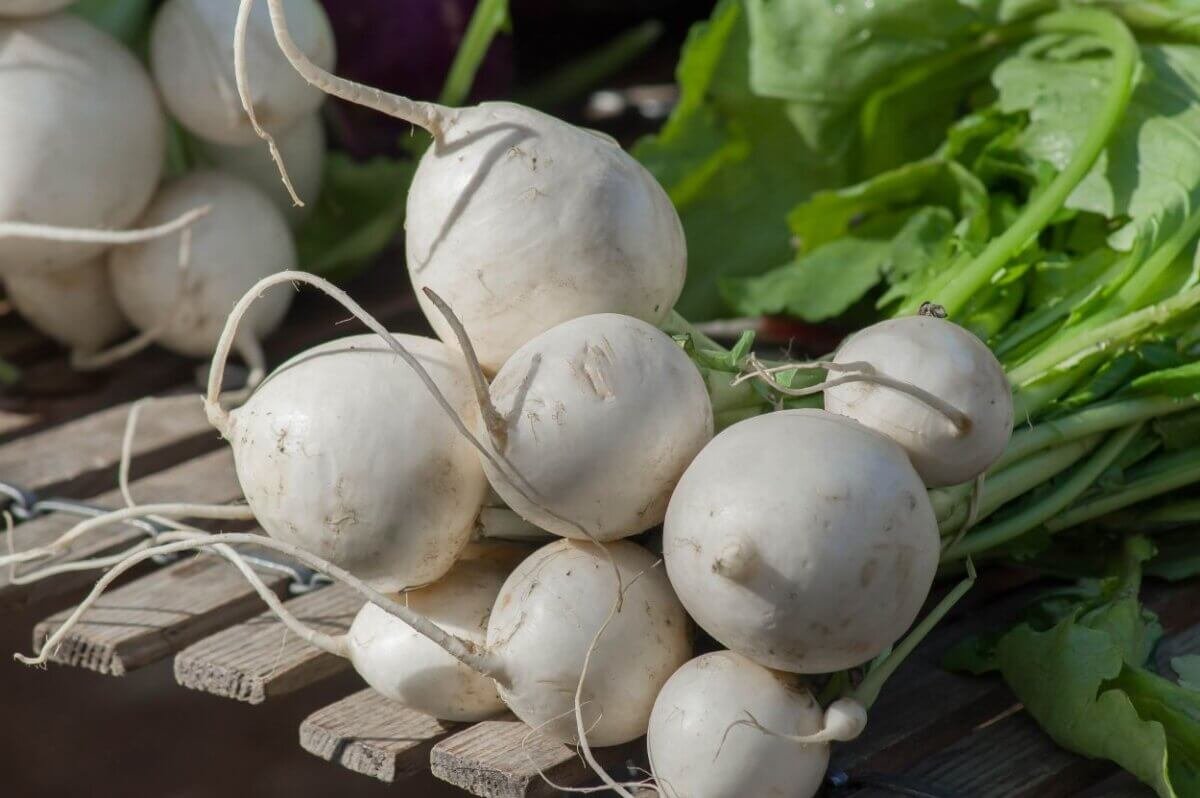
Most turnips available in the grocery stores today tend to have a creamy white color. Get to know them below before buying your seeds.
| Variety | Description | Days to Germination | Days to Maturity | Where to Buy |
|---|---|---|---|---|
| Oasis | Oasis is a Japanese turnip variety with tolerance to downy mildew. It yields white, globe-shaped root crops that are late to bolt. Oasis turnips are harvestable at any size, but at best, its diameter can reach up to 2 inches. | 7 to 10 days | 25 to 40 days | True Leaf Market |
| Shogoin | This cold and drought tolerant variety produces round crisp turnip roots with white flesh and skin. The leafy greens from the Shogoin variety can reach up to 2 feet tall. | 5 to 7 days | 42 to 47 days | Eden Brothers, True Leaf Market |
| Sugukina | An excellent option for pickling, Sugukina turnips have an elongated shape as opposed to the common round type. It is an annual cool season root vegetable with seeds you can sow during early spring or late summer to early fall. | 5 to 10 days | 25 to 45 days | True Leaf Market |
| Tennouji Kabura | The Tennouji Kabura has a long rich history that goes back to ancient Japan. It originates from Osaka and is considered one of the oldest Japanese turnip varieties. Its round roots can reach up to 3 to 4 inches in diameter. | 5 to 7 days | 25 to 45 days | True Leaf Market |
| Tokyo Cross | Cold tolerant and slow to bolt, the Tokyo Cross is an All-America Selections winner. It is a fast-growing variety whose turnip roots can be harvested early — after 30 days from sowing. If you’re craving larger turnips, harvest the roots after 60 days. Expect them to be around 6 inches in diameter. | 7 to 14 days | 25 to 45 days | True Leaf Market |
| White Egg | White Egg is the go-to turnip of home gardeners from the South. It yields egg-shaped roots with smooth white skins. | 7 to 14 days | 45 to 55 days | Eden Brothers, True Leaf Market |
| White Globe Round | White Globe Round grows impressively uniform crops with a tight round shape and white exterior. | 5 to 10 days | 70 to 75 days | True Leaf Market |
Popular Varieties of Colored Turnips
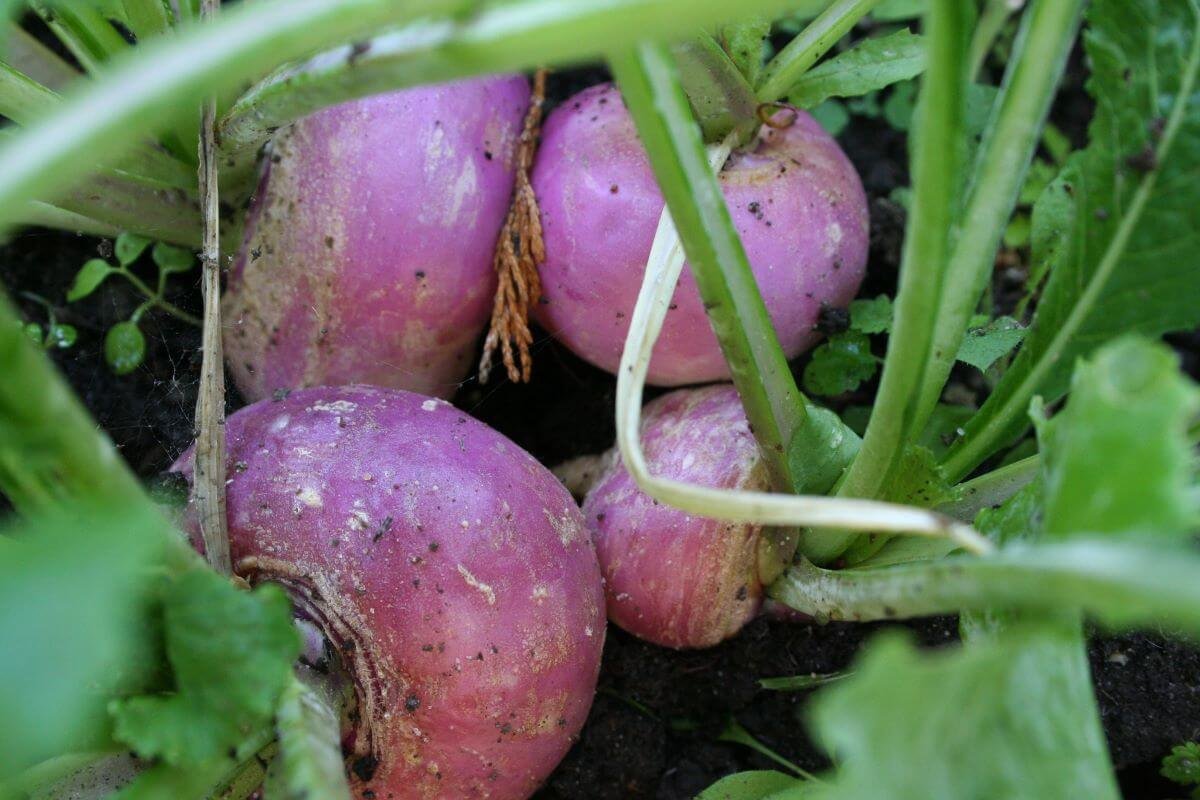
As mentioned earlier, turnips are not exclusively white in color. Consider some of the varieties below to add a pop of color to your meals or garden.
| Variety | Description | Days to Germination | Days to Maturity | Where to Buy |
|---|---|---|---|---|
| Golden Ball or Golden Globe | Enjoy meaty turnip flesh from this variety. Golden Ball sports an amber exterior and contains a slightly earthy flavor. Sow seeds of this yellow turnip variety during early spring or late summer to early fall. | 4 to 10 days | 70 to 75 days | Eden Brothers, Territorial Seed Company, True Leaf Market |
| Hidabeni or Hida Beni Red | Commonly grown in Gifu prefecture, Japan, Hidabeni produces a globe-shaped root with a flat top. Although its skin is dark scarlet, the flesh inside has a white color. Young turnips of this variety can be enjoyed raw, while mature ones work deliciously in stir-fry. | 10 to 14 days | 45 to 50 days | True Leaf Market, Rare Seeds |
| Purple Top White Globe | Considered by many as the traditional American turnip, the Purple Top White Globe variety has been grown effectively in states like Florida, Michigan, Oregon, and Texas. | 4 to 14 days | 50 to 60 days | Eden Brothers, Territorial Seed Company, True Leaf Market |
| Red Round | Another popular Japanese variety, the Red Round produces medium-sized turnips about 3 inches in diameter. Similar to the Hidabeni variety, Red Round has a red and white flesh. | 4 to 7 days | 50 to 55 days | True Leaf Market |
FAQ About Types of Turnips
Which turnip varieties are also grown for their greens?
Due to its broad, dark-green tops, the Seven Top turnip variety is widely used as leafy greens. This variety is primarily cultivated for their turnip greens, and not for their roots. You can find Seven Top leaves being used in many Southern recipes in the United States. Another variety of greens to consider is the Turnbroc, which is a crossbreed between broccoli and turnip.
What are early-harvest turnips?
Varieties like Hakurei, Market Express, and Tokyo Cross can be classified as early-harvest turnips. You can harvest their greens and roots earlier than other varieties.
Originally published on Types of Turnips


