
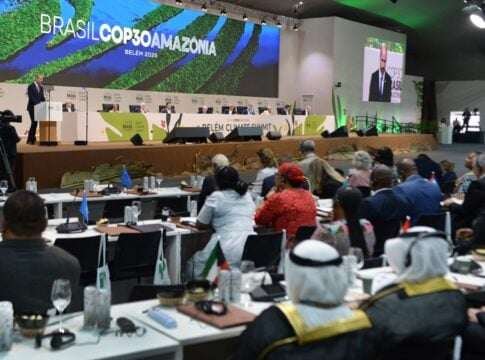
COP30, held in Belém, Brazil, has shifted into higher gear. Ministers are now at the negotiation table. The talks are shifting from technical discussions to tough political bargaining.
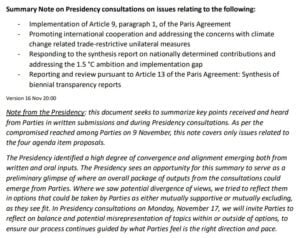
The COP30 presidency has released a new summary document outlining 21 different options for resolving some of the most contentious issues. This is signaling a push for real progress.
A Menu of Options from the Presidency
At the heart of the summit is a 5-page note from COP30 President André Corrêa do Lago. This document does more than guide discussions: it frames possible outcomes by laying out 21 options across four major areas.
These major issue-areas include:
- Strengthening national climate plans: whether countries should be urged to do more on their new emissions-reduction pledges.
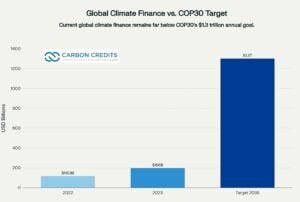
- Climate finance: especially the allocation of a $300 billion aid target from richer to poorer countries. Current climate finance flows are far too low. About $500 billion is available each year, but the world needs $1.3 trillion by 2030–2035. Rich countries made a promise: to give $100 billion a year by 2020. But they didn’t meet this goal.
- Trade and climate: how to deal with trade barriers and climate-related trade disputes. Climate-related tariffs and disputes are rising. This shows that COP30 needs to tackle trade measures in a more organized way.
- Transparency and reporting: improving how countries report their emissions and climate progress.
The presidency says these options are not fixed decisions. Instead, they reflect different pathways that countries can endorse or reject. This structure is meant to give negotiators flexibility while still working toward a coherent package.
Some options call for a new three-year climate finance program. Others suggest simpler steps, like reaffirming current commitments.
One idea for trade is to host roundtables about how climate policies impact cross-border trade. Another is to create a formal platform to discuss climate-related trade measures under the UNFCCC.
- The presidency also emphasizes core themes: multilateralism, putting people at the center, and moving from negotiation to implementation.
COP30 metrics show the size of these talks. Nearly 200 countries and many observer groups are represented.
Analysts say the document suggests a bolder COP30 outcome that could lead to roadmaps for phasing out fossil fuels. Also, it may establish a clearer link between climate finance and accountability.
Host Brazil Urges Action, Not Just Words
Brazil, as host, is pressing hard for concrete results. It has sent a strong message through a letter and its draft text, urging parties to negotiate in good faith and aim for real deliverables. And so negotiations extended into the nights to finalize the talks.
President Lula da Silva and COP President do Lago both emphasize that talks must lead to a practical roadmap, not vague promises. They argue that to meet the challenges ahead, especially on fossil fuels and finance, countries must chart out “who does what, when, and how.”
In particular, Brazil is pushing for a roadmap to phase out fossil fuels. It sees this as both an ethical and strategic move: phasing out fossil fuels in a just way, while respecting development needs.
- Global fossil fuel subsidies are about $500 billion each year.
Reform efforts are now closely tied to COP talks. This adds urgency to Brazil’s proposals.
Money Talks: Climate Finance Stalls Negotiations
Even though the presidency’s proposal is broad, finance continues to act as a major roadblock. Developing countries say rich nations still haven’t met their climate aid promises. This includes a goal of $300 billion each year by 2035. The shortfall compared to the estimated needs of $1.3 trillion annually illustrates the scale of the finance gap.
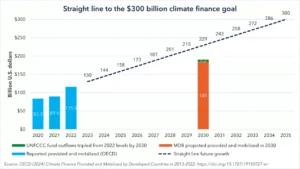
These financial disputes have even prompted critics to warn that the absence of real funding could undermine the entire summit. Some say that until money flows, other issues — like emissions or transparency — may remain stalled.
South Korea’s Big Coal Shift
Meanwhile, a significant moment came when South Korea announced it would phase out many of its coal-fired power plants by 2040. The country joined the Powering Past Coal Alliance.
Under the plan, 40 out of its 61 coal plants are set to retire by 2040. The remaining 21 will be evaluated for closure later, based on economic and environmental factors.
South Korea aims to have 45% of its electricity supplied by renewables by 2040, supplemented by nuclear and gas. This commitment signals a major step toward a cleaner energy mix and the creation of green jobs.
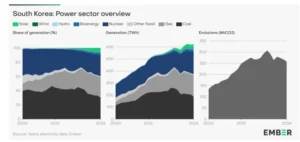
But the pledge also raises geopolitical stakes. South Korea has long been a major coal importer. Its decision could ripple through global coal markets, especially affecting exporting countries.
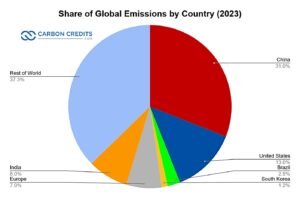
The country accounts for about 1.5% of global emissions. This shows that its policies, though smaller than those of China or the U.S., still hold significant regional influence.
China Steps Up as the United States Steps Back
Complicating dynamics at COP30 is the notable absence of the United States. As such, China has stepped up its diplomatic efforts. With no top U.S. officials around, it is pushing for stronger cooperation among many countries.
Beijing’s delegation sees itself as a stabilizing force. They push for climate finance, technology cooperation, and working together on the Paris Agreement. China accounts for around 31% of global emissions, making its position critical for the overall climate outcome.
Before the summit, China updated its climate goals. It plans to cut emissions by 7–10% from peak levels and increase non-fossil energy use to 30% of total energy consumption by 2035.
Analysts note that, even with these plans, long-term goals and accountability are still necessary to keep warming within 1.5°C.
What’s at Stake: A Turning Point for COP30
As COP30 presses on, what happens in the next few days could define its legacy. Here are the key things to watch out for as the summit takes its second week run:
- The presidency’s “menu” of options gives countries flexibility, but risks producing watered-down outcomes.
- Finance remains the most difficult divide. Without real funding, many fear COP30 could fall short.
- Brazil is pushing for a fossil-fuel roadmap anchored in fairness — but that depends on buy-in from major emitters.
- South Korea’s coal commitment could reshape export markets and send a signal to other coal-dependent nations.
- China’s rising role highlights how power dynamics are shifting, especially in the U.S.’s absence.
- Trade and climate measures, including tariffs and disputes, remain an area where COP30 could produce tangible frameworks to avoid future conflicts.
In short, COP30 may not just be another negotiation; it could be a turning point. Whether countries seize the moment to deliver real change will determine if this climate conference becomes a source of momentum or just another talking summit.
The post COP30 Moves Into a More Ambitious Phase: Key Updates to Know appeared first on Carbon Credits.


