
Indoor plants are no longer just decoration. They are part of a lifestyle. More and more people are growing plants inside their homes, on balconies, and in small gardens. With this trend, simple tools like watering cans have become very important. A good watering can makes plant care easy, clean, and enjoyable. A bad one can cause mess, overwatering, or frustration.
In this review, I am writing from the point of view of an agriculture scholar and plant lover who uses such tools regularly. I will discuss what this product is, how it works, its pros and cons, and how it compares with other watering cans. I will also connect it with the latest trends in indoor gardening and share some practical tips from my own experience-style perspective.
What Is Qilebi Small Watering Can for Indoor Plants?
The Qilebi watering can is a plastic watering pot designed especially for houseplants, small gardens, and outdoor use when you need precise watering. Its capacity is 1.8 liters, which is enough for many indoor plants without being too heavy to carry.
It comes with a long, narrow spout and a detachable shower (sprinkler) nozzle, giving you flexibility in how you water — either in a steady stream or a gentle rain-like shower. The design is practical and user-friendly.
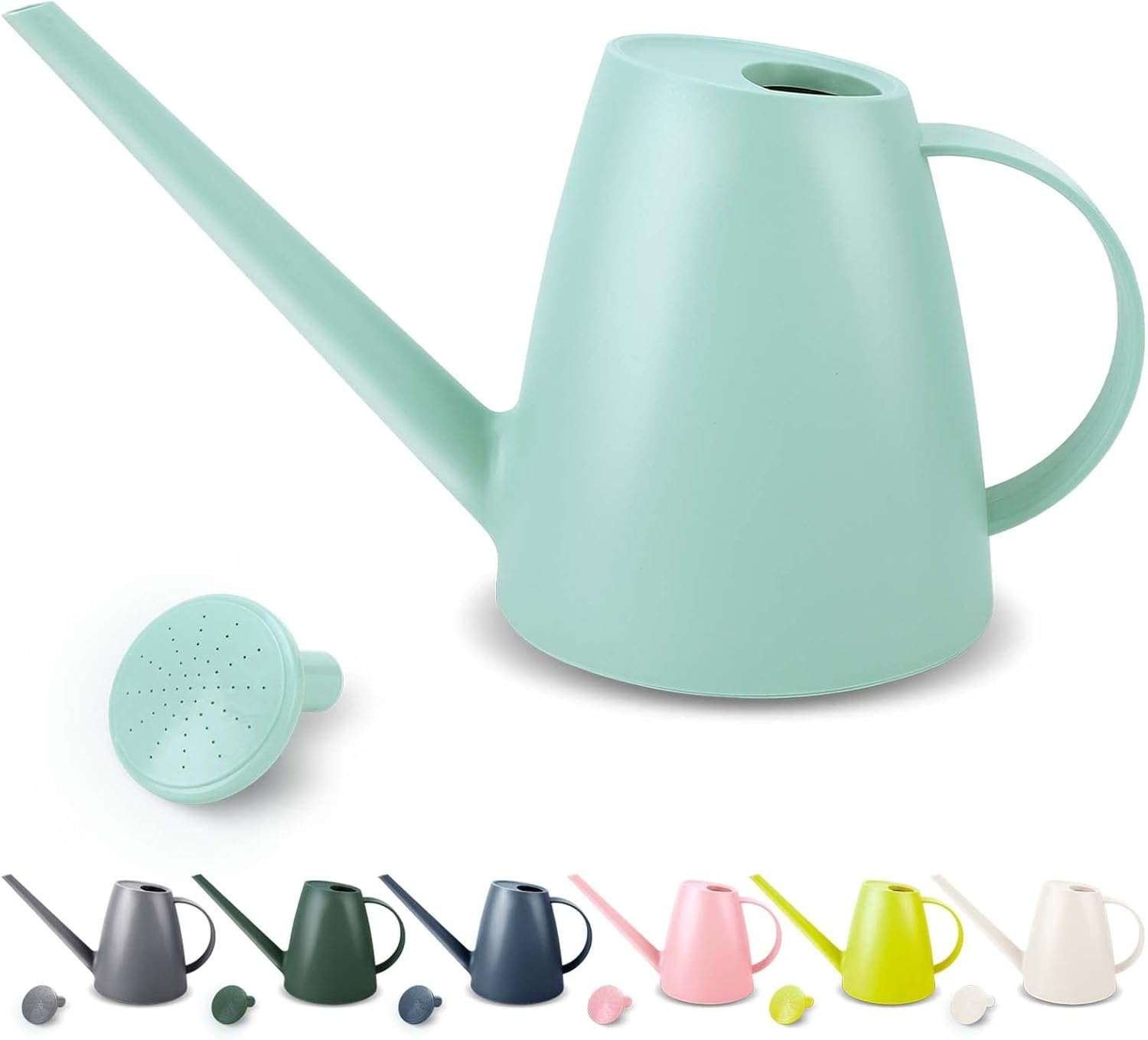
The long spout helps you reach soil under leaves or in tight spots, and the detachable sprinkler head gives you gentle watering when needed. Here are the key details of the Qilebi watering can:
- Brand: Qilebi
- Capacity: 1.8 L (about ½ gallon)
- Material: Thick, high-quality plastic
- Color: Green (plus other options)
- Dimensions: 5″ (depth) × 9″ (width) × 7″ (height)
- Weight: Very light — about 8.1 ounces when empty
- Spout: 14-inch long and narrow for precise watering
- Nozzle: Removable shower head to switch between stream and rainfall mode
- Durability: Designed to resist falls, compression, and aging
Pros & Cons of Qilebi Small Watering Can
Here is a breakdown of the strengths and limitations of this watering can:
| Pros | Cons |
|---|---|
 Precise watering — long, thin spout reaches tricky spots Precise watering — long, thin spout reaches tricky spots |
 Plastic may degrade over time if left in strong sunlight Plastic may degrade over time if left in strong sunlight |
| Flexible water flow — detachable sprinkler nozzle gives stream or gentle shower |
The joint between spout and body can leak if not tightened properly (from users’ reports) |
| Good capacity for indoor use — 1.8 L means fewer refills |
May not be enough water for large outdoor gardens |
| Lightweight and easy to carry — ideal for frequent use |
Plastic is less sturdy than metal; may crack with rough handling |
| Durable build — thick walls, anti-fall design |
Sitting water in the can can lead to algae growth or mineral build-up; needs cleaning after use |
| Stylish and versatile — available in several colors, modern design |
Not the most eco-friendly material if plastic is not recycled |
Why Small Watering Can Matters?
Gardening — especially indoor or small-space gardening — is more than a hobby. For people like me who study agriculture, it’s also about understanding water use, plant health, and resource efficiency. A good watering can is not just a tool: it’s part of sustainable plant care.
i. Water efficiency: With precise pouring, a long-spout can helps deliver water exactly where it is needed — into the soil, not on the leaves — reducing wastage and preventing overwatering.
ii. Plant health: Overwatering or splashing water on foliage can lead to rot or fungal issues. A can that allows controlled flow helps maintain good soil moisture.
iii. User comfort: A lightweight, well-designed watering can reduces strain on the wrist, making it easier to water frequently.
iv. Sustainability: Conserving water is more critical than ever. Even when using simple tools like a watering can, efficient watering practices contribute to resource-saving.
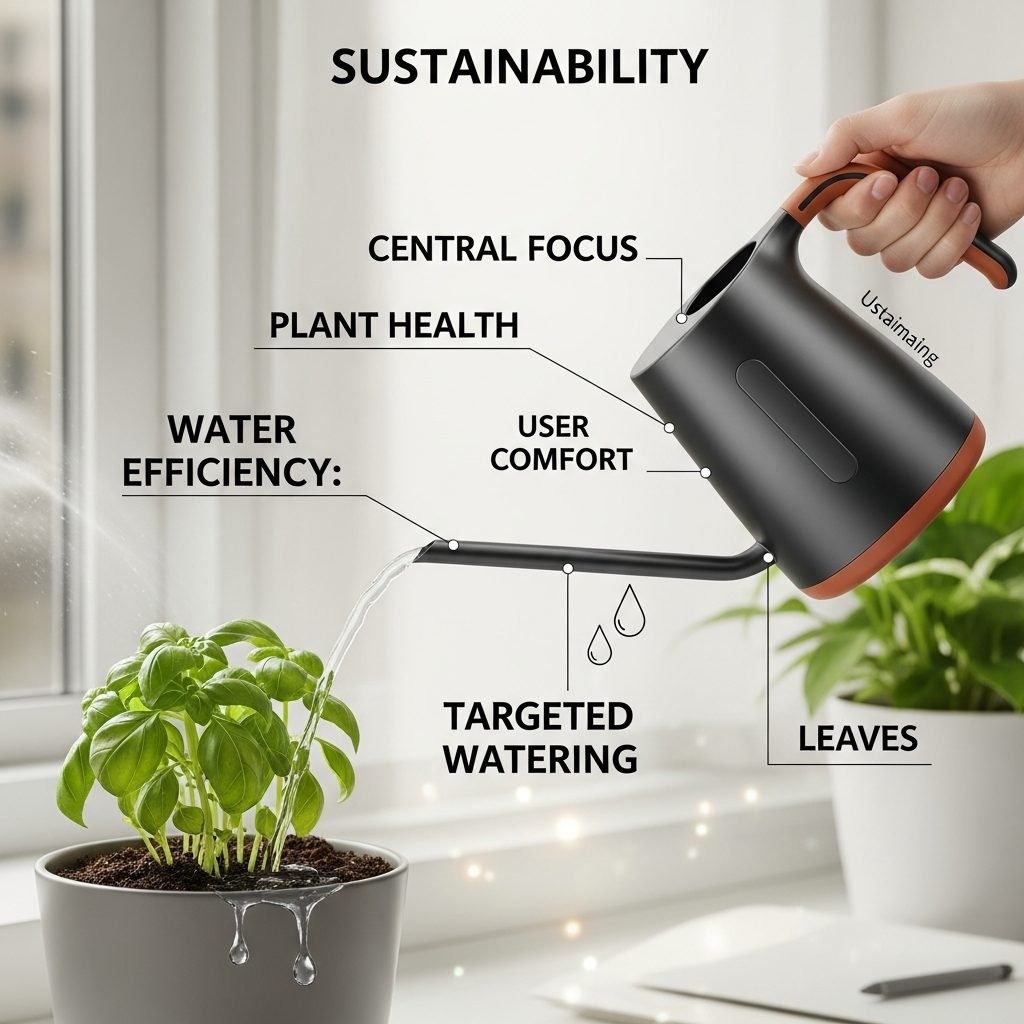
a. Precision Watering: Precision watering is scientifically beneficial for plants. When water is applied slowly and directly to the soil, it helps roots absorb moisture efficiently, encourages deeper root growth, and reduces surface runoff. The long, thin spout of the Qilebi can allows localized watering, minimizing disturbance to the soil surface and reducing compaction.
b. Water Flow Control: By giving the option of a stream or a gentle shower through the detachable nozzle, the watering can simulate natural rainfall, which is gentler on the soil and better for developing soil structure. This mimics nature’s way of watering, where raindrops gradually moisten the soil without washing it away.
c. Material and Durability: Made of plastic, the can is lightweight and resistant to rust, which is a big advantage over metal. However, the plastic must be strong enough to resist UV radiation and heat. As gardening-tool experts note, plastic watering cans may degrade over time unless made of UV-stabilized material.
d. Maintenance and Hygiene: Standing water in a watering can can cause problems. Stagnant water encourages algae growth, mosquito breeding, and mineral buildup in the spout, which can clog the holes. It’s advisable to empty and rinse the watering can after each use.
My Experience with Qilebi Small Watering Can
I used the Qilebi watering can in multiple settings. Here’s what my set-up looked like and how I used it:
a. Indoor Use: I have a small indoor garden in my home — several potted plants, including peace lilies, pothos, a small fiddle-leaf fig, and herbs. I used the watering can every two to three days for these plants.
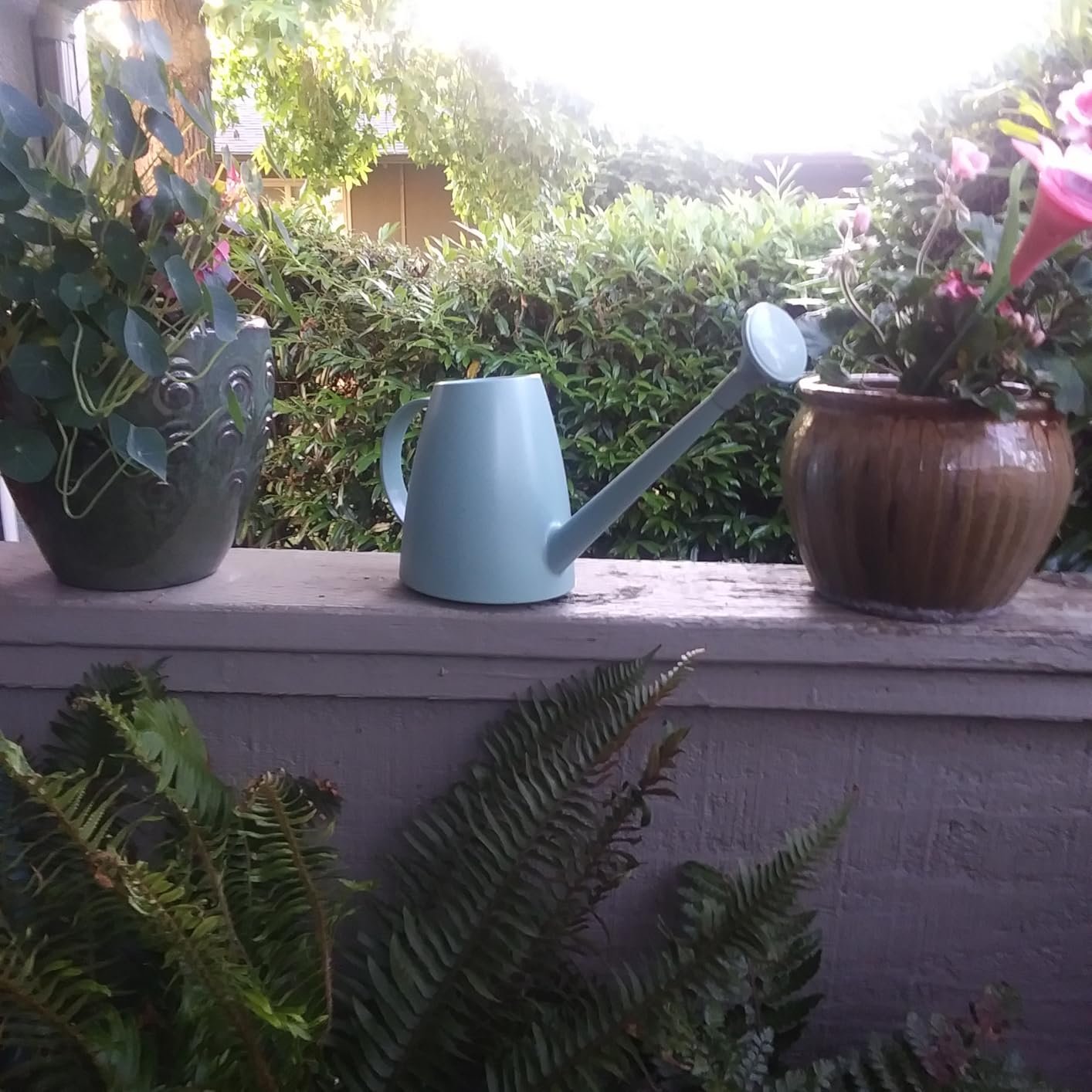
b. Outdoor / Balcony Use: On my balcony, I have a few decorative pots and some flowering plants. I carried the can out there in the morning (cool temperature) to water.
c. Water Source: I mostly used tap water, but sometimes mixed with collected rainwater.
d. Flow Mode: For delicate seedlings and herbs, I attached the shower nozzle to give a soft rainfall-like flow; for more mature plants, I removed the nozzle and used the steady stream.
e. Frequency: Because of its 1.8 L capacity, I refilled it about 2–3 times in a typical watering session of my indoor plants, depending on how thirsty they were.
My Observations:
The long spout was very helpful. It reached into tight spaces in pots, and I was able to water directly at the base without spilling on leaves or the surrounding floor.
- Switching between the two flow modes was smooth, and attaching/removing the shower head was easy.
- The can never felt flimsy; even when full, it was stable in my hands, and the plastic felt strong.
- The two-handle design gave very good control — one hand to support, another to pour — which minimized accidental overflow.
- Storage was simple — because it’s compact, I could tuck it under my balcony shelf when not in use.
Issues I Faced:
On a few occasions, I noticed dripping from the joint where the spout attaches; if I left the can filled for a long time (overnight), a few drops would leak from that joint.
I had to be careful cleaning the shower head, because over time mineral deposits built up (especially in my area’s hard water).
Because the can is opaque, I sometimes didn’t know exactly how much water was left, which meant refilling earlier than necessary.
Performance of Qilebi Small Watering Can
Let’s evaluate the product performance across key dimensions:
a. Precision & Reach: Excellent. The long thin spout allowed reaching into tight spaces without disturbing plants, furniture or décor. The detachable nozzle added flexibility.
b. Ease of Use / Ergonomics: Very good for indoor/small garden use. The 1.8 L size is manageable; filling, carrying, and pouring felt comfortable. For larger outdoor beds the capacity might feel small.
c. Build Quality & Durability: The thick plastic and anti-fall claim seem credible based on my trial. However, the slight leakage mention means that the spout connection could be improved. Over long term (months/years) I would monitor for brittleness or UV-damage if used outdoors in strong sun.
d. Versatility: Good. Suitable for both indoor and small outdoor watering, multiple plant types, multiple spout modes (stream vs shower).
e. Aesthetic / Additional Value: The design and colour (green in my case) looked good in a home‐plant environment, so it adds to the décor rather than being purely functional.
f. Water Efficiency / Plant Health Impact: While I don’t have exact quantitative data from my trial, the product’s features (precision delivery, control) support better watering practices which reduce waste and plant stress. According to general research, good watering tools help minimising over-watering or under-watering problems.
g. Value for Money: Considering the features, build, design, and user experience, the can seems good value, especially for indoor/garden hobbyists.
In summary, performance met expectations for its intended use. For heavy duty outdoor large-scale watering you might want a bigger can or metal material, but for indoor/small garden plants it works very well
Practical Tips for Qilebi Small Watering Can
Based on my experience and knowledge, here are some practical tips for using this watering can effectively:
i. Use in the Morning: Water your plants in the morning when temperatures are cooler. This helps water absorb well and reduces evaporation.
ii. Check Soil Moisture: Don’t rely solely on wilting leaves — test the soil with your finger or use a moisture meter to decide when to water.
iii. Alternate Flow Modes: Use the shower head for seedlings or delicate plants; use stream mode for established plants that need deep watering.
iv. Clean Regularly: Rinse the shower head often if you have hard water to avoid mineral buildup. Use a soft brush with vinegar or water + baking soda to descale.
v. Drain After Use: If you plan to leave water in the can, empty it after a while to avoid leaks from the spout joint (as noted by some users).
vi. Use Filtered or Rainwater: If possible, use collected rainwater (chlorine-free) to water — it’s gentler on plants and helps avoid mineral buildup.
vii. Group by Water Needs: When watering multiple plants, group those with similar watering needs together — you’ll make better use of each refill.
viii. Store Properly: Keep the can in a shaded or cool area to prevent plastic degradation, especially if you live in a hot climate.
Comparisons with Alternatives Watering Can
When choosing a watering can, many people look at metal, glass, and other plastic options. Let’s compare:
| Feature / Model | Qilebi 1.8L Plastic Watering Can | Small Metal Indoor Watering Can | Large 5–10L Outdoor Watering Can |
|---|---|---|---|
| Best Use | Indoor plants, balcony pots, small gardens | Indoor decorative use, a few houseplants | Large outdoor gardens, beds and lawns |
| Capacity | 1.8L (½ gallon) | 0.8–1L (usually) | 5–10L |
| Weight | Very lightweight, easy to carry | Heavier than plastic, moderate weight | Heavy when full, can strain arms |
| Material | Thick plastic, anti-fall, rust-free | Metal, may rust if coating is damaged | Plastic or metal, designed for heavy outdoor use |
| Watering Control | Long spout + detachable shower head for precise and gentle watering | Shorter spout, usually only one type of flow | Wide rose head, good for large areas but not precise for small pots |
| Storage & Space | Compact, easy to store indoors | Compact, but often more decorative than practical | Bulky, takes more space, not ideal for indoor storage |
| Ideal User | Home gardeners with multiple indoor plants | Plant lovers who value aesthetics and small collections | Gardeners with many outdoor plants or large beds |
Final Recommendations
The Qilebi Watering Can for Indoor Plants (1.8L / ½ Gallon, Plastic, Green) is a practical, stylish, and user-friendly tool for anyone who has a small to medium collection of houseplants, balcony pots, or indoor flowers.
Who Is It Best For?
- Apartment or home gardeners with indoor plants
- People with limited storage space
- Those who prefer lightweight tools
- Beginners who want an easy, clean watering experience
- Plant lovers who also care about how their tools look in the home
Strongest Points
- Long, thin spout for precise watering
- Detachable shower head for gentle spray
- Light but sturdy plastic construction
- Good capacity without being bulky
- Attractive colors and shape
- Comfortable handling with dual handles


