

Climate startup Reverion, a German company specializing in biogas-based carbon removal, has secured several major offtake agreements through Frontier, the advanced carbon removal buyer coalition. The deals mark a significant milestone for the company as it works to commercialize its solid oxide fuel cell (SOFC) technology, which captures and permanently stores CO₂ while producing clean electricity.
Under the new commitments, Frontier buyers—including Google, McKinsey, H&M Group, Autodesk, Workday, and others—will pay $41 million for 96,000 tons of permanent CO₂ removal between 2027 and 2030.
Frontier’s carbon removal portfolio
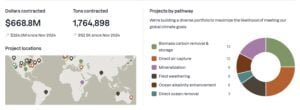
These agreements strengthen the growing belief that biogas-based carbon removal can be both scalable and economically attractive when combined with high-efficiency energy production.
How Reverion’s Fuel Cell System Turns Biogas into Permanent Carbon Removal
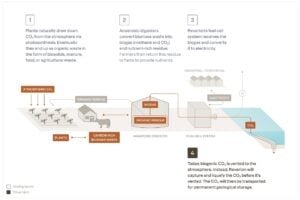
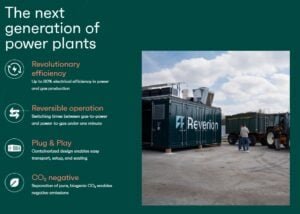
Reverion, a 2022 spin-off from the Technical University of Munich, has created a system that generates clean electricity and captures carbon from biogas at the same time. Farmers produce biogas by placing manure, crop leftovers, and food waste into anaerobic digesters. These digesters create a gas mix that contains methane and CO₂.
- The company’s solid oxide fuel cell (SOFC) converts the methane in this gas directly into electricity with very high efficiency.
- During this reaction, the carbon in the gas separates into a pure CO₂ stream.
- The system then liquefies this CO₂ and sends it for permanent geological storage.
Traditional biogas systems burn the gas in engines, lose energy, and release most of the carbon back into the air. Some even leak methane, which traps far more heat than CO₂. Reverion avoids these problems by capturing carbon from both methane and CO₂ in the biogas. As a result, the system increases the amount of carbon removed and cuts emissions at the source.
By pairing efficient power generation with full carbon capture, Reverion turns everyday biogas into a dependable pathway for long-term carbon removal.
Energy, Hydrogen, and New Revenue Streams for Farmers
The press release highlighted that, today, more than 120,000 biogas plants operate worldwide, but many still use old engines with low efficiency. And Reverion’s SOFC gives farmers a major upgrade. It reaches about 74% fuel-to-electricity efficiency—one of the highest levels in the industry. This lets farmers produce more electricity from the same biogas, lower their energy bills, and earn extra money by selling clean power.
The system also adds flexibility. When electricity prices drop, often during times of strong wind and solar output, the fuel cell can run in reverse to make green hydrogen. Farmers can sell this hydrogen or use it on their own farms, creating another income source.
By delivering clean energy, flexible operation, and permanent carbon removal, Reverion offers a strong alternative to combustion engines and renewable natural gas upgrading systems.
Frontier Unlocks: Why BiCRS Matters in Carbon Removal Portfolios
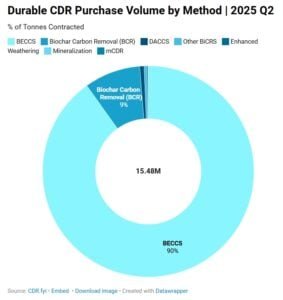
Biomass Carbon Removal and Storage (BiCRS) is emerging as a strong contender for long-duration carbon removal. It includes several pathways such as BECCS, bio-oil sequestration, biomass injection, and now biogas-based fuel cell systems.
Frontier explains how BiCRS stands out for the following reasons:
- Lower costs: Plants capture CO₂ naturally and at no cost. Many BiCRS systems also use existing waste streams, which reduces input costs.
- Clear verification: Technologies like BECCS and biomass injection are easier to measure and verify compared with more experimental removal pathways.
- Near-term scalability: Bio-oil and biomass injection can grow quickly, helping meet the rising demand for carbon removal supply.
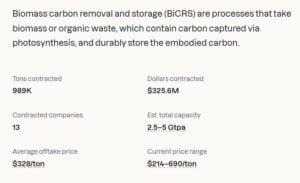
However, BiCRS is not without challenges. The biggest concern is sustainable biomass sourcing. Poor practices—such as removing too much crop residue, clear-cutting forests, or heavy fertilizer use—can harm biodiversity, damage soils, or increase emissions. Because of these risks, carbon removal purchasers must follow strict sustainability guidelines when sourcing biomass.
There is also a durability question for some BiCRS methods. Some biomass burial or sinking approaches could decompose over time, reversing the stored carbon. Frontier funds several R&D projects to evaluate long-term durability.
Finally, the BiCRS market is expected to be highly fragmented. Feedstock types differ by region, and the best removal pathway varies based on geography, transportation options, and local policy. Most BiCRS facilities also operate at a modest scale, meaning the market will rely on many distributed projects rather than a handful of giants.
Even so, BiCRS delivers several co-benefits. These include on-site clean energy production, lower fossil fuel use, reduced methane emissions, nutrient recycling for croplands, and destruction of harmful pollutants like PFAS.
Why Reverion’s Model Stands Out
Reverion’s approach offers compelling advantages that support its rapid market adoption:
- Large potential impact: With over 120,000 biogas sites worldwide, the theoretical removal potential from biogas could exceed 2 gigatons per year by 2040, according to IEA projections. Reverion could capture a meaningful share of this, especially alongside other BiCRS technologies.
- Full-stream carbon capture: Most systems capture only the CO₂ portion of biogas. Reverion captures carbon from both CO₂ and methane, effectively doubling the removal impact.
- World-class electrical efficiency: Its 74% efficiency ranks among the highest globally, increasing economic returns for operators.
- Low methane leakage: Because methane is converted on-site, the system avoids pipeline leaks often associated with renewable natural gas.
- Strong market demand: Reverion already holds 60 pre-orders and 120 letters of intent, signaling strong momentum.
As the world accelerates efforts to scale permanent carbon removal, technologies like Reverion’s offer a promising path—combining high-efficiency clean energy production with durable, verifiable carbon storage at biogas sites around the world.
- ALSO READ: Frontier Backs Norway’s First Carbon Capture Retrofit! Is This the Future of Waste-to-Energy?
The post Frontier Backs Climate Startup Reverion for 96,000 Tons of Biogas-Based Carbon Removal appeared first on Carbon Credits.


