

Walmart, Kellanova, and Indigo Ag formed a new partnership to help rice farmers in Arkansas. Their goal is to make farming more profitable and better for the environment. These companies plan to support farmers by giving them training, digital tools, and extra payments for using regenerative agriculture methods.
Walmart has already worked with Indigo Ag to support cleaner and more sustainable farming. With Kellanova now joining, the program will reach more farmers and cover more rice-growing areas. The hope is that farmers can earn more money while using practices that protect their land for the future.
What Is Regenerative Agriculture?
Regenerative agriculture is a way of farming that helps restore soil health, conserve water, and support biodiversity. Instead of relying only on heavy chemical inputs, this approach works with nature to grow crops. Farmers might use methods like:
- crop rotation,
- careful water management, and
- soil-restoring techniques.
This type of farming can help soil store nutrients and moisture better. That improves crop stability even when the weather gets tough. Over time, regenerative farms may need less fertilizer and water.
Globally, interest in regenerative agriculture is rising. The market for regenerative agriculture services — like soil testing, consulting, and sustainable farming tools — is growing quickly. A recent industry forecast estimates strong growth through 2030, $18.3 billion at 15-20% annual growth.
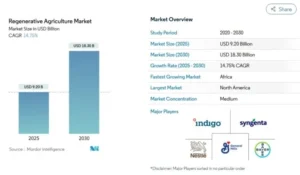
This growth reflects a shift among food companies, farmers, and investors toward sustainable supply chains and climate-smart farming.
Arkansas Rice: A Big Deal for U.S. Farming
Arkansas leads U.S. rice production. In 2024, the state’s rice growers harvested about 1.432 million acres at a record yield of 7,640 pounds per acre. That production made up 49.3% of all U.S. rice output.
Rice is one of the top three crops in Arkansas in terms of money earned by farmers. It also supports thousands of jobs in rural communities.
But rice farming has become harder lately. Many Arkansas farmers face economic pressure. Input costs such as fertilizer, fuel, and irrigation have gone up.
At the same time, rice market prices have weakened. Some estimates show significant losses per acre for long-grain rice in such conditions. This economic squeeze makes support and innovation more urgent.
The New Partnership and What It Offers
The companies involved — Walmart, Kellanova, and Indigo Ag — plan to help Arkansas rice farmers move to regenerative agriculture. Under this approach, farms receive guidance, tools, and extra pay when they follow certain sustainable practices.
Farmers joining the program get help with soil, water, and crop management. They also get payments (a “premium”) for rice grown under these sustainable practices. That extra pay helps cover the risks and costs of changing farming methods.
Moreover, sustainable farming practices are shown to lower the industry’s carbon emissions. The initiative is projected to reduce 35,500–8,000 metric tons based on acreage adoption.
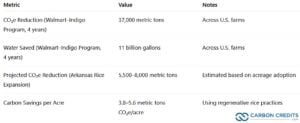
Why the Timing Is Important
The new partnership comes at a time when Arkansas rice farmers face major economic challenges. Rising costs for fuel, fertilizer, and water make farming more expensive. Meanwhile, global rice prices remain under pressure because of large supplies from abroad. These conditions reduce profits and increase risks for farmers.
In that context, the support from Walmart, Kellanova, and Indigo Ag may help stabilize farm incomes. The premium payment offers an extra financial cushion while farmers transition to sustainable practices.
Also, a move to regenerative farming may increase long-term resilience. Healthier soil and better water management can help farms survive extreme weather — a growing concern in climate change.
Mikel Hancock, Senior Director, Strategic Initiatives, Sustainability at Walmart, stated:
“We are excited to see our regenerative agriculture goals becoming a reality. Expanding our partnership with Indigo Ag to include Kellanova reflects the scale of impact we can achieve by working together to strengthen supply chains, support farmers, and advance environmental stewardship.”
Walmart’s Sustainability and Environmental Initiatives
Walmart has been actively pursuing sustainability across its global operations. The company plans to achieve net-zero emissions by 2040. It has invested in renewable energy, energy-efficient stores, and low-emission logistics. This powers over 50% of its operations with renewable energy. It also aims to source 100% of its electricity from renewables in the U.S. and around the world when possible.
Walmart teams up with suppliers to cut greenhouse gas emissions in its supply chain. They focus on reducing Scope 3 emissions. One key effort is Project Gigaton, which aims for suppliers to lower CO₂e by one billion metric tons by 2030.

The company also promotes sustainable sourcing, including responsible agriculture, forestry, and seafood programs. The recent partnership with Kellanova and Indigo Ag is an example. These efforts show Walmart’s commitment to protecting the environment and ensuring a strong supply chain for the future.
Kellanova and Indigo Ag: Driving Sustainable Agriculture
Kellanova and Indigo Ag are both actively advancing sustainable practices across the food and agriculture sectors. The Pringles producer aims to lower its environmental impact. It does this by sourcing responsibly, reducing waste, and improving energy efficiency in its supply chain.
The company is focused on cutting greenhouse gas emissions. It also seeks to use more sustainable ingredients in its products, which aligns its work with larger climate goals.
Janelle Meyers, Chief Sustainability Officer, Kellanova, said:
“Our Kellanova Better Days™ Promise aims to advance sustainable practices and mitigate the impacts of climate change—but we know we can’t achieve our goals without our partners. By joining forces with Indigo Ag and Walmart, we’re creating agricultural resiliency that increases farmer revenues, advances climate-smart practices, and drives long-term, systemic impact across the value chain.”
Indigo Ag works directly with farmers to implement climate-smart and regenerative agriculture practices. The programs focus on improving soil health, saving water, and cutting carbon emissions. They also aim to boost farm profits.
The agritech firm uses digital tools and technical support to measure and verify environmental benefits. This gives farmers and buyers confidence in the supply chain’s sustainability.
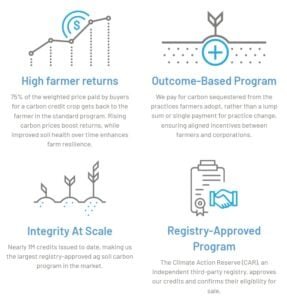
Indigo partners with big retailers like Walmart, which helps scale initiatives for lower-carbon, resilient farming. These efforts benefit farmers, communities, and the environment.
Dean Banks, CEO of Indigo Ag, remarked:
“Together, we are building prosperity from the ground up: safeguarding water resources, improving soil health, reducing emissions, and supporting farmers.”
What This Means for the Future of Farming
This partnership among Walmart, Kellanova, and Indigo Ag shows a deeper shift in agriculture. Instead of just growing more crops, they aim to grow crops sustainably.
For farmers in Arkansas, it could mean a better future: a more stable income, healthier farms, and less risk. For companies, it offers a more dependable supply chain, while for communities and the environment, it offers a chance at long-term sustainability.
As demand grows for sustainable and responsibly grown food, regenerative agriculture may move from niche to mainstream. We could see growing interest, more investments, and wider adoption, not just for rice, but for other crops too.
This partnership could create a future where farming, business, and the environment work together, benefiting farmers, consumers, and the land.
The post Walmart and Kellanova Partner for Regenerative Rice Farming in Arkansas appeared first on Carbon Credits.


