
If you love houseplants or small potted plants — like I do — you know that watering can be both an art and a gamble. Water too much and roots rot; water too little and plants wither. For many of us, especially those with busy schedules or many plants, it becomes a guessing game.
That’s why I was excited to try the SUSTEE Aquameter — a simple, leave‑in soil moisture sensor that promises to take the guesswork out of watering. After using it for several months across different potted plants (succulents, leafy indoor plants, and herbs), I’m ready to share a detailed review: what it is, how it works, its pros and cons, how it performed for me — and whether it’s worth it.
What is Sustee Aquameter Plant Soil Moisture Sensor?
The Sustee Aquameter is a Japanese-designed, award-winning soil moisture sensor that helps you monitor the water content of your potted plants. Unlike traditional moisture meters that need to be removed after each reading, the Sustee Aquameter is a leave-in device, meaning it can continuously monitor soil moisture without being disturbed.
Designed for small pots—especially 2, 2.5, and 3-inch pots—it is ideal for succulents, bonsai, orchids, and other small indoor plants. The meter changes color based on the soil’s water content: white indicates the plant needs water, while blue means the soil is sufficiently moist. Each stick is refillable, lasting approximately 6–9 months before replacement is needed.
Sustee collaborated with Tokyo University of Agriculture to improve the design and functionality of these sticks, making it not just practical but scientifically precise. With its slim, minimalist design, the meter blends seamlessly into the plant environment without interfering with the aesthetics of your indoor garden.
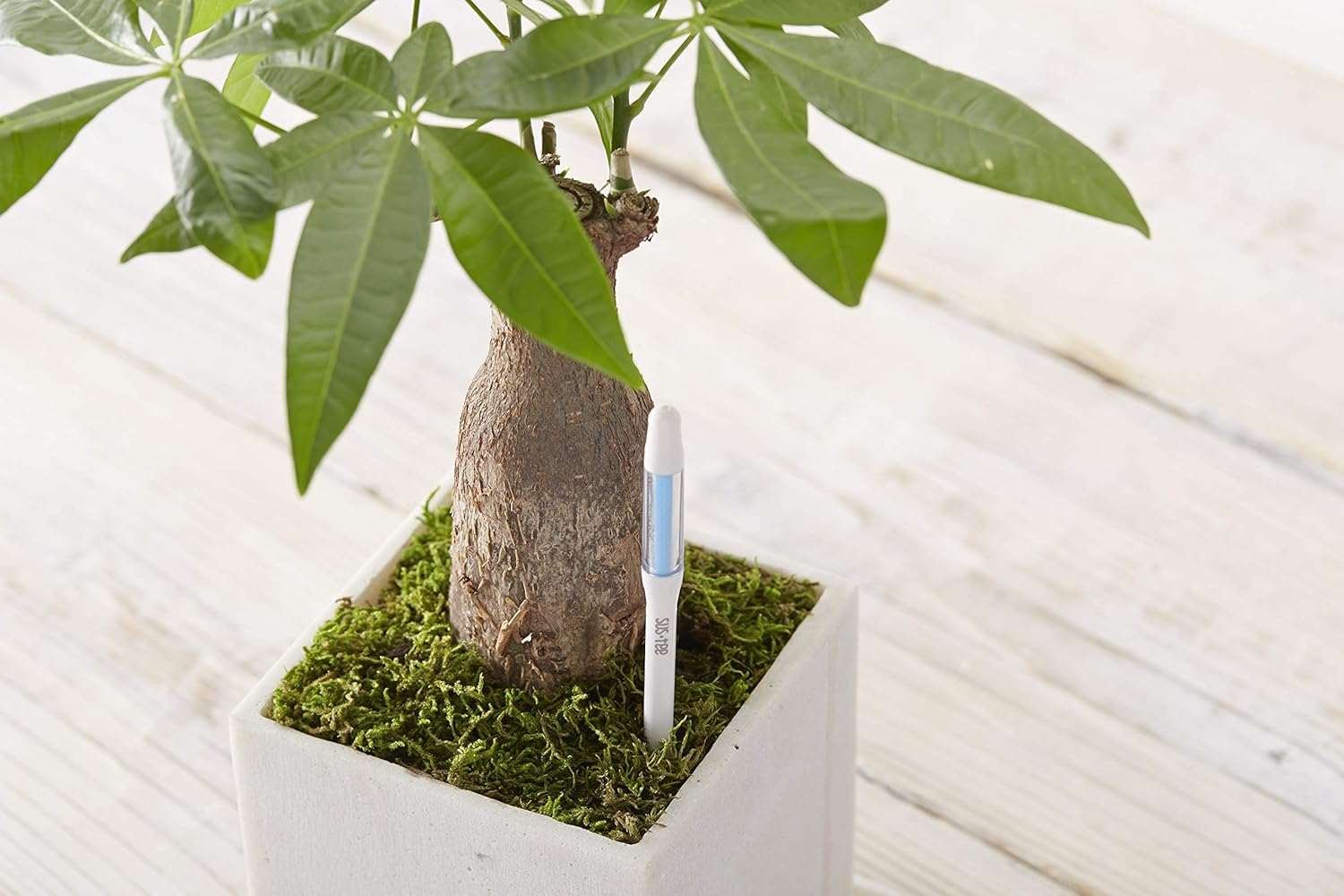
The Sustee Aquameter Set comes in a pack of five small sticks, each measuring 0.4 x 0.3 x 4.7 inches. They are made specifically for smaller pots but can work across a variety of plant species and soil types, including akadama soil, peat moss, bark, coco peat, and even hydroponic systems.
Key Features:
- Color-coded water indicator: White = water needed, Blue = adequately watered
- Leave-in design: Can remain in the soil permanently
- Refillable core: Each stick lasts 6–9 months; easy to replace
- Minimalistic aesthetics: Japanese design awards including Reddot, Japan Good Design, and Germany Design for Asia
- Versatility: Works with almost all soil types and plant species
- Maintenance-free: No batteries required
Pros & Cons of Sustee Aquameter Plant Soil Moisture Sensor
| Pros | Cons |
|---|---|
 Accurate and easy-to-read color indicators Accurate and easy-to-read color indicators |
 Small size may not be suitable for larger pots Small size may not be suitable for larger pots |
| Leave-in design allows continuous monitoring |
Color change may not be significant enough for some users |
| Minimalistic and attractive design |
One stick may fail to indicate accurately in rare cases |
| Refillable core ensures long-term use |
Replacement cores require purchase after 6–9 months |
Why Plant Soil Moisture Sensor Matters?
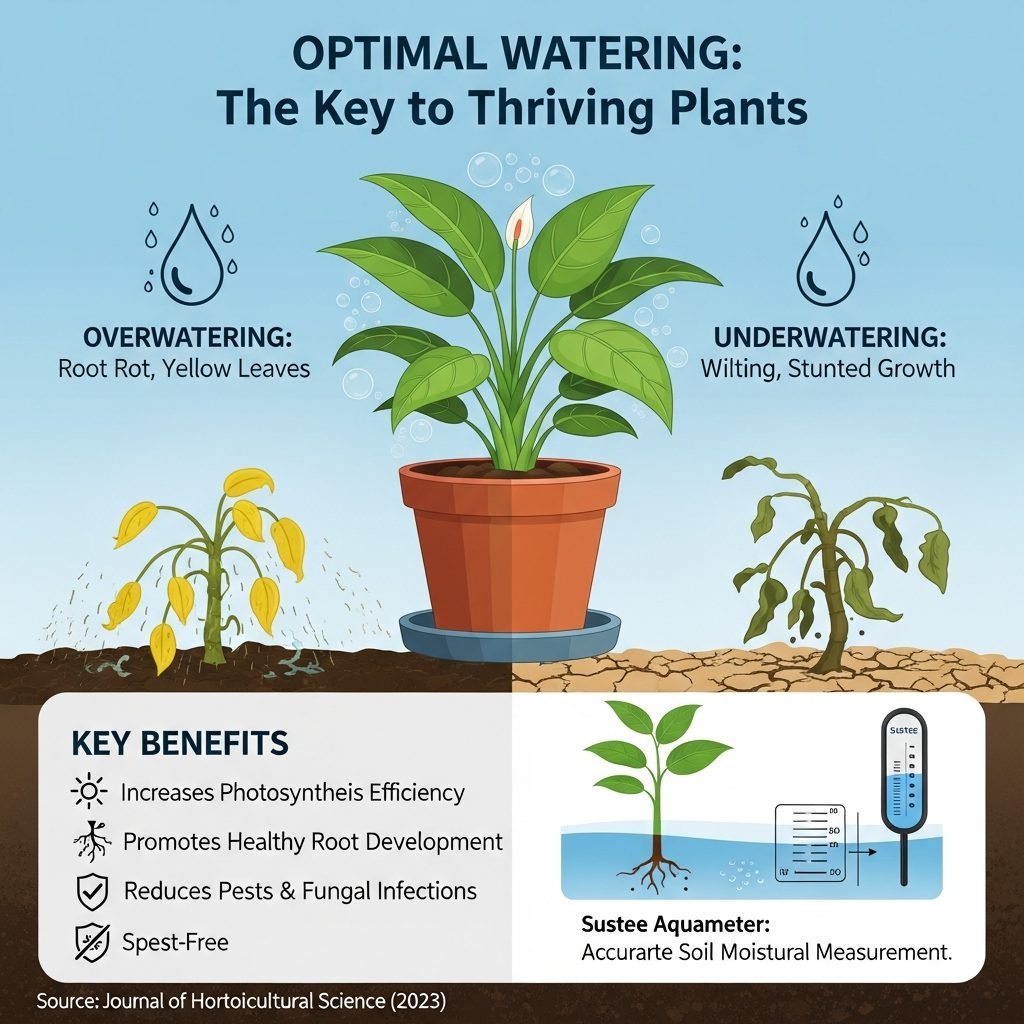
Proper watering is one of the most critical factors in plant health. Both overwatering and underwatering can stress plants, lead to root rot, or stunt growth. According to studies from the Journal of Horticultural Science (2023), maintaining optimal soil moisture levels increases photosynthesis efficiency, promotes healthy root development, and reduces pest and fungal infections in houseplants.
Soil moisture sensors like the Sustee Aquameter allow gardeners to measure the water content in soil accurately, instead of relying on guesswork or finger tests. By keeping plants in the optimal moisture range, you improve plant health, longevity, and flowering performance.
Indoor plant care is a growing global trend, with over 87% of urban households reporting an increase in houseplants in 2023 (Statista, 2024).
Research by Tokyo University of Agriculture shows that using soil moisture sensors reduces watering errors by up to 60% for small potted plants.
The Sustee Aquameter has won multiple international design awards, including the Red Dot Design Award, Germany Design for Asia Award, and Japan Good Designs Award, highlighting both functionality and aesthetics.
These facts indicate that soil moisture monitoring is becoming an essential practice for modern gardeners, especially in urban settings where overwatering or underwatering is common.
My Experience with Sustee Aquameter Plant Soil Moisture Sensor
Before discovering the Sustee Aquameter, my relationship with plants was chaotic. I often overwatered succulents and underwatered tropical plants, which caused unnecessary stress for both me and my plants. Enter the Sustee Aquameter—a true lifesaver.
I use the small-sized Sustee sticks for my potted succulents and bonsai, inserting the meter at the base of the soil. The setup is straightforward:
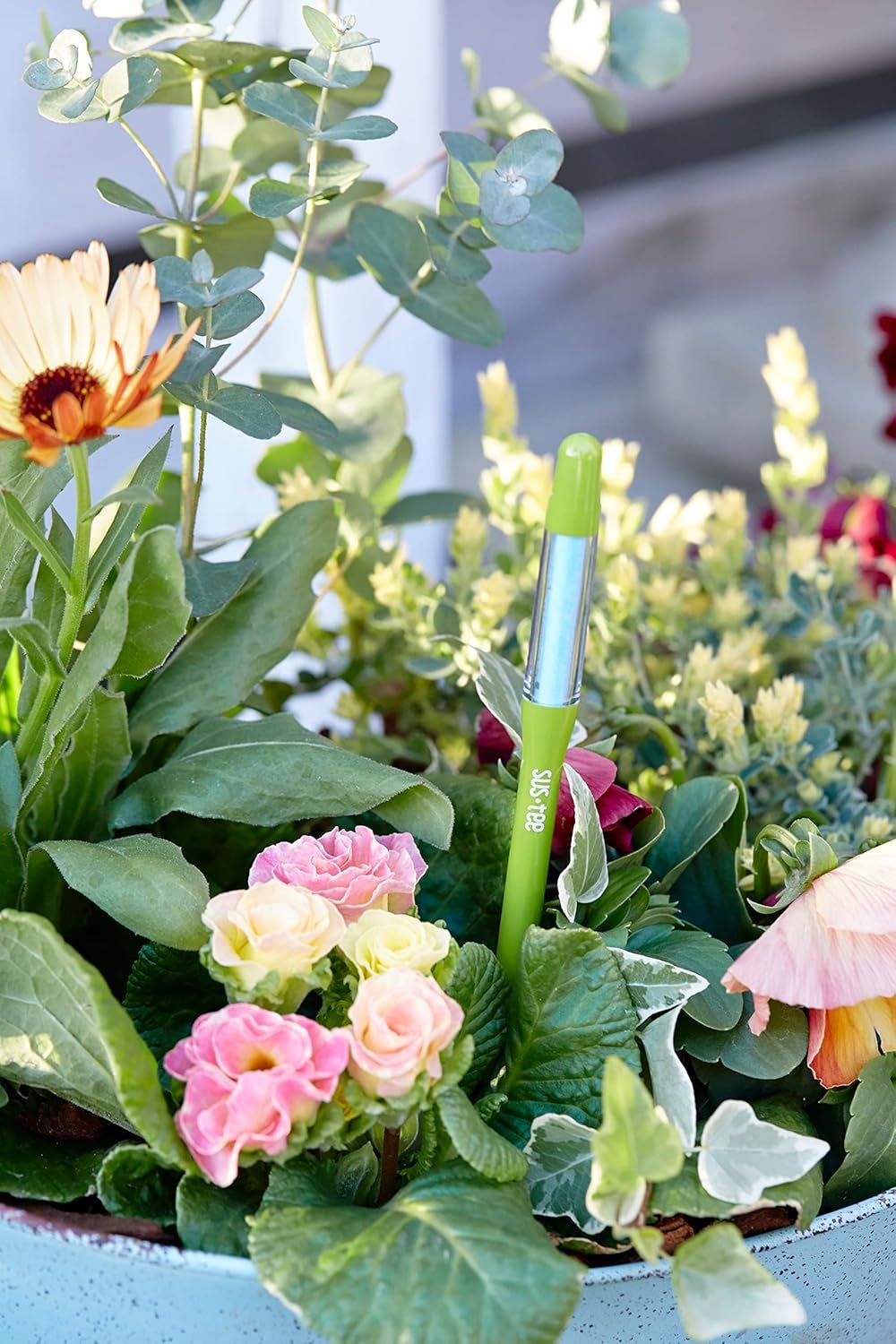
- Insert the stick vertically into the soil, ensuring the Ω mark is fully covered.
- Observe the color change: white means water needed, blue means adequately watered.
- Replace the core every 6–9 months to maintain accuracy.
The first time I used it, I was amazed by how quickly and accurately it indicated soil moisture. Within 3 minutes, my small pots showed the correct reading, helping me water precisely and avoid overwatering. Over time, my plants have thrived, showing healthier leaves, stronger stems, and even better flowering.
Performance of Sustee Aquameter Plant Soil Moisture Sensor
The Sustee Aquameter performs exceptionally well across various soil types and plants. Key highlights:
- Works in akadama soil, peat moss, bark, and hydroponic systems
- Color change occurs within 3 minutes for small pots, 15 minutes for medium, and 25 minutes for large pots
- Durable: Each stick lasts 6–9 months with proper care
- Maintenance-free: No batteries or complicated calibration required
Some minor limitations: the color change from white to blue may not be pronounced enough for some users, and occasionally one stick may fail to indicate accurately. Despite this, the overall performance is reliable and consistent.
Practical Tips for Using Sustee Aquameter
Based on my experience — and what I read from manufacturer instructions and user feedback — here are a few tips to get the most out of SUSTEE:
- Use appropriate stick size: Small sticks for pots 2–3 inches, medium for larger pots.
- Insert correctly: Ensure the Ω mark is fully covered and the transpiration opening is visible.
- Initial watering: Water generously the first time you use Sustee to calibrate it.
- Observe trends: Keep track of how long it takes for the soil to turn white again to understand your plant’s water needs.
- Replace cores: After 6–9 months, replace the refillable core for accurate readings.
- Blend with decor: The minimalist design allows it to complement your plant arrangement seamlessly.
Comparisons with Alternatives Plant Soil Moisture Sensor
Compared to traditional moisture meters or DIY methods:
| Feature | Sustee Aquameter | Traditional Moisture Meter | Finger Test |
|---|---|---|---|
| Continuous Monitoring | Leave-in device | Must remove after use | Manual, inaccurate |
| Ease of Use | Simple color code | Requires reading scale | Guesswork |
| Maintenance-Free | No batteries | Requires battery or calibration | None |
| Aesthetic | Minimal, modern | Bulky, not stylish | Invisible |
| Versatility | Works with many soils | Limited soil types | Only for finger-accessible soil |
| Price | Medium | Variable | Free |
Final Recommendations
For anyone serious about plant care—whether beginners or experienced gardeners—the Sustee Aquameter is a must-have tool. It removes guesswork from watering, helps extend the life of your plants, and blends elegantly into your indoor garden.
If you have small to medium potted plants, succulents, or bonsai, the set of 5 sticks is perfect. While the initial investment may seem high, the convenience, accuracy, and aesthetics justify the cost. Replacing the cores every 6–9 months ensures continued functionality and precision.


