
The European Commission has launched a major funding package worth €5.2 billion, drawn from revenues under the EU Emissions Trading System (EU ETS). It aims to support clean transition technologies and push Europe toward a low-carbon future.
The EU package, under the Innovation Fund, has three funding tracks that opened together:
- Net-zero technology projects
- Hydrogen production
- Industrial heat decarbonization
This shows a coordinated effort across different sectors. The EU wants to decarbonize heavy industries and aims to promote renewable energy and boost clean-technology innovation in member states.
What Is the Innovation Fund?
The funding is part of the EU Innovation Fund. This is the EU’s main tool for backing net-zero and low-carbon technologies. The Fund gets money from the EU ETS. Companies pay for carbon allowances, also known as carbon credits. Then, the proceeds go into clean-tech projects.
From 2020 to 2030, the Innovation Fund aims to mobilise up to €40 billion, assuming a carbon price of €75 per tonne. So the new €5.2 billion allocation is a big part of the Fund’s 10-year budget. This shows the EU’s strong commitment to becoming climate-neutral.
The Fund backs many technologies. These include renewable energy, energy storage, industrial decarbonisation, carbon capture, green mobility, and clean buildings. It also supports unique projects that are too risky for private investors on their own.
The Three Pillars: Net-Zero, Hydrogen, and Industrial Heat
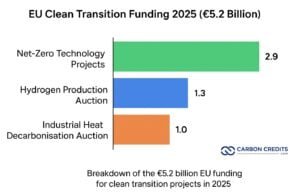
According to the Commission’s “Calls for Proposals” page, the €5.2 billion is split into three parts: a net-zero technology fund, a hydrogen auction, and a heat-decarbonization auction.
- €2.9 billion — for the 2025 Net-Zero Technologies Call (grant funding)
- €1.3 billion — for the third hydrogen auction under the European Hydrogen Bank
- €1.0 billion — for the first industrial process-heat decarbonisation auction under the Industrial Decarbonisation Bank
This structure takes a broad approach. It promotes clean technologies, enables green fuels, and targets a tough area to decarbonize: industrial heat. The EC states:
“Together, these opportunities mark a major step forward in achieving the EU’s climate and energy objectives by 2030 and climate neutrality by 2050. They will also significantly contribute to progress on the clean transition and deliver the Clean Industrial Deal, boosting the competitiveness and resilience of European industry.”
What the €2.9 Billion Net-Zero Funding Covers
On November 3, 2025, the Commission announced that the €2.9 billion grant will support 61 net-zero technology projects across Europe. The projects span 19 different industrial sectors and take place in 18 European countries.
The targeted sectors are:
- Energy-intensive industries (like steel, cement, and chemicals)
- Renewable energy and energy storage
- Clean mobility
- Net-zero buildings
- Cleantech manufacturing
- Industrial carbon management
The Commission says these projects will reduce 221 million tonnes of CO₂ equivalent in their first ten years. That is roughly equal to taking nearly 10 million average European cars off the road for a year.
The call attracted 359 applications, requesting a total of €21.7 billion — more than nine times the available budget. This strong interest shows high demand for clean tech in Europe, even when support is limited.
The 61 projects are now moving into the grant agreement preparation phase with CINEA, the European Climate, Infrastructure and Environment Executive Agency. Contracts are expected to be finalised in the first half of 2026.
Hydrogen Auction: Betting on Clean Fuel Supply
The second pillar is a €1.3 billion auction under the European Hydrogen Bank. This auction supports renewable hydrogen production. It is key for heavy industry, shipping, aviation, and other hard-to-electrify sectors.
For the first time in this auction, low-carbon hydrogen made by electrolysis can join renewable hydrogen. This expanded eligibility shows the Commission’s practical approach.
Renewable hydrogen is the long-term goal, but low-carbon hydrogen can meet immediate needs. It also helps industries transition more smoothly.
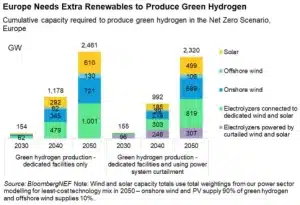
By subsidising the gap between production costs and market price, the auction helps make hydrogen more competitive with fossil fuels. The expected outcome: a growing supply of clean hydrogen, enabling industries to switch away from natural gas and oil.
The EU views hydrogen as key to its clean energy shift. This is especially true for heavy industries and transport sectors that are hard to electrify.
Industrial Heat: Targeting a Hard-to-Decarbonize Sector
The third funding track allocates €1.0 billion for an auction through the Industrial Decarbonisation Bank. It aims to decarbonise industrial process heat. Long-term industrial heat is tough to reduce. Factories often use fossil fuels for high-temperature processes.
The auction supports innovative technologies like heat pumps, electric boilers, and induction heating. It also includes other renewable or electricity-based heating solutions. It may also support renewable heat sources such as solar thermal or geothermal, where applicable.
The EU plans to offer dedicated funding for industrial heat. This will help energy-intensive industries cut emissions and stay competitive. The program welcomes many sectors, including heavy manufacturing and smaller to medium-sized factories. This creates a chance for wide impact throughout Europe.
Why Now? Timing and Climate Ambitions
The new funding package arrives as Europe seeks to meet its climate goals under the European Green Deal. The EU Innovation Fund is key to this effort. It offers money for new, hard-to-commercialize clean technologies throughout the continent.
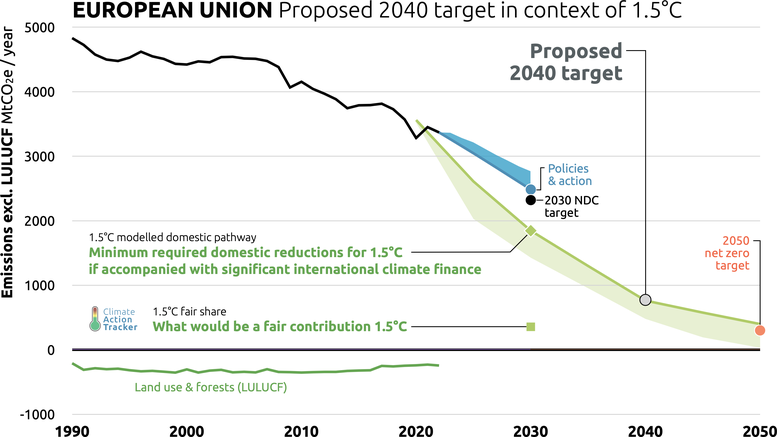
The size and scope of the €5.2 billion package underline the EU’s commitment. The Innovation Fund aims to raise up to €40 billion from 2020 to 2030. This recent funding round is a key step forward.
The program also helps balance climate ambitions with economic competitiveness. By supporting emerging technologies and clean energy supply chains, the EU aims to reduce dependence on imports, create jobs, and secure its industrial future.
The Source of Funding: EU ETS
The EU ETS requires companies in power, industry, aviation and now shipping to pay for their greenhouse‑gas emissions. Every allowance — which allows a company emit one tonne of CO₂ — is auctioned under a cap that shrinks each year to cut total emissions.
The money raised from selling these allowances helps fund the Innovation Fund. Through this system, polluters pay for emissions while those revenues are reinvested to support clean energy projects, renewable fuels, and low‑carbon industry across Europe.
What to Watch in 2026 and Beyond
The 61 selected net-zero projects are expected to sign grant agreements and begin implementation in 2026. At the same time, the auctions for hydrogen and industrial heat are open for new bids, inviting project proposals across the EU.
If successful, the combined effort could accelerate Europe’s clean energy transition, reduce emissions in heavy industry, and build a stronger industrial base for green technologies. It can also help Europe secure future energy and industry supply chains, covering clean hydrogen, renewable energy systems, low-carbon manufacturing, and carbon capture.
The €5.2 billion package is not the final word. The EU Innovation Fund is active through 2030. As projects mature and new rounds of funding open, the scale and ambition may grow. Success will depend not only on grant money but also on efficient implementation, robust policy support, and market adaptation.
For now, the package marks a clear and coordinated move by the European Commission. It backs innovation, promoting clean energy, and betting on technologies that can transform Europe’s industrial and energy landscape.
- READ MORE: India-Europe Hydrogen Highway: AM Green and Rotterdam Join Forces to Drive $1B Green Fuel Trade
The post EU Unlocks €5.2B for Clean-Tech Innovation: Hydrogen, Heat, and Net-Zero Projects appeared first on Carbon Credits.


