

Congestion pricing — the idea that drivers should pay to enter the most crowded parts of a city — is often portrayed as a radical new experiment but in reality, it is the product of more than a century of thinking about how to manage scarce urban space, dating back to the dawn of the automobile age.
The concept first appeared in economic theory in the early 20th century. British economist Arthur Pigou argued in the 1920s that road users impose hidden “social costs” on everyone else by creating congestion, delays, pollution, and accidents. If those costs were reflected in a price, Pigou reasoned, travelers would make more efficient choices about when, where, and how to drive.
For decades, cities struggled with exploding car ownership after World War II, responding with massive highway construction rather than demand management. The first real-world tests of congestion pricing emerged in Singapore in 1975, when the city-state introduced a paper-based licensing system to restrict vehicles entering its downtown. The program cut traffic almost overnight and became a global case study.
London followed in 2003 with a bold cordon charge around its central business district, using cameras and automatic number plate recognition. Traffic volumes dropped, bus speeds improved, and billions were reinvested into public transit. Stockholm’s 2006 pilot — initially unpopular — was later approved in a referendum after residents experienced cleaner air and faster commutes.
New York’s path has been longer and more contentious. Proposals date back to the 1970s, but political resistance, concerns about equity, and regional disputes stalled progress for decades. Only in the 2010s, amid crumbling subway infrastructure and chronic gridlock, did congestion pricing gain sustained momentum. The program approved for Manhattan’s core is not an overnight experiment, but the latest chapter in a global effort to treat road space as a limited public resource — one that, like electricity or water, must be managed wisely to keep a great city moving.
Reduction in Traffic Volume
Early numbers show that vehicle entries into the congestion zone have dropped by roughly 17% during peak hours. That’s tens of thousands fewer cars each weekday. Before the program, average vehicle speeds in Midtown often crawled along at just five miles per hour. Post-implementation, speeds have improved to almost seven miles per hour — and while still not racetrack levels a 40% improvement is enough to keep delivery trucks and buses moving more efficiently.
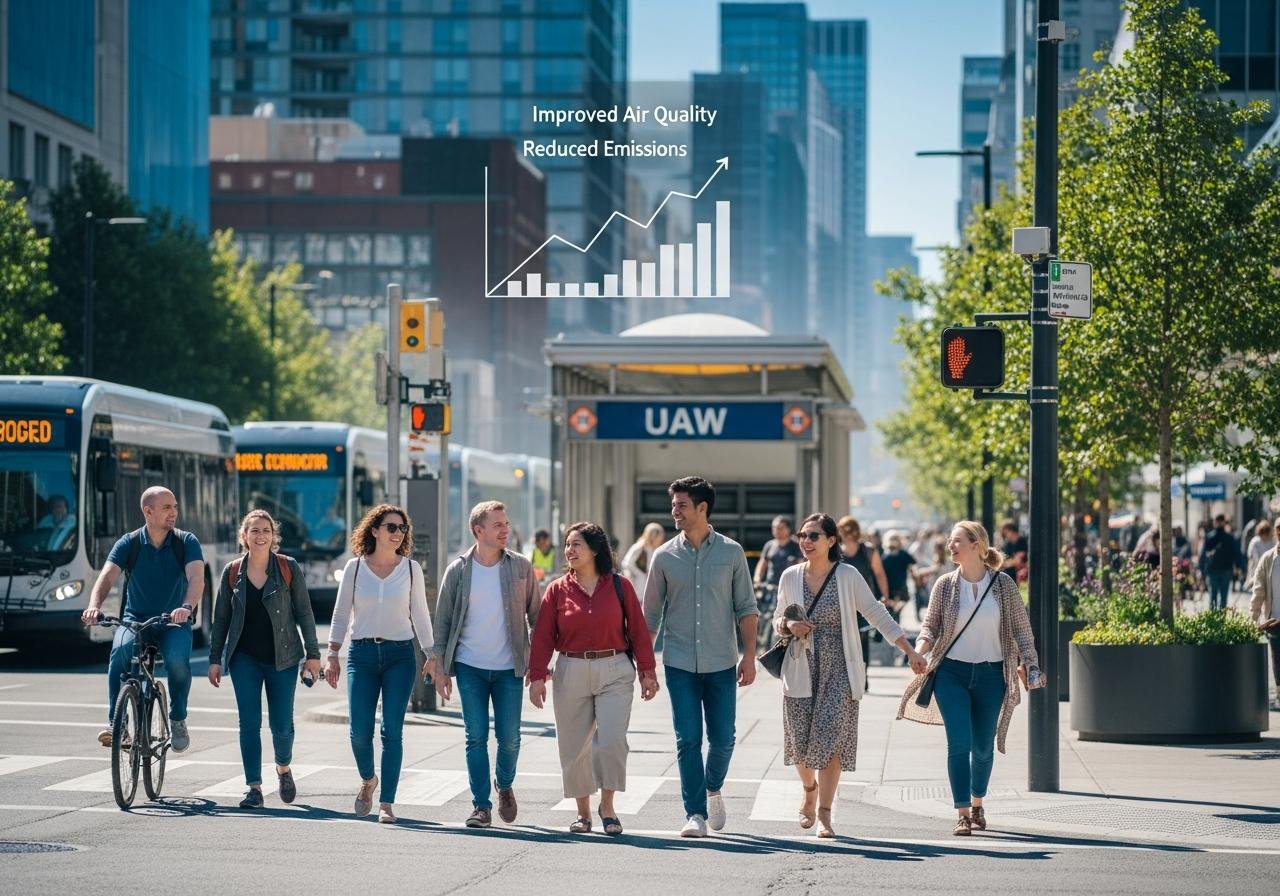
Rush hour congestion has eased considerably, and emergency services are reporting faster response times in key areas. With fewer cars clogging intersections, even cyclists and pedestrians are experiencing a safer, calmer cityscape.
Environmental Impact
One of the clearest benefits has been the air New Yorkers are breathing. Early air monitoring data suggests a drop in nitrogen dioxide levels of about 9% within the pricing zone. Carbon dioxide emissions from vehicles have also declined, aligning neatly with the city’s longer-term climate goals.
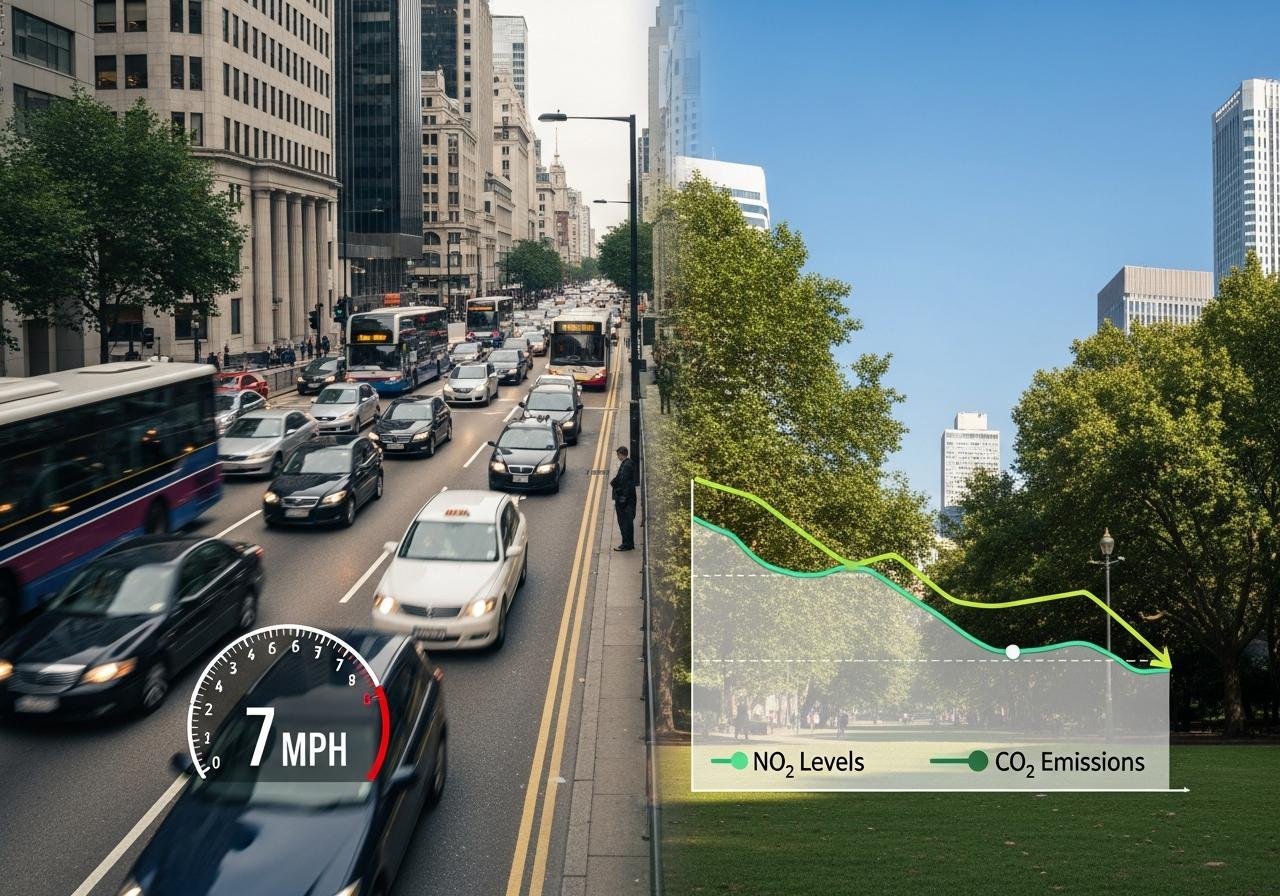
Reducing traffic has also cut down on idling, a surprisingly stubborn source of urban emissions. With vehicles spending less time stuck in place, fuel consumption has dropped, multiplying the environmental gains over time.
Economic Benefits and Revenue Generation
The city’s Metropolitan Transportation Authority (MTA) estimates that congestion pricing will bring in roughly $1 billion annually. That money, by law, is dedicated to improving public transit — from upgrading subway signals to electrifying bus fleets. The inflow of funds has already supported pilot projects in sustainable transit and green job creation.
Local businesses, once fearful that fewer cars would mean fewer customers, have found the opposite in many cases. With improved street flow and more pedestrians, foot traffic in certain retail districts has risen slightly. Delivery efficiency has improved too — fewer delays mean lower costs for small businesses that depend on timely shipments.
Public Transportation Improvements
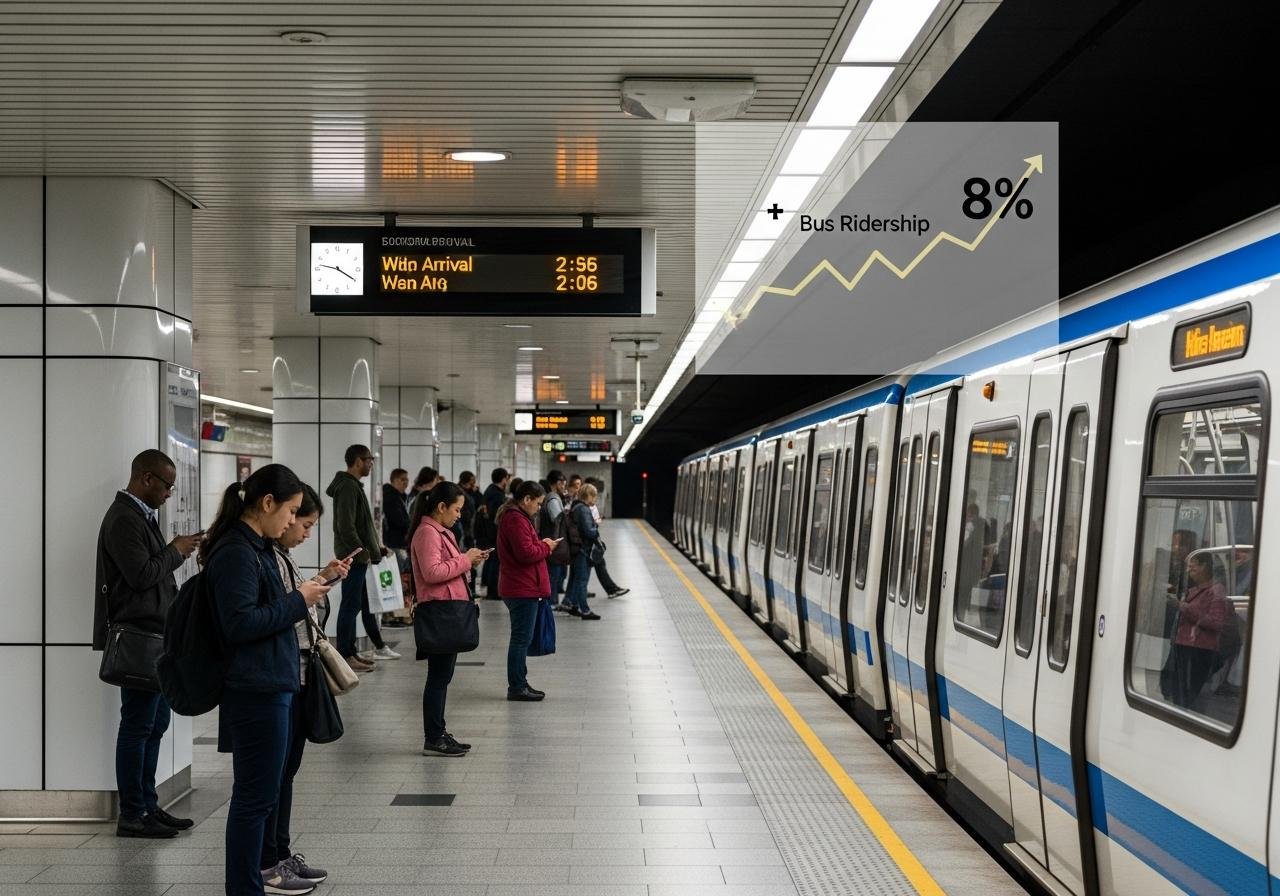
Congestion pricing isn’t just about discouraging driving; it’s about making not driving more appealing. Revenue from the program is boosting public transportation in tangible ways: modernized subway stations, cleaner trains, and more accessible platforms. Some of the earliest gains include increased bus reliability — the newfound consistency has helped bus ridership rise by about 8% since the toll’s launch.
Riders are also noticing the changes. Shorter wait times, more predictable service, and investments in accessibility upgrades are all signs that the system is reinvesting in its users. The MTA has announced further plans to expand electric bus routes and retrofit older infrastructure to meet sustainability standards.
Public Perception and Challenges
Of course, no major policy rolls out without a few bumps. Early reactions were mixed — commuters grumbled about new costs, while environmental advocates worried the fee wasn’t high enough to deter wealthier drivers. Over time, though, public opinion has softened. Surveys now suggest that a narrow majority of New Yorkers support the program, especially those who rely on public transit daily.
Lessons Learned and Future Outlook
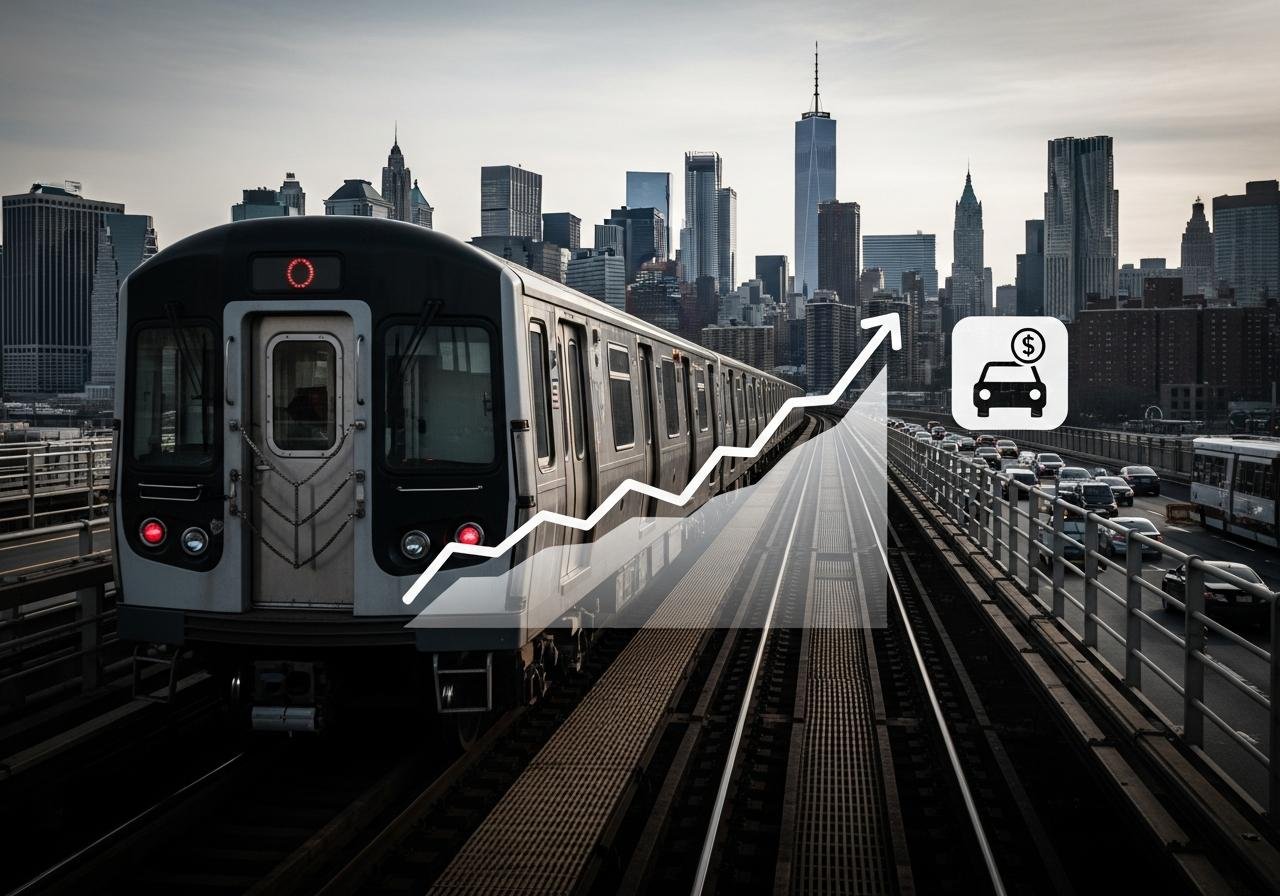
New York’s experience is showing the rest of the U.S. — and perhaps the world — that congestion pricing can work in a dense, car-heavy metropolis. The key lesson? Pair pricing with strong investments in public transportation and clear communication about benefits. Other cities like Los Angeles, San Francisco, and Boston are now studying the model closely.
Looking ahead, New York plans to expand its sustainability efforts by integrating congestion pricing data into future urban planning — from low-emission zones to smarter traffic signal systems. The city’s experiment is no longer just about driving; it’s about designing a future where movement and sustainability coexist seamlessly.
Frequently Asked Questions
What is congestion pricing in New York City?
Congestion pricing is a traffic management policy that charges vehicles a fee to enter Manhattan’s busiest areas during peak hours. The goal is to reduce traffic congestion, improve air quality, and generate funding for public transit.
When did New York’s congestion pricing program begin?
The program officially launched in 2024 after years of planning, regulatory approval, and infrastructure setup, including license-plate recognition and tolling systems.
Has congestion pricing actually reduced traffic?
Yes. Early data shows a measurable decline in vehicle entries into the congestion zone, especially during peak commuting hours. Traffic speeds have increased and gridlock has eased across several major corridors.
How has public transportation been affected?
Public transit has seen modest ridership gains, particularly on subways and buses serving Manhattan. Reduced traffic has also improved bus reliability and travel times.
What do the charts reveal about air quality and emissions?
The charts indicate lower vehicle emissions within the congestion zone, with reductions in nitrogen dioxide and particulate matter. This suggests tangible environmental and public-health benefits.
This article is for informational purposes only.
Reference: https://www.bloomberg.com/news/articles/2025-12-22/nyc-congestion-pricing-is-the-controversial-program-working
The post New York’s Congestion Pricing Is Working appeared first on Green.org.


