

Microsoft (MSFT Stock) has signed a new agreement with InPlanet to remove more than 28,500 tonnes of CO₂ between 2026 and 2028. It marks another major step forward for both tropical Enhanced Rock Weathering (ERW) and corporate-backed climate solutions.
InPlanet is pushing the boundaries of nature-based climate innovation. The company aims to remove gigatons of CO₂ from the atmosphere. At the same time, it works to restore tropical soils. As a result, it helps support healthier ecosystems and fight climate change.
Now, that mission has received powerful reinforcement.
Tropical Rock Weathering: Turning a Natural Process Into Scalable Climate Action
Rock weathering has always helped regulate Earth’s climate. Over time, rocks slowly react with CO₂ and remove it from the atmosphere. As a result, they help stabilize the planet’s temperature. Enhanced Rock Weathering speeds up this natural process. It works by spreading finely crushed silicate rock on farmland. Then, rain, heat, and soil microbes interact with the minerals. This way, CO₂ is captured and locked into more stable forms.
Dual Benefits: Climate and Agriculture
However, ERW does more than capture carbon. It also supports farmers. The added minerals improve soil fertility and reduce acidity. Moreover, they lower dependence on synthetic fertilizers. In addition, ERW helps build long-term soil resilience. This is especially important in tropical regions where weathering happens faster. In such places, ERW delivers climate and agricultural benefits together.
Over the past 24 months, it has demonstrated how this technique delivers real-world results. Farmlands treated with silicate rock powder showed clear improvements in soil health, reduced fertilizer use, and lower need for agricultural limestone. In this case as well, these outcomes directly support farmers while ensuring lasting climate benefits.
Brazil: The Perfect Climate for Scalable ERW
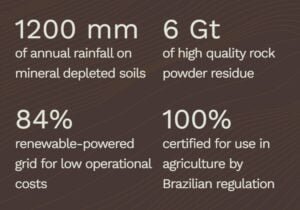
Today, InPlanet operates the largest ERW program in Brazil, covering more than 12,000 hectares of farmland, roughly equivalent to the size of San Francisco. With around 1200 mm of annual rainfall, nutrient-depleted agricultural soils, and immense agricultural capacity, Brazil provides one of the most promising landscapes on Earth for meaningful, high-quality carbon dioxide removal through weathering.
The country has a tropical climate, heavy rainfall, and vast farmland. Together, these conditions enable faster mineral weathering. Meanwhile, abundant basalt deposits support sustainable rock sourcing.
Also, Brazil’s 84% renewable-powered grid keeps operational emissions low. This strengthens the climate integrity of ERW projects. On top of that, ERW materials are fully certified for agricultural use in Brazil. Therefore, adoption becomes easier, faster, and more credible.
Setting a Global Benchmark With Verified ERW Credits
Trust is everything in carbon markets, and InPlanet has taken a major step toward building long-term confidence in ERW. In January, Isometric issued 235.53 independently verified ERW credits to InPlanet—the first verified Enhanced Weathering credits in the world. These credits were delivered to Adyen through ClimeFi and marked a turning point for the sector.
This achievement proves that strong science, rigorous monitoring, and robust verification are not only possible in ERW—they are already happening in the field. Isometric’s Enhanced Weathering Protocol incorporates leading academic insights, demanding MRV frameworks, and transparency to help push the broader CDR industry toward higher integrity standards.
Under the new Microsoft agreement, every credit will be issued through Isometric’s framework and listed on the Isometric Registry. In addition, anonymized project data will be shared through Cascade Climate’s ERW Data Quarry, supporting open scientific collaboration and helping accelerate knowledge-sharing across the global carbon removal community.
- ALSO READ: Microsoft and UNDO Partner for 15,000 Tons of Carbon Removal Using Enhanced Rock Weathering!
Microsoft Bolsters Its Position as the World’s Largest CDR Buyer
Microsoft continues to stand out as the single largest corporate buyer of carbon removal in the world. By 2025, the company had already contracted over 8.2 million tonnes of carbon removal, and its total commitments keep rising. Major purchases include 3.3 million tonnes from Stockholm Exergi, alongside major volumes across BECCS, biochar, ERW, and nature-based solutions. Reports also highlight its long-term engagement in forestry-based CDR, including major commitments like 18 million tonnes from Rubicon, illustrating its portfolio depth.
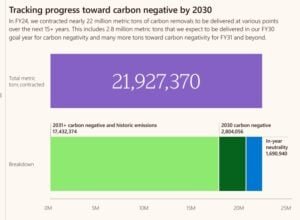
In 2024 alone, Microsoft secured commitments for nearly 22 million tonnes of carbon removal credits, surpassing the combined totals of all earlier years. This aggressive expansion aligns with its goal to become carbon negative by 2030, guided by a “do our best and remove the rest” philosophy. Significantly, the company is working to cut operational emissions while also backing technologies that remove unavoidable and legacy carbon.
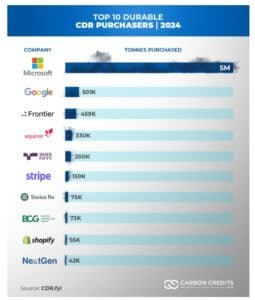
Furthermore, the rise of AI and data center energy demand has only sharpened its climate urgency. Rather than slowing sustainability progress, it is doubling down on reliable, scientifically credible climate solutions. Its investment in InPlanet reinforces trust in ERW as a viable, scalable pillar of global decarbonization.
Why This Deal Boosts Market Confidence
This agreement is more than a simple procurement deal. It reflects growing confidence in a technology that can transform agriculture, strengthen farmer resilience, and deliver measurable, long-term climate benefits. Moreover, it shows that tropical regions—often facing intense climate stress—can lead the way in carbon removal. It also underscores an important truth: credible climate action relies on rigorous science, transparency, innovation, and strong partnerships.
At the same time, ERW is gaining attention in the carbon market. In 2025, ERW credits typically ranged from $230 to $400 per tonne, reflecting their permanence, scientific rigor, and verification under trusted standards like Isometric and Puro.earth. Looking ahead, as supply scales, prices are expected to decline toward $100 per tonne by 2030, but quality and credibility will remain central.
Ultimately, InPlanet aims to remove gigatons of CO₂ while restoring tropical soils for future generations. With support from Microsoft, verified standards like Isometric, and growing field data, Enhanced Rock Weathering in the tropics is moving from promise to a proven, scalable climate solution.
- Microsoft (MSFT Stock) and Vaulted Deep Team Up to Unlock Almost 5M Ton of Carbon Removal from Organic Waste
- Microsoft (MSFT) Buys 28,900 Tonnes of CO₂ Removal from UNDO in Landmark Multi-Million-Dollar Deal
The post Microsoft Backs InPlanet’s Enhanced Rock Weathering Push to Remove 28,500 Tons of CO₂ in Brazil appeared first on Carbon Credits.


