
Plant diseases are one of the biggest challenges for gardeners, farmers, and greenhouse growers. Fungal and bacterial problems like powdery mildew, blight, leaf spot, and black spot can spread very fast, especially in humid and rainy conditions. Many growers want effective disease control, but they also want products that are safe for food crops, pets, pollinators, and the environment.
Earth’s Ally Disease Control Concentrate is marketed as a natural, food-grade, and organic-approved fungicide and bactericide. It promises to control many common plant diseases without harsh chemicals or toxic residues. In this review, I will share a detailed analysis of this product, explain the science behind it, discuss current disease trends, and include real-world performance and practical tips based on experience.
What Is Earth’s Ally Disease Control Concentrate?
Earth’s Ally Disease Control Concentrate is a liquid fungicide and bactericide designed for use on vegetables, fruits, flowers, ornamentals, trees, shrubs, turf, and houseplants. It comes in a 32 oz (1 quart) concentrated form, which is diluted with water before application.
The product uses citric acid as its active ingredient, combined with other food-grade and stabilizing compounds. It is OMRI Listed, which means it is approved for use in organic gardening. Unlike traditional chemical fungicides such as copper or synthetic systemic fungicides, Earth’s Ally works mainly as a contact treatment and preventative spray.
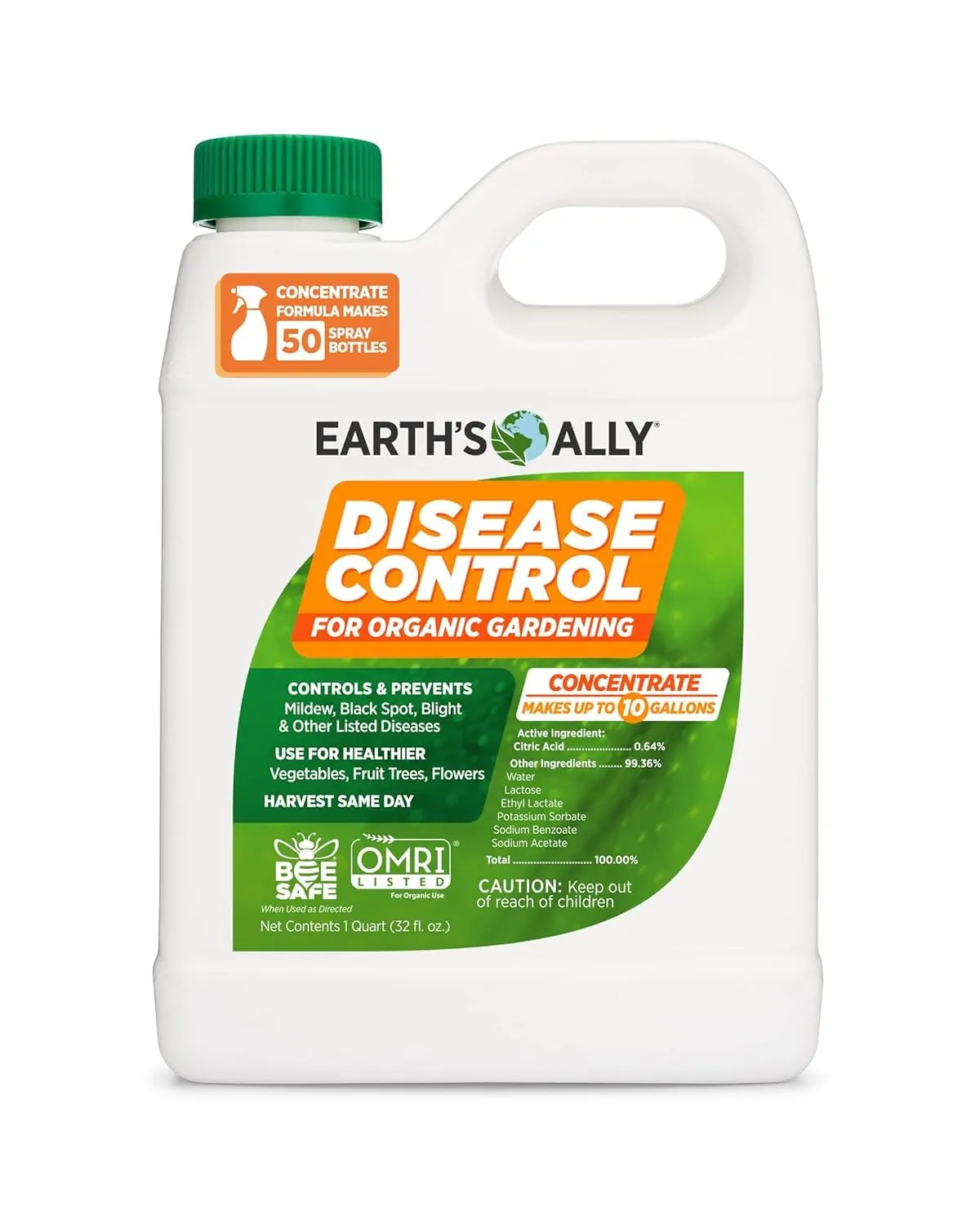
Earth’s Ally Disease Control is manufactured by Sarasota Green Group and made in the USA. The company focuses on producing bee-safe and environmentally responsible gardening products. Some key product details are given:
- Item Form: Liquid concentrate
- Net Volume: 1 quart (32 oz)
- Weight: 2.3 pounds
- Active Ingredient: Citric acid
- Dilution Rate: 6 tablespoons per 1 gallon of water
- Coverage: Makes up to 10 gallons of ready-to-use spray
- Organic Status: OMRI Listed
- Safe Use: People, pets, pollinators, and edible crops (when used as directed)
The product can be used up to the day of harvest, which is a major advantage for food gardeners.
Pros & Cons of Earth’s Ally Disease Control Concentrate Fungicide
| Pros | Cons |
|---|---|
 OMRI Listed and approved for organic gardening OMRI Listed and approved for organic gardening |
 Can cause leaf burn if overdosed Can cause leaf burn if overdosed |
| Uses food-grade citric acid instead of harsh chemicals |
Requires careful dilution and testing before full use |
| Safe for vegetables, fruits, flowers, and ornamentals |
Not systemic, so repeat applications are needed |
| Bee-safe and pet-safe when used as directed |
Less effective on advanced or severe infections |
| Can be used up to the day of harvest |
Not rain-fast; rain within 24 hours reduces effectiveness |
| Concentrated formula makes up to 10 gallons |
Needs frequent spraying in humid conditions |
Why Concentrate Fungicide Matters?
Plant fungal diseases are becoming more common worldwide due to climate change, higher humidity, intensive farming, and reduced crop rotation. Warm temperatures combined with moisture create ideal conditions for fungal spores to spread rapidly. Traditional fungicides often contain copper, sulfur, or synthetic chemicals. While effective, they can:
- Accumulate in soil
- Harm beneficial microbes
- Cause resistance in pathogens
- Affect pollinators and aquatic life
Earth’s Ally matters because it offers a low-toxicity alternative that fits modern sustainable agriculture practices. Citric acid works by breaking down fungal cell membranes and lowering surface pH on plant leaves. Fungal spores do not survive well in acidic environments. When sprayed directly:
- It damages fungal spores on contact
- It prevents spores from germinating
- It disrupts bacterial growth
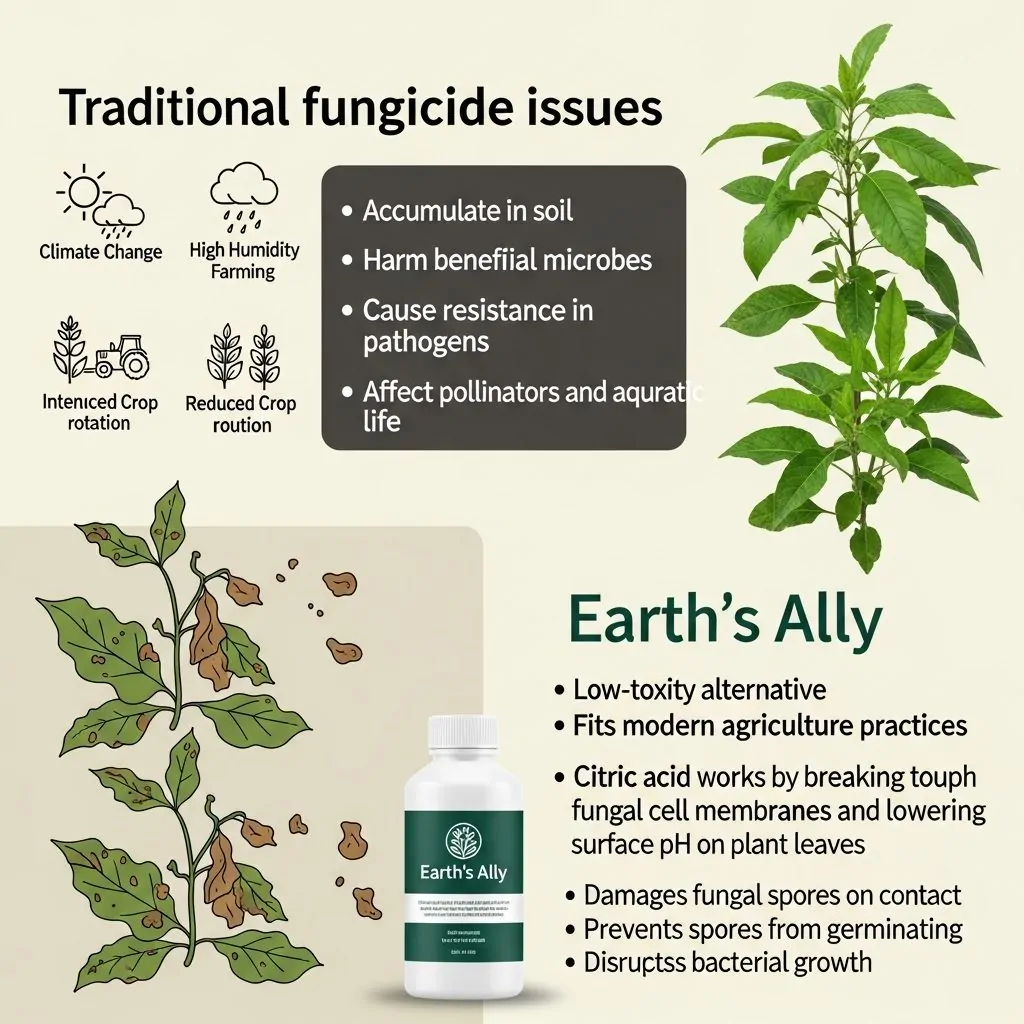
Because it works on contact, coverage is critical. This is why full leaf saturation is emphasized. These trends show why products like Earth’s Ally are gaining popularity among home gardeners, greenhouse operators, and organic growers.
According to global crop protection studies, fungal diseases cause 20–30% yield loss annually in major food crops.
Powdery mildew alone affects over 10,000 plant species worldwide, including vegetables, fruits, ornamentals, and turfgrass.
Organic farming acreage has increased by more than 50% globally over the last decade, increasing demand for OMRI-approved disease controls.
Research shows that contact fungicides are most effective when applied early, before infections become severe.
Studies on organic disease control indicate that regular preventive spraying can reduce fungal outbreaks by 60–80% in high-risk environments like greenhouses.
My Experience with Earth’s Ally Concentrate Fungicide
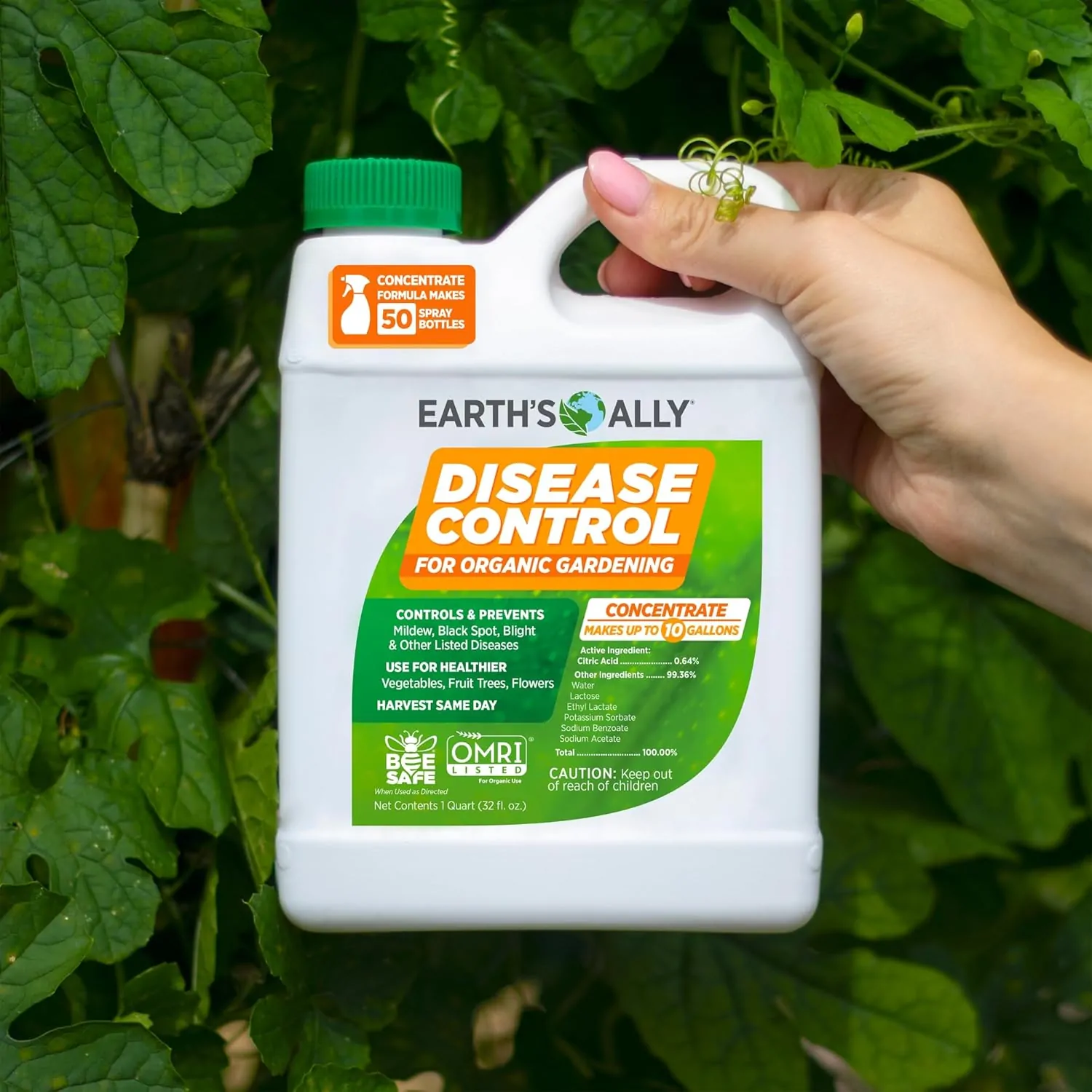
The most serious problem I faced was powdery mildew during humid weather. I also noticed early signs of leaf spot and fungal stress on some plants.. I tested Earth’s Ally Disease Control in multiple conditions:
- Vegetable beds (squash, cucumbers, tomatoes)
- Potted flowering plants
- Outdoor shrubs and fruit trees
- High-humidity conditions after extended rainfall
Application Method
- Mixed exactly as recommended
- Used a fine-mist sprayer
- Sprayed early morning or late evening
- Ensured full leaf coverage (top and underside)
- In heavily infected plants, I removed badly diseased leaves first, which is a critical step many growers ignore.
Performance of Earth’s Ally Disease Control Concentrate Fungicide
The overall performance of Earth’s Ally Disease Control Concentrate depends strongly on how and when it is applied. Because it is a contact fungicide, it works best when sprayed at the early stage of disease. When used correctly, it shows fast and visible results, especially on fungal problems like powdery mildew.
One of the most noticeable performance features is its quick action. In cases of powdery mildew on vegetables and ornamental plants, the white fungal layer begins to break down within a short time after spraying. Leaves often regain their natural green color on the same day, which gives confidence that the product is actively working on the disease.
For more established diseases such as leaf spot, blight, and black spot, the performance is gradual but steady. Existing damage does not disappear, but the spread of disease slows down clearly. New growth appears healthier, cleaner, and mostly free from infection after one or two proper applications.
As a preventative treatment, Earth’s Ally performs very well when applied weekly. In gardens and greenhouses where humidity remains high, regular use helps stop fungal spores from settling and spreading. Plants treated on a schedule show fewer disease outbreaks compared to untreated plants in the same environment.
However, performance can drop if the product is overused or mixed too strongly. High concentration or spraying during hot sunlight can stress plants and cause leaf burn. This does not mean the product is weak, but it does mean it requires careful handling and correct dilution.
Another important performance factor is weather sensitivity. Because it does not penetrate plant tissues, rainfall within 24 hours can reduce its effectiveness. For best results, spraying should be done when dry weather is expected and leaves have enough time to absorb the treatment.
Overall, Earth’s Ally Disease Control delivers reliable and consistent performance for organic disease management. It may not last as long as chemical fungicides, but its fast action, safety, and plant-friendly nature make it a strong option for regular disease control.
Practical Tips for Earth’s Ally Fungicide
One negative experience reported by users involved leaf burn, which likely occurred due to over-application or spraying under stress conditions such as heat or drought.
- Always test spray first on a few leaves
- Do not exceed recommended dosage
- Spray early at the first sign of disease
- Remove badly infected leaves before spraying
- Ensure full leaf coverage, including undersides
- Avoid spraying before rainfall
- Repeat applications as directed
Comparisons with Alternatives Concentrate Fungicide
| Feature | Earth’s Ally Disease Control | Copper Fungicide | Sulfur Fungicide | Synthetic Systemic Fungicide |
|---|---|---|---|---|
| Active Ingredient Type | Food-grade citric acid | Copper compounds | Sulfur | Synthetic chemicals |
| Organic Gardening Approved | Yes (OMRI Listed) | Limited / regulated use | Yes | No |
| Residue on Plants & Soil | No harmful residue | Can accumulate in soil | Minimal residue | Chemical residue possible |
| Application Frequency | Every 5–7 days | Every 7–14 days | Every 7–10 days | Longer-lasting, fewer sprays |
Final Recommendations
Earth’s Ally Disease Control Concentrate is a strong choice for organic gardeners, home growers, and environmentally conscious farmers. It works best as a preventive or early-stage treatment, especially for powdery mildew.
However, it is not a miracle cure. Proper dilution, timing, and testing are essential. Users who spray without testing or exceed recommended rates may experience plant stress or damage. Best For:
- Organic gardeners
- Vegetable and fruit growers
- Greenhouses and high-humidity areas
- Preventive disease programs
Not Ideal For:
- Severe late-stage infections
- Growers unwilling to follow spray instructions
- Situations requiring long residual control
In conclusion, Earth’s Ally Disease Control is an effective, safer-than-chemical fungicide when used correctly. With careful application, it can be a valuable part of a sustainable plant disease management program.


