
Not long ago, the idea of a laser weeder was the stuff of science fiction.
However, like many things tech, development often progresses in leaps and bounds.
WHY IT MATTERS: Killing weeds with a laser may be of interest to growers wanting to limit herbicide use on their crops.
Artificial intelligence has been a key to acceleration.
“LaserWeeder is an AI robot,” Paul Mikesell, chief executive officer and founder of Carbon Robotics, said at Agritechnica 2025 in Hanover, Germany.
How high-powered, you ask?
Each liquid-cooled module has two NVDIA GPUs (graphics processing units) to identify weeds, and two lasers emit a 240-watt beam to zap each weed it identifies. Each module is also equipped with 20 LED lights and three high resolution cameras.
In case you’re wondering how powerful a 240W laser is, it only takes a 30 to 60W laser to engrave titanium.
That may sound like overkill, but the higher wattage allows LaserWeeder to work faster in the field.
Speed is relative, though.
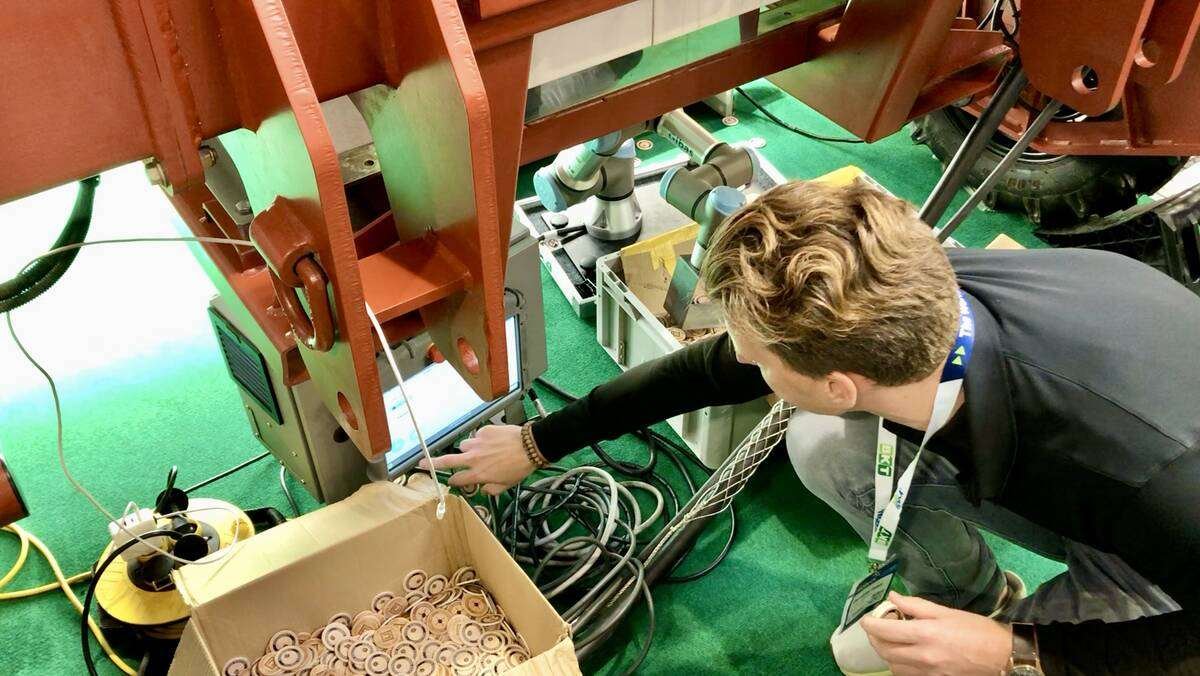
To work effectively, field travel is limited to about three km/h. An adaptive speed control kit controls the tractor speed based on weed pressure and weed size.
While the LaserWeeder is a pull-type implement, an autonomy kit for tractors is available as an option.
“Our Carbon ATK autonomy tractor kit plugs into a tractor so you can get an entire autonomous laser weeding solution,” said Mikesell.
The LaserWeeder’s modular design offers five options, ranging from three to 16 modules, depending on crop type and row spacing.
An operator can adjust the location of each module and wheel spacing based on what works best for their field.
Mikesell said LaserWeeder works in about 100 crop types and can identify about the same number of weed species.
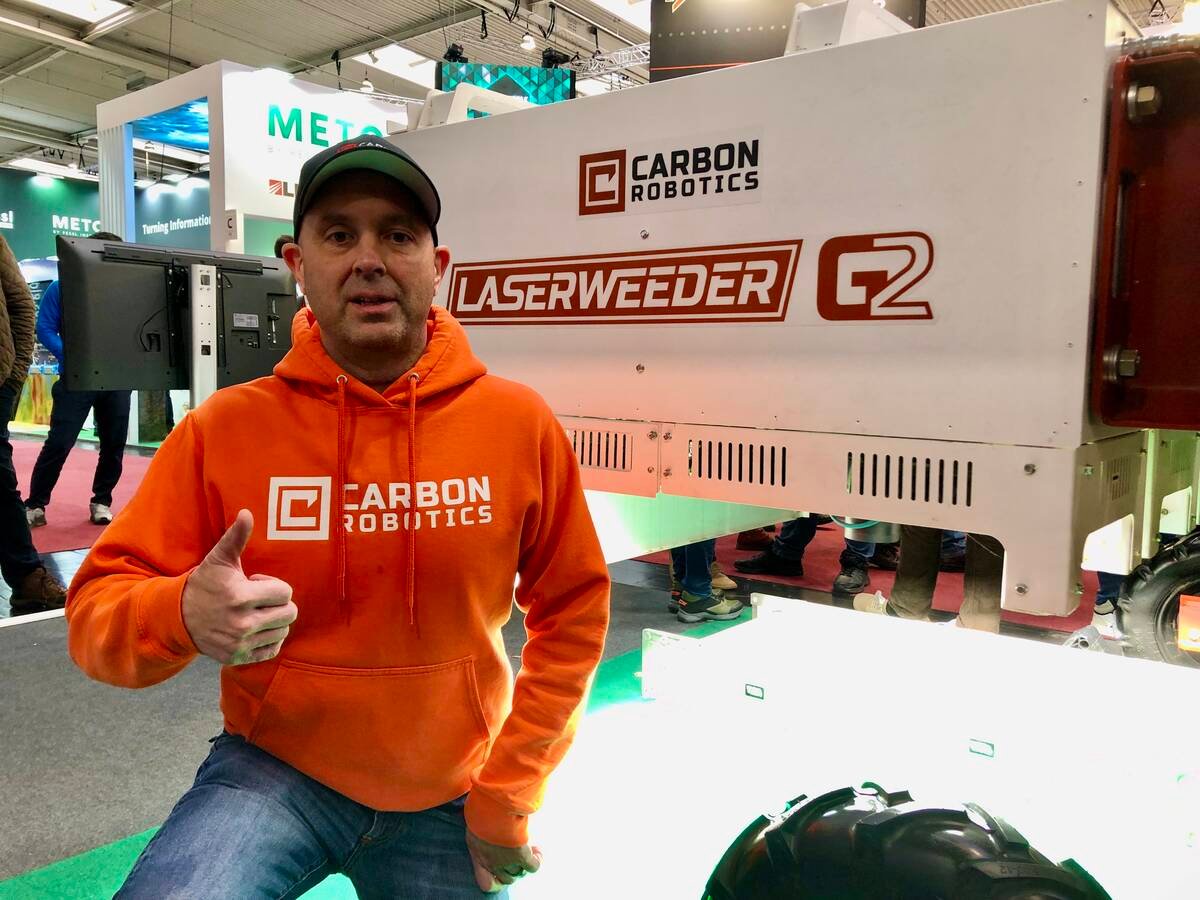
“There’s probably several hundred weed species and weed types that we’re identifying. We can bring on new crops in less than 24 hours, and most of the time, we can bring on a new crop into the crop models without even having to retrain,” he added.
The LaserWeeder has seen the bulk of its work in vegetable and herb crops, but the company has worked in organic corn and soybean crops and expects to do more.
Similar to conventional weed control, Mikesell said that the technology works best when weeds are small.
“Smaller weeds, when they’re just popping out, (it takes) less laser energy to kill them,” he said.
“Destroy them before they steal nutrients or they cause physical damage to the roots of your crops. So we always say earlier is better.”
The post Giant laser ag’s latest defence in war of the weeds appeared first on Farmtario.


