
By Virginia Houston, ASA Director of Government Affairs
It isn’t an exaggeration to say that trade is the lifeblood of U.S. soybean farmers. As the United States’ largest exported agricultural commodity, the ability to sell high-quality U.S. soybeans around the world is vital to the continued success of our industry.
It also isn’t an exaggeration to say that trade policy was front and center in 2025. Since the return of President Trump to the White House, there has been a renewed spotlight on the role of international trade in the domestic economy and its impact on U.S. consumers. Amid this debate on protectionism and free trade, U.S. soybean farmers have once again been in the spotlight.

Photo courtesy of North Dakota Soybean Growers Association
While it’s no secret how important the Chinese market is to U.S. soybean farmers, ASA has continued to advocate for increased market expansion and market access. Over the past several months, we have applauded the Trump administration for announcing renewed or new trade frameworks with multiple countries around the world, including many important to U.S. soy exports. These include markets such as Japan, the European Union, the United Kingdom, the Philippines, Vietnam, Cambodia and Malaysia.
It is important to note that these frameworks are still in the early stages of full trade agreements. Negotiations are ongoing with these trading partners, and ASA – alongside the U.S. Soybean Export Council – has been providing critical feedback to the administration about gains that could be realized for our industry with those partners. We continue to work with the administration and seek clarification on implementation and additional technical details.
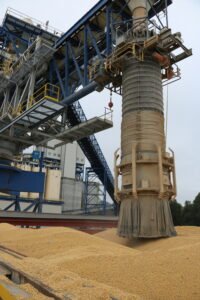
Photo courtesy of North Dakota Soybean Growers Association
However, many of those markets are already long-term, reliable customers for U.S. soybean farmers. The EU already stands as a top three trading partner, and Japan, Vietnam and the Philippines are consistently top export markets for U.S. soy. But what about new markets?
This fall, the government of Uzbekistan and ASA’s World Initiative for Soy in Human Health (WISHH) signed a Memorandum of Understanding to expand collaboration on developing U.S. soy value chains to advance trade between the U.S. and Uzbekistan. A leader in the Trans-Caspian region, government officials from Uzbekistan made multiple visits to Washington D.C. in the fall, seeking information from ASA, USDA and the private sector about their plans to increase imports of U.S. soybeans.
While there is still much work to be done, the groundwork for additional exports of U.S. soy into Uzbekistan has the potential to increase U.S. soy’s presence in the region and further diversify our export markets.
Trade policy will continue to be a rollercoaster over the next several years but rest assured – your ASA team in Washington D.C. is strapped in with our hands and feet inside the ride. There may be bumps in the road, but we are committed to working with our partners at USSEC, WISHH and the U.S. government to secure policy wins that result in long-term, stable market access for U.S. soybeans and soy products.
The post Advocating for Increased Market Expansion & Market Access appeared first on American Soybean Association.


