
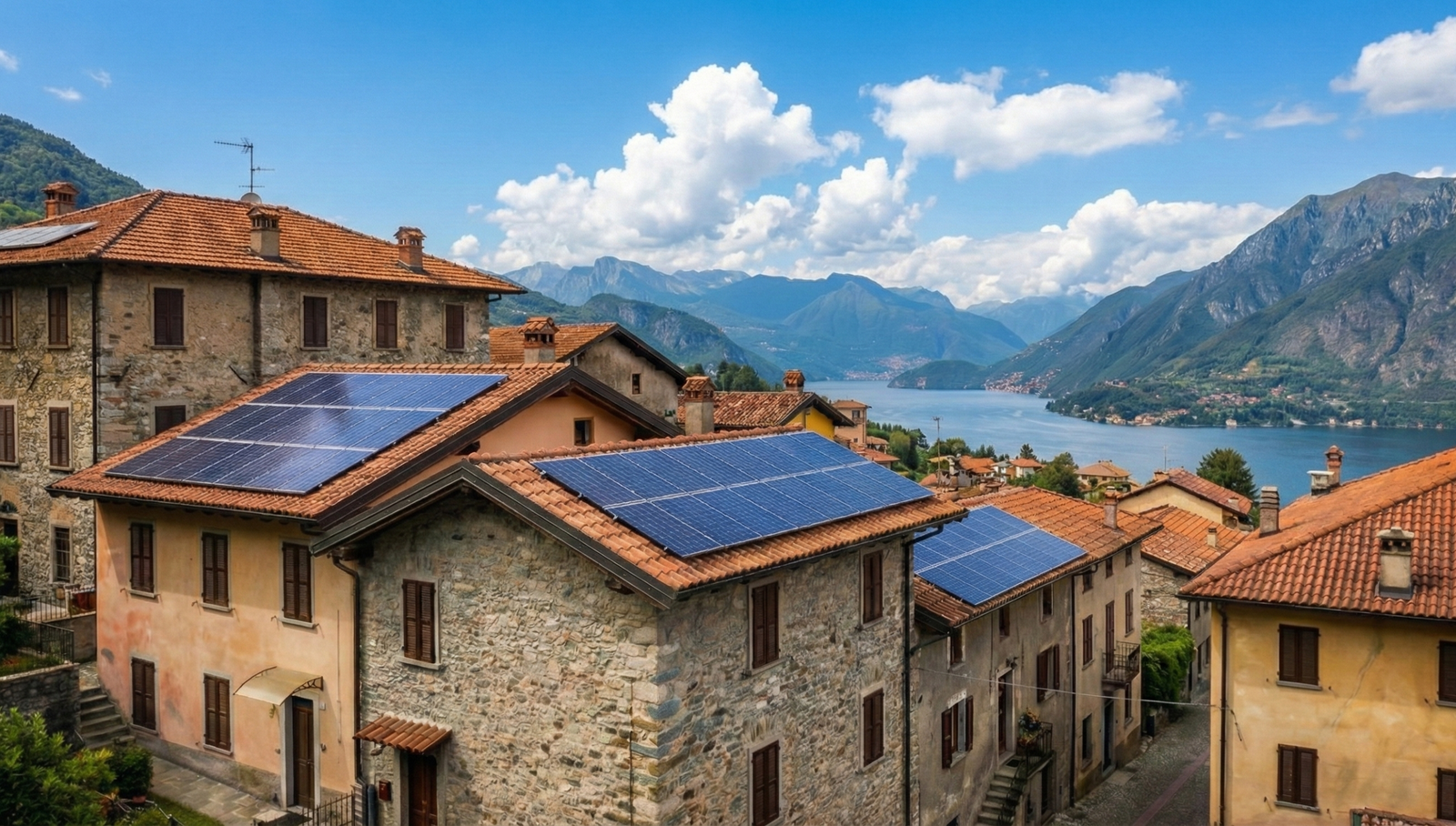
Last year, heat pumps outsold gas boilers in Germany. That one stat tells the story: the freight train of European electrification is gaining steam. The tech works. The savings pile up. And a growing number of people want the peace of mind that comes from knowing their home heating comes from clean, local electricity instead of polluting Russian gas. The major bottleneck left is distribution. It’s easy to shout from the rooftops about the upsides of electrification, but sooner or later, someone actually has to climb atop the shingles and install a solar panel or two.
In Europe, this buildout is the work of 100,000 small and mid-sized businesses already responsible for installing 85% of the continent’s residential solar panels, heat pumps, and home batteries. They’re developing the know-how to build even more, and attractive incentives have homeowners queuing up to buy. What’s holding back the next step function jump in residential electrification is financing the upfront costs without busting household budgets.
Cloover’s ambition is simple but economically and geopolitically essential: make it easy for Europe’s army of installers to install distributed energy assets at tens of millions of homes and businesses. In B2B2C speak, that means transforming electrification from a high-friction, one-off project into a standardized, financeable, repeatable consumer upgrade at a continental scale. Cloover has de-risked this motion in their first market, Germany, where electrifying a home will be as routine as picking up a loaf of pumpernickel.
Now, Jodok, Peder, and Valentin’s focus shifts to the rest of Europe. To speed that up, Cloover just secured a jaw-dropping $1.2b additional debt capacity to fuel expansion, of which nearly $350m is covered under an unprecedented loan guarantee. That news comes off the back of the team hitting double-digit monthly growth rates, reaching profitability ahead of schedule, and supporting hundreds of installers across five countries, with plenty more to come.
When a product flies off the shelves that quickly, the decision to double down is easy. We’re proud to join Cloover’s $22m Series A, which they’ll be tapping to roll out their offering across strategic investor Bosch’s network of 10,000 installers, launch new geographic markets, and accelerate European energy sovereignty.
More Power Tools for the Work Belt.
Historically, electrifying a home has felt like renovating a medieval castle while applying for a mortgage, a subsidy, and a second mortgage at the same time. Every nook and rampart may give an abode its unique European charm, but it’s an outright pain for a technician trying to size the hardware and stitch together the financing. They have to eyeball a bespoke system, front the cash, and orchestrate a small circus of permits, parts, and payments. And that’s for just one project out of hundreds.
Once this laborious assessment is complete, the quote they deliver weeks later is simply too expensive for most homeowners to pay upfront, even if it saves them cash in the long run. And the installers are too small on their own to access the kind of debt that allows them to offer a payment plan (assuming they haven’t lost the sale by then). The result? Onerous paperwork + limited options = lost sales. It’s an unhappy outcome for everyone, besides the existing utilities that take advantage of this broken equation to burn their volatile gas supply and siphon more cash from homeowners.
Cloover tips the scales by aggregating thousands of independent installers into a single block. Suddenly, mom-and-pop shops have access to the same resources as large incumbents: volume discounts from hardware vendors, access to debt at cheaper rates, and a functional software platform—all without the bureaucratic headache or the espresso machine budget.
Rally enough independent businesses under one banner, and leverage compounds fast. That’s the Square playbook adapted to electrification. Cloover can become Europe’s largest installer without having installed anything itself.
Finance the Install. Compound the Impact.
Cloover has turned homeowners’ biggest barrier (upfront cost) into their moat. Their initial product enables installers to generate different lending offers, ranging from short-term 60-day invoices that unlock working capital to 25-year payment plans that make the switch to electrification an economic no-brainer. The impact is immediate: conversion rates spike by up to 34%, and installers get paid faster with no balance-sheet risk.
That core offering is just the start. Cloover is moving beyond lending into a full-stack energy operating system. For customers, that means layering in elective add-ons like custom-fit insurance policies and energy management systems. On the other side, installers are given access to cheaper procurement and CRM. Fewer steps, faster decisions, more euros. What used to take weeks now happens over a croissant and/or a glass of wine.
This is classic vertical fintech: high-frequency usage, real economic value creation, and a customer base that doesn’t churn once they’re rolling over your rails. Pretty soon, installers not using Cloover’s sticky software look like they’re tallying ledgers by candlelight.
Build for the Builders.
In the 18 months since we led Cloover’s €5m seed round, it’s become clear that industrializing the installer channel is a serious cheat code. Whoever wins over the group holding the power tools controls pace, quality, and scale. Cloover doesn’t have to solve the hardest problem in electrification (customer acquisition) because it attracts trusted businesses with a built-in pipeline of clients.
Even better, the platform steers smarter and more profitable designs. The platform makes it easier for installers to offer complete systems instead of one-off components, and those bundled installs consistently outperform single-SKU jobs. In Europe, that dynamic pushed battery attachment rates on new solar installs to ~95%, nearly 4X higher than in the US—boosting economics for installers, customers, and capital providers alike.
Hold Onto Your Hard Hat.
The opportunity ahead is enormous. There are more than 100,000 installers in Europe actively looking for a solution like Cloover’s. That puts roughly €90b per year of spending within reach for residential electrification alone. That number grows as the platform expands into adjacent products and services.
The time is now. Europe is on the electric slide. Utility-scale renewables, onsite storage, and smart controls are all coming online in parallel to turn buildings from passive energy consumers into active, flexible assets. Cloover’s role is to sit at the center of that shift—coordinating millions of electrification decisions and transactions within a single, dynamic network. At scale, Cloover acts as a distributed plant, shaping what gets built, how systems are sized, and when energy moves across the grid.
The tailwinds are gale-force. Policymakers are hard-coding that electric future. The EU’s Directive 2024/1275 mandates solar integration across new buildings starting in 2030, with early provisions rolling out later this year. Fossil boiler subsidies were phased out in 2025, pushing demand decisively towards heat pumps. With regulation pulling demand forward and financing finally removing friction, European electrification is crossing the threshold from episodic growth to true mass adoption. Not bad for a continent paved in cobblestone.
Move Fast. Don’t Break the Grid.
It’s rare to find a team this aligned, locked-in, and eager to skip siestas. If you want to help build the financial rails of Europe’s electrified future, and you’re excited to opt into the intensity of grinding 9-21-6 hours in Berlin, the team is hiring.
The post Europe Unplugs from the Pipeline appeared first on Lowercarbon Capital.


