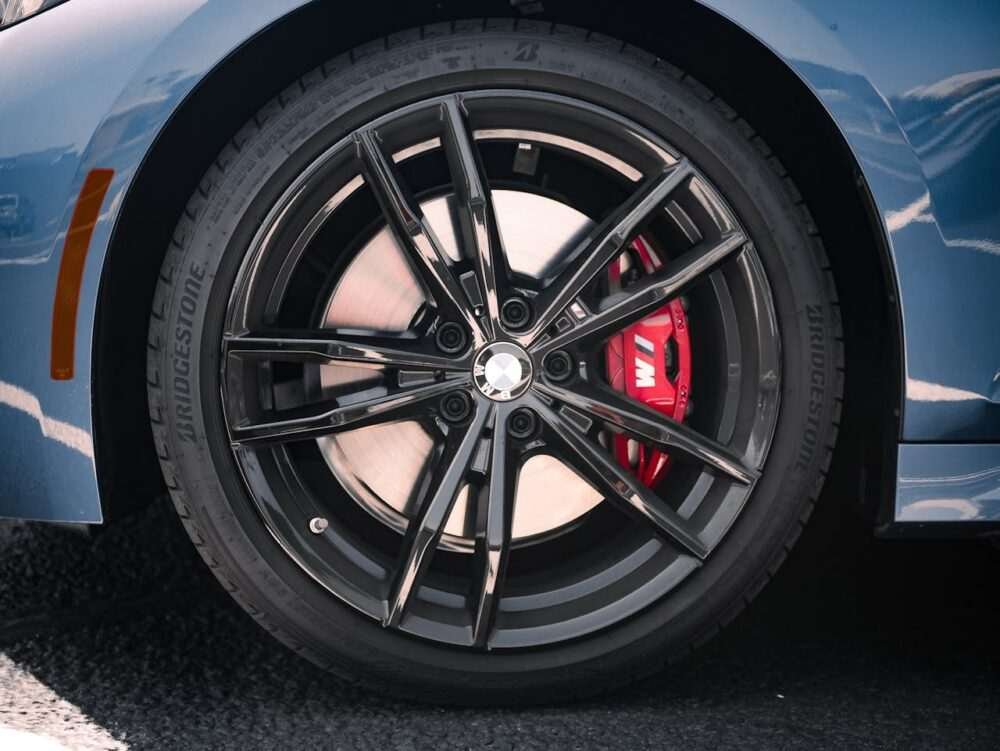
Bio-based auto parts are finally on the verge of scaling
EVs promise a lower-carbon future, eliminating the exhaust fumes that choke our cities and warm our planet.
Yet tailpipe emissions are not the only dirty legacy of the combustion car. Dashboards, seatbelts, and upholstery are packed with toxic materials that sustain car industry emissions.
It doesn’t have to be this way. Biomaterials like flax-based composites and mushroom leathers offer a way out of animal hide, oil plastic, and synthetic fibre seats.
Automakers like Volvo and Hyundai have been developing plant-based materials for years. Now, they are going behind one-off concept cars. Their aim is to scale materials that can go into mass-produced vehicles.
Why bio-based cars?
Automakers are investing in biomaterials because they can reduce the embodied carbon of their vehicles.
Embodied carbon refers to the carbon used in making (rather than fuelling) a car. It includes carbon released from mining and refining raw materials (plastics and metals), as well as final factory assembly.
EVs cut fuel emissions but cannot lower the carbon needed to make the vehicles themselves. In fact, manufacturing EVs emits more carbon than building combustion engine cars due to how energy-intensive battery production is.
There is another problem with EVs and embodied carbon. As the EV industry grows, its appetite for plastic is also increasing. This is because car makers want a lighter-weight body to extend battery range.
EVs may be cleaner in a certain sense, but electrification comes with new resource demands and environmental impacts. Bio-based interiors and exteriors can boost the sustainability of EVs, supporting their value proposition. Plant-based materials and bio-based composites can cut a vehicle’s embodied carbon just as electric batteries cut operational carbon from fuel.
The end result should be a less carbon-intensive car industry overall.
Speed and luxury
So far, bio-based car parts have mostly been associated with luxury models and race cars. The reason for this is economics: higher-priced, limited-run cars justify the use of higher-cost renewable materials.
Hyundai is one of the brands targeting the luxury car market with bio-based innovations. The company’s Cradle unit, a department focused on automotive innovation, has lately been developing grain-based leathers. It is doing this with partner Uncaged, whose Elevate material uses grain-based proteins that mimic the sleekness of leather by replicating collagen.
Mercedes is investing in biomaterials development, too. A recent partnership with startup Modern Meadow is developing a plant and recycled tire-based seat for its Concept AMG GT XX, a sports car set to enter series production.
Historically, automakers have demonstrated and promoted new bio-based materials in sports cars and racing competitions.
This is a useful way to launch new materials because a culture of innovation is firmly embedded into motorsports.
Technical tweaks are fundamental to winning in these sports while new materials get finetuned in rapid iterations.
Sports car engineering also boasts a short development pipeline, with tech moving from the lab to the road much more quickly than in the commercial industry.
Biomaterials have been proving their mettle in the frenetic world of sports cars, demonstrating functionality under extreme conditions.
This includes Syensqo’s resin, a 30% bio-based material released in early 2024. It was incorporated into the rear brake duct wheel shields of a Mercedes-AMG race car that competed in the Azerbaijan Grand Prix in September 2025.
What about scale?
This association with luxury and race cars confers glamour on biomaterials, an industry normally associated with the humdrum world of ESG reporting and compliance.
However, getting these materials into affordable vehicles is even more important from a sustainability and industry perspective. Building for the mass market is what will expand investment into bio-based capacity and spur meaningful decarbonisation in car-making.
Biomaterials are still rare in the car industry at large. Most of the time, bio-based car parts hit the headlines for featuring in one-off concept cars, like a recent mushroom leather-lined EV from Cadillac and GM.
However, all the pieces are now in place for scaling. Some big brands, like Volvo, are starting to take the leap. In 2023, the car maker integrated mass-produced bio-based parts into a standard road model, its EX30 electric vehicle, which now offers flax composite interior panels in select markets.
Volvo’s bio-based car came out just one year after the company announced its strategic investment into Swiss company Bcomp, which developed the model’s flax composite.
The short timescale between initial investment to commercial production signals how quickly a major automaker can now incorporate new biomaterials into its lines.
Bcomp captures the market
Bcomp is working with several other major European and Asian car brands to expand biomaterials in car production.
In April 2025, it announced a collaboration with South Korean carmaker Kia to build composites into entry-level vehicles. The project centres around renewable seat materials based on flax-based fabrics. Bcomp describes the partnership as a step towards mainstream natural fibre adoption by the car industry.
Integrating biomaterials into entry-level vehicles can also combat consumer perceptions that alternative materials are costly luxuries. Building biomaterials into affordable cars also helps make the economics of bio-based production more secure. This is because the entry-level car market is so much larger than for luxury models.
Higher-end (but still mass-produced) models are getting the bio-based treatment too.
BMW, which holds a stake in Bcomp, has collaborated with the company to develop flax composites.
In 2025, the German carmaker announced it was ready to start integrating the biomaterials into its M models. BMW will be using the plant-based materials in the car exterior as well as its interiors. According to the company, this will be the first time that natural fibre materials have been incorporated into commercially-produced automotive bodywork.
Why cars can drive decarbonisation
Growth in bio-based autoparts does not just help the car industry comply with sustainability regulations. It can also help decarbonise the economy at large.
Car makers purchase huge amounts of materials from upstream suppliers. This purchasing power makes the industry an ideal lever for change through the entire industrial economy.
A collective shift among automakers toward renewable materials would boost capacity throughout the bio-based supply chain, helping decarbonise other industries and other end applications.
The car industry can also help put biomaterials in the spotlight, driving cultural acceptance among consumers. Cars are the ultimate test of quality and durability thanks to repeated, heavy use being the norm.
The recyclability issue
Even though bio-based autoparts are reaching market-readiness, there is still room for technical improvements.
From a sustainability standpoint, the biggest problem with many automotive biomaterials is their lack of recyclability. Apart from the risk that these materials will get landfilled at the end of their product lives, materials made from virgin feedstock are also more carbon intensive. More emissions (and other resources) are needed to create inputs from scratch than to use materials already in the economy.
The biocomposites commonly used in car manufacturing can be particularly difficult to recycle. Separating the different components of the material is very costly.
One automotive supplier trying to improve the recyclability of biocomposites is Materi-Act. Founded in 2022, it has developed biocomposites for visible interior parts that are both recyclable and contain recycled content.
The company claims that their biocomposites can be recycled without affecting the final mechanical properties of the new product and without clogging machinery that shreds vehicle waste. More technical innovation and regulatory intervention is needed to make this the norm.
Automakers anticipate regulations
Biomaterials remain costlier to produce than petroleum materials. For this reason, the biggest demand driver will come from regulations that encourage lower-carbon manufacturing.
The EU has already made headway in this. A major recent effort has been its Carbon Border Adjustment Mechanism (CBAM), which imposes costs on foreign producers exporting certain carbon-intensive goods to the EU.
The CBAM is designed to prevent carbon leakage, where strict carbon regulations in the EU can encourage carbon-intensive manufacturing to shift abroad. This leakage makes it difficult to reduce carbon emissions at a global level.
Originally, the CBAM covered inputs like aluminium and steel. However, the EU is already proposing to extend the CBAM to some automobile parts. This indicates how CBAM could spur more rules that penalise high carbon manufacturing.
Lobbyists like the Clean Air Task Force are also pushing the EU to lower industry emissions. The group has recommended the EU mandate automakers and other industries to purchase decarbonised materials.
Major European carmakers are reaching for sustainable materials because they have read this regulatory mood, anticipating stricter carbon regulations to come.
A combination of technical innovation and regulatory pressure will pave the way towards an industry that is cleaner from the inside out. Automakers and suppliers already familiar with using biomaterials in mass-produced models will be ahead of the curve once these regulations arrive.
The post Bio-based car parts reach market-readiness appeared first on World Bio Market Insights.