
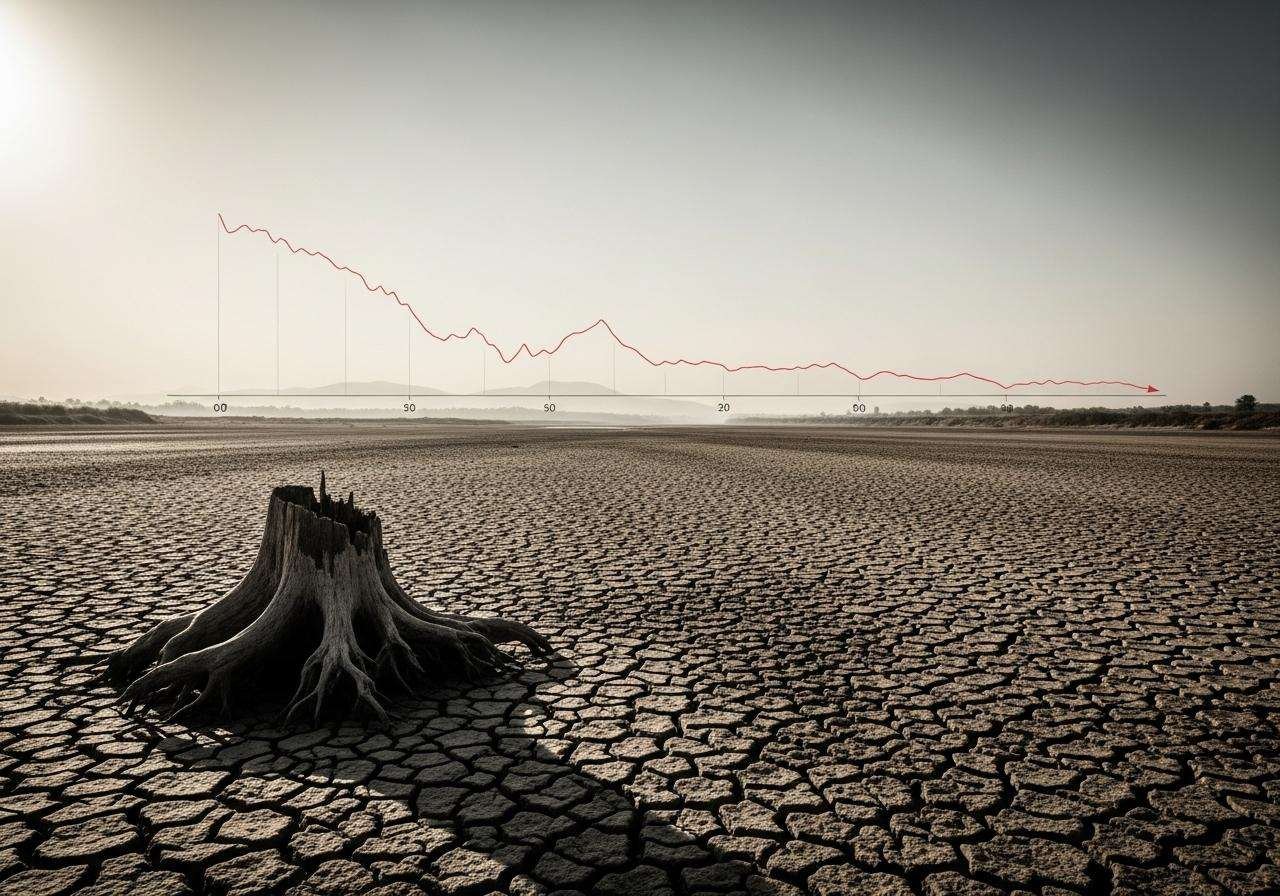
Global Water Bankruptcy: Humanity’s Overdrawn Account with Nature
In early 2026, the United Nations University Institute for Water, Environment and Health published one of its most sobering reports to date: Global Water Bankruptcy: Living Beyond Our Hydrological Means in the Post-Crisis Era.
The title itself signals a decisive shift in tone as though for decades, we’ve talked about a “water crisis” a term suggesting something temporary, solvable, and reversible, calling it “bankruptcy” reframes the issue entirely. It means that we’ve not only overdrawn nature’s account but also reached a point where old systems can’t simply be restored; they require restructuring.
This notion of global water bankruptcy isn’t just a metaphor in that data backed sources show ever more clearly the reality affecting cities, farms, industries, and ecosystems worldwide.
And the worst part is – as the report makes clear – if water bankruptcy continues, global food bankruptcy could soon follow. They say could. In my opinion WILL would be a better word and furthermore even that implies a threat in the future whereas in reality it’s happening NOW.
What the UN Report Reveals About Water Bankruptcy
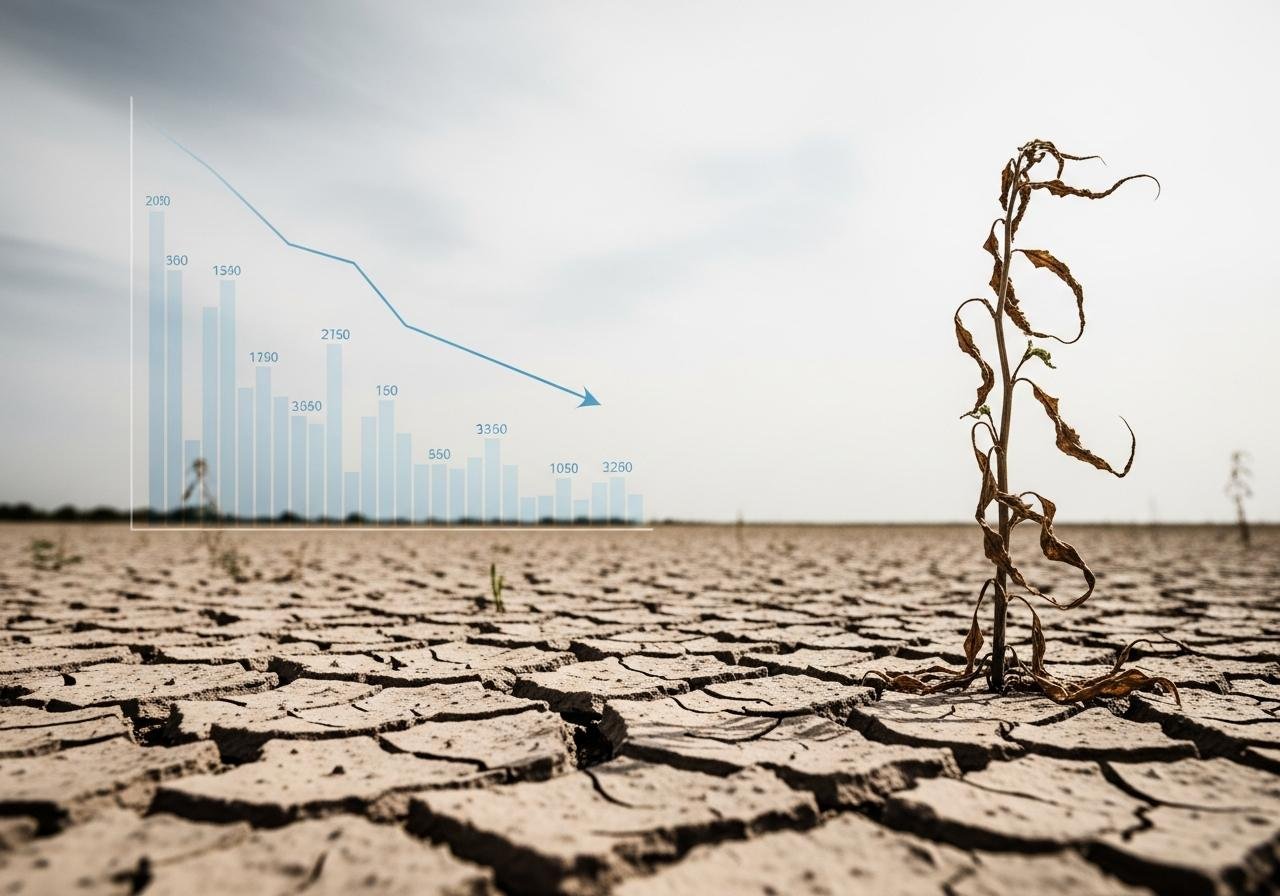
According to the UN itself, the planet is now extracting water from rivers, lakes, and aquifers far faster than it can replenish them with nature’s income in the form of rain and snow no longer balancing withdrawals – consumption exceeds renewal, we deplete natural savings. When that savings runs dry, collapse inevitably follows.
Visible Consequences Across the Globe
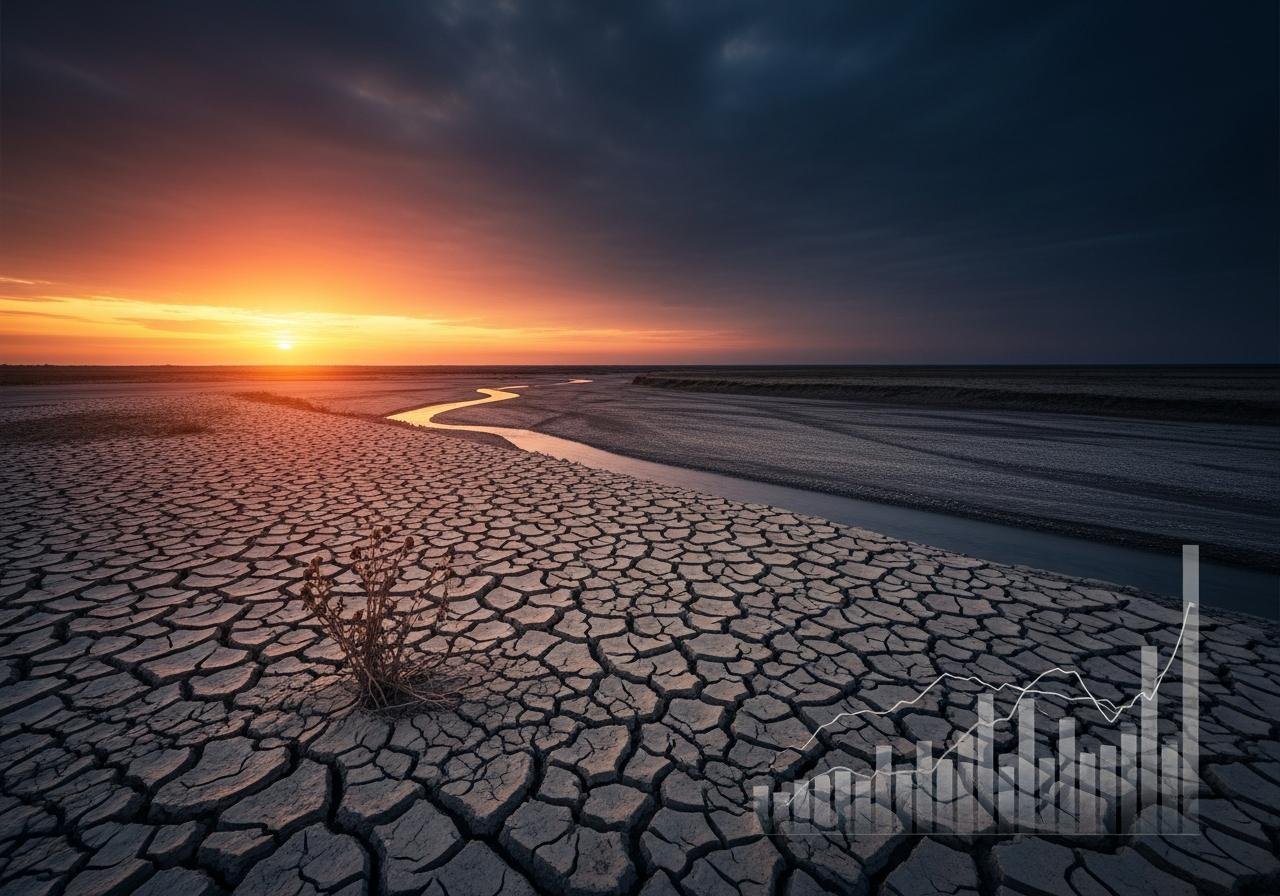
Evidence of water bankruptcy is already visible in Cape Town, South Africa, which came dangerously close to “Day Zero” in 2018, nearly running out of municipal water. Mexico City whose origin is a lake is now sinking by up to 20 inches (50 cm) per year as its overdrawn aquifer collapses. In the United States, the Colorado River lifeline to 40 million people now fails to reach the sea for parts of the year and in Iran (during a revolution and maybe because of it to a degree) – day zero is close at hand if something drastic is not done.
When the Ground Itself Starts to Sink
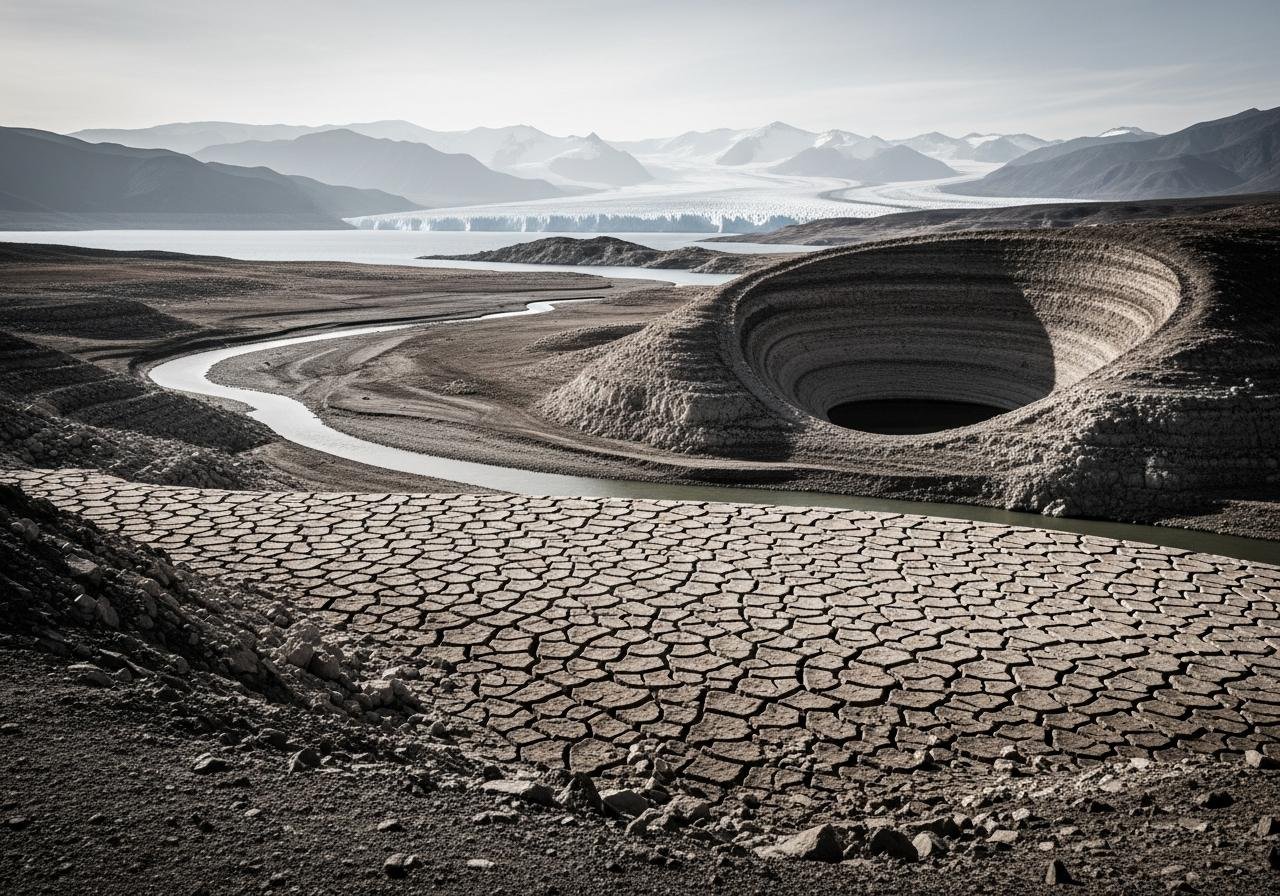
Groundwater depletion doesn’t only drain aquifers it literally reshapes the planet’s surface. As underground reservoirs empty, the land above begins to collapse, a process called subsidence and today over two billion people live on sinking ground (as in Mexico City) and once an aquifer collapses, it loses its capacity to hold water forever.
The Human Cost: Health, Migration, and Conflict
Water bankruptcy isn’t only an ecological problem; it’s a humanitarian one. The UN report estimates that 2.2 billion people lack safely managed drinking water, while 3.5 billion lack sanitation.
Droughts and water shortages already cost the global economy more than $300 billion annually and as rivers and lakes vanish, millions of farmers are forced to grow food from polluted or disappearing water sources.
Water scarcity is also a growing driver of displacement and conflict as predicted and the number of water-related conflicts has been rising sharply over the past two decades. As scarcity worsens, tensions over cross-border rivers and shared aquifers are expected to intensify and it is said that where water goes, stability follows or collapses.
From Water Bankruptcy to Food Bankruptcy
If the world’s water accounts are emptying, our food systems are next in line as agriculture accounts for more than 70% of global freshwater use, and half of all food production occurs in regions already under high water stress. So as aquifers dry up, irrigation falters, and harvests shrink, the risk of cascading food insecurity grows. This scenario underscores the importance of rethinking sustainable practices and innovation in agriculture to prevent such failures.
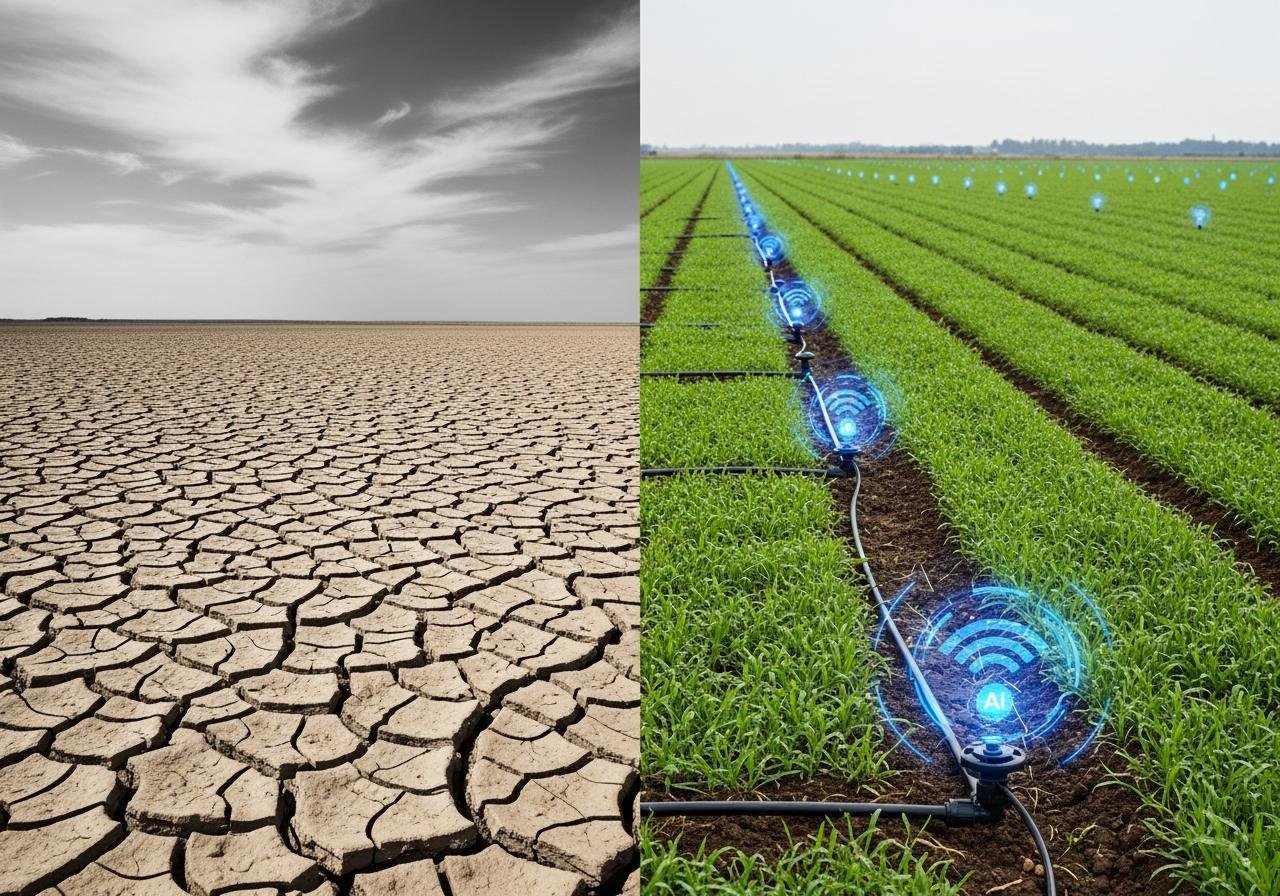
The report warns that without rapid transition toward “water-smart agriculture” including precision irrigation, drought-tolerant crops, and better soil moisture retention the planet could enter a parallel crisis of “global food bankruptcy.” The link is direct: when water runs out, food follows.
Why We Can’t Go Back to the Old Normal
The UN’s shift in language from “crisis” to “bankruptcy” carries an important implication as crisis suggests a momentary disruption, after which normalcy returns – while bankruptcy, by contrast, acknowledges that the old system is gone and therefore demands restructuring not restoration.
Pathways Toward Recovery
Declaring bankruptcy, in financial terms, is not the end necessarily but can be the beginning of recovery. and so while some damages are irreversible, many opportunities remain to stabilize and rebuild our relationship with water.
Key actions include rethinking agriculture to prioritize efficiency, shifting to less water-intensive crops, investing in advanced irrigation technologies, and protecting the planet’s remaining wetlands and aquifers. Artificial intelligence and remote sensing are already being used to monitor groundwater depletion and guide smarter water allocation.
Interconnected Crises: Climate, Biodiversity, and Inequality
Water sits at the intersection of multiple global challenges. Climate change accelerates evaporation, intensifies droughts, and disrupts rainfall patterns, compounding water scarcity. As freshwater ecosystems decline, biodiversity collapses. Land degradation and desertification follow. All of this disproportionately impacts low-income nations that lack the infrastructure to adapt.
When water systems fail, the effects cascade: energy production slows, food systems falter, public health weakens, and social unrest grows. The UN warns that water insecurity threatens progress on nearly all of the Sustainable Development Goals, from poverty reduction to peace and justice.
What does all this mean? A Call for Hydrological Responsibility
The post We are Globally Bankrupt: Water and Food apocalypse appeared first on Green.org.


