
Members of three Indigenous nations based in Ontario shared the cultural importance of seeds at the recent Ecological Farmers Association of Ontario (EFAO) annual convention.
The three-day conference tackled a range of topics, with a strong Indigenous focus on day one, during which attendees learned about ongoing projects to steward and restore manomin (wild rice), community funding for Indigenous farming, and the integration of Indigenous knowledge into land restoration efforts.
Why it matters
Understanding Indigenous agriculture can contribute to the country’s reconciliation efforts.
The conference kicked off with a panel discussion entitled “Seed Rematriation Journey: Returning seeds to their homeland,” drawn from the May 2025 experiences of lead-off presenter, Denise Miller of the Cayuga Nation in Six Nations territory.
On 27 acres of land, where her grandfather once farmed, Miller now grows food and medicinal plants and is working to enhance ecological habitats and develop an “environmental hub” for learning and ceremonial purposes. Last year, she joined Braiding the Sacred, a North America-wide organization of Indigenous corn cultures, to return dozens of ears of heritage-variety corn — held for decades at the Illinois State Museum — to the Lakota Nation in South Dakota.
Records posted online by the State Museum’s board of directors report a “rematriation” ceremony held in the Springfield-based institution in December 2024, attended by members of Braiding the Sacred along with “a group of Indigenous seed growers and a contingent of Haudenosaunee (Six Nations) people.” The document added, “the collection had been left at the Research and Collections Center by a researcher over 50 years ago but never accessioned by the Museum, so a deaccession request was not necessary.”
Taken and tagged
Miller first saw the corn, referred to by the museum as “a collection of over 350 ears of corn and seeds,” during a rendezvous between the westward-bound travellers and members of Braiding the Sacred at an Indigenous-run casino complex in Wisconsin. She showed photos of the seed pick-up and drop-off in Lakota territory, where more celebrations were held.
She likened the identification tags put on the seeds by the museum to the placement of Indigenous children in non-Indigenous residential schools, stressing that “the ceremonies that took place (when the corn was returned) haven’t really happened for over 200 years.” It occurred to her that the seeds in those boxes might have been handled by Sitting Bull’s daughter or granddaughter before they had been taken by the researcher.
Miller lamented that participation in the Lakota ceremonies was muted, highlighting how privileged she and her friends are as Haudenosaunee people, given the extensive work her community has done to build awareness of the value of ceremony and traditional foods.
The main point of the journey, organizers said, was “we are in service” to the seeds and plants and “we have to protect what we have left,” she concluded.
Three Sisters
Those sentiments were echoed by fellow panellist Nathan Martin of the Mohawk Nation, who recalled learning from his grandparents that “seeds, they have stories and they can talk to us … These foods, they see and they feel everything that’s around them. And they have a life.”
Martin told the story of the “three sisters” — corn, beans and squash — clinging to a man who had been called to heaven, saying they wanted to go with him because the plants weren’t being treated well by humans. But the man said no, they hadn’t yet been called. The plants said OK, but there must be a change in how the plants are being treated.
“One day, (the plants) are going to go back, and we’ll never have those foods again. But as long as we take care of it and we’re thankful for these seeds, they’ll be here,” he said.
Life’s work
Longtime Indigenous food activist James Whetung from Pigeon Lake-based Black Duck Wild Rice has spent decades fighting for better care of what’s known as “manomin.” For him it began in 1981 when he joined a blockade at the Algonquin Nation’s Ardoch reserve, seeking to stop a commercial rice-harvesting venture on the nearby Mississippi River. Police raided the reserve and arrested blockade participants, but the venture never proceeded.
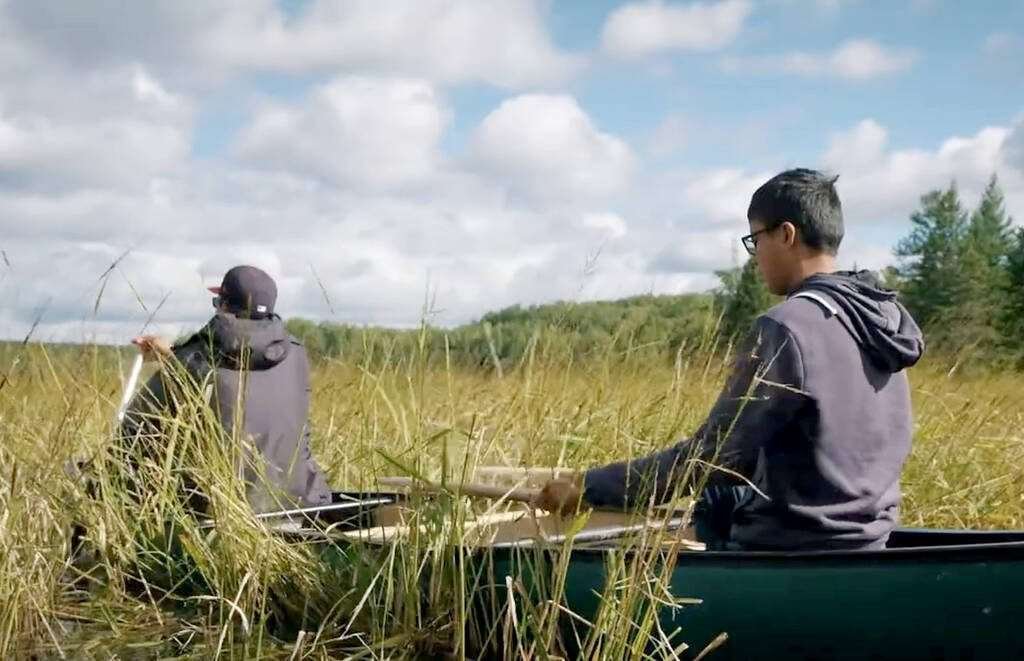
The experience propelled Whetung into a life of protecting manomin and spreading word of the wetland plant’s importance both culturally and environmentally.
He told attendees at the “Manomin Matters” session that a Trent University analysis indicated the Anishinaabe (a group of nations including Ojibwe and Algonquin) have been using wild rice as a food for about 28,000 years. In Indigenous lore, meanwhile, there was a prophecy that, during a migration, “our people would find a plant growing in the water and it would provide food.”
Whetung said a 1923 treaty forbade the Anishinaabe from hunting or gathering their traditional foods. In defiance of this, he began canoeing to spots at the back of bays or behind rocks where the motorboats couldn’t go, often where his uncle said the wild rice grew, to tend and to harvest.
But due to the progressive incursions of the Trent Severn waterway beginning in 1835, opening the area to logging of all the hardwoods, followed by the introduction of hunting and fishing camps starting in the 1920s, and eventually the widespread development of cottages and permanent homes along all waterways, those patches of manomin have dwindled over the decades.
Given Whetung’s charismatic nature and the fact that he was inspired by the Ardoch blockade, this inevitably led to conflicts between Indigenous rights advocates and waterfront landowners.
Whetung’s cousin, award-winning playwright Drew Hayden Taylor, recounted those outcomes in “Cottagers and Indians” – a work that was soon transformed into a documentary film that aired on CBC.
There were strong feelings on either side, Whetung commented, and that continues to this day.
“But I’m not going to quit,” he told the EFAO audience. “I’ve had a lot of help from settlers and allies in the area.”
The post Panel demonstrates importance of preserving Indigenous foods appeared first on Farmtario.


