
Raising better calves is a powerful tool for improving herd profitability and longevity, but how do you get there?
To address this, paneists Larissa Hamel of Harmony Holsteins, Kristen Stevenson of Pendora Dairy Ltd., Dr. Jodi Wallace of Anderson Farms Silverstream Holsteins, and Rob Kirkconnell of Valleykirk Farms shared their insights on raising healthy, thriving calves at the Grey Bruce Farmers Week Beef Day in January.
Why it matters: Investing in early nutrition boosts herd efficiency, profitability, and longevity, leading to better-performing cows, especially when combined with genetics.
Each panellist represented operations varying in scale, ranging from 60 to more than 400 cows, technology and management, but agreed on some universal priorities:
- Colostrum quality is as critical as volume.
- Prevention-first health programs
- Clean air and housing are key.
- Nutrition equals performance and shouldn’t be limited.
- Consistency reduces risk, and measurement drives improvement.
- The end goal is building a healthy, efficient, high-performing milk cow.
Building on these shared priorities, each producer reported delivering three to four litres of colostrum within two hours of birth. Delivery methods and colostrum brix percentage targets ranged from 25 to 30 per cent, slightly above the traditional standard of 24 per cent.
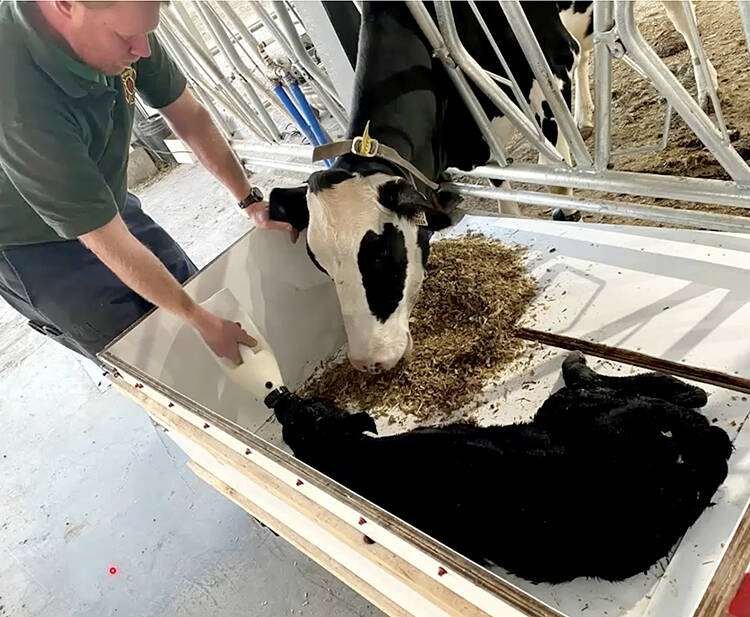
Wallace said modern research suggests 300 g IgG at 24 per cent Brix per four litres — well above older standards, but she aims for 28 per cent Brix or higher, enriching as needed.
“We’re pretty stringent on taking a lot of feed samples and working with a nutritionist to ensure high-quality colostrum,” Wallace explained. Her calves are free choice bottle-fed, so if a newborn wants to drink five litres, she’s not complaining.
Stevenson, who milks 400 cows through a 32-stall rotary parlour, puts an emphasis on testing each cow’s colostrum to ensure a minimum of 27 per cent Brix is met.
She initiated an enrichment program in the summer of 2025 following a cryptosporidium outbreak. The change all but eliminated the issue, and they achieved a pre-weaning death rate of 1.5 per cent.
On the economics of prevention, Stevenson cited research showing that one case of scours can cost up to $600 in a heifer’s first lactation – money she believes is better spent on prevention.
Passive transfer protection is essential, so panellists prioritize fresh maternal colostrum but also use a mix of frozen or powder-enhanced colostrum to achieve a minimum Brix of 25-30 per cent.
Immunization support
In line with the saying ‘an ounce of prevention is worth a pound of cure,’ a robust dry-cow vaccination program, including Scourguard and J-Vac, is considered standard by most, along with clean, well-managed calving and newborn environments.
Each bolsters calves’ early immune support with a First Defense bolus, an intranasal, like Inforce, VitaFerst Care, navel iodine spray and a coat once dry. Kirkconnell’s protocol includes selenium.
Targeted calf feeding ensures strong, consistent growth well past the weaning stage, with early-life calories translating into stronger heifers and higher lifetime milk production.
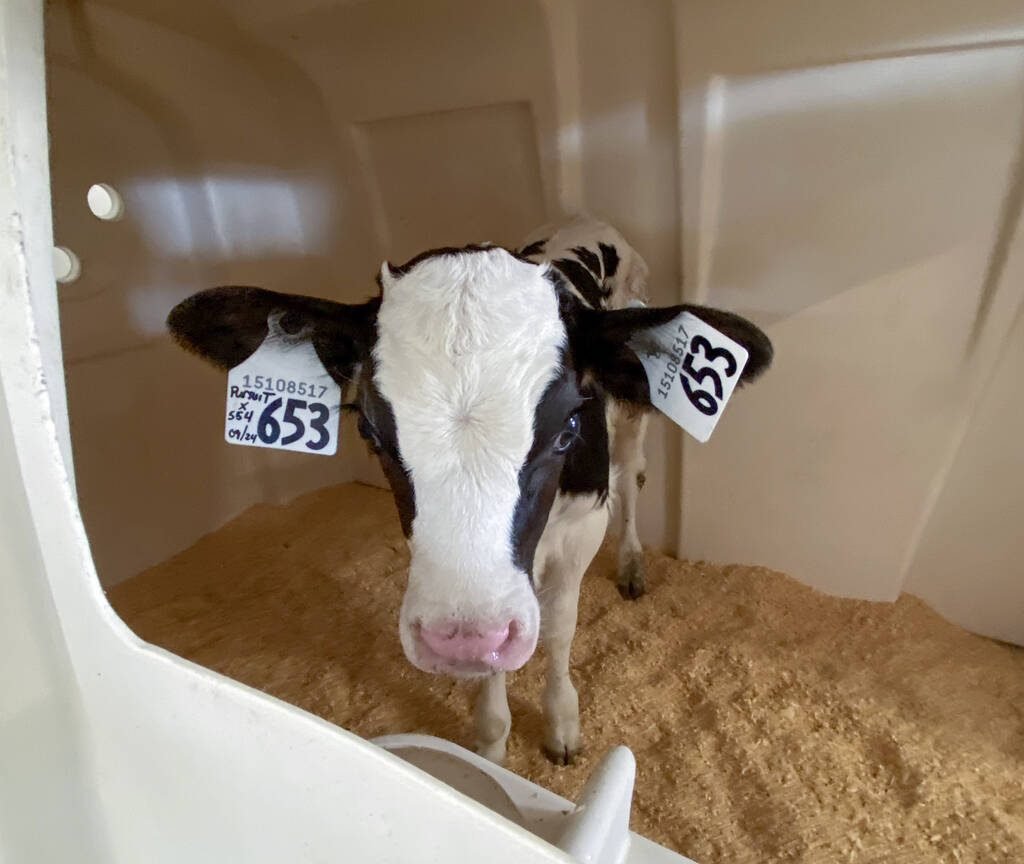
Each producer follows a slightly different milk replacer transition program, but, on average, it involves six to eight litres of milk replacer in week one, with unlimited calf starter and water access, before doubling in week two, until a step-down weaning program is initiated from day 57 to 70.
Stevenson invested in an on-farm pasteurizer and bottle sterilizer, noting that it eliminates human error, provides a consistent milk temperature, and ensures that bottles are always clean.
In 2021, Kirkconnell invested in a robotic bottle feeder, which was a “game-changer” for consistency and labour efficiency, especially through the weaning process.
Old school
On the 110-cow Anderson Farms Silverstream Holsteins, Wallace runs a data-driven, low-tech, unconventional system that relies on detail-oriented staff, joking that even their brix refractometer is optical, not digital.
Wallace uses far-off and close-up calving packs for her closed groups, including a dedicated calving corner to reduce metabolic disease, and a “cuddle box” where cows can lick and bond with a calf while she’s milked at the calving pen and the calf receives colostrum.
The cuddle box easily transports the calf to the calf barn, a former tie-stall barn converted in 2014, which includes a newborn “calf sauna” to dry coats, before being paired or grouped in threes. Wallace observed that paired calves were calmer, ate more and were easier to manage.
“(We) went four years straight with zero treatments and zero loss, and that’s for diarrhea and pneumonia,” she said. “We keep doing that, and we think it’s repeatable.”
The $150,000 barn conversion included positive-pressure ventilation, a heated centre and outer alley for humidity and draft control, with housing two feet off the outer walls, bedded daily and cleaned twice weekly, resulting in a 1,100-kilogram increase in first-lactation milk production.
Calves are fed free-choice acidified milk (pH 4.2) through continuously agitated tanks at transition, allowing the animals to regulate their own intake, while also providing free-choice hay at week one, which eliminated cross-suckling in the calf barn. However, she noted some cases in the eight to 12-month pen when pre-breeding or breeding heifers are under stress or overcrowded.
Wallace runs research trials, including weighing calves at birth, weaning, and sale, noting they routinely double birth weight by 23 days, with average daily gains between 1.17 and 1.46 kg, adding that the calf that doubled its birth weight wasn’t even the breed average for feed efficiency. She said that, with increasingly tight margins, the way to boost profitability is to improve the efficiency of gains and the quality of dairy animals.
“When we look at the new standards to double in 56 (days), I’m pretty sure we can all do better,” she said. “If you want to do better, you have to do better than the average, and we didn’t know (our benchmark) until we measured.”
Wallace’s calves undergo drastic weaning, which she doesn’t recommend broadly, but said the animals are already consuming two to three kilograms of grain and hay when the milk valves are closed and show no signs of stress.
Concluding the discussion, Kirkconnell said he plans to increase his Brix; Stevenson aims to improve tracking of birth and weaning weights; Wallace intends to move paper calf records to a spreadsheet; and Hamel will look into calf pairing.
“As the industry changes, we focus more on raising a milk cow, instead of just raising a calf,” said Hamel. “I think that doubling up and not having single calves is probably where our industry is headed.”
The post Better calf strategies for healthier, more profitable herds appeared first on Farmtario.


