
When the combine leaves the field in the fall, most farms enter a biological pause as plant life
halts, soil life slows, and temperatures drop. Planting a fall cover crop changes that trajectory.
Instead of entering dormancy early, the soil ecosystem can stay active for weeks, or sometimes
months, longer. Every additional day of plant growth captures solar energy and converts it into
root exudates that feed soil microbes. Those microbes in turn build soil aggregation, cycle
nutrients, and strengthen the soil’s structure heading into winter and laying the groundwork for
spring.
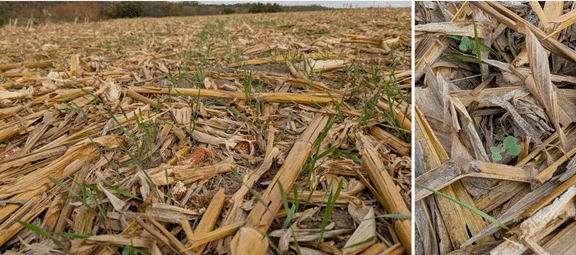
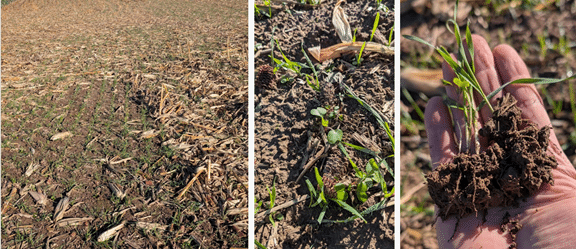
The cover crop growth seen in Figures 1 and 2 may not seem impressive from a biomass production standpoint. Not much growth occurred in the 10 days between photos. But what matters in the fall is not what is above ground, it’s what is happening below the surface. This is compacted, degraded soil that had been in continuous corn production for many years. In figure 2 you can already see 2 inches of soil aggregation, aka “chocolate cake” soil structure, beginning to improve only 21 days after planting. This sets the stage for better water infiltration in the spring when the real benefits begin to accrue.
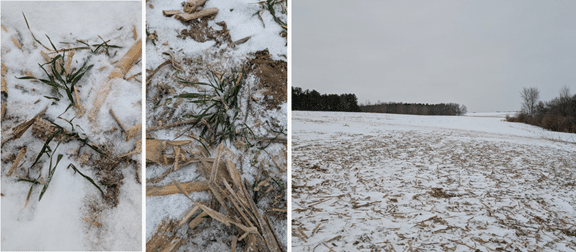
Moving into the cold of winter the growth of the cover crop slows down. The field may look barren at first glance, but you can see in figure 3 that it is still alive and green under the snow even after a -40°F cold snap. Cereal rye can photosynthesize down to almost freezing temperatures, even when tucked away under snow!
Why spring grazing matters more than you think
In addition to covering the soil, fall-seeded cover crops maintain living roots and increase plant diversity in the crop rotation—all foundational principles of regenerative agriculture as outlined by the 6-3-4TM Principles. But perhaps the biggest “bang for your buck” with fall cover crops is the ability to graze them the following spring. Spring grazing a cover crop is one of the highest-return activities you can do with both your livestock and your crop ground. Grazing stimulates plants to shed and regrow roots, increasing carbon deposition into the soil. Manure and urine return nutrients directly to the soil in a biologically available form. Microbial populations respond by accelerating aggregation and nutrient cycling. This provides the basis for healthier and more productive crops after the livestock are moved off the field.
It bridges the early spring feed gap
In early spring, hay inventories are typically at their lowest and perennial pastures may be weeks away from being ready to graze. An overwintering cover crop breaks dormancy early in the spring and can put on several inches of high-quality growth before perennial pastures wake up. Grazing that early growth allows you to extend your grazing season, reduce hay consumption, and lower the cost of carrying your herd through that expensive window between seasons. Managed correctly, these fields become both a feed source and a biological engine. One caution with this approach is that you do need to ensure that some supplemented dry lower protein roughage feed is also available for ruminants to balance out the high nitrogen content of the fresh cover crop.
It gives your perennial pastures a rest
A consistent mistake in grazing management is putting animals on perennial pastures too early in the spring. Cool-season grasses draw on root energy reserves to push the first flush of spring growth. Grazing that flush before the plant has had time to rebuild root reserves can set the stand back for the entire growing season. Having cover crop acres available to graze in early spring allows you to give perennial pastures more time to grow and encourages more plant diversity. That simple change in timing can pay dividends all season long with higher carrying capacity.
Running the numbers: Does it actually pay?
Seed and seeding costs for a fall cover crop typically run between $25 and $45 per acre depending on seed price, seeding rate, and equipment costs. A more diverse blend with legumes and other species might run $40 to $60 per acre. Those are real costs and they deserve honest accounting.
On the return side, an overwintering cover crop in our area of southern Wisconsin can produce ± 2,000 pounds of grazable dry matter per acre depending on establishment date, weather, and grazing date. At an equivalent hay value in this area, that provides around $150 per acre in forage value alone. You also must account for the erosion protection, improved nutrient availability, and the long-term soil building benefits. The longer the cover crop is allowed to grow, the more value you can capture from grazing.
Thinking outside the cash crop box
Many producers will switch back to cash crops after spring grazing on crop fields. This is a missed opportunity. The current economic situation calls for some thinking outside the box if you want to stay in the farming game for the long run. With current commodity grain prices, it may be more profitable to do full season grazing with another cover crop. I have had discussions with several producers who see this as a viable alternative to cash cropping and are switching some acres to full season grazing in 2026.
This is also the approach we are taking at Wild Type Ranch—permanently. We recognize that commodity production on a small scale is not economically viable and we must find alternatives. Full season grazing of diverse annual cover crops is our method to improve the soil for eventual conversion to perennial forages. Livestock and direct marketing are the tools that will allow us to make this switch and stay viable in a world where small farms struggle to compete.
Sheep grazing (or che-e-e-p grazing as I like to call it) is a lower-cost entry point if you do not have livestock and do not want the upfront cost of buying beef cattle. Poultry is another good option with fast cash turnover. Coupling these enterprises with annual cover crop mixes diversifies income streams and improves soil productivity with the option to return fields to crop production in the future.
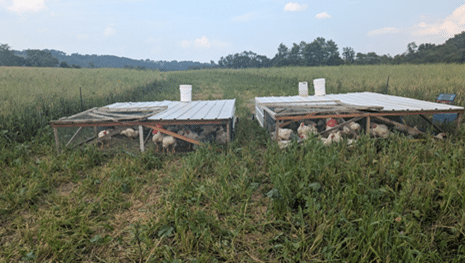
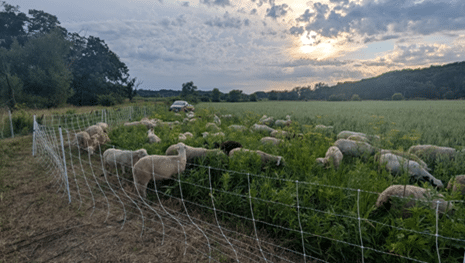
Figures 4 & 5 Sheep and poultry on full season cover crops can be stacked enterprises on the same acres.
The Bigger Picture
Fall-planted cover crops provide flexibility and added economic and ecological benefits. If spring planting is delayed, you have more forage. If feed prices spike, you have grazing. If weather creates uncertainty, you have a living root protecting your soil. And if grain prices tank, you can pivot to full season grazing. But cover crops are more than a forage strategy. They are a systems strategy that align ecological function with economic return.
As with any management change, the devil is in the details. There are many tips and tricks that can help you avoid costly mistakes. Reach out to an Understanding Ag consultant for more information or assistance with cover crop planning or livestock integration.

Brian Dougherty
bdougherty@understandingag.com
563-239-7070
The post Making Cover Crops Pay Double Dividends with Grazing appeared first on Understanding Ag.


