
Words by Julia Webster Ayuso with photography by Sabiha Çimen
This story was featured in Unwoven Issue 03, Textile Exchange’s annual magazine. Read the full issue here.
Combining technological innovation with large-scale production expertise, Säntis Textiles and Kipaş Textiles created the RCO100 system to transform textile waste into high-quality, garment-grade fiber. But it all started with a chance meeting and a challenge from PVH Corp.
The journey to creating the first 100% recycled cotton begins—as is often the case with good ideas—not in an office, but through a chance encounter between two visionary leaders. Stefan Hutter, a textile engineer and founder of Säntis Textiles, was on a skiing holiday when he met fellow Swiss man Daniel Grieder, then CEO of PVH Corp (the parent company of Calvin Klein and Tommy Hilfiger), and the two quickly struck up a conversation about the future of the textile industry.
“Even though he’s been in the textile business for 40 years, my father never ventured into fashion,” says Annabelle Hutter, the Managing Director of Säntis Textiles in Switzerland, explaining that Säntis focused on technical fabrics. “Grieder came up with a challenge for him: could he create 100% recycled cotton for his brands?” Cotton represents around 19% of global fiber production, but just 1% of it is recycled cotton, according to Textile Exchange’s 2025 Materials Market Report. However, the demand for recycled cotton is projected to almost double in 10 years, from $5.2 billion in 2023 to $9.8 billion by 2032.
Stefan, whose family has a long tradition in Swiss textile engineering, founded Säntis in 2005. The company, headquartered in Singapore with offices worldwide, already had some experience with recycled fabrics, but these were mostly technical fabrics for applications such as home furnishings—a far cry from the fine threads needed for garments. So in 2016, Stefan accepted the challenge.
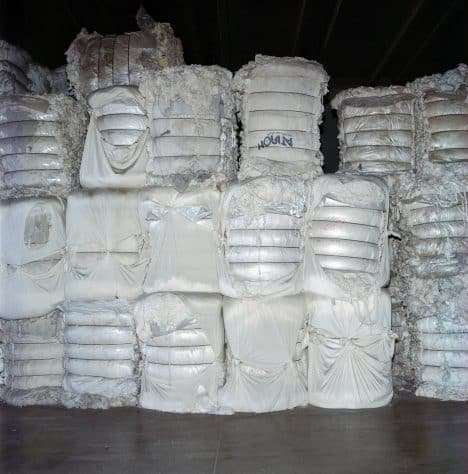
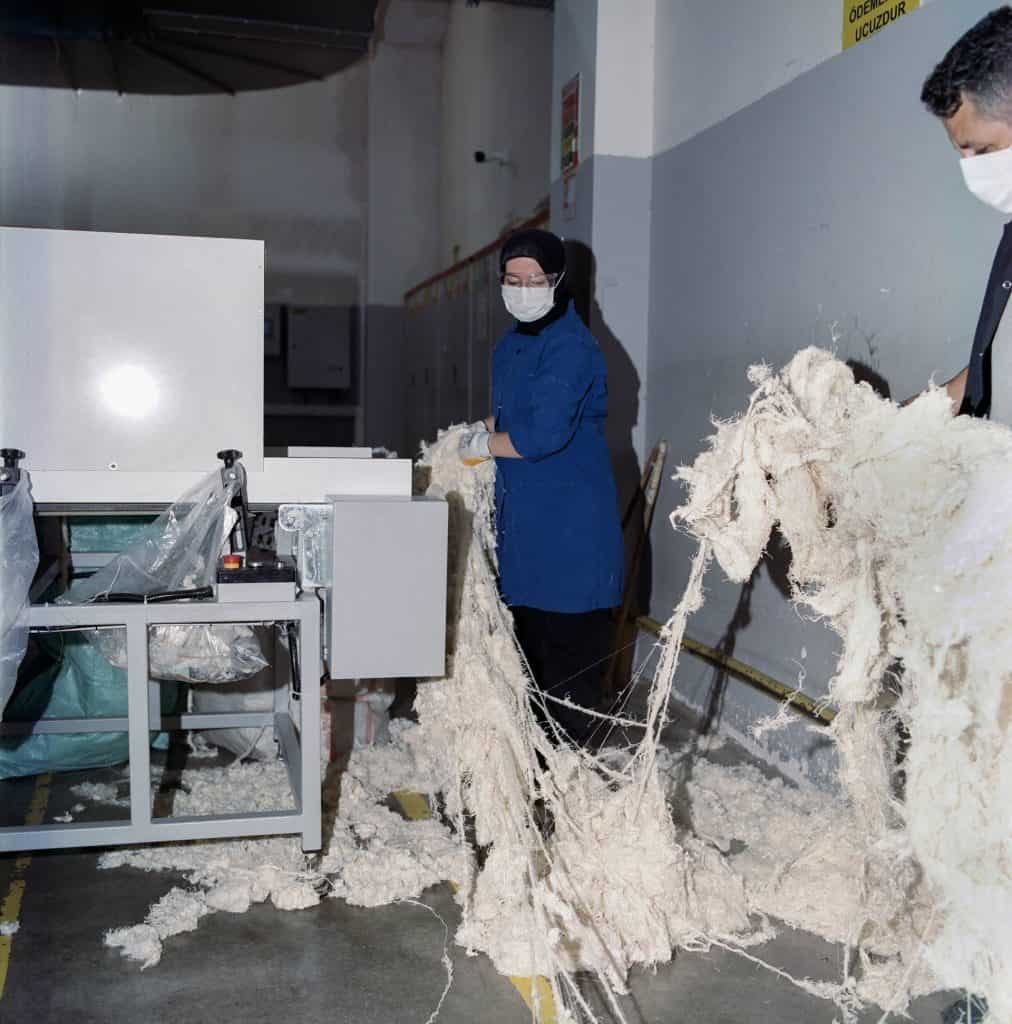
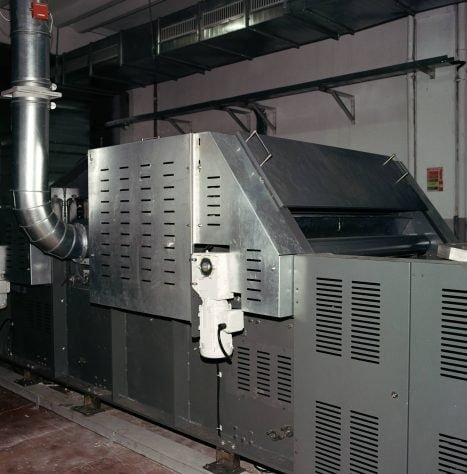
Without the help of outside investors, Stefan decided to invest his own profits into developing a machine specifically for recycling textiles in the garment industry. And after several trials in the company’s Chinese factories, the result was RCO100—a breakthrough system capable of turning industrial waste (such as fabric cuttings and yarn waste) as well as pre- and post-consumer garments sorted by color and composition, into high-quality recycled cotton.
Unlike existing machines, it produces longer fiber lengths essential for spinning, without the use of water or chemicals, and is specifically designed to create 100% recycled cotton and textile-grade fiber.
“There are other mechanical recycling machines, but they were all built decades ago and were designed for downcycling, never to handle textiles to make textiles again,” says Annabelle.
“The breakthrough is that we prioritize creating a fiber that can go back into making new textiles.”
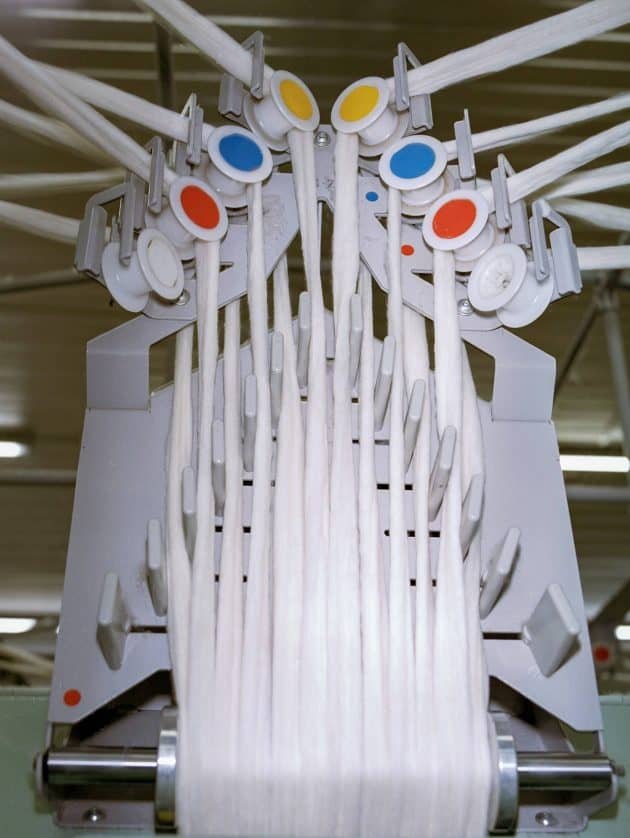
But technological innovation cannot solve the problem of textile waste alone. Stefan soon realised he needed a partner with the technical muscle and industry know-how to take the project from prototype to large-scale production. Kipaş Textiles, based in the Turkish city of Kahramanmaraş, emerged as a natural choice.
With a production capacity of 80 million meters of fabric per year and 330 tons of yarn per day, it is Türkiye’s and Europe’s largest integrated textile manufacturer. “Our expertise in spinning, weaving, and producing finished fabrics like denim allows us to process recycled fiber efficiently,” says Halit Gümüşer, Managing Director and Board Member of Kipaş Holding.
Türkiye is the world’s fourth-largest exporter of denim, known for its bright, smooth finish and strong cotton fibers, and Kipaș has been a driving force behind that reputation. “Türkiye holds a significant strategic position,” says Nicolas Prophte, a board member at the Denim Deal, a circular denim project launched in the Netherlands in 2020. “With a well-established textile industry experienced in recycling and spinning technologies, as well as decades of operation of numerous denim mills, the country boasts a solid foundation for advancing sustainable practices.”
Denim is also especially important for recycled cotton, explains Nicolas, who was the former VP of PVH Corp’s Denim Center.
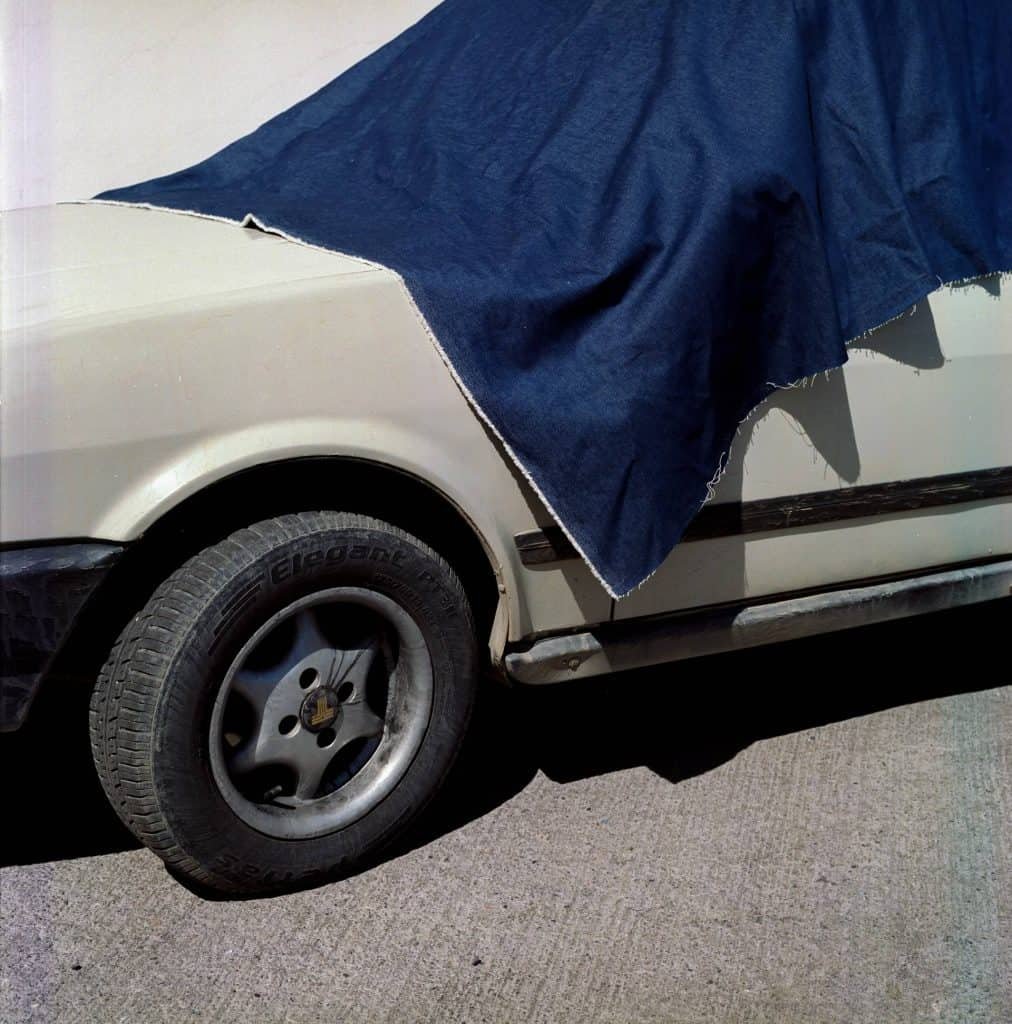
“It’s predominantly made from cotton fibers—around 98 to 99%—and because it is one of the most widely produced and worn fabrics globally, it generates considerable textile waste, from factory scraps to discarded jeans.” He adds that “denim fibers are usually of high quality and durability,” so even when recycled, they can still make high-quality yarns.
The ubiquity of denim across the fashion industry also helps.
“It was also the friendliest [fabric] to introduce to a brand that had never done anything like that before,” says Annabelle. In 2021, Stefan was able to complete his challenge of providing 100% recycled cotton to Tommy Hilfiger. Since then, Kipaș and Säntis have produced around 300 tons of 100% recycled cotton every month.
In February 2023, just as the RCO100 system was scaling up, a 7.8-magnitude earthquake devastated southern Türkiye, including Kipaș’s home city of Kahramanmaraş. Several factory buildings were heavily damaged, and many workers lost homes and loved ones.
It took an immense effort to bring the factory back on track. “There was a very big dedication and sacrifice of our team,” says Halit. But far from slowing their ambitions, the disaster strengthened Kipaș’s commitment to building a better future. Having experienced firsthand the destructive force of a natural disaster, the company doubled down on its sustainability efforts. “We had to destroy some buildings and build new ones to make more sustainable processes available,” says Halit, adding that, as a result, “Kipaş is becoming much more sustainable and much more efficient.”
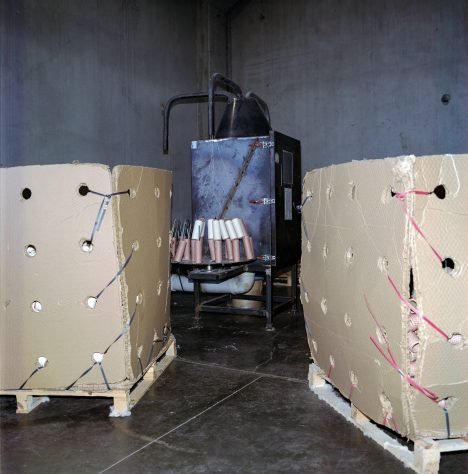
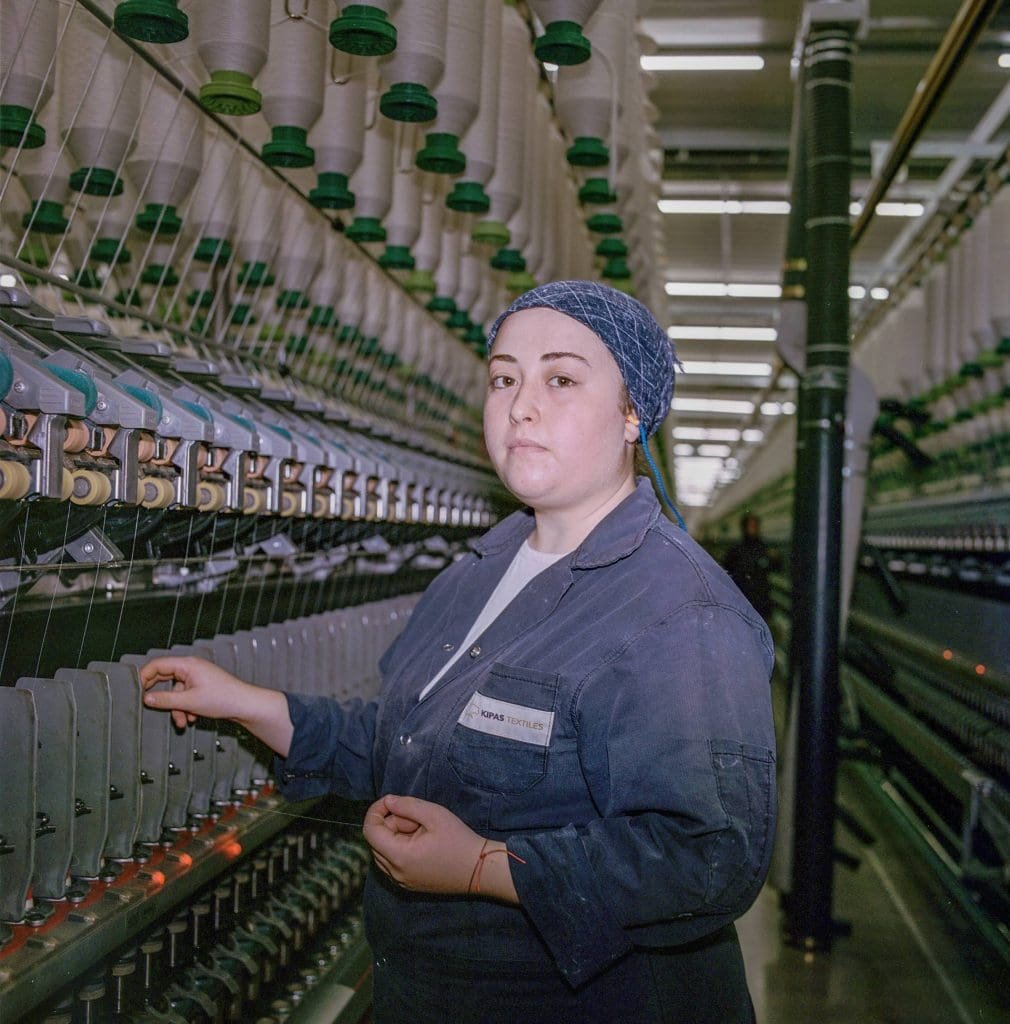
A year later, the collaboration reached another significant milestone. The RCO100 recycled canvas fabric caught the eye of Alexander McQueen, and gave rise to a Bird Tail Peplum Jacket in the label’s 2024 Autumn-Winter collection. It marked the first time RCO100 had been showcased on the catwalk.
Today, Säntis and Kipaș produce and sell everything from the recycled cotton fiber to the yarns and fabrics. Säntis even sells the RCO100 recycling machine itself. The first licensed machine manufacturer is Temsan, a company based in the same area as Kipaş, and Säntis has since commercially launched the machine to allow third-party manufacturers, from wool recyclers and garment manufacturers to yarn spinners, to buy it and recycle their own waste, whether it’s cotton, wool, or silk.
“It’s not for us to gatekeep all of this,” says Annabelle. “We need to be able to open up access to the industry, to have better quality recycled cotton fibers,” she says, knowing that doing so will require the exact spirit of multi-stakeholder partnership that they have now proven is possible.
This story was featured in Unwoven Issue 03, Textile Exchange’s annual magazine. Read the full issue here.
The post How Cross-Sector Partnerships Made Recycled Cotton a Reality in Türkiye appeared first on Textile Exchange.


