
A plain backyard can feel uninspiring, just empty space waiting for something more. The moment a well-designed patio enters the picture, everything changes. The texture underfoot, the layout, the subtle play of light and shadow… suddenly, the outdoors becomes a place people actually want to spend time in. That’s the magic of thoughtful patio design.
Concrete has quietly become one of the most versatile materials for outdoor living. It’s durable, budget-friendly, and surprisingly stylish when handled creatively. From modern finishes to rustic charm, there’s a world of design possibilities that go far beyond the dull gray slab most people expect.
The ideas below go deeper than surface-level inspiration. Each one explores a unique way to elevate an outdoor space, blending aesthetics with function. And just when it feels like one idea stands out as the best, another one might steal the spotlight.
Let’s get into it.
Stamped Concrete Designs That Mimic Natural Materials
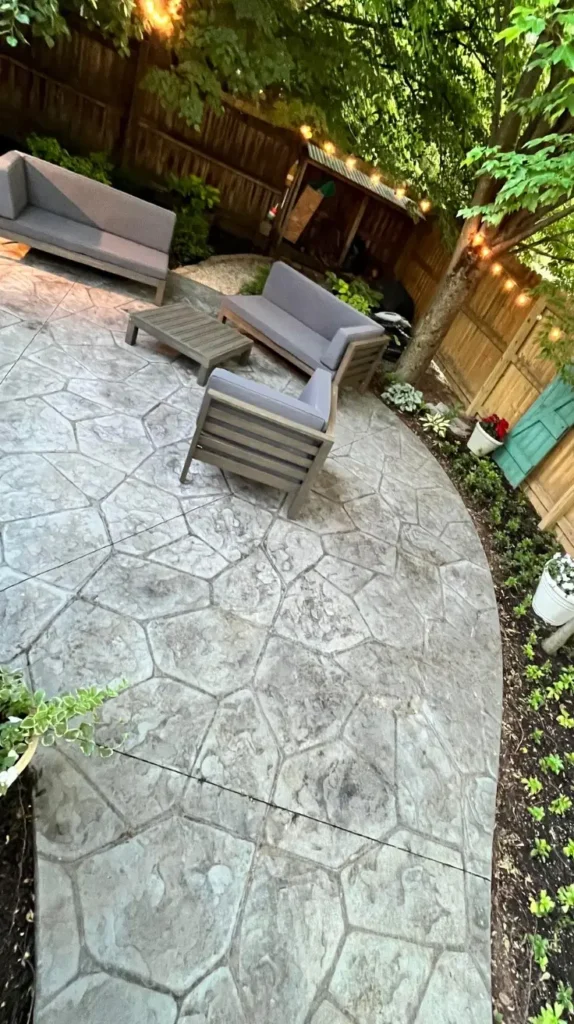
Stamped finishes bring personality into a space without the cost of real stone or brick. Patterns can replicate slate, cobblestone, or even wood planks, creating a high-end look at a fraction of the price. The surface gains depth, texture, and a handcrafted feel that instantly elevates the yard.
This design works beautifully in both small patios and expansive outdoor areas. The visual detail adds interest without overwhelming the space. With earthy tones like sandstone, walnut, or charcoal, the result feels natural and grounded.
Maintenance is another major advantage. Unlike real stone, stamped surfaces resist weeds and shifting. A simple seal keeps the finish looking fresh for years. For homeowners who want elegance without constant upkeep, this approach delivers.
And here’s the twist, when lighting hits the textured surface at sunset, the shadows create an entirely different atmosphere.
Polished Concrete for a Sleek Modern Finish
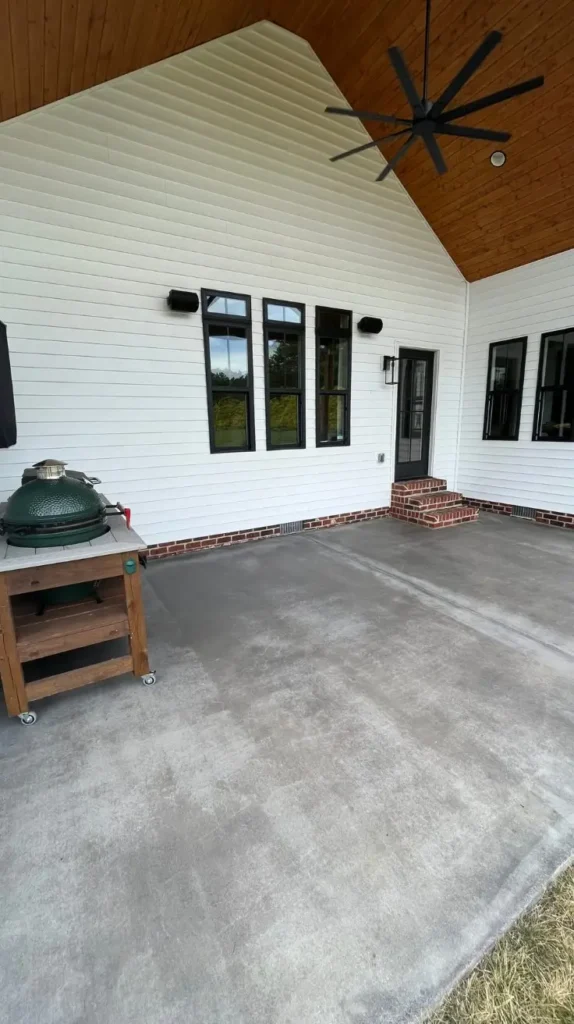
Polished surfaces bring a refined, high-end feel to outdoor living spaces without overwhelming the design. The smooth finish reflects natural light beautifully, which helps even a compact backyard feel brighter and more open. This style works especially well for modern homes, where clean lines and simplicity create a calming visual effect. Instead of relying on heavy decoration, the subtle sheen becomes the focal point.
Another major advantage is durability. This type of surface resists stains, moisture, and daily wear, making it ideal for outdoor dining areas or spaces with frequent use. Cleaning is also simple, which is a huge benefit for homeowners who prefer low-maintenance solutions. Pairing this finish with neutral outdoor furniture, metal accents, or minimalist landscaping creates a cohesive and polished environment.
As daylight fades, the reflective quality begins to shift. Soft evening lighting adds a quiet elegance that transforms the entire space. It’s not loud or flashy, but it leaves a lasting impression that feels effortlessly sophisticated.
Stained Concrete for Rich, Earthy Tones
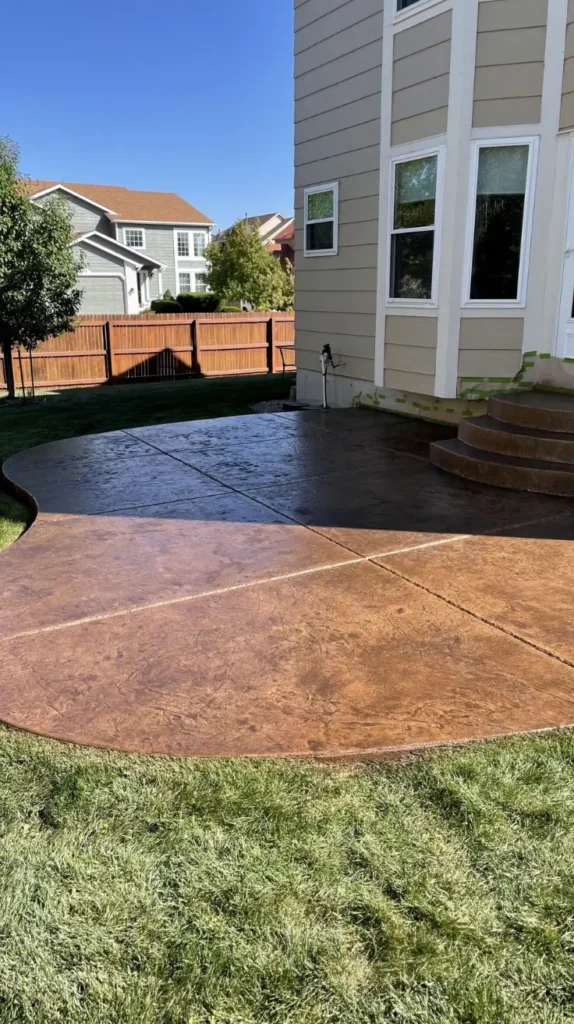
Color plays a powerful role in shaping the atmosphere of any outdoor space, and stained finishes offer a natural way to introduce depth and warmth. Unlike surface-level paint, the stain penetrates deeply, creating long-lasting tones that won’t peel or fade easily. The result is a rich, layered appearance that feels authentic rather than artificial.
Earth-inspired shades like terracotta, deep brown, and soft amber blend beautifully with greenery, wooden furniture, and garden elements. This creates a seamless transition between built and natural environments. Instead of standing out harshly, the patio becomes part of the landscape itself.
One of the most appealing aspects is the variety of colors. No two surfaces look the same, which adds character and uniqueness. Over time, the tones may subtly evolve, enhancing that lived-in, welcoming feel. For homeowners seeking to create a cozy, grounded outdoor space, this approach strikes a balance between beauty and practicality.
Concrete Pavers for Flexible Design Layouts
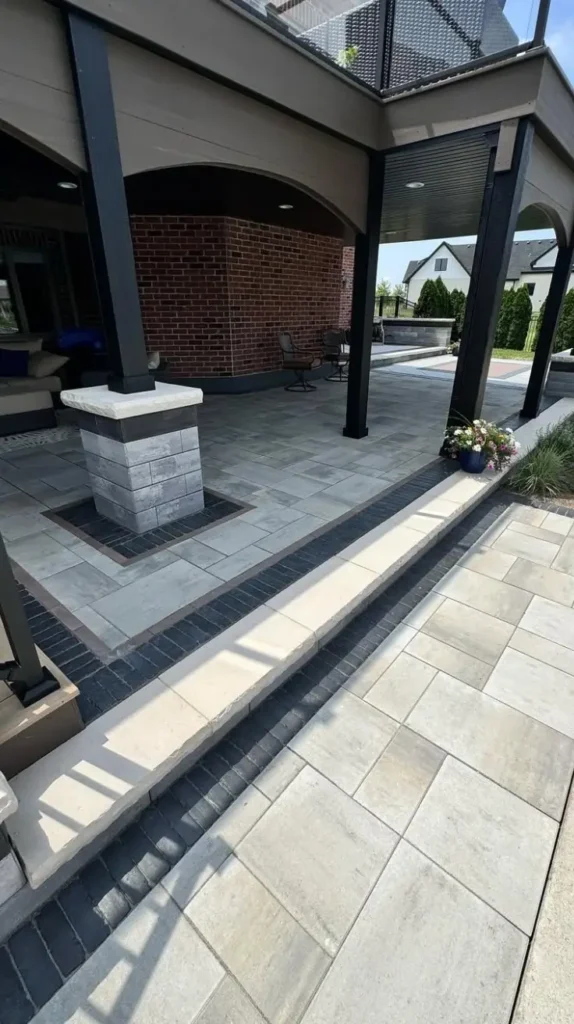
Pavers introduce structure while still allowing for creativity and flexibility. Instead of a single continuous surface, individual units can be arranged in countless patterns, from simple grids to intricate geometric layouts. This makes it easy to personalize the patio according to style preferences.
One of the standout benefits is adaptability. If a section becomes damaged or stained, it can be replaced without disturbing the entire area. This makes pavers a smart long-term investment for outdoor spaces. The gaps between pieces also open up creative opportunities. Filling them with grass, gravel, or decorative stones adds texture and visual contrast.
This design approach works well for both large and small patios. It creates a sense of rhythm and flow that guides movement through the space. Whether the goal is a formal look or something more relaxed, pavers provide the flexibility to achieve it without compromising durability or style.
Exposed Aggregate for Texture and Grip
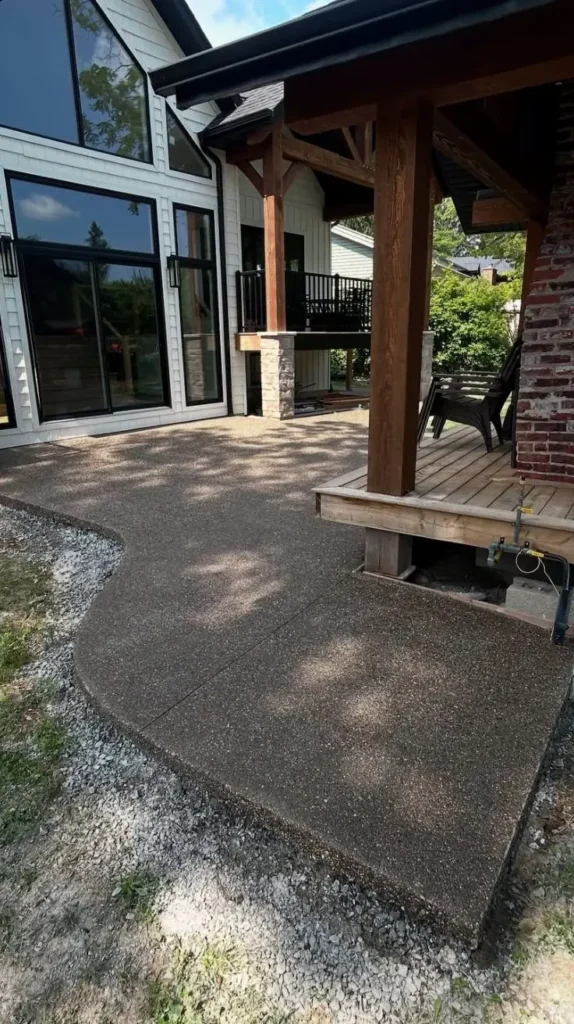
Exposed aggregate finishes bring a natural, textured look that instantly adds depth and character to any outdoor space. Instead of a flat, uniform surface, this style reveals the stones and pebbles embedded within, creating a visually rich and slightly rugged appearance. The variety of colors and textures in the aggregate makes every patio feel unique, almost like a custom-crafted design formed by nature itself.
One of the biggest advantages of this finish is its practicality. The textured surface provides excellent grip, making it a safe option for areas that are often exposed to water, such as near pools or outdoor dining spaces. This added safety doesn’t compromise style; it enhances it. The subtle sparkle of stones under sunlight adds a quiet elegance that changes throughout the day.
Maintenance is also straightforward. The surface hides dirt and wear better than smoother finishes, which makes it ideal for busy households. Over time, it retains its strength and charm, proving that durability and beauty can go hand in hand without effort.
Concrete Patio with Built-In Seating
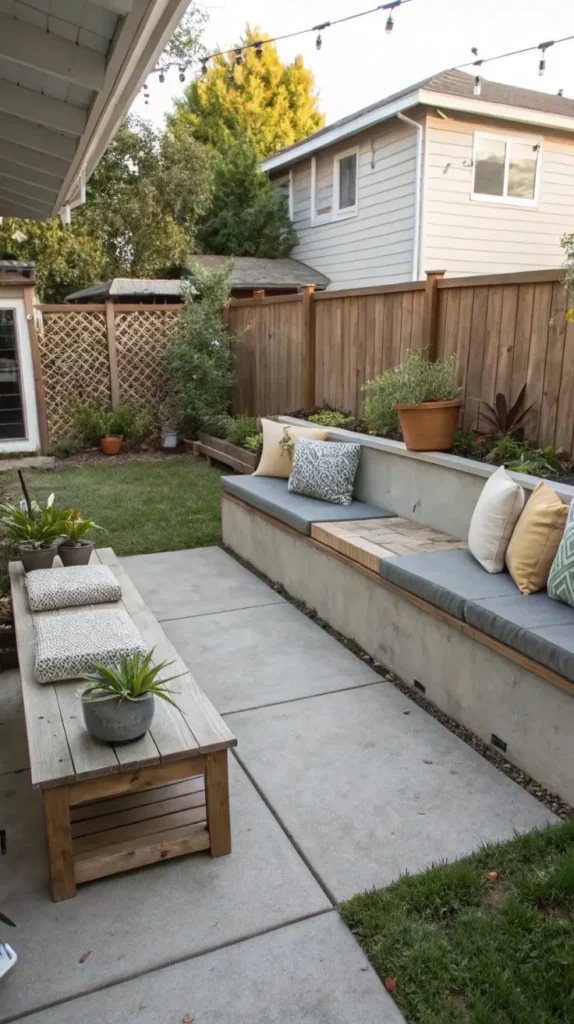
Built-in seating transforms an ordinary patio into a thoughtfully designed living area. Instead of relying on movable furniture, the seating becomes a permanent part of the structure, creating a seamless and organized look. This approach not only maximizes space but also adds a sense of intention to the overall layout.
The design possibilities are flexible. Seating can wrap around the edges, form cozy corners, or even create a central gathering zone. Adding cushions and soft fabrics introduces comfort, balancing the solid structure with inviting warmth. This combination makes the space feel both functional and welcoming.
Another major benefit is durability. Built-in seating stands up to weather conditions far better than traditional outdoor furniture. It doesn’t shift, fade, or require constant upkeep. This makes it a long-term solution for homeowners who want both style and reliability.
The result is a patio that naturally encourages people to gather, sit, and stay a little longer, turning everyday moments into shared experiences.
Fire Pit Integration for Cozy Evenings
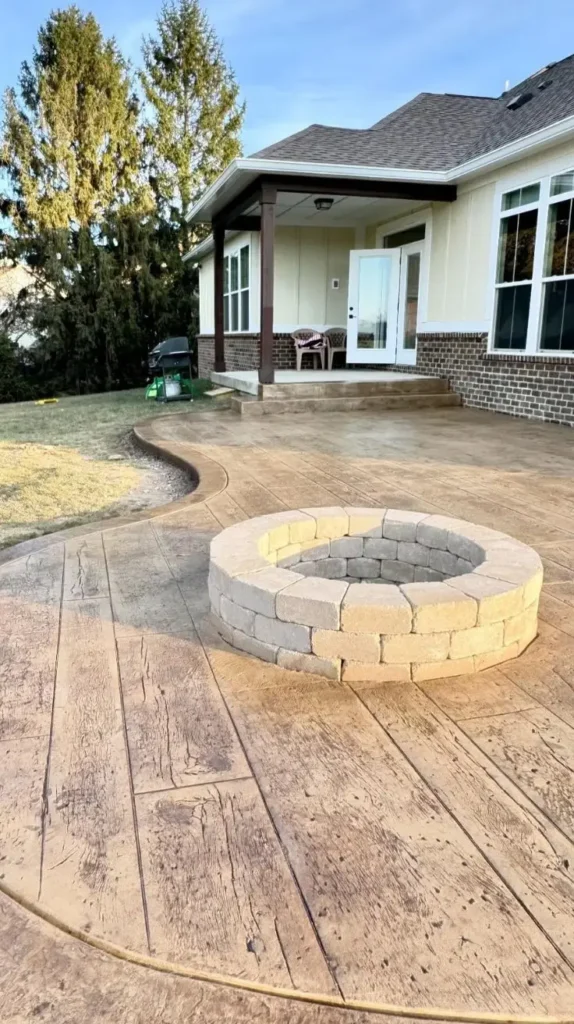
A fire pit introduces a powerful emotional element to any patio, turning it into a space that feels warm, inviting, and alive. The gentle crackle of fire and the soft glow of flames create an atmosphere that draws people in without effort. It becomes the heart of the outdoor area, where conversations flow naturally and time seems to slow down.
This feature extends the usability of the patio beyond daylight hours. Cooler evenings become opportunities rather than limitations, allowing the space to remain active throughout the year. Seating arranged around the fire enhances the experience, encouraging connection and interaction.
Design options can range from sleek and modern to rustic and traditional, depending on the overall style of the patio. Regardless of the design, the fire element adds depth and contrast, making the space visually dynamic.
As night falls, the shifting light and shadows create a mesmerizing effect. It’s more than just a feature; it’s an experience that transforms how the outdoor space is used and enjoyed.
Concrete Patio with Outdoor Kitchen Features
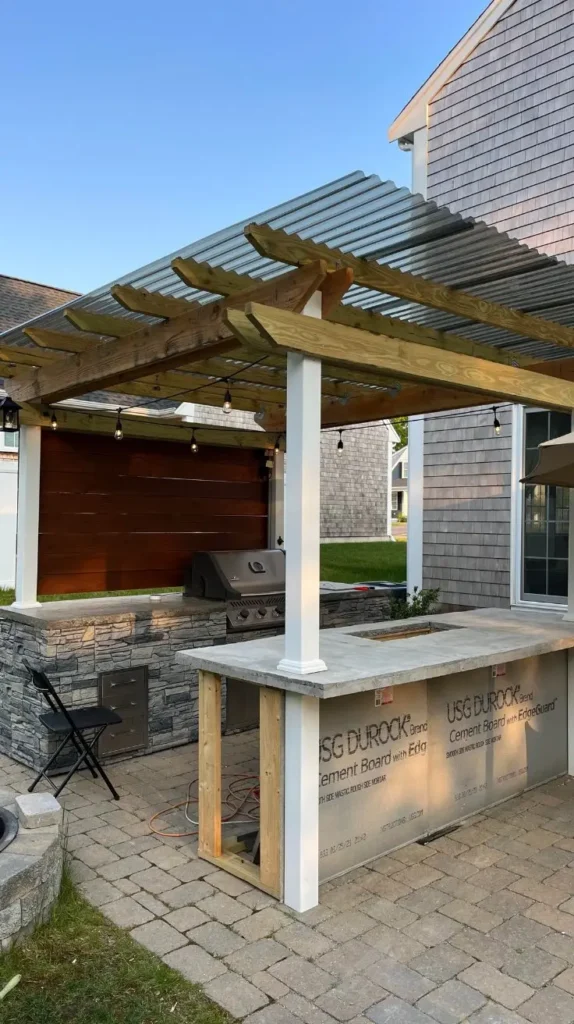
An outdoor kitchen elevates a patio from a simple seating area to a fully functional living space. It brings cooking, dining, and socializing together in one place, making it perfect for gatherings or relaxed family time. The solid surface provides a strong foundation for grills, countertops, and storage units, ensuring long-term durability.
This setup improves convenience in a noticeable way. Everything needed for cooking and serving is within reach, eliminating the need to move back and forth between indoor and outdoor areas. This seamless flow makes hosting guests much easier and more enjoyable.
Design elements such as bar seating, preparation counters, and built-in appliances add both style and practicality. The layout can be customized to suit the available space, creating a balanced and cohesive look.
The presence of an outdoor kitchen changes how the patio is used. It becomes a central hub of activity where people gather, share meals, and create lasting memories in a relaxed and open environment.
Read – Backyard Kitchen Ideas
Geometric Patterns for a Contemporary Look
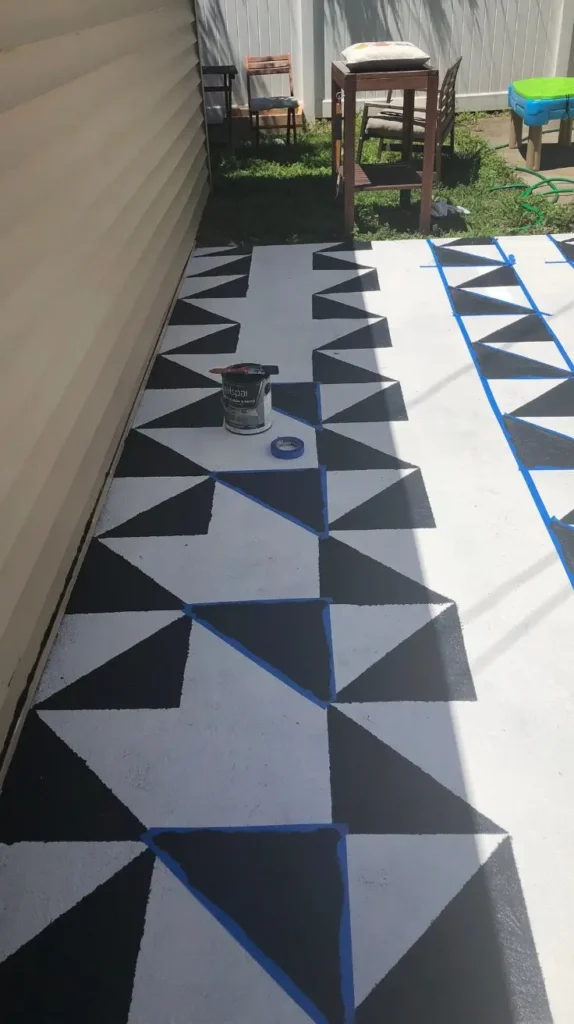
Geometric patterns bring a sense of structure and creativity that instantly modernizes any patio. Clean lines, repeating shapes, and carefully planned layouts create a visually striking surface that feels both organized and artistic. Even subtle designs can make a strong impact by guiding the eye and adding movement to the space.
This style works especially well in contemporary settings where simplicity meets bold design choices. The patterns can be customized with different tones to create contrast or kept minimal for a softer effect. Either way, the result feels intentional and refined.
Lighting plays an interesting role here. As sunlight shifts throughout the day, the patterns appear to change slightly, adding a dynamic quality to the patio. This keeps the space visually engaging without needing additional decoration.
For homeowners looking to introduce personality without clutter, geometric designs offer a balanced approach that feels modern, clean, and endlessly appealing.
Multi-Level Patio Designs for Depth
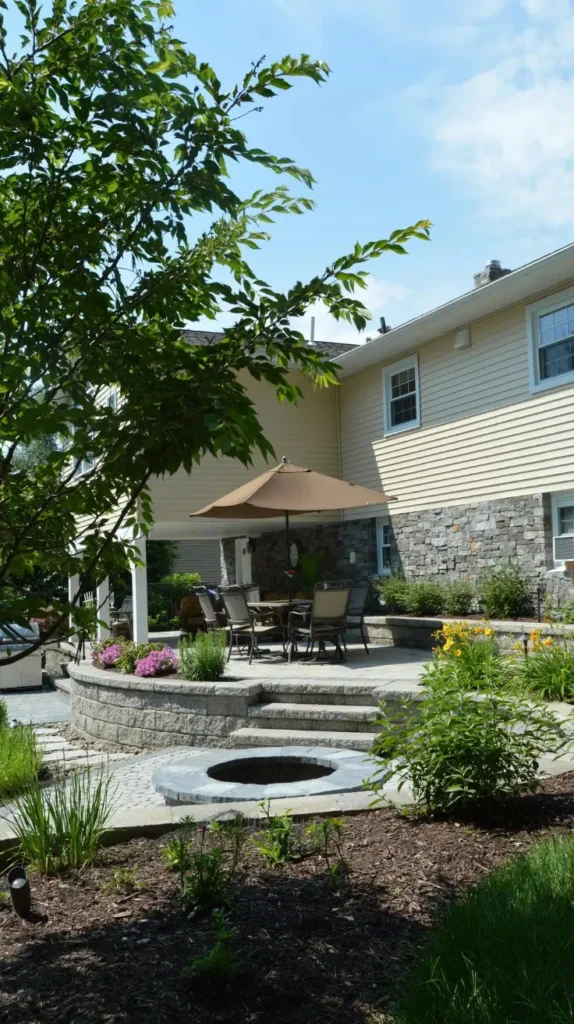
Multi-level patios add dimension and visual interest to outdoor spaces that might otherwise feel flat and unremarkable. By introducing different heights, the design creates natural zones for various activities such as dining, lounging, or entertaining. This separation makes the space feel larger and more organized.
Steps and transitions between levels add a sense of movement, guiding people through the area in a natural way. Instead of a single open space, the patio becomes a layered environment with distinct yet connected sections.
This approach is particularly useful for sloped landscapes. Rather than trying to level everything, the design works with the natural terrain, enhancing its character. Each level offers a slightly different perspective, making the space feel more engaging.
The overall effect is both practical and visually appealing. It turns the patio into an experience rather than just a surface, encouraging exploration and interaction with every step.
Concrete with Wood Accents for Warmth
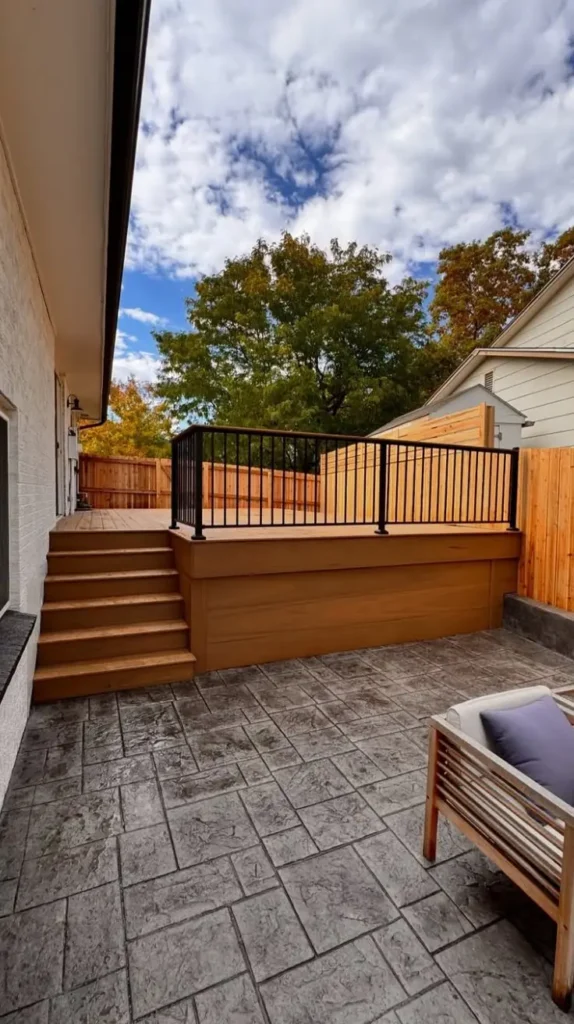
Blending concrete with wood accents creates a beautiful contrast that feels both modern and inviting. While concrete provides strength and durability, wood introduces warmth and a natural touch that softens the overall look. This combination works incredibly well for homeowners who want a balanced outdoor space that doesn’t feel too cold or overly rustic.
Wood elements can be incorporated in various ways, such as built-in benches, pergola beams, or decorative panels. The natural grain and color variations of wood add depth and personality, making the patio feel more lived-in and comfortable. At the same time, the solid base ensures the structure remains strong and low-maintenance.
This pairing also offers design flexibility. It can lean toward a contemporary aesthetic with clean lines or shift toward a more relaxed, cozy style depending on how the materials are used. Over time, the materials age gracefully, enhancing their character. The end result is a patio that feels welcoming, stylish, and perfectly balanced between modern design and natural comfort.
Minimalist Concrete Patio for Clean Simplicity
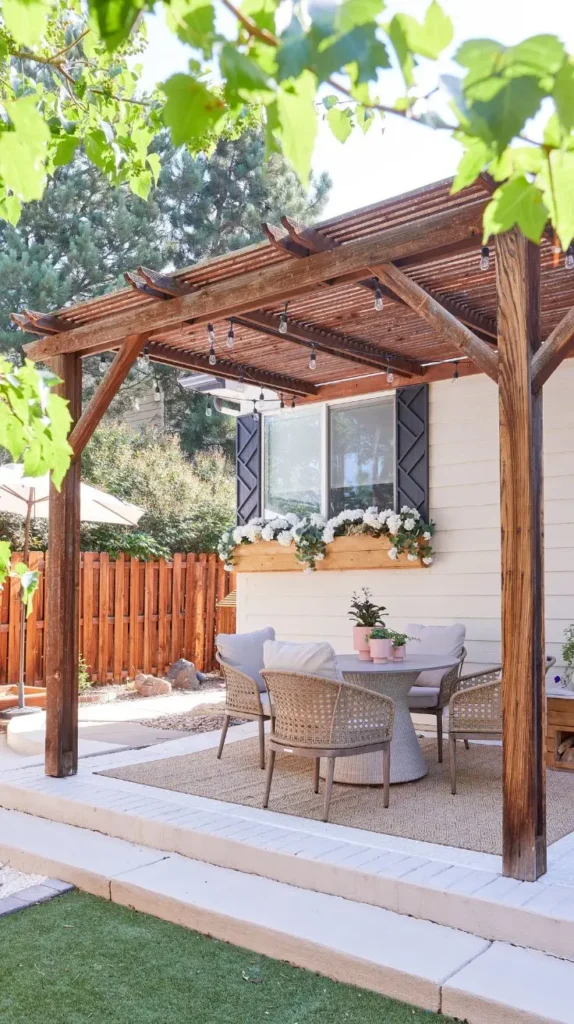
A minimalist patio design focuses on clarity, openness, and intentional simplicity. Instead of filling the space with excessive décor, this approach highlights clean lines, neutral tones, and functional elements. The result is a calm and uncluttered environment that feels refreshing and easy to enjoy.
This style is particularly effective in smaller outdoor spaces. By reducing visual clutter, the patio appears larger and more breathable. Carefully selected furniture and subtle landscaping enhance the design without overwhelming it. Every element serves a purpose, which creates a sense of harmony and balance.
Maintenance is also easier with a minimalist approach. Fewer elements mean less cleaning and upkeep, making it a practical choice for busy homeowners. The simplicity also ensures the design remains timeless, avoiding trends that may quickly go out of style.
The beauty of this concept lies in its restraint. It proves that a space doesn’t need to be complicated to feel elegant. Instead, simplicity becomes the defining feature that draws people in and encourages relaxation.
Colored Concrete for Bold Statements
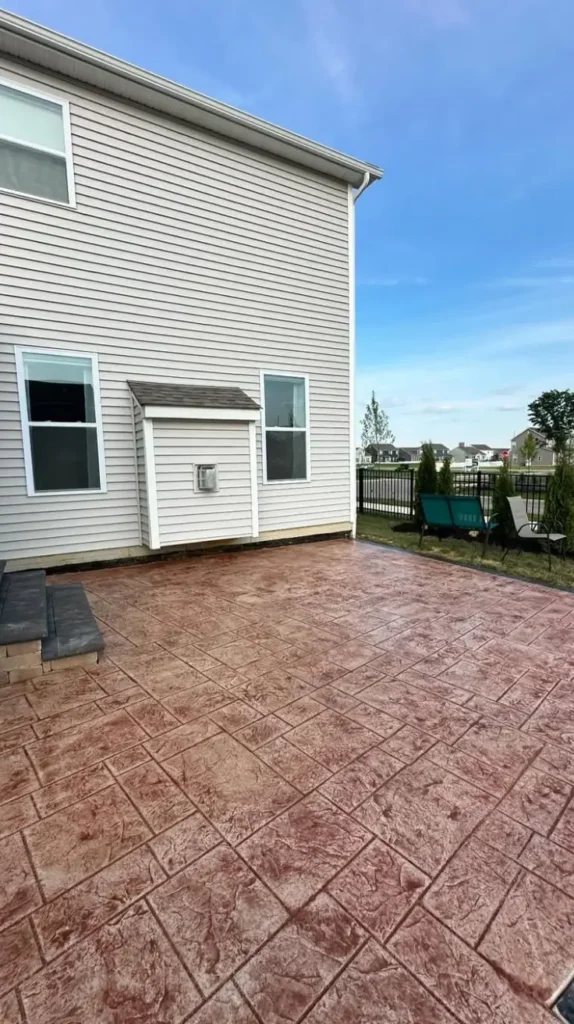
Introducing color into a patio design can completely change its personality. Colored finishes allow homeowners to move beyond traditional gray and create a space that feels vibrant, expressive, and unique. Whether using soft, muted tones or bold, dramatic shades, color becomes a defining element of the design.
This approach works well when the goal is to make the patio stand out. It can complement the exterior of the home or create contrast that draws attention. The color choice can influence the mood of the space; warm tones create a cozy feel, while cooler shades offer a more modern and refreshing atmosphere.
Advanced coloring techniques ensure long-lasting results. The color is integrated into the material, making it resistant to fading and wear. This means the patio maintains its visual appeal over time with minimal maintenance.
When combined with thoughtful lighting and décor, the impact becomes even stronger. The patio transforms into a bold, eye-catching feature that reflects personality and creativity.
Concrete Patio with Pergola Cover
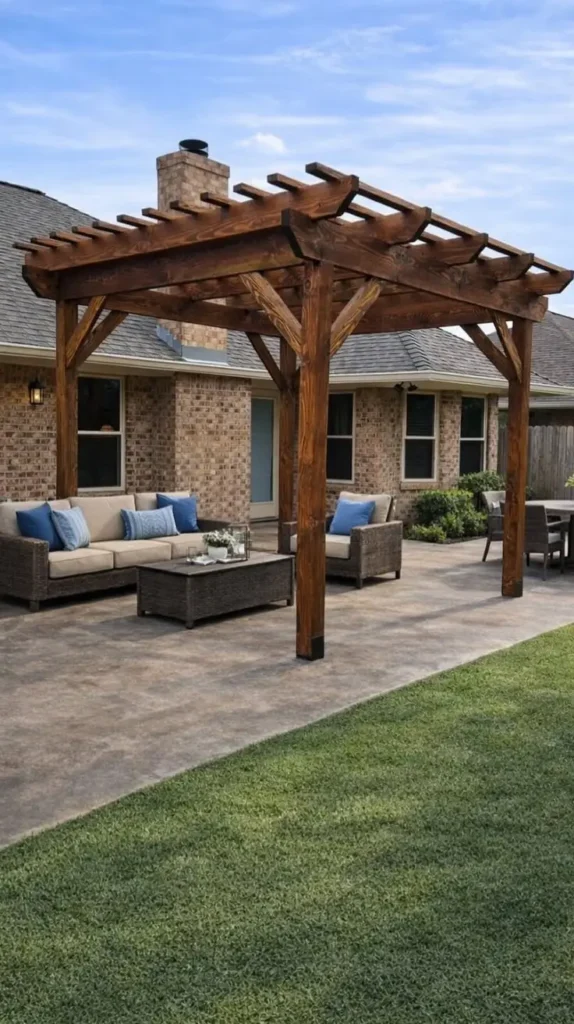
Adding a pergola to a patio introduces structure, comfort, and visual interest. It transforms an open outdoor area into a more defined space that feels like an extension of the home. The vertical framework balances the flat surface, creating a complete and cohesive design.
One of the main benefits is shade. The pergola provides relief from direct sunlight while still allowing airflow and natural light to pass through. This makes the patio more comfortable during warmer days. Additional elements like climbing plants or fabric covers can enhance both shade and aesthetic appeal.
The structure also creates a sense of intimacy. It defines the space without fully enclosing it, making it ideal for relaxing, dining, or hosting small gatherings. The partial coverage offers privacy while maintaining an open and airy feel.
As sunlight filters through the beams, it creates shifting patterns of light and shadow. This dynamic effect adds depth and keeps the space visually engaging throughout the day, making it feel alive and inviting.
Eco-Friendly Concrete Patio Options
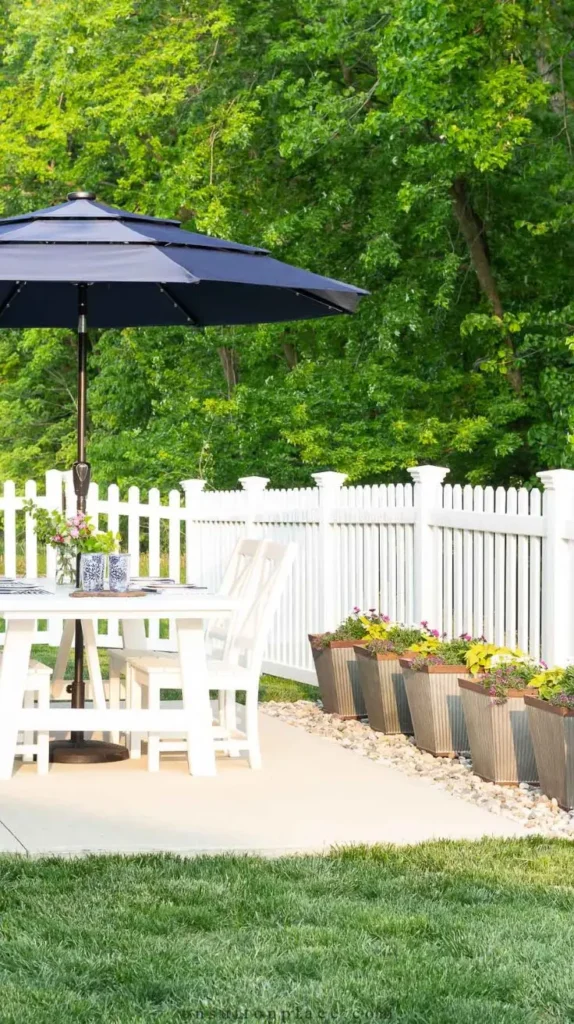
Eco-friendly patio designs focus on sustainability while maintaining strength and style. These options are perfect for homeowners who want to create beautiful outdoor spaces without negatively impacting the environment. Using recycled materials is one of the key approaches, reducing waste while still delivering durability.
Permeable surfaces are another important feature. They allow water to pass through rather than pooling on the surface, helping to manage rainwater naturally. This reduces runoff and supports healthier soil and landscaping. It’s a practical solution that benefits both the patio and the surrounding environment.
These designs also contribute to long-term efficiency. By choosing sustainable materials, homeowners can reduce maintenance needs and extend the lifespan of the patio. This makes eco-friendly options both environmentally responsible and cost-effective.
The overall result is a space that feels modern, thoughtful, and aligned with sustainable living. It proves that outdoor design can be both visually appealing and environmentally conscious without compromise.


