
Words by Claudio Sala and Julia Webster Ayuso, with photography by Alejandra Orosco
This story was featured in Unwoven Issue 03, Textile Exchange’s annual magazine. Read the full issue here.
High in the harsh landscapes of Peru’s central Andes, alpacas have sustained families for generations—not just as a livelihood, but as part of daily life and identity. For farmer Evelyn Diaz, preserving that bond means safeguarding both her family’s future and a heritage under pressure from climate change, economic challenges, and shifting traditions.
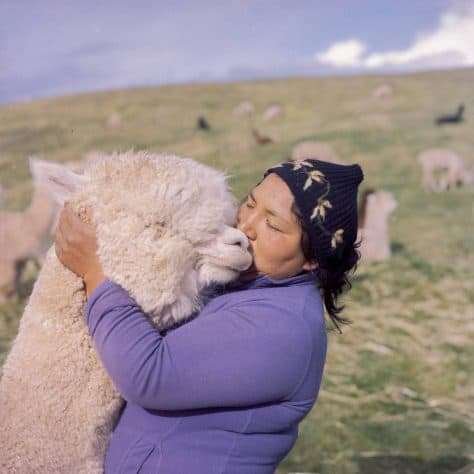
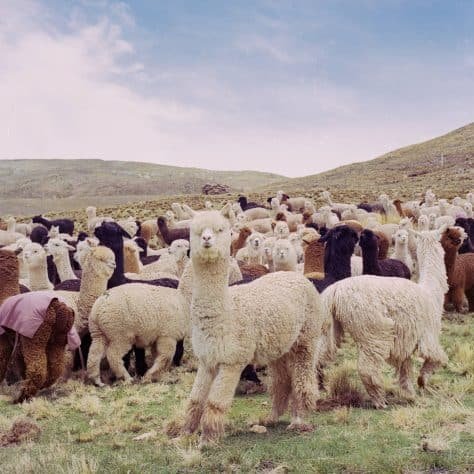
To Evelyn Diaz, an alpaca farmer in Peru’s highlands, the animals she works with every day are not merely her livelihood—they’re part of the family. “Sometimes my husband jokingly tells me that my mother must be an alpaca,” she says with a giggle. “From the moment I opened my eyes, they’ve always been right there beside me.”
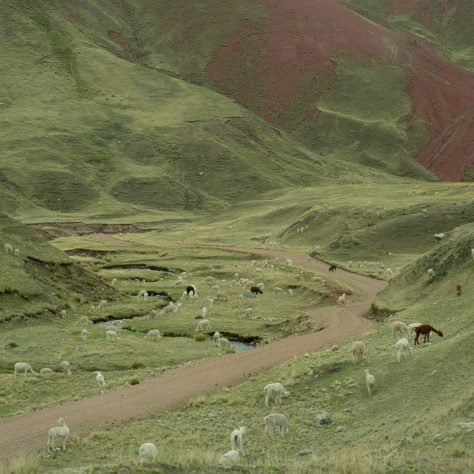
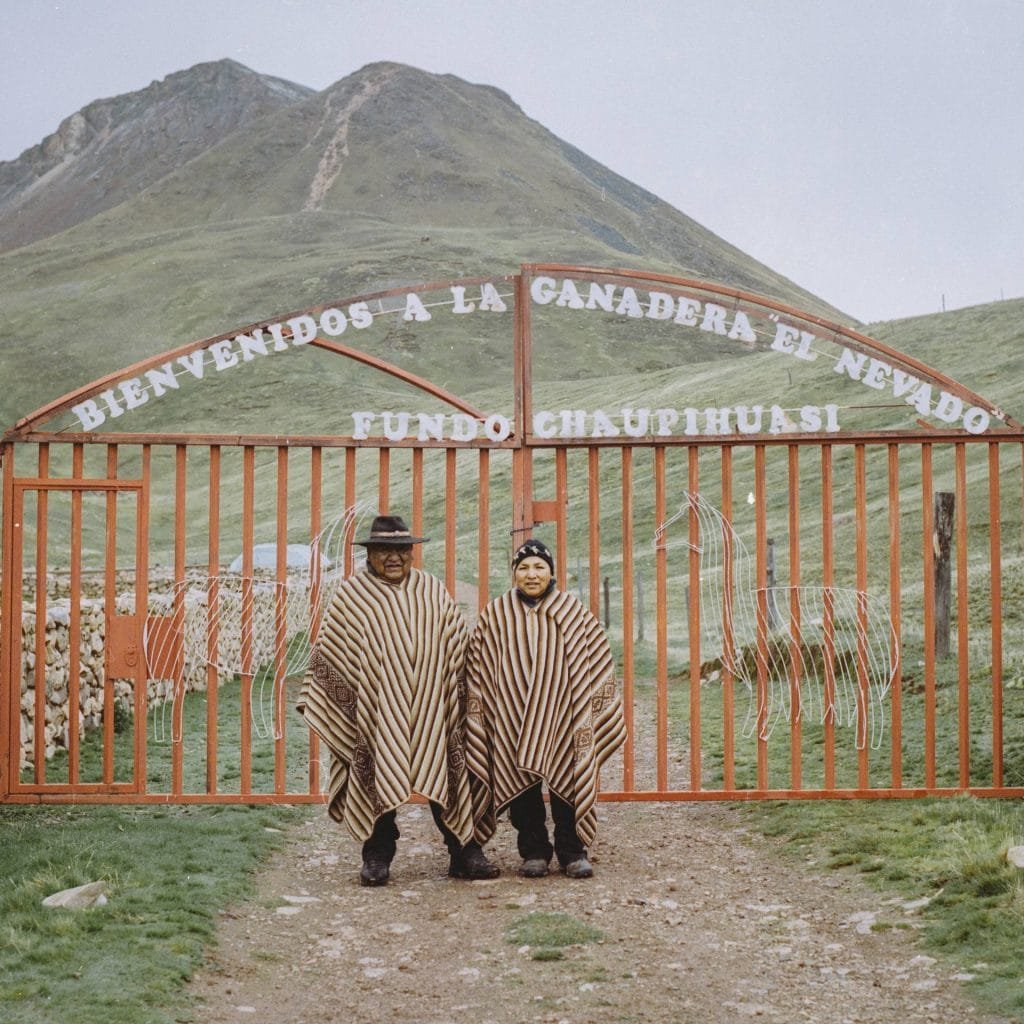
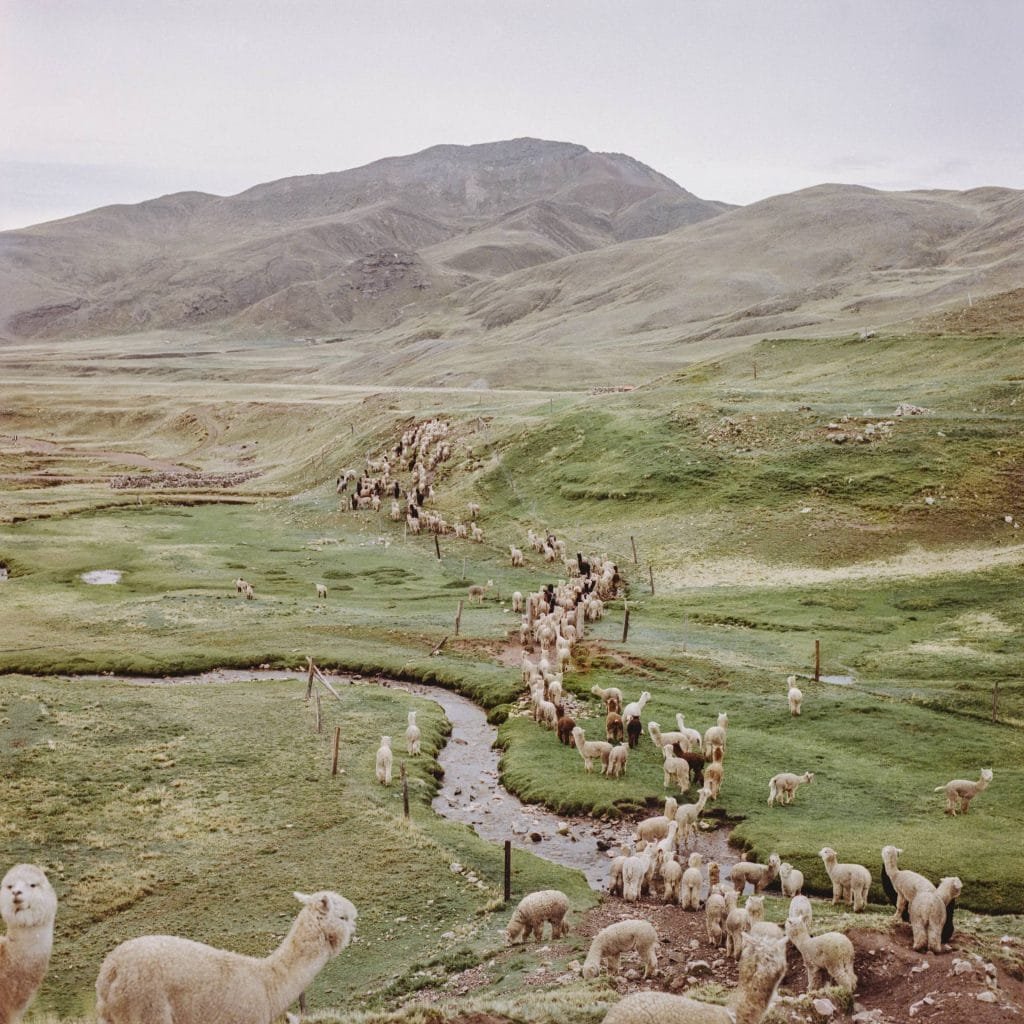
Evelyn’s family farm, Fundo El Nevado, sits high in the grasslands of the central Andes—a five-hour drive from the bustling city of Juliaca. At 4,500 meters above sea level in the puna, oxygen is thin and vegetation sparse. The changing climate is also making alpaca farming increasingly difficult. But after years in the city, Evelyn felt the call of home. Ten years ago, she decided to return to her childhood home to help preserve Peru’s alpaca farming tradition.
Today, the business she runs with her parents and husband is recognized by Textile Exchange’s Responsible Alpaca Standard, which ensures alpaca fiber is produced in a way that respects animal welfare, social welfare, and land health. It’s a philosophy that comes through clearly in the way Evelyn talks about her flock and the landscape they inhabit.
“These animals are our guardians,” she says. “They live closely alongside us—the people of the high Andes—and share the same ecosystems that sustain us all.”
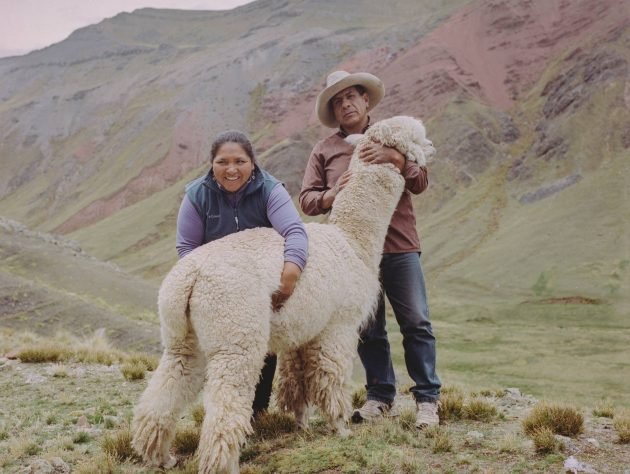
Evelyn’s parents, Máximo and Felicitas Diaz, began their journey here 40 years ago with fewer than 100 alpacas and a small inherited plot of land. At the time, they were considered subsistence farmers —a term Máximo rejects for suggesting mere survival rather than his entrepreneurial, growth-driven approach. Through smart decisions such as buying land from neighbors and growing their herd exponentially, they overcame the challenges of living in the region’s harsh climate with no public services. Over the years, they’ve become known for breeding high-quality alpacas, now their main source of income.
Over a breakfast of chaplas (Andean bread) and a quinoa and lamb soup, Felicitas, now 70, shared that the greatest hurdle in those early years was ignoring their neighbors’ warnings about expanding their herd and land too quickly. “It was risky, they said,” she recalled with a knowing smile as she served the hearty three-course meal. “But we didn’t listen, and we proved them wrong.”
The couple passed on their work ethic to their children. Evelyn, the eldest of five, stood out early on for her passion for alpacas and life in the puna. While her sisters dreamed of city life, she was up at 3am every day, helping her father with the daily tasks required to maintain a healthy herd—a routine that remains unchanged to this day. As she herded the alpacas, Evelyn explained that, like any other member of the family, the animals simply need constant love and care. “I just couldn’t stay away from them for too long,” she says.
When Evelyn and her sisters reached their teenage years, Máximo and Felicitas faced a tough decision. The puna wasn’t conducive to quality education, so they began splitting their time between the farm and the city. As the eldest, Evelyn often found herself acting as a part-time mother. “It was a huge responsibility,” she admitted. “During high school, I had to balance helping my parents manage the farm and taking care of my sisters. It wasn’t easy, but it taught me a lot.”
Her hard work and determination were reflected in her academic success. Thanks to her parents’ unwavering support, Evelyn became the first woman in her village to pursue a professional career, unsurprisingly choosing veterinary medicine. While studying at the Universidad Nacional del Altiplano de Puno, she met her husband, Oscar Vilca, who shared her love for alpacas and llamas. After graduation, the couple returned to El Nevado with innovative ideas for improving herd management: new herding techniques, keeping records on each of the animals, and the introduction of Western medicine.
However, these modern approaches initially clashed with Máximo and Felicitas’s traditional methods. “It was like talking to the most stubborn wall you can imagine,” Oscar joked. “I only gave in to stop the headaches their constant nagging was giving me,” his father-in-law replied.
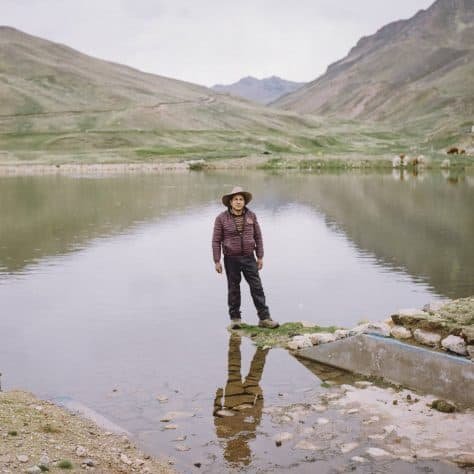
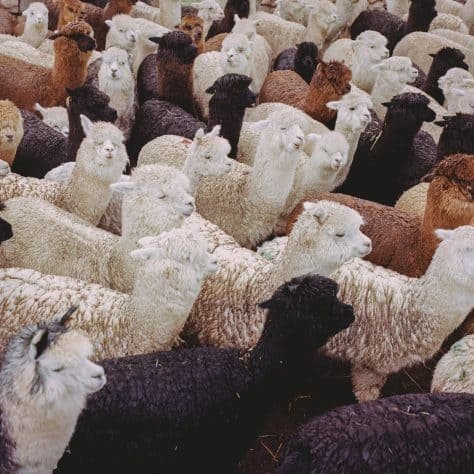
Their persistence eventually paid off. Mortality rates decreased, animal welfare improved, and the herd grew to over 2,000 alpacas. The family grew too: Evelyn and Oscar had two children. While Oscar fostered cooperation among neighboring farmers and collaborated with local governments to improve market access for alpaca products, Evelyn became a leading voice for alpaca farmers across Peru. Her ability to articulate the challenges farmers face—particularly women—caught the attention of Peruvian fashion designers and organizations eager to support initiatives that improve rural livelihoods, such as Meche Correa and Qaytu.
Evelyn is quick to point out that their work is far from finished. “There’s still so much to be done,” she says, describing her projects to create entrepreneurship opportunities for women, which ran into traditional expectations around their role as homemakers.
“With limited government support and few opportunities for alpaca farmers, many young people are losing interest in following their parents’ path.”
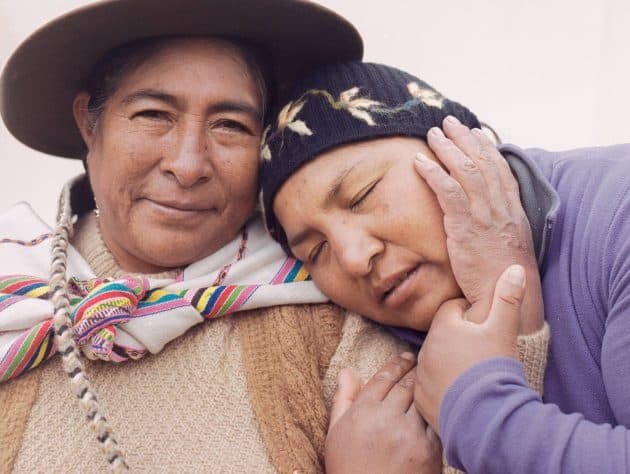
This generational shift is a significant concern for the Diaz family and wider alpaca farming community, and Evelyn and Oscar are determined to bring it to the attention of industry stakeholders.
When asked about the greatest challenge she faces as a female alpaca farmer, Evelyn is unequivocal: “Being away from my kids.” Even 30 years after her parents faced the same issue, it’s still almost impossible to balance farming and providing a decent education for one’s children. “The only option is for them to live in the city with a relative while you travel back and forth from the farm,” she says. She makes the four-hour commute to and from the city and the farm almost daily, in order to see her children as much as possible.
Despite the difficulties of highland life, Evelyn says the bond she shares with her animals is her greatest source of hope. “As a mother, I know it’s thanks to them that I have an income and can provide for my children,” she says.
“Apparently, we raised them,” she says of the herd. “But if they could speak, they would say that they raised us.”
This story was featured in Unwoven Issue 03, Textile Exchange’s annual magazine. Read the full issue here.
The post Preserving Peru’s Heritage One Alpaca at a Time appeared first on Textile Exchange.


