
Ontario’s hog farmers shipped about seven per cent more hogs in 2025 than in 2024.
The increase is part of a broader rise in demand for protein, which has created more demand for most high-quality sources of protein.
Why it matters: Hog production increases help contribute to the income of farmers and help grow the agriculture sector.
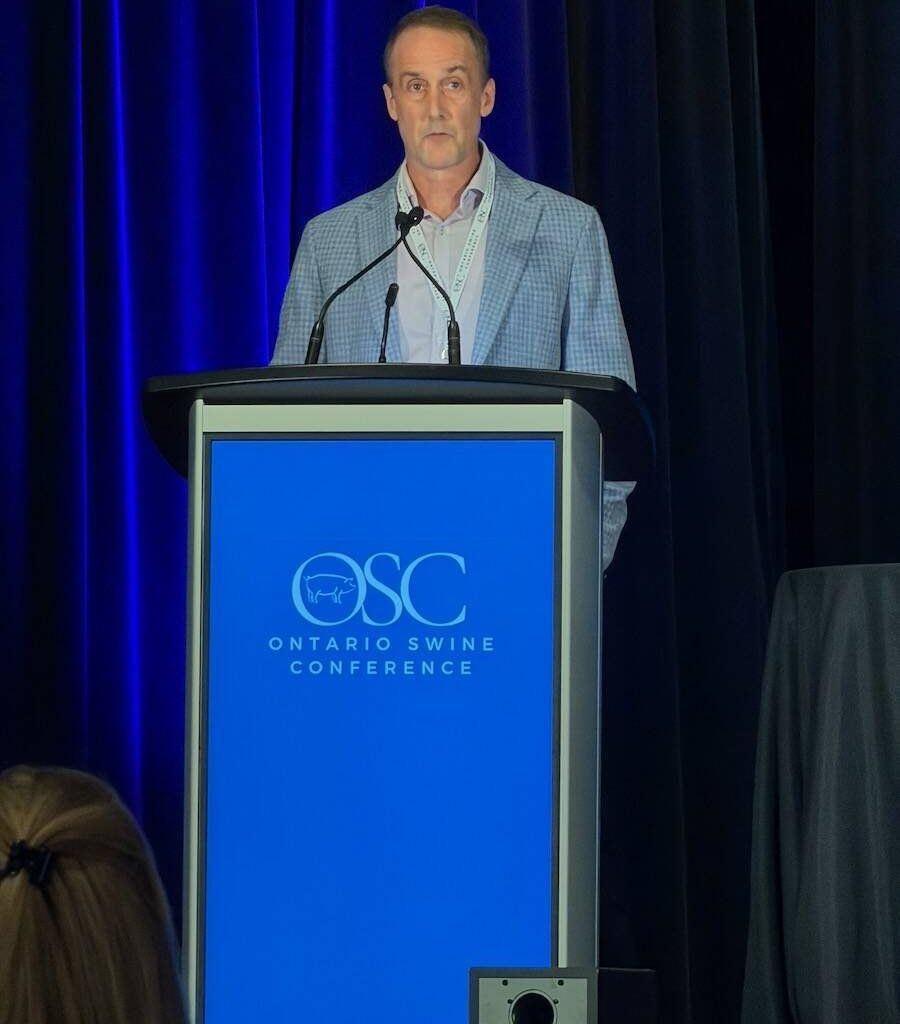
“The Ontario pork sector has benefited from a period of strength, and it’s been driven by a lot of high prices last year and steady demand for pork,” said Tara Terpstra, chair of the board of Ontario Pork at the organization’s annual meeting. The meeting was held in conjunction with the Ontario Swine Conference in Niagara Falls.
About seven per cent more hogs shipped resulted in a total of 6.2 million hogs shipped in Ontario in 2026. A lot of those pigs are exported, which meant a week of pain when the United States imposed across-the-board tariffs on Canadian exports early in 2025.
It is the continuing geopolitical uncertainty that informed much of what Ontario Pork did in 2025, Terpstra said in an address she shared with Ontario Pork’s executive director Ken Ovington. She identified federal and provincial elections and global uncertainty, especially around trade, as challenges.
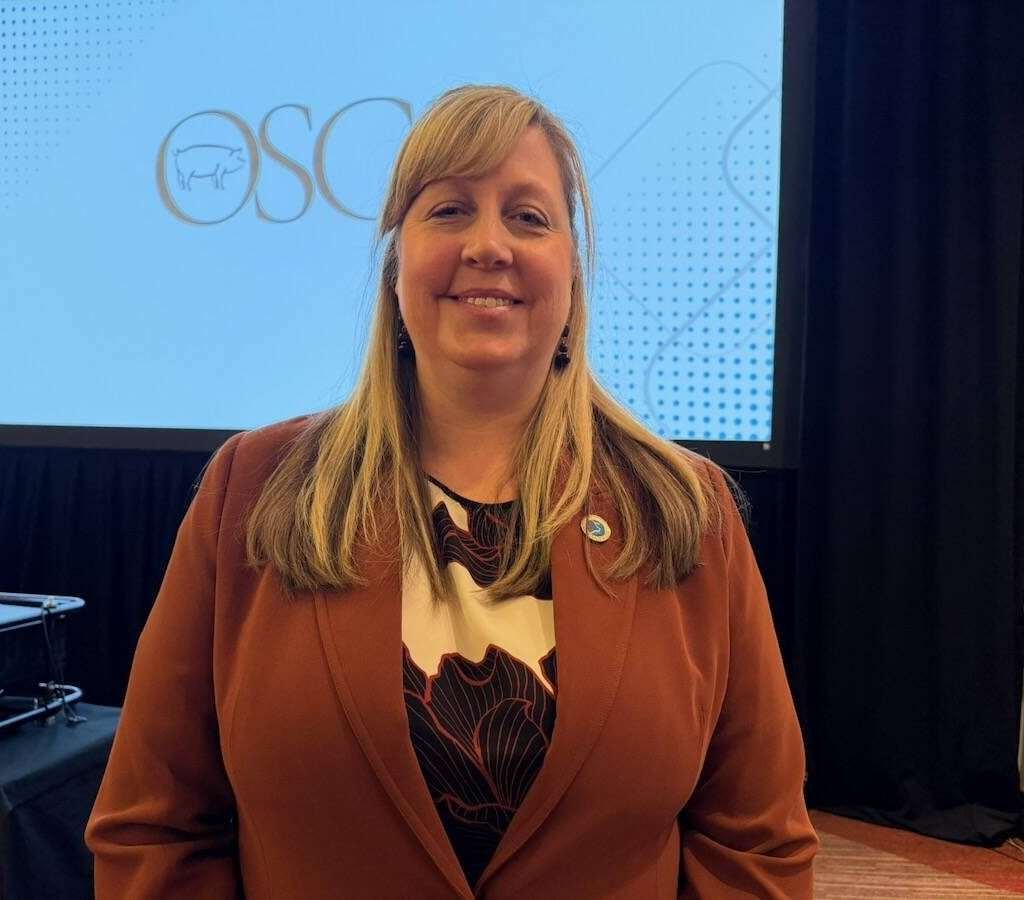
“When trade relationships become uncertain, or when tariffs are threatened or imposed, it’s extremely difficult for you to plan, invest and make long-term business decisions,” she said.
Ontario Pork has increased its advocacy at the federal level with trade uncertainty and the CUSMA North American trade agreement under review until July.
The many issues with the potential to affect pork producers have been an oppportunity for Ontario Pork to make its case with federal politicians and government representatives, including African swine fever (ASF) risk.
“Ontario pork producers will not be a silent casualty of geopolitical disputes. Ontario Pork has pushed hard on this file,” said Terpstra.
Evolving strategic focus
Ontario Pork adopted and implemented a new strategic plan in 2025, which resulted in changes in its strategic approach especially around areas creating volatility, including markets and trade.
The five areas of focus identified in the strategic planning process include:
- Advocacy
- Producer engagement
- Producer services
- Promotion
- Research and innovation.
The strategic plan was created after input from producers identified priorities.
“The result is a strategy that is about mitigating risks and delivering value, not adding complexity or creating new programs for their own sake,” said Terpstra.
Research is being refocused, she added, including more work on economic analysis of trade risks.
During the strategic planning process, it was determined that “the approach needed to be clear, research needed to be more focused and more deliberate.”
The goal is to make sure that research is of practical use to farmers, Terpstra said.
Ontario Pork has also made a deliberate differentiation between public outreach and product promotion in its new plan. The organization increased its education of young people, including creating educational events that engage people longer. An example is at the Royal Agricultural Winter Fair, where there was an education component and a separate production promotion component, said Ovington.
Product promotion is also evolving to help younger people learn to cook. Ontario Pork partnered with 25 content creators and showed them choosing and cooking pork from Ontario. The videos on social media platforms totalled about half a million views in a month.
Ovington says research has shown that the Gen Z generation was choosing less pork because they didn’t know how to cook it.
A young board of directors
Ontario Pork’s board of directors is younger than most farmer boards, partially because there are young people eager to be involved and Ontario Pork’s leadership development program is encouraging young people to become involved earlier.
Six of the board members have been there for less than two years, but Terpstra said that means they bring fresh ideas.
Processing capacity is still stagnant
Most of the pigs in Ontario are processed through two large plants, the Sofina Foods plant in Burlington and the Conestoga Meats co-operative plant in Breslau, and most of the increased production is exported as live hogs to the United States.
There has been discussion of an expansion of Conestoga Meats for several years.
Terpstra says Ontario Pork makes the point to government regularly that government help to build a new plant would keep more hogs in the province for processing, creating more jobs and economic development in the province.
The post Ontario hog production increases in 2025 appeared first on Farmtario.


