
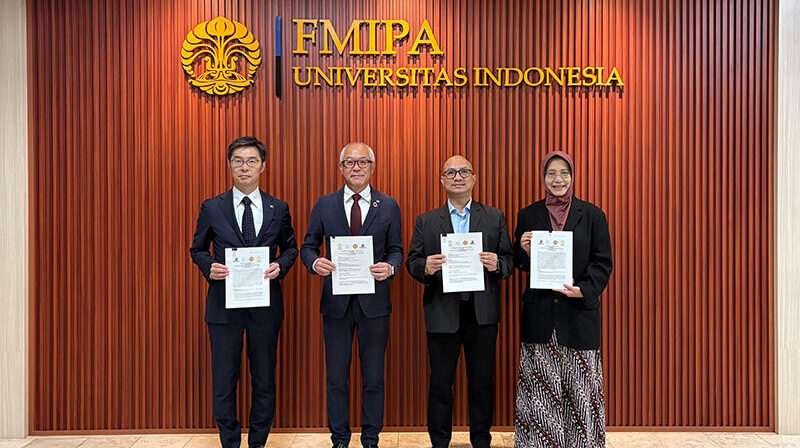
Bridgestone Corporation has launched a joint research project with Universitas Indonesia, Public University Corporation Yokohama City University (Yokohama City University) and Public University Corporation Maebashi Institute of Technology (Maebashi Institute of Technology) for the genetic analysis of para rubber trees. This collaboration will leverage trees and genetic information from Bridgestone’s natural rubber farm in Indonesia.
The joint project aims to create a marker-assisted selection technology that enables early identification of elite trees (high-yielding, stable performers). Through this effort, Bridgestone and the partner universities seek to contribute to improvements in the productivity and stable supply of natural rubber.
Masashi Otsuki, executive director, Institute of Advanced Technology, Bridgestone Corporation, said, “By co-creating with stakeholders across the natural rubber industry and promoting the sustainable use of natural rubber, Bridgestone strives to achieve the corporate commitment of ‘Ecology: Committed to advancing sustainable tire technologies and solutions that preserve the environment for future generations’ described in its Bridgestone E8 Commitment.”
Stable yet sustainable
While natural rubber is a renewable resource, its source, the para rubber tree, grows only in geographically limited regions near the equator and is susceptible to external factors such as climate change and disease.


