
Hog farms are embracing artificial intelligence and new digital tools to gain quicker and more efficient insights into their barn operations.
A series of speakers at the Ontario Swine Conference discussed tools they are trying to better manage data and pigs on hog farms.
WHY IT MATTERS: Artificial intelligence tools mean more conversational interaction with the software and the ability to catch anomalies in data for quicker human decisions on pig farms.
Hog farms are generating a large amount of data, says Sharlimar Martin, who works on the insights and data team at South West Ontario Veterinary Services.
“The issue really isn’t collecting it,” she says. “Oftentimes, you just see that this data isn’t utilized or integrated.”
That’s where artificial intelligence can add value by analyzing large data sets.
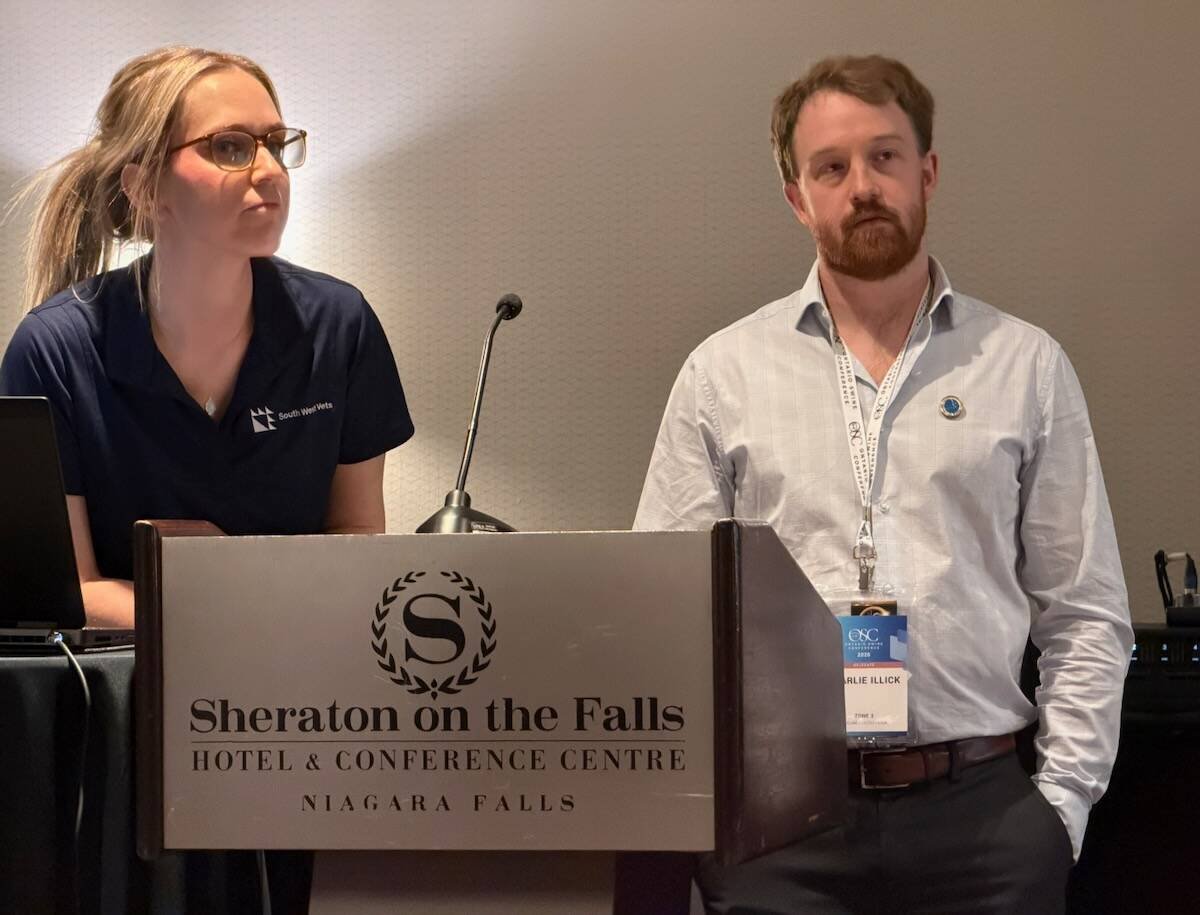
Ontario Pork board member and hog farmer Charlie Illick is using a new artificial intelligence option from CloudFarms, the software he uses on his farm. The software will compare farm data against targets identified by that farm to pick up patterns.
Illick checked the analysis of the report with his own calculations, and the AI report was accurate. A report identified issues with preweaning mortality.
After the report, Illick says he went in and changed some of the data based on steps they’ve taken, which allows the system to learn, in advance of the next report.
Martin says the artificial intelligence tools are in early stages.
“We’re at Version 1.0, but I think we have a lot to look forward to in the future, not only with this, but technology as a whole, and how things are going to shift and help us with direction and better decision making alongside your judgment.”
Aggregating data
A new Canadian company, Precision Livestock Diagnostics, has been created to manage the disparate data across hog farm systems.
The software merges production data and hog barn systems data together.
“You are eliminating the need to log into multiple systems to monitor performance,” said Martin.
SWOVS, Phason, a controls company and Green Analytics, a software company, are involved with PLD, according to its website.
PLD has created a natural language interface, which means a user can talk to the software and ask it questions as one would when talking to a person, said Martin.
Illick says he sees a future where a farmer has a chat box to interact with.
A producer can ask a question, “for example, why is my wean-to-first-service interval high and it’ll go through all your sows with high wean-to-first-service interval and it’ll identify something they all have in common.”
Digital data management is growing in sow barns
Corey Bosko, who manages production and compliance for the Progressive Group of Companies, a 45,000-sow company in Saskatchewan, is moving the adoption of PigFlow through the company’s sow barns.
Sow barns have gotten larger, but still have relied on cards on sow stalls and crates and manual entry of data. That can be hours of data entry per week. PigFlow, a mobile data entry system for hog barns, eliminates most of that manual data entry.
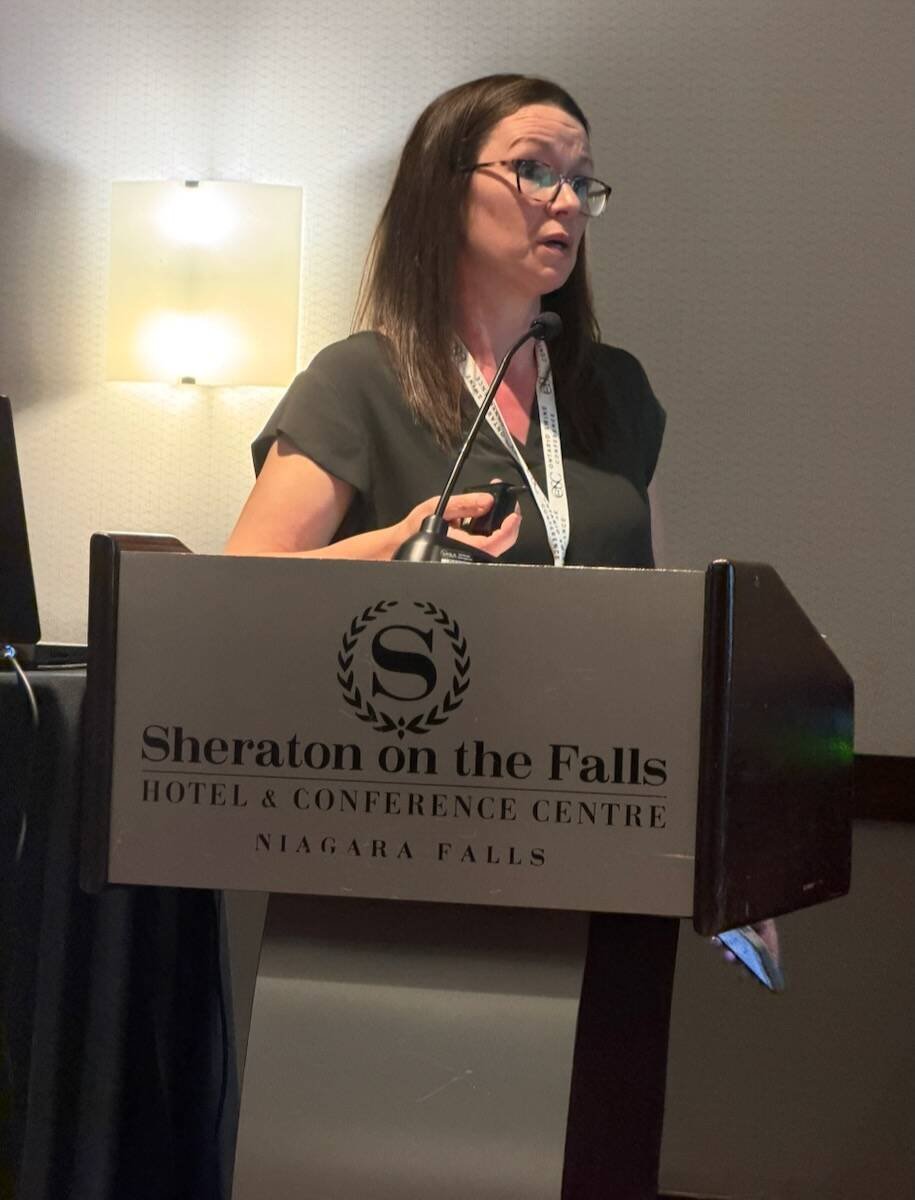
Entering data for groups of 350 sows that were bred at the same time in a batch farrowing system was hours of work, said Bosko at the Ontario Swine Conference, and the information wasn’t live, it was old data.
PigFlow has changed most of that. Workers are given Android phones with no SIM card, which operate off of the WiFi in the barns. Data is immediate, which has proved advantageous to managing the flow of pigs and breeding. It’s now easy for breeders to see where they are as far as targets for sows bred.
Adoption has gone mostly smoothly in the barns where the Progressive Group has adopted the software. Sometimes workers are reluctant to change, but it doesn’t take them long to see the advantages, said Bosko. The farrowing teams were more sceptical, as the cards on farrowing crates have been the source of truth for farrowing information.
It took the team halfway through farrowing a batch to decide that the phone data was a better way, she said.
The system also helps to better organize data for making decisions. PigFlow has an API that integrates with the gestal group housing feeding system in their barns, which has been helpful in limiting the number of sources of data to be managed.
The system helps manage workflow. The workers know exactly which room of sows with piglets that need to be processed next in order to keep the processing within the five-day limit that the company prefers. Piglet processing data can be easily exported for the veterinarian to examine if there’s a health issue.
Weaning days have also become more efficient, with data entered on phones and data being live.
“There’s no more chasing the data,” said Bosko. And as simple as it sounds, the chat function in the system makes moving sows a long way in a large barn easier.
A backbone data program, such as PigChamp, which is used by the Progressive Group, is still necessary when using PigFlow for data entry and communication.
The post AI and digital tools help automate hog barns appeared first on Farmtario.


