Reports this month that Microsoft would pause its carbon removal activities set off a fresh set of alarm bells about the long-term viability of the carbon market. After all, Microsoft is the world’s largest buyer of carbon removal credits, accounting for around 90% of all purchases; many argue the tech giant is the carbon removal market.
Microsoft chief sustainability officer Melanie Nakagawa told AgFunderNews that the company’s carbon removal program has not ended, and that it will continue to support its existing portfolio.
“At times, we may adjust the pace or volume of our carbon removal procurement as we continue to refine our approach toward sustainability goals. Any adjustments we make are part of our disciplined approach- not a change in ambition,” she said via an email.
Even so, the rumor has kicked up old doubts that have polarized discussions around carbon markets for more than a quarter of a century.
Advocates see them as a cost-effective way to offset emissions while also providing socio-economic benefits to developing countries. Critics highlight the plethora of quality and integrity issues surrounding them, arguing that carbon markets are often more “smoke and mirrors” than a climate solution.
In the decade following the Paris Agreement, we’ve seen an influx of public climate commitments and massive companies like Microsoft purchasing millions of credits in CO2 equivalent. Agrifood companies, large and small, have made a variety of emissions reduction goals via organizations like the Science-Based Targets initiative. Greenwashing accusations have proliferated alongside these commitments, and, in the last few years, both media reports and a perceived lack of financial gain have cooled enthusiasm.
And yet, “We have 50 billion tons of greenhouse gases, and 38 billion of it is CO2,” says Joseph Romm, a noted researcher, author, and climate expert. “We are going to have to figure out a way to do this carbon dioxide removal.”
‘Intractable’ problems in a gameable market
“It isn’t just that this is a flawed market; it is a market that has left a lot of people with the misimpression that this is easy to do,” says Romm.
A paper he co-authored in 2025 went as far as to call the problems persisting in carbon markets “intractable.” As the research argues, “the present market failures are not due to a few bad apples but rather to systematic, deep-seated problems, which will not be resolved by incremental changes.“
At the heart of the problem is the quality issue with carbon credits. Continued challenges around additionality, leakage, double counting, verification, environmental injustice, and permanence render many credits less impactful than sellers claim, often by a factor of five to 10 or more, according to the research.
The general consensus is that many previous carbon credits were poorly verified, did not address additionality, or were double-counted.
The Guardian‘s now-famous 2023 investigation into Verra’s forest carbon credits brought this problem into mainstream discourse by asserting that rainforest carbon offset projects in Peru, Cambodia, and the Democratic Republic of the Congo overstated how much they were preventing deforestation. The Guardian’s analysis suggested that these forests were, in fact, not under a genuine threat and would have remained without the offset project. Hence, the project was said to lack the necessary additionality to make the credits valuable, and corporations had therefore bought “worthless” credits. (Verra called the claims “untrue” and based on inaccurate information.)
“You have to get out of this space of paying people to not cut something down,” says Romm.” You don’t know if they were going to cut the forest down. It’s just too easy to game the system.”
The 2022 World Cup in Qatar is another notable example where football’s governing body, FIFA, claimed the tournament would be the first “fully carbon-neutral World Cup.” Complaints from a number of countries argued that FIFA’s claim was false “because of an underestimation of emissions and a lack of credibility in its offsets.”
“I want to get away from this idea that the next group of people who are really smart and well-meaning will solve these problems,” says Romm. “It’s been a series of smart and well-meaning people, and one of the problems is that there’s a lot of very smart and not so well-meaning people who will game any market. This happens to be a very gameable market.”
Maturity signals
Others express greater confidence in carbon markets, particularly regarding Microsoft.
Indigo Ag, for example, is on its third carbon removal project with the tech giant, the latest being a 12-year agreement announced in January in which Microsoft will purchase 2.85 million credits generated under the Carbon by Indigo program.
Indigo VP of sustainability services A.J. Kumar is confident his company’s work with Microsoft will continue. If anything, he says, Indigo’s latest deal with Microsoft is a signal of the maturity of soil carbon markets and that it is possible to do them at scale, with rigor and diligence.
He agrees that the core of most doubts is still around the science of carbon capture and the credibility of the markets.
This is not a new revelation for Indigo; the company was among the more than 250 consulting bodies for the Taskforce on Scaling the Voluntary Markets (TSVCM), from which the Integrity Council for the Voluntary Carbon Market (ICVCM) emerged in 2021.
ICVCM maintains standards for voluntary carbon markets, assessing the validity of projects and their methodologies against its quality benchmark, the Core Carbon Principles (CCPs).
CCPs are the gold standard, and credits with such certification are considered of the highest quality and integrity. At the end of 2025, Indigo’s soil carbon credits were awarded the label, the first instance of agricultural credits bearing the CCP certification.
Kumar suggests the CCP label is most important for what it offer growers. “That means they can trust that a carbon credit is something real and tangible, and that will be valued in that market by buyers. We stand to try and help farmers access the value for the ecosystem benefits they create, no matter the market.”
‘Companies pay money to get to heaven’
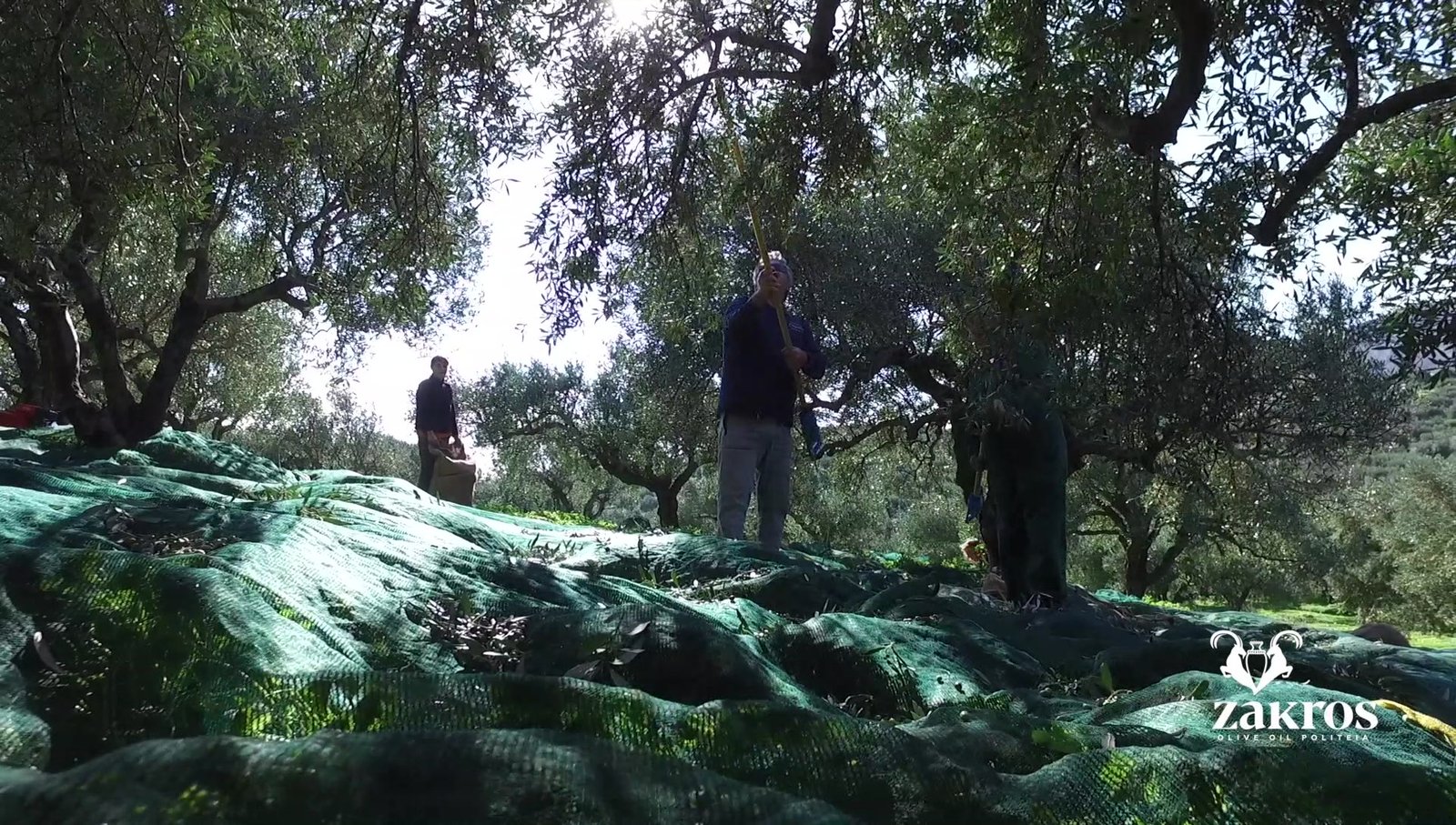
Regeneratively-grown olive oil retailer Eurof Uppington is less enthusiastic and farm more blunt about carbon markets: “My favorite metaphor is medieval indulgences,” he says. “Companies pay money to get to some kind of corporate PR heaven.”
Uppington’s company, Amfora, works with regenerative olive oil producers to help them transition to sustainable farming practices and access more competitive pricing. Carbon markets would, in theory, be another means of building income for these farmers, but Amfora has opted to forego any involvement with those markets.
The main force behind the decision was the lack of monetary benefit carbon markets would actually bring to Amfora’s growers. Uppington estimates that any actual money made would be the equivalent of farmers raising the price of their olive oil just 2%.
Or as he puts it, “It’s like a gnat on the butt of a donkey—effectively pointless.”
Beyond money, and perhaps more philosophically, he says selling carbon credits to massive corporations that continue to pollute would negate Amfora’s efforts. Locally, the biodiversity, sequestered carbon, and community health brought by regenerative practices might exist, but globally these things would be worth nothing because the purchaser of the credit would simply be polluting somewhere else in the world.
“We would be giving away the core of what we’re trying to do, which is to have a positive impact, by making it easier for someone else to pollute,” he says.

Weak credits ‘an historic challenge’
Uppington’s stance underscores a common concern with carbon markets—that they simply let corporations off the hook for continuing environmentally damaging practices.
However, Simon Haldrup, founder of soil carbon marketplace Agreena, believes this is an historic challenge and less of a concern in 2025.
“You’ll see very few companies making claims on these very weak carbon projects at this point,” he says.
Agreena’s own methodologies from three years ago, he adds, are “ineligible” at this point because the quality bar for credits has since risen.
Of carbon credits now, he says they are “transforming from super cheap excuses for taking certain actions to being much more integrity and compliance-based.”
Nowadays, it’s all about focusing on ensuring quality on the supplier side. “The demand side needs integrity for sure, but the key point is, what is actually happening on the supply side, and is it real and certifiable? Did someone actually go out and reduce emissions with carbon removals into soils and trees?”
Haldrup suggests that the focus now shouldn’t be on whether carbon markets, in and of themselves, are effective, but on whether they’ll ever be a relevant financing mechanism for farmers deploying climate solutions.
“The key thing is to activate the supply side into driving real, measurable, certifiable carbon reduction and removals,” he says. “If we just stop there, that would be great. The problem is that there is no financing going back to the farmers.”
Agreena’s carbon credits are calculated based on the amount of carbon a farmer has captured through practices such as cover crops, reduced soil tillage, and organic fertilizer, to name a few. Farmers can then sell their credits directly to buyers, bundle the credits with crops, or work with Agreena to find the best price. (Agreena takes a 15% broker fee.)
The financial argument for insetting
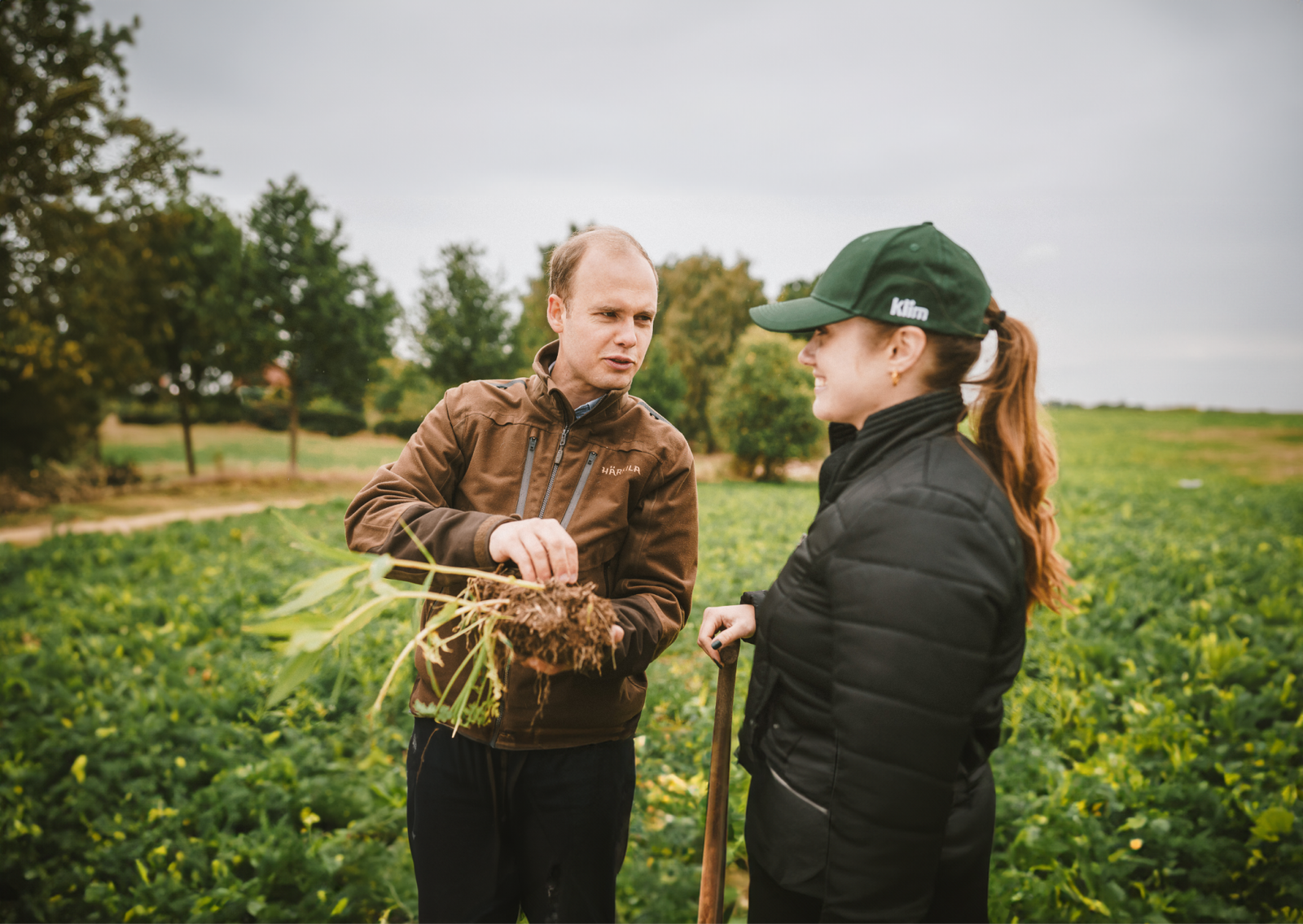
Like Agreena, German startup Klim helps farmers adopt regenerative practices, enabling companies to tackle emissions within their own supply chains. [Disclosure: AgFunderNews parent company AgFunder is an investor in Klim.]
Known as “carbon insetting,” this route involves companies funding carbon capture and/or removal projects within their own supply chain, rather than simply buying offsets.
The draw of insetting is that it directly addresses Scope 3 emissions—those outside a company’s control and therefore hard to track and manage. In agriculture and food value chains, this is especially tricky. There’s also a financial and risk reduction benefit for agrifood corporates, argues Robert Gerlach, CEO and cofounder of Klim.
“The case for insetting is a much stronger one because you’re also improving the P&L of the food company while reducing Scope 3 emissions,” he explains. “Balancing supply and demand is much easier with insetting than it is for offsetting.”
It can also ensure a more predictable flow of goods and less overall uncertainty in the face of climate change and other outside pressures, which in turn can strengthen the financial health of companies. Many companies, he says, now invest in regenerative agriculture practices and carbon market activities not for environmental reasons but to build more “resilience” into their own supply chains.
As the list of crops under threat grows (cocoa, bananas, coffee, wheat, and maize being a few), more companies will need to approach regen ag and carbon markets with a P&L mindset.
This mindset also addresses another sticking point for carbon markets: permanence.
“Permanence has been flagged as an issue for a long time,” he says. “If you do something with farmers, you need to have long-term commitments and long-term agreements. One-year contracts—”I’m buying a bit of it here and there”—don’t lend themselves to this business.”
Echoing that, Indigo’s Kumar highlights “durability” of carbon credits as an especially important factor moving forward.
“If you do these soil health practices long enough, then [the farm] becomes more profitable, it’s more resilient. But then what happens when the farm changes hands? That’s a question that comes up. How do we think about land passing from generation to generation, and seeing that investment in the soil as an investment in those future generations?”
Building better accountability: a lesson from finance
Romm is quick to point out that carbon markets aren’t going away just because they’ve been plagued with a lot of dubious claims in the past.
“There is going to be a role for well-studied permanent storage. Can the agricultural industry play a role there? Yes. Are these calculations complicated? They are very complicated.”
As outlined in his recent paper, there is still a “subclass of things that could potentially be well verified,” including clean cookstoves and landfill gas capture.
All of these things—and indeed any effort to store carbon and claim emissions reductions—will require more regulatory oversight that has the same rigor as found on, say, financial markets.
“There’s no accountability [in carbon],” says Romm. “The brokers here understand that if they don’t certify a deal, someone will find a broker that will.
If there were no regulatory oversight of the stock market, I could issue stock for any company. I can just say “Hey, this stock represents one share of this company, and I’m going to charge you $200 for that. And someone else might say, “I’’ll sell you a share of that for $20.”
If no one is calling the balls and strikes, he continues, the industry winds up in a race to the bottom, known in economic circles as Gersham’s Law, where bad money chases out good money.
“Until you put in an independent, enforceable system in place, then you are always going to compete on price,” he says.
“The fact that something is cheap doesn’t always mean it’s worthless. But we’re talking about average prices of $2 or $3 a ton. If we could solve the climate problem, I think we would have solved it quite a long time ago.”
The post What’s next for carbon markets? Maturity signals or ‘medieval indulgences’ appeared first on AgFunderNews.
- Source: https://agfundernews.com/whats-next-for-carbon-markets-maturity-signals-or-medieval-indulgences