
Bringing construction projects to completion in Ontario has become increasingly convoluted, an engineer from MNT Consulting Group told the recent annual conference of the Canadian Farm Builders Association (CFBA).
That won’t change until the numerous stakeholders involved in such projects can somehow be brought together to share their input simultaneously.
WHY IT MATTERS: With costs continuing to rise for so many of the other aspects of barn construction, it can be frustrating for farm builders to also see more of their financial, time and human resources get tied up on permits, approvals and inspections.
A consulting engineer on farm and infrastructure construction projects for about 20 years, Michelle Dada told the March 25 CFBA gathering in Stratford that her career has been roughly split in two: the earlier half during which approvals were relatively streamlined and the most recent half — especially after the COVID-19 pandemic — during which virtual meetings have become more common, approvals from municipalities have increasingly been split into multiple departments instead of a single building official, and there has been a growing pattern of “siloed meetings and email chains that go on for months.”
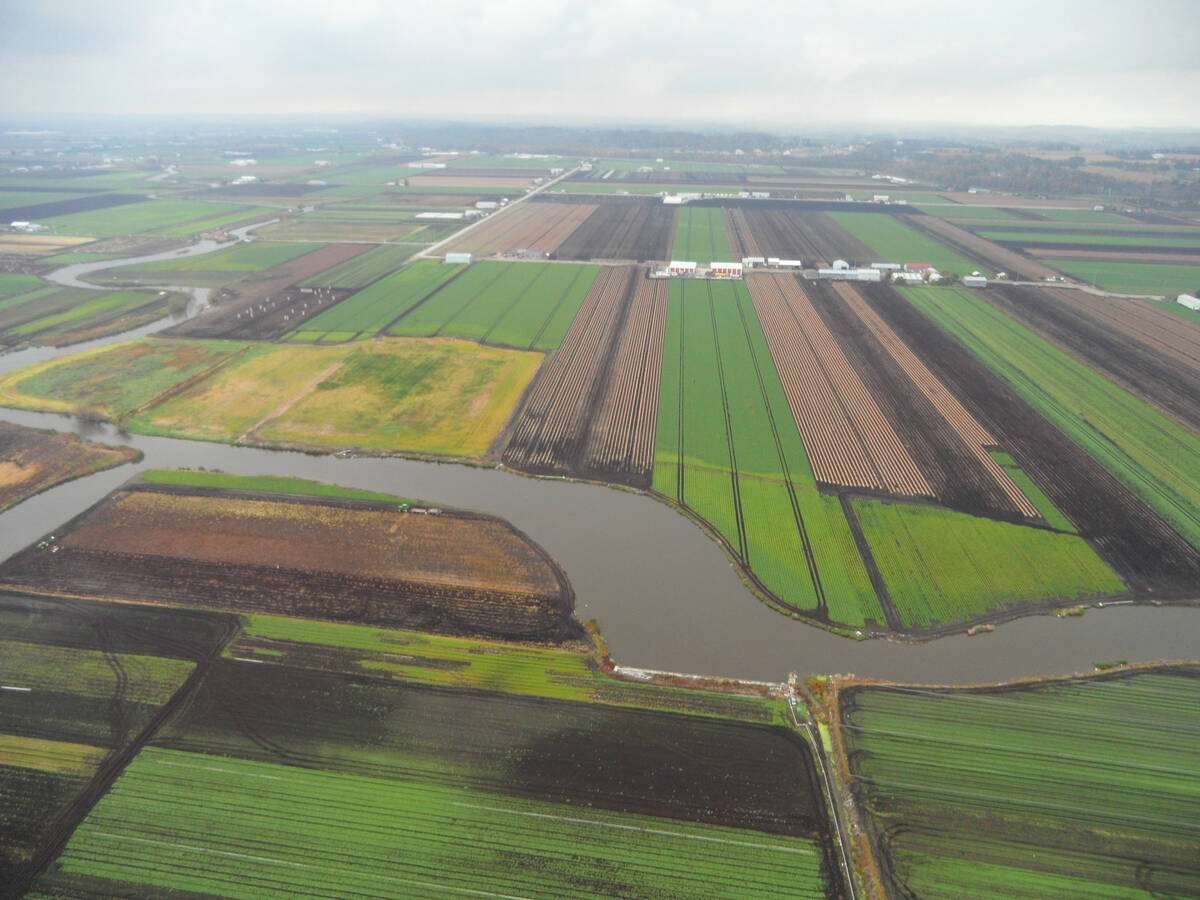
Barrie-based MNT Consulting Group works a lot in septic and other infrastructure design, Dada explained, but has also become increasingly involved in agriculture — including projects in the Holland Marsh and areas surrounding Caledon, King City and Stouffville.
“What I hear continuously is how hard it is to work through approvals,” she said of her firm’s farm-based work — which doesn’t involve the actual building design but does include pretty much everything else that’s required in making a construction project move ahead.
Dada described farmers — and, as a result, the projects they want to build — as practical. But “that practicality often conflicts,” she continued, “with how many approval processes have been created” for bringing those projects to completion.
When a farm project owner or farm project builder contacts MNT, she said, “they’ve typically hit a wall in the process.”
New roadblocks have appeared
The list of possible roadblocks never seems to get smaller. Among the elements Dada listed were zoning approvals, site plan amendments, development charges requirements, septic regulations, minimum distance separation rules, conservation authority-enforced permits related to flood control and environmental conservation, and a farm building code that was updated in 2025 and also included enhanced requirements for complying with the fire protection code.
“One-and-a-half years to get approvals is not workable for most people,” she said, yet that has becoming increasingly common in Ontario farm country,
Dada encouraged the building contractors in the room to, for major projects, make sure they have one person employed either at their company or through a consulting firm like MNT who is dedicated to co-ordinating the applications, approvals, inspections and signing-off of permits.
Engage in “pre-consulting,” she continued. Get as many stakeholders as possible together — ideally on-site but virtually if that’s not possible — at the same time to identify possible constraints and bottlenecks to the project. If specialized inspections regarding the environment or soils will be necessary, “can we get those consultants on site early just to have eyes on it?” And can regulators take advantage of the opportunity to comment on the plans ahead of time?
Hopefully that way, Dada said, after the excavation work begins, “your focus can be on optimizing the activity on the site.”
She agreed, however, that it has become increasingly difficult to make these all-hands-on-deck meetings happen.
Post-COVID, there was a huge shift away from on-site, in-person meetings in favour of remote applications, inspections and approvals. Concurrently, Dada believes, a greater disconnect has developed in municipal governments between communications channels and on-the-ground staff.
The chain of command for who’s in charge of which aspects of project construction has become more complex. Nowadays, she suggested, you’re often dealing with three or four different departments to get matters related to construction dealt with.
Regulations related to conservation authorities, the Oak Ridges Moraine and the Niagara Escarpment add to the complexity. Sometimes there are conflicting regulations and interpretations between the municipality and these environmental-themed agencies.
“It all has a huge impact on timelines and cost.”
Other nuances of project completion have also changed in recent years. Dada received a call on the way to the conference about a building that had been used for 20 years as housing for workers but only recently was inspected for the first time, leading to an order for changes to be completed.
Rise in post-construction inspections
In general, she said, the farm building sector is seeing a lot more post-construction inspections, compliance orders and enforcement than it did a decade ago.
“It’s not so often now that their reports get put on a pile and forgotten.”
Following the 2025 update of the national farm building code, there has also been “a huge uptick” in fire code enforcement, she stressed, potentially adding significant costs on farm projects for provision of fire routes and fire protection infrastructure.
The latest development is the Doug Ford government’s proposal to amalgamate 36 conservation authorities into nine — taking the governance models of those agencies from being based on river watersheds to much larger, Great Lakes-based watersheds.
Dada said it’s possible that the proposed amalgamation will eventually streamline applications and approvals if it leads to the creation of a single portal for all matters related to flood control and environmental conservation. She’s not too optimistic at this early stage, however, because it also has the potential to spread a smaller number of staff over much wider areas, thereby decreasing the possibility that someone from the enforcement agency will be available to be on-site for one of the in-person meetings for which she strongly advocates.
“That’s going to be a big thing we’ll see in the next few years,” she said, of the potential for conservation authority amalgamation for streamlining construction approvals. “In theory, that could be good. But there’s going to be a steep learning curve.”
The post Having red tape specialist could pay dividends for Ontario farm builders appeared first on Farmtario.


