
After 10 years in business, vertical farming company Growcer highlights how a slow-and-steady approach to growth provided stability in a sector that has experienced some turbulence.
The Ottawa-based company received the Governor General’s Innovation Award earlier this year for its novel approach to food sovereignty and sustainable technologies in food production.
WHY IT MATTERS: Indoor agriculture, including containerized production systems, could have a more significant impact on local food security.
Growcer manufactures modular container units for the production of herbs and leafy greens. This includes hydroponic units, what the company is best known for, as well as modular root cellars, community fridges, and food processing units. Purchasers of each unit are provided with operational training and ongoing support.
Now operating in 40 countries, Growcer’s origins lay in the Canadian Arctic.
“We had volunteered for four or five years in Iqaluit and got to know some of the local folks in the food security community there, and realized one of the big challenges was just bringing in food, and of course it being wilted and not appealing after just a couple days, or even by the time it arrived,” says Corey Ellis, Growcer chief executive officer and co-founder.
“We started thinking about how we could address that and partnered with a number of communities in the north over the following few years. We deployed the world’s first indoor farms, operated in the Arctic Circle. Those are still up and running today.”
Success amidst consolidation
A general lack of profitability, driven in part by a lack of forethought in design and production efficiency, is widely pointed to as a barrier to success for some business in the vertical farming sector. Like the investment bubble that followed the legalization of cannabis in 2018, the vertical farm sector is now experiencing a period of consolidation.
“It’s in a little bit of a lull period. There was lots of investment early on, but there have been business failures, or projects that were not economically viable,” says Luca Galler, master’s student researching containerized food production systems in the University of Guelph’s Controlled Environment Systems Research Facility.
“There were cases where we were trying to reinvent the wheel…sometimes you would see these really high stacking systems that require a crane lift to reach the top. That becomes inefficient really quickly,” he said. “I think maybe we tried a little too much all at once.”
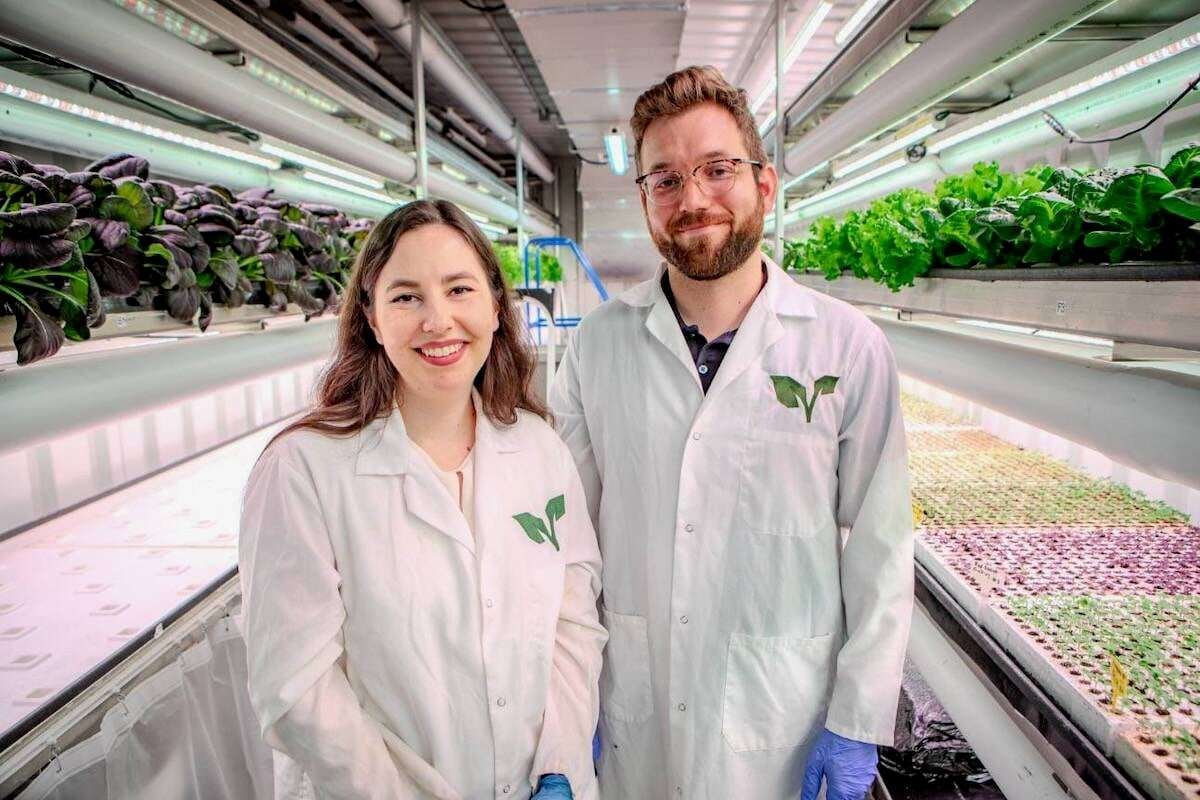
Ellis and his co-founder, Alida Burke, avoided the investment bubble in part by, at least initially, not raising investment money.
A few years after establishing a footprint in Canada’s north, the pair did solicit investment on the television show Dragon’s Den. They did not accept any of the offers, says Ellis, though the experience “was great visibility” from a customer acquisition standpoint.
“We went on to sign with a few large food service companies. So, moving away from not only serving the Arctic and remote communities, but also incumbents in the food supply chain that import all their vegetables. Obviously, they need something of high quality and good prices. We started operating with companies like that, that operate cafeterias, also mine sites. That was another big one,” Ellis says. “Really just kind of grew the business organically. We didn’t raise investment money for the first seven years of business. We managed to continue doubling the size of the business every year.”
In 2025, Growcer acquired Freight Farms – its largest United States-based global competitor.
“Our whole industry is going through a contraction. People overestimated the growth expectations and built businesses that weren’t sustainable. We are in a position, having built a business without that many investors, to have built-in sustainability from day one,” Ellis says.
“Ultimately, the way to think about it is they were built to serve investors. They didn’t actually solve a customer problem…it’s not a contraction for contraction’s sake, we’re just getting back to where it should have been all along.”
Setting profit expectations
There is no shortage of problems to be solved in containerized production. Profit margins in vertical systems remain smaller than some would like, for example, while the types of crops that can be viably produced remain in the herb and leafy green category, at least for now.
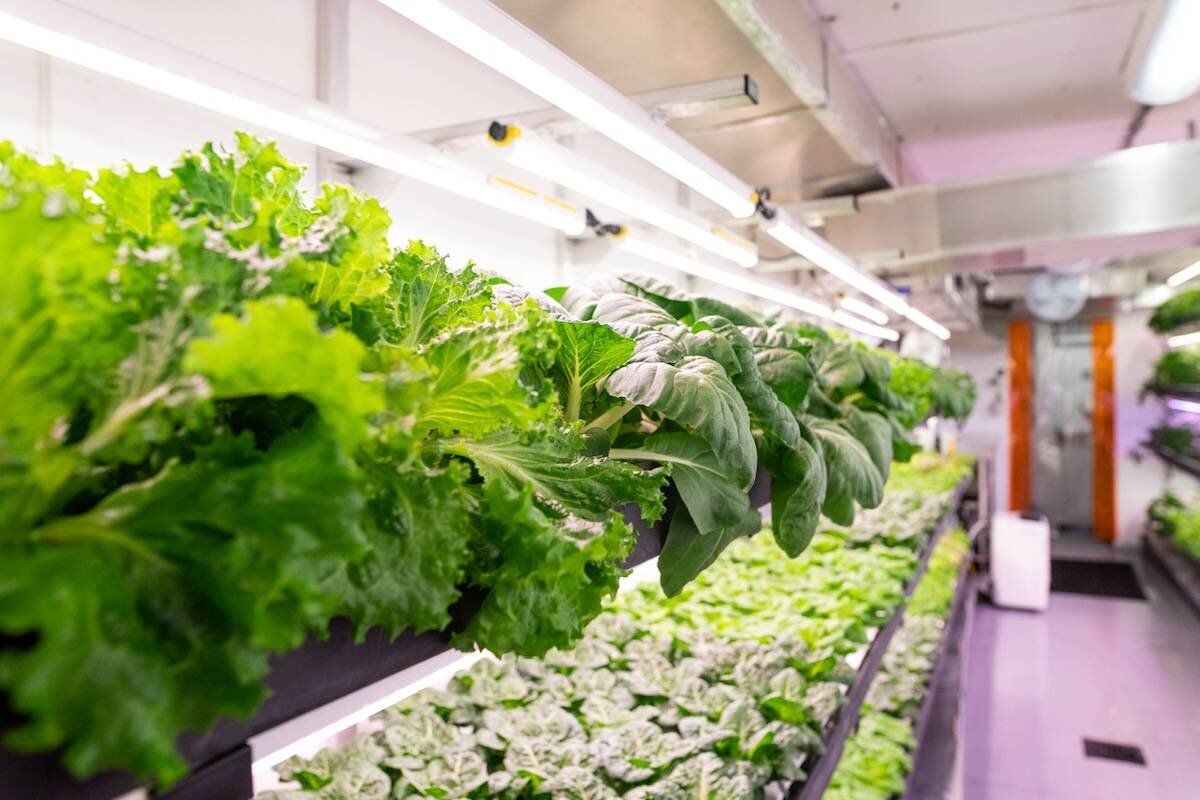
Ellis says Growcer customers are encouraged not to “bite off more than they can chew” with their modular systems, and to set realistic expectations for returns.
“The key to being profitable in this business is clear expectations. Second, is a good operator that controls costs and pays attention to yield. If you got those things and you’re in a place where electricity and labour costs are about the average in Canada, it is possible to be profitable,” he said. “You’re not going to be earning 50 per cent margins. You’re going to be earning 20 per cent margins. That’s just the life of being in farming. It is doable. Is it a slam dunk everywhere? No. Should everybody do it? No. But it’s about having the right expectations.”
Looking ahead, Ellis and his colleagues aim to strategically analyze their overseas markets for those with the greatest depth of growth, while also looking for distribution partners and at the production of different crops “that make sense in the local area.”
Sector-wide, Galler reiterates research into many aspects of production – lighting optimization, improved energy use efficiency, and different and higher-value cropping options – remain priorities.
“We’re working on the science right now, and we have done projects showing vertical farming is economically viable. But right now, we are working on tight margins. Those margins are going to get better as we make improvements,” she says. “It’s a matter of time and setting things up right. Again, there are very viable systems. There are just a few kinks in the industry, like any other industry, that needs to be worked out. And it’s going to be very important to Canadian agriculture in the future.”
The post How Ottawa indoor farm supplier Growcer succeeds in a consolidating sector appeared first on Farmtario.


