
A yard doesn’t need constant watering, endless mowing, or expensive plants to look breathtaking. Sometimes, all it takes is the quiet strength of stone. Rock landscaping ideas have become a favorite for homeowners who want beauty without the burden. These designs bring texture, contrast, and a sense of calm that traditional lawns often lack.
There’s something deeply grounding about natural stone. It tells a story of time, resilience, and simplicity. Whether the goal is a modern outdoor space or a rustic escape, rocks can shape the entire atmosphere. Even better, they require very little maintenance, making them perfect for busy lifestyles.
And here’s the twist: what looks simple on the surface can completely transform how a space feels. The right combination of gravel, boulders, and plants can turn an ordinary yard into something unforgettable. Some of these ideas might seem subtle at first… but their impact? That’s where the magic really begins.
Zen Garden Calm with Gravel and Stones
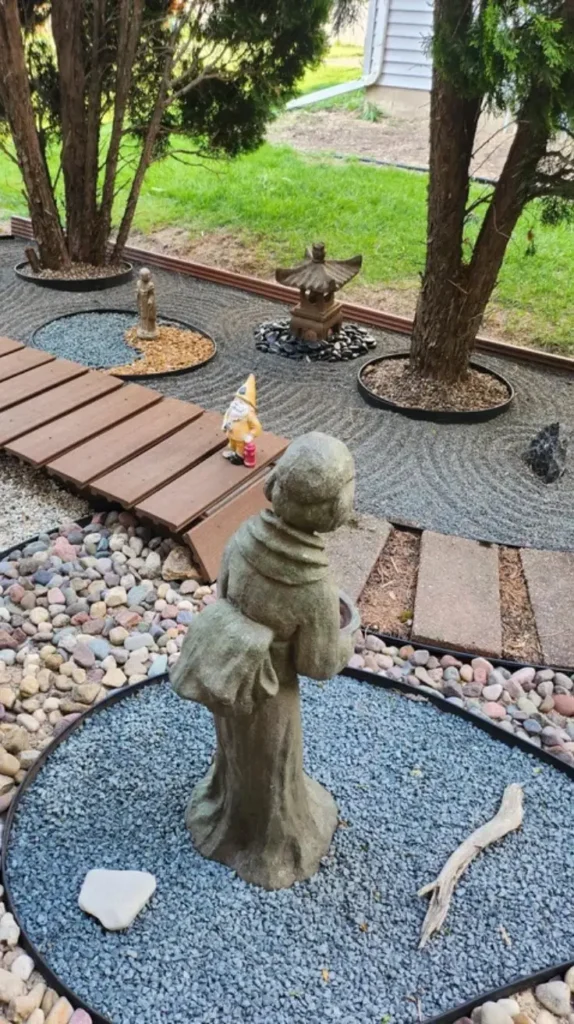
A Zen-inspired outdoor space offers a peaceful escape from the noise of everyday life, and this design style relies heavily on simplicity, balance, and natural textures. Fine gravel acts as the base, creating a clean and soothing visual surface that reflects light beautifully throughout the day. Carefully placed stones serve as focal points, each one positioned with intention to create harmony rather than clutter. The gentle patterns raked into the gravel introduce a sense of motion, often symbolizing flowing water or quiet waves, which adds emotional depth without overwhelming the space.
This type of setup works especially well in small yards, side gardens, or even compact courtyards where simplicity is key. Adding a few subtle elements, such as low shrubs, moss, or sculptural plants, enhances the natural feel without disrupting the calm atmosphere. The muted color palette allows the textures to shine, creating a space that feels both grounded and refined.
Another advantage is the low maintenance involved. Unlike traditional gardens, there’s no need for constant watering or trimming. Occasional raking keeps the design fresh, and weeds are easy to manage. Over time, this space becomes more than just a design, it becomes a retreat that encourages relaxation and quiet reflection.
Dry River Bed for Natural Flow
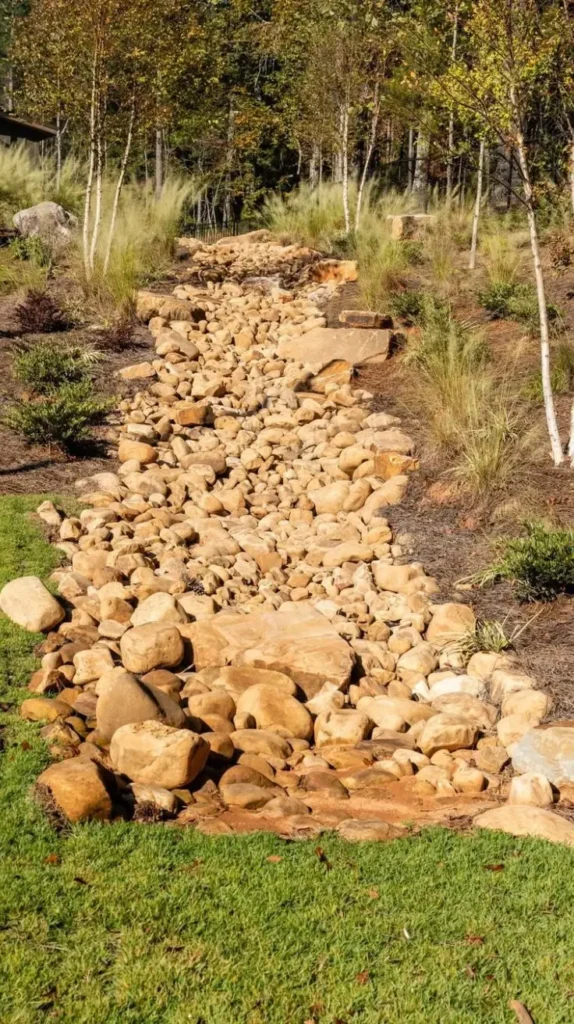
A dry river bed introduces movement and direction into a landscape without relying on actual water. This idea mimics the look of a natural stream, using a mix of stones and pebbles arranged in a winding pattern that guides the eye across the yard. Larger rocks are typically placed along the edges to define the shape, while smaller stones fill the center, creating a layered and realistic effect.
This feature works beautifully in both large and small spaces because it naturally draws attention without feeling forced. It can connect different areas of the yard, making the entire layout feel more cohesive and intentional. Adding ornamental grasses or hardy plants along the sides softens the edges and enhances the organic appearance, making it seem like it has always been part of the landscape.
Beyond aesthetics, this design also serves a practical function. It helps manage water flow during heavy rain, reducing erosion and preventing water from pooling in unwanted areas. This combination of beauty and function makes it a smart addition to any outdoor space.
As sunlight shifts throughout the day, the stones reflect different tones and shadows, creating subtle changes that keep the design visually interesting. It’s a quiet feature, but one that adds depth and character in a way that feels effortless.
Rock Pathways That Guide Every Step
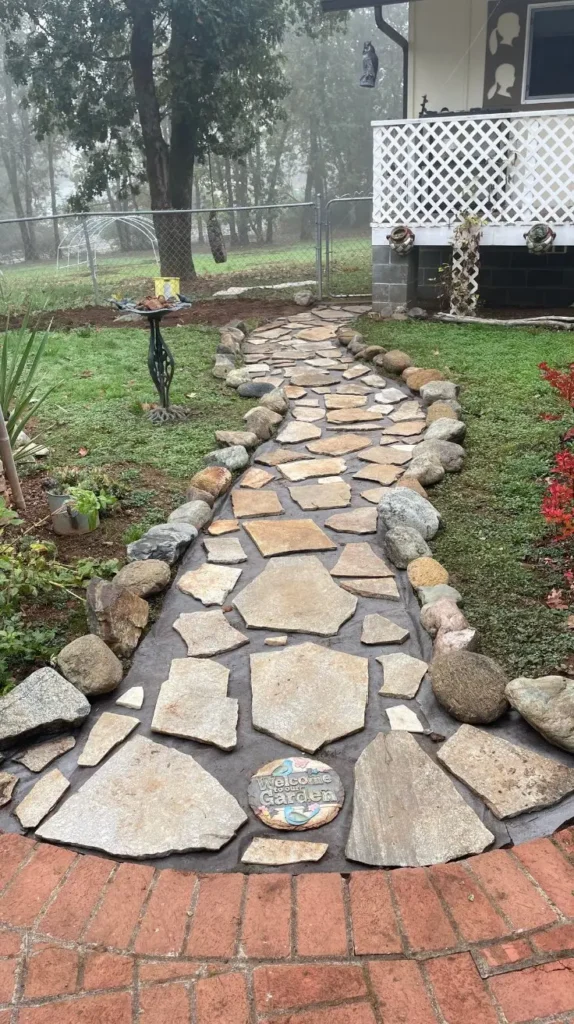
Pathways play a crucial role in shaping how a yard is experienced, and using stone materials can turn a simple walkway into a standout feature. Instead of walking across plain grass, a thoughtfully designed path invites movement and exploration. Flat stepping stones create a structured and stable route, while gravel paths offer a softer, more relaxed feel with a satisfying crunch underfoot.
Curved pathways tend to feel more natural and engaging than straight lines. They create a sense of discovery, leading from one part of the yard to another while revealing new perspectives along the way. Edging the path with smaller stones or low plants helps define the space and adds a polished finish without making it feel overcrowded.
These pathways also improve functionality, especially in areas that experience heavy foot traffic. They prevent soil from becoming compacted and keep the yard looking neat and organized. Over time, they naturally guide movement, shaping how people interact with the space.
What makes this idea particularly appealing is its ability to blend practicality with beauty. It transforms everyday movement into an experience, making even a short walk across the yard feel intentional and enjoyable.
Rock Mulch for Low-Maintenance Beauty
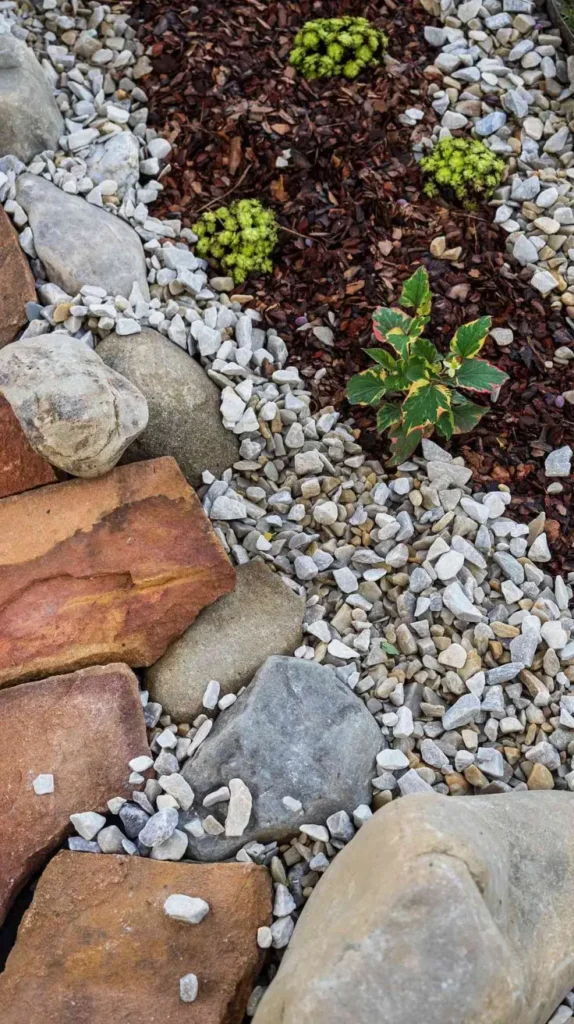
Replacing traditional mulch with stone is a practical and visually appealing solution for modern landscaping. Unlike organic mulch, which fades, decomposes, and needs regular replacement, rock mulch remains consistent in both color and texture for years. This makes it an excellent choice for homeowners who want a clean and polished look without ongoing maintenance.
Small stones spread around plants help retain moisture in the soil while preventing weed growth. This creates a healthier environment for plants and reduces the need for frequent watering. The variety of available colors, from soft whites to deep grays and warm reds, allows for customization that complements the overall design of the home.
This approach works particularly well in garden beds, around trees, and along walkways. It pairs beautifully with drought-tolerant plants, creating a landscape that is both sustainable and visually striking. The contrast between the stones and greenery adds depth, making even simple plant arrangements look more dynamic.
Another benefit is durability. Rock mulch does not wash away easily during heavy rain, which helps maintain the structure of the landscape. Over time, it continues to look fresh and well-maintained with very little effort, making it a reliable choice for long-term design.
Boulder Accents for Bold Statements
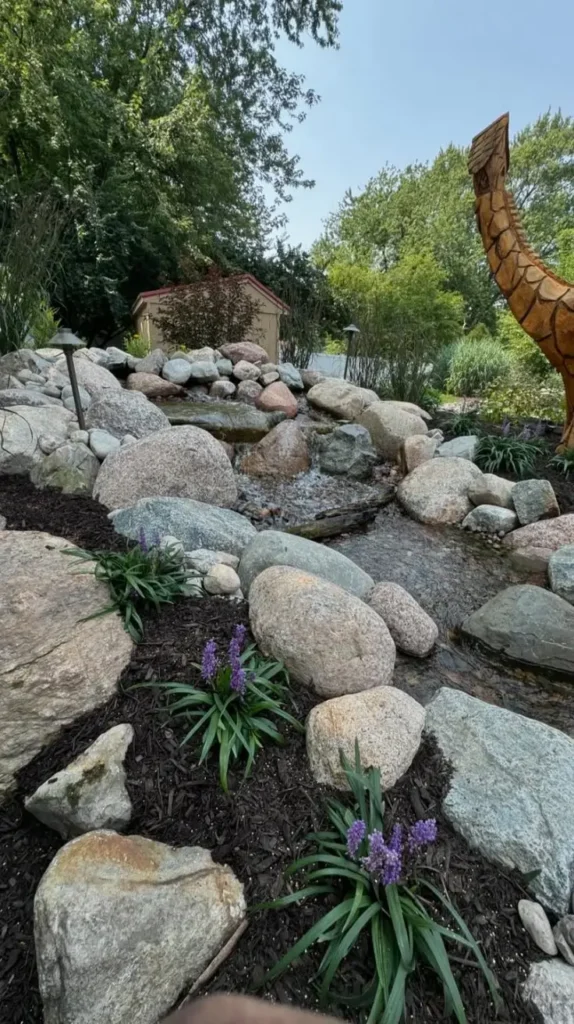
Large stones have a natural ability to command attention, making them perfect for creating bold focal points in a landscape. Boulders act like sculptures, adding a sense of strength and permanence that smaller elements simply cannot achieve. Their size and unique shapes make each one a standout feature, ensuring that no two designs look the same.
Strategic placement is key. A single boulder can anchor a garden bed, while a small grouping can create a dramatic visual impact in open spaces. Surrounding them with smaller stones or low-growing plants helps integrate them into the overall design without diminishing their presence.
These elements work well in both modern and rustic settings. Their natural textures and earthy tones blend seamlessly with the environment, creating a look that feels authentic rather than artificial. Over time, they weather naturally, adding even more character to the space.
What makes this idea especially compelling is its simplicity. There’s no need for elaborate arrangements or constant adjustments. Just a few well-placed boulders can transform the entire atmosphere of a yard, turning it into something that feels grounded, balanced, and visually striking.
Gravel Patio for a Cozy Outdoor Space
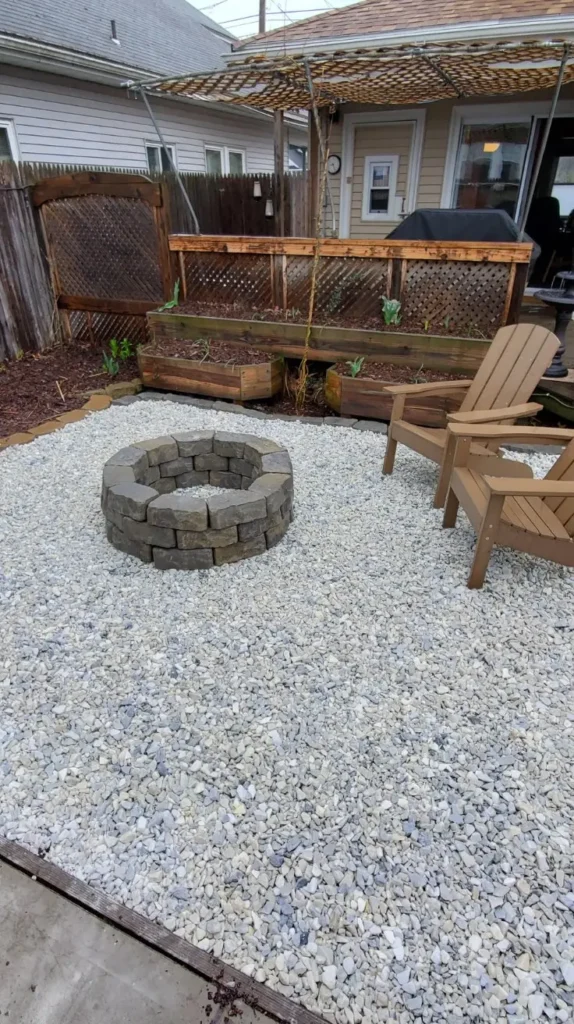
Creating an outdoor seating area doesn’t require expensive materials or complicated construction. A gravel patio offers a simple yet effective solution that combines comfort, style, and affordability. The soft texture of gravel creates a relaxed atmosphere, making it an ideal choice for casual gatherings or quiet evenings outdoors.
This type of patio can be customized easily to fit different styles. Wooden furniture adds warmth, while metal or minimalist pieces create a more modern look. Edging the area with stones or bricks helps define the space and keeps the gravel contained, giving it a clean and finished appearance.
One of the biggest advantages is drainage. Gravel allows water to pass through easily, preventing puddles and making it suitable for areas that receive heavy rainfall. It also requires minimal upkeep, as there’s no need for sealing or repainting like other materials.
Over time, the space becomes more inviting as it settles into its surroundings. The natural tones of the gravel blend with the environment, creating a seamless transition between the patio and the rest of the yard. It’s a practical solution that delivers both comfort and charm.
Rock Garden with Succulents and Drought-Tolerant Plants
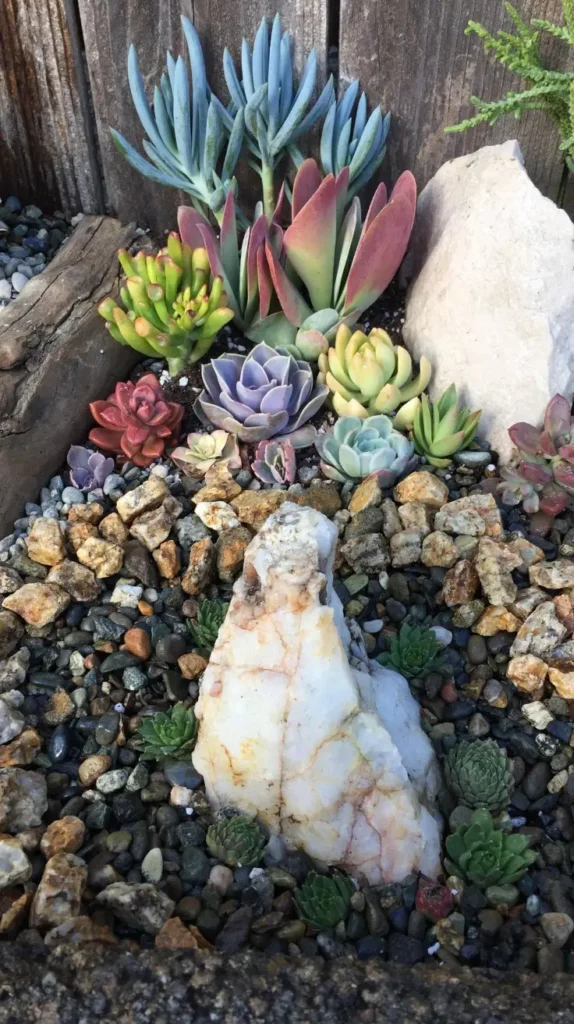
A thoughtfully designed rock garden filled with succulents and drought-tolerant plants creates a visually striking landscape that thrives with minimal care. This style seamlessly blends rugged stone textures with soft, sculptural greenery, creating a balanced and layered outdoor space. Succulents such as echeveria, aloe, and agave bring unique shapes and subtle color variations, which contrast beautifully against gravel, pebbles, and larger rocks. The combination of textures ensures the space never feels flat or boring.
This type of landscaping is especially well-suited for dry climates or areas where water conservation is a priority. The rocks help retain soil moisture while preventing excessive evaporation, allowing plants to survive with very little watering. By arranging stones in clusters and layering plant heights, from low ground cover to taller statement plants, the garden gains depth and dimension.
Another advantage is its long-term durability. Unlike traditional flower beds that require frequent replanting, this setup evolves slowly, maintaining its structure while still offering visual change over time. The result is a landscape that feels natural, resilient, and quietly captivating, providing year-round beauty without constant effort.
Decorative Rock Borders for Clean Edges
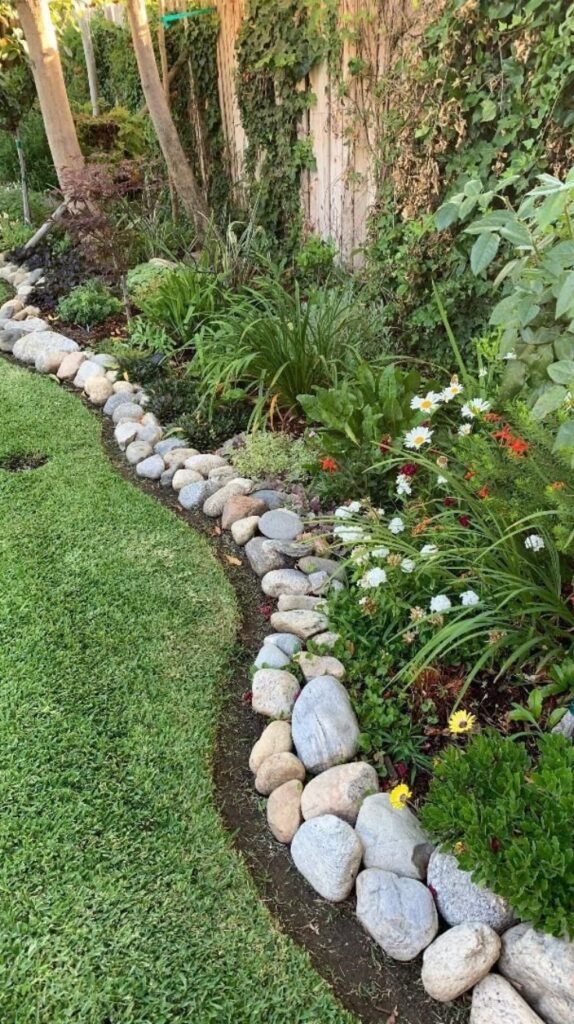
Using stone borders is one of the simplest yet most effective ways to bring structure and clarity to an outdoor space. By outlining garden beds, pathways, or lawn areas with carefully placed rocks, the entire landscape instantly looks more organized and refined. These borders act as visual guides, helping separate different elements while maintaining a cohesive overall design.
Small pebbles can create soft, subtle edges that blend seamlessly into the surroundings, while larger stones provide a more defined and bold boundary. This flexibility allows homeowners to match the border style with the overall theme of the yard, whether it leans toward modern minimalism or a more natural, rustic look. The contrast between the stone and the surrounding greenery enhances visual appeal, making plants stand out more clearly.
Beyond aesthetics, rock borders offer practical benefits. They help prevent soil erosion, keep mulch in place, and reduce the spread of grass into garden beds. This significantly lowers maintenance efforts over time. Unlike wood or plastic edging, stones are highly durable and resistant to weather changes, ensuring they remain intact for years. This combination of functionality and beauty makes them an essential element in any well-designed landscape.
Water Feature with Rock Surroundings
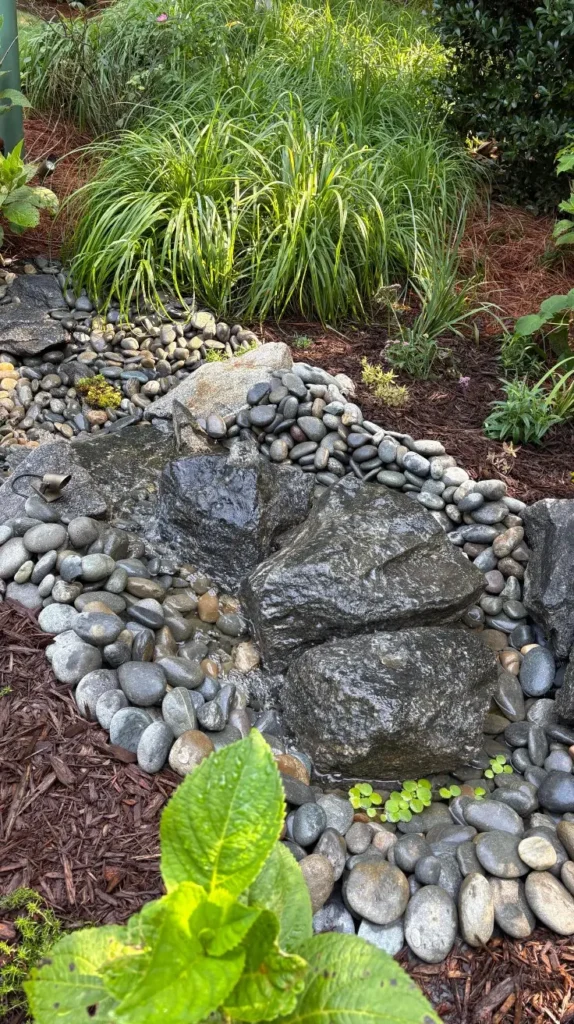
Incorporating a water feature surrounded by stones introduces a sense of movement and tranquility that elevates the entire outdoor environment. Whether it’s a small bubbling fountain, a pond, or a cascading waterfall, the presence of water creates a calming atmosphere that feels both refreshing and timeless. When paired with rocks, the feature takes on a more natural and grounded appearance, blending seamlessly into the landscape.
The placement of stones around the water feature plays a crucial role in its overall effect. Larger rocks can form a natural frame, while smaller pebbles fill gaps and soften transitions. This layering creates depth and makes the feature appear more organic, as if it has always belonged in that space. The interplay between smooth stone surfaces and moving water adds a dynamic visual element that changes throughout the day.
Sound is another powerful aspect. The gentle flow of water can mask background noise, creating a peaceful retreat within the yard. Even a compact feature can have a significant impact, drawing attention and encouraging relaxation. Over time, it becomes a focal point that enhances both the visual and sensory experience of the space.
Sloped Yard Solution with Terraced Rocks
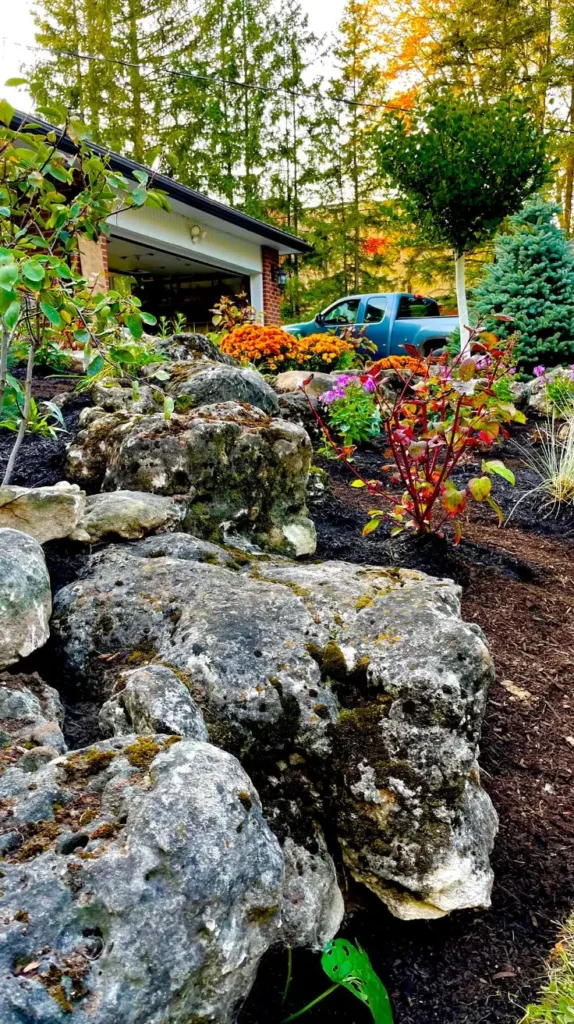
A sloped yard often presents challenges, but using rocks to create terraces turns uneven terrain into a functional and visually appealing design. By building retaining walls with natural stone, the slope can be divided into multiple flat levels, each serving a specific purpose. This approach not only improves usability but also adds depth and structure to the landscape.
Each terrace can be customized to suit different needs. One level might feature plants and greenery, while another serves as a seating area or decorative zone. This layered design creates a sense of progression, guiding the eye upward and making the yard feel larger and more dynamic. The natural texture of stone walls blends beautifully with the environment, ensuring the design feels cohesive rather than forced.
In addition to its visual appeal, this solution provides important practical benefits. It helps prevent soil erosion, improves drainage, and stabilizes the ground. These factors make the yard easier to maintain in the long run. With the right combination of rocks and plants, a previously challenging slope becomes one of the most attractive and functional parts of the property.
Fire Pit Area with Stone Surroundings
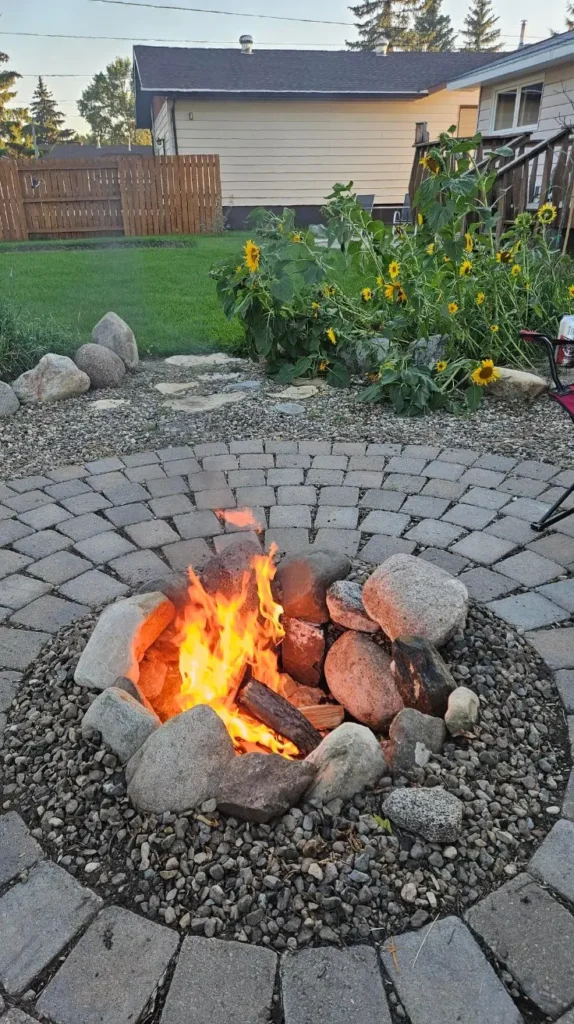
A fire pit surrounded by stone creates a warm and inviting outdoor space that naturally draws people together. The combination of fire and rock has a timeless quality, offering both comfort and visual appeal. Stones are ideal for this purpose because they are durable, heat-resistant, and capable of withstanding outdoor conditions without losing their structure.
The layout of the area plays a key role in its effectiveness. A gravel or stone base defines the space and keeps maintenance low, while larger stones or built-in seating create a sense of enclosure. This makes the area feel cozy and intentional, encouraging people to gather and spend time there. The textures of the stone complement the flickering flames, adding depth and contrast to the scene.
This type of setup is not just about aesthetics; it also enhances functionality. The non-flammable nature of stone improves safety, while its durability ensures the feature remains intact over time. As the sun sets and the fire begins to glow, the space transforms into a focal point that feels both relaxing and engaging, making it a favorite spot for evenings outdoors.
Minimalist Modern Design with Clean Lines
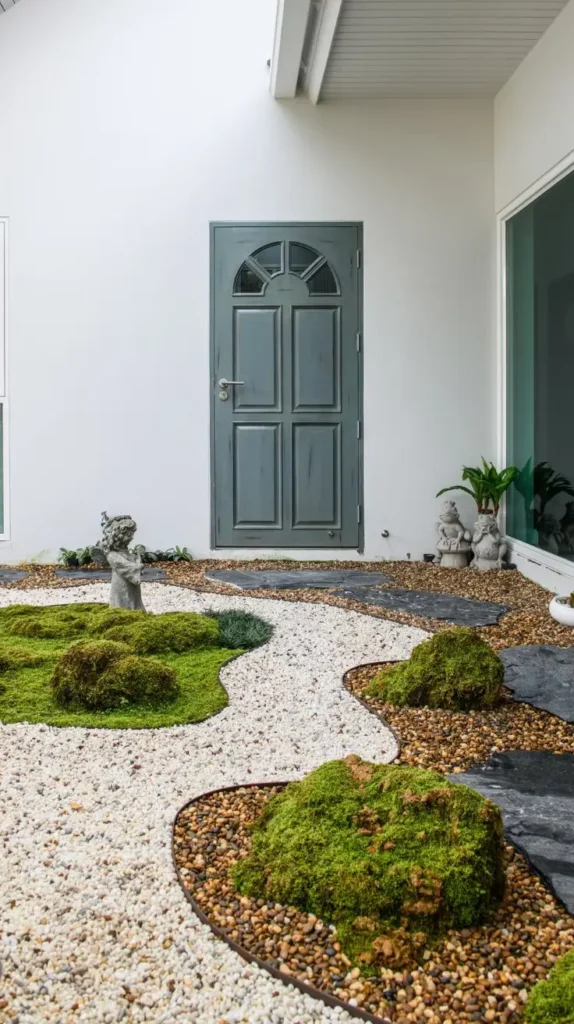
A minimalist outdoor design focuses on simplicity, precision, and intentional use of space, and stone materials play a key role in achieving this look. By combining clean lines with neutral tones, the landscape feels calm, organized, and visually balanced. Large flat stones, fine gravel, and geometric arrangements create a structured layout that avoids unnecessary clutter.
This style emphasizes quality over quantity. Instead of filling the space with multiple elements, each feature is carefully chosen and positioned to stand out. The contrast between smooth surfaces and subtle textures adds interest without overwhelming the design. Neutral color palettes, such as shades of gray, white, and black- enhance the modern aesthetic while maintaining a cohesive appearance.
Lighting can further elevate this design, highlighting key features and creating dramatic effects in the evening. The simplicity of the layout also makes maintenance easier, as there are fewer elements to manage. The result is a sophisticated outdoor space that feels both functional and visually striking.
What makes this approach so appealing is its ability to create a sense of calm through simplicity. Every detail has a purpose, and the overall design reflects a refined, contemporary style that remains timeless.


