
A Canadian-made firefighting gel designed to make water “stick and stay” is gaining traction and could soon play a bigger role in how fires are fought, contained or prevented.
Napanee-based startup FireRein, founded by a team that includes longtime volunteer firefighters, has developed Eco-Gel, a plant-based hydrogel product that increases the effectiveness of water while reducing how much is needed to fight fires.
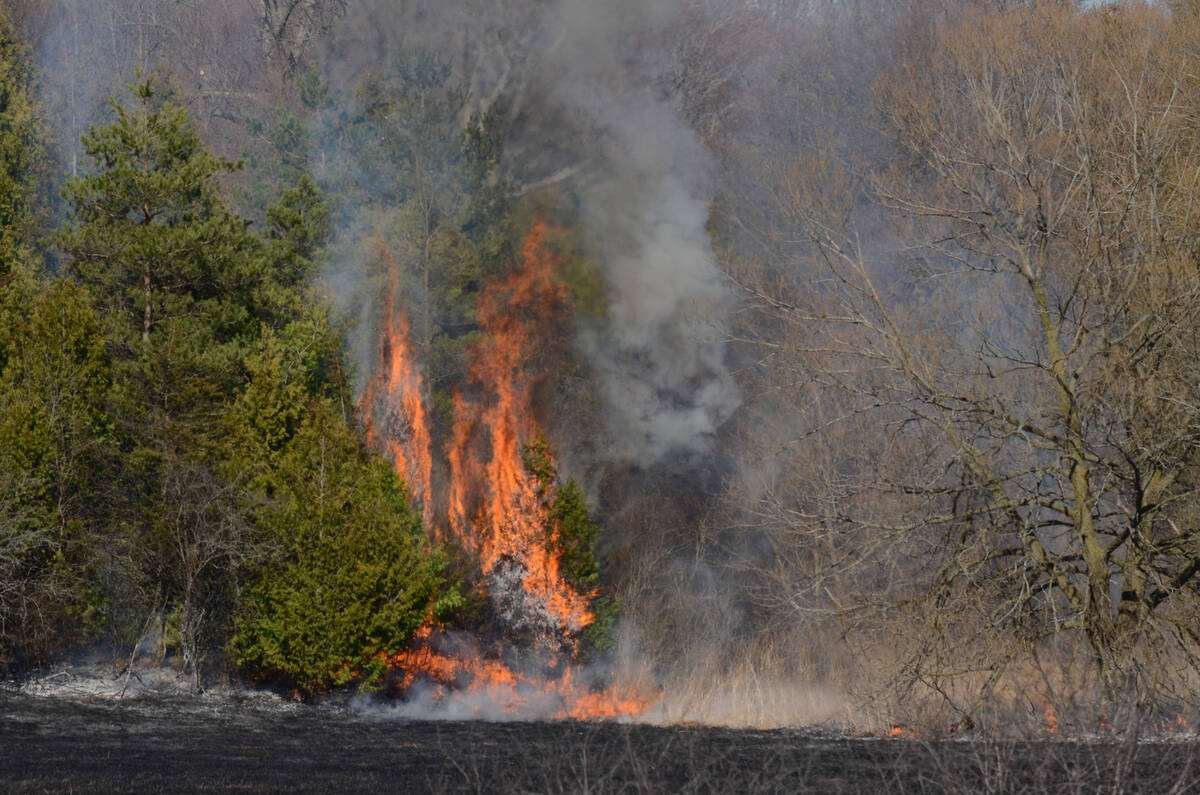
WHY IT MATTERS: Canada’s wildfire seasons are getting longer, larger and more destructive, according to data from the Canadian Forest Service. The 2023 season was the worst in Canadian history, burning more than 15 million hectares, followed by the 2025 season.
According to the company’s president and co-founder Quincy Emmons, there is not only a need for better firefighting tools, but also rising scrutiny over the toxicity of conventional firefighting foams, particularly those containing PFAS chemicals — a group of long-lasting chemicals that do not break down easily and can build up in the environment and human body.
Today, roughly 70 to 75 per cent of Eco-Gel’s ingredients, including starches and vegetable oils, are grown and sourced in Canada. That focus on domestic sourcing is intentional and something the company is looking to expand.
With more than 25 years in the fire service, he has seen firsthand the risks firefighters face, including long-term health impacts linked to traditional firefighting foams.
“We’ve had a lot of friends succumb to firefighting-related cancers,” he says. “We wanted to build something that was truly safe for firefighters, for communities and for the environment.”
The result is a product that behaves very differently from conventional foams. Rather than creating bubbles, Eco-Gel changes the properties of water itself, allowing it to cling to surfaces and act as a heat sink. That improves suppression and protection while using significantly less water, a key advantage in remote or resource-constrained environments.
Biobased food-grade fire suppressant
The product is certified as 100 per cent biobased and food grade, and has UL certification, a widely used third-party safety verification provided by Underwriters Laboratories.
“We’re still paying retail for some of our ingredients,” Emmons says. “We’d like to work more directly with producers and processors here in Canada. There’s a real opportunity to build stronger local supply chains around this.”
Beyond firefighting, FireRein is finding applications anywhere water management and fire risk intersect. In mining, for example, companies are using it to reduce water consumption while improving fire suppression around heavy equipment. The product is also being explored for dust control, replacing harsher chemical treatments that can damage equipment and pose environmental risks.
Much of FireRein’s recent momentum has come through support from Innovation, Science and Economic Development Canada. The company participated in testing through Innovative Solutions Canada, where its gel was evaluated for uses ranging from structural protection to naval compartments.
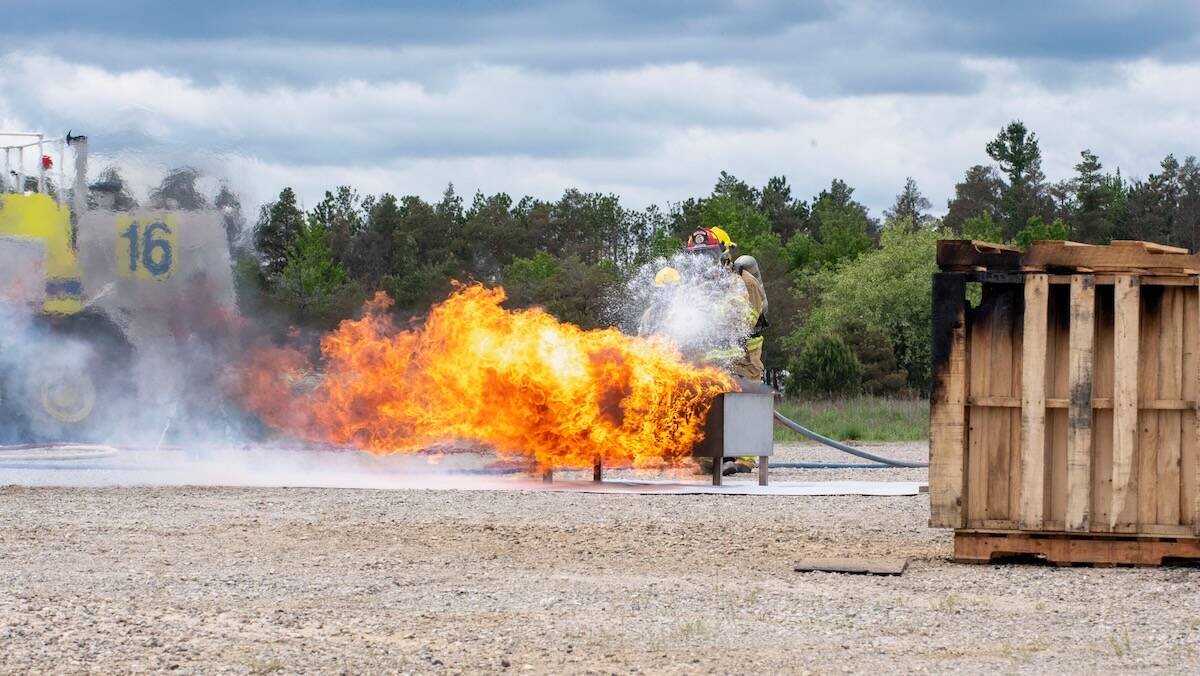
That work has led to further support through the Pathways to Commercialization program, with potential contracts worth up to $8 million over three years as the company works with the Canadian Coast Guard and the Canadian military.
One area of particular interest is aerial deployment. According to Emmons, FireRein has been collaborating on a delivery system that allows its gel to be dropped from military cargo aircraft in large, precise loads, offering a potential complement to traditional water bombers, especially when resources are stretched.
“We’re not trying to replace water bombers, but when all the resources are tapped out, this gives another option that can be deployed quickly and strategically,” he says.
There is also growing interest from Indigenous communities, where controlled burns are increasingly being revisited as a land management tool. Eco-Gel is a way to help contain those burns more safely, supporting both environmental stewardship and wildfire prevention.
Looking ahead, Emmons is hoping for wider provincial uptake in wildfire suppression this year, while continuing to expand manufacturing and supply partnerships. He sees innovations like Eco-Gel leading a shift toward safer, more effective and more sustainable fire solutions that use Canadian-grown inputs.
“I really believe the future is gels,” he says. “They give firefighters more control, they’re better for the environment, and they open the door to doing things differently.”
The post Plant-based firefighting gel could change how Canada tackles wildfires appeared first on Farmtario.


