
With light pink wings and black spots, the spotted lanternfly is a visually striking member of the planthopper family of insects.
It is, however, an invasive species of significant concern for Ontario’s horticulture and forestry sectors.
Particularly devastating for grape growers, industry and government representatives urge heightened vigilance for a pest which has already seriously damaged vineyards across several states south of the border.
WHY IT MATTERS: Spotted lanternfly could harm Ontario’s vineyards and hurt the horticulture sector more broadly, if it successfully establishes in the province.
Native to southeastern Asia, spotted lanternfly first established itself in Berks County, Pennsylvania, in September 2014. It’s now found across parts of the northeast and Midwest, including in Michigan, Ohio and New York.
Emily Posteraro, program development co-ordinator for the Invasive Species Centre, a Sault Ste. Marie-based national research and outreach organization, said the most widely accepted theory is the spotted lanternfly entered the country via wooden pallets used in shipping.
“Their eggs are quite hardy,” she said. “They do fly short distances on their own. Quarantine zones didn’t work in Pennsylvania.”
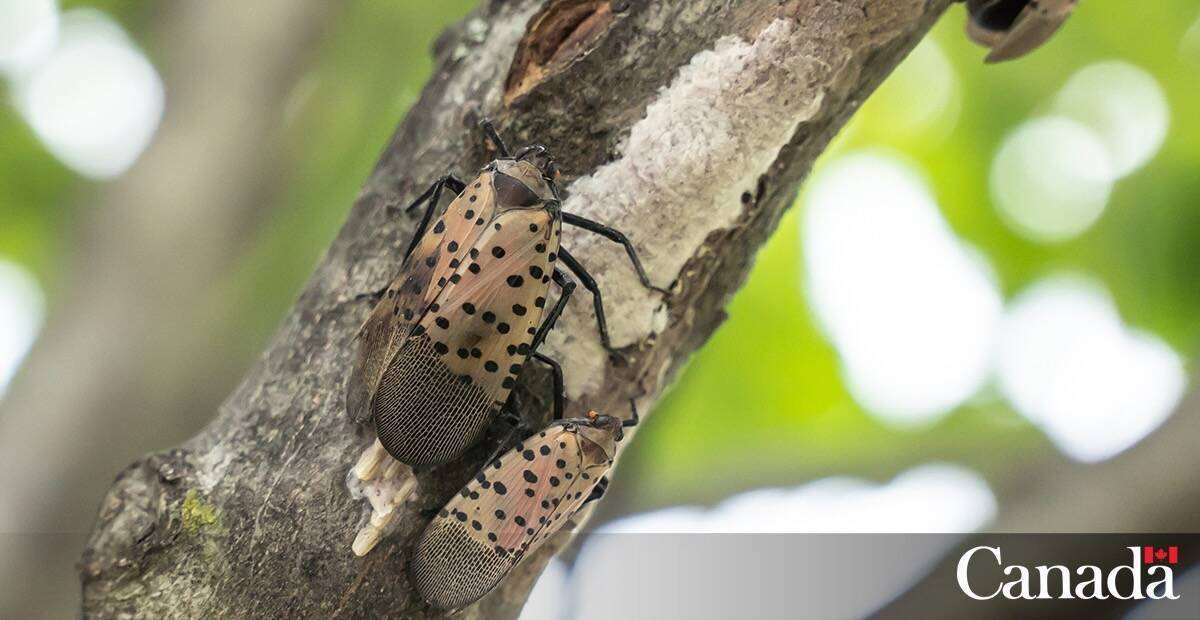
Posteraro added that long distance movement of spotted lanternfly tends to be facilitated by humans – eggs, nymphs, or adults getting caught on vehicles or camping gear, for example.
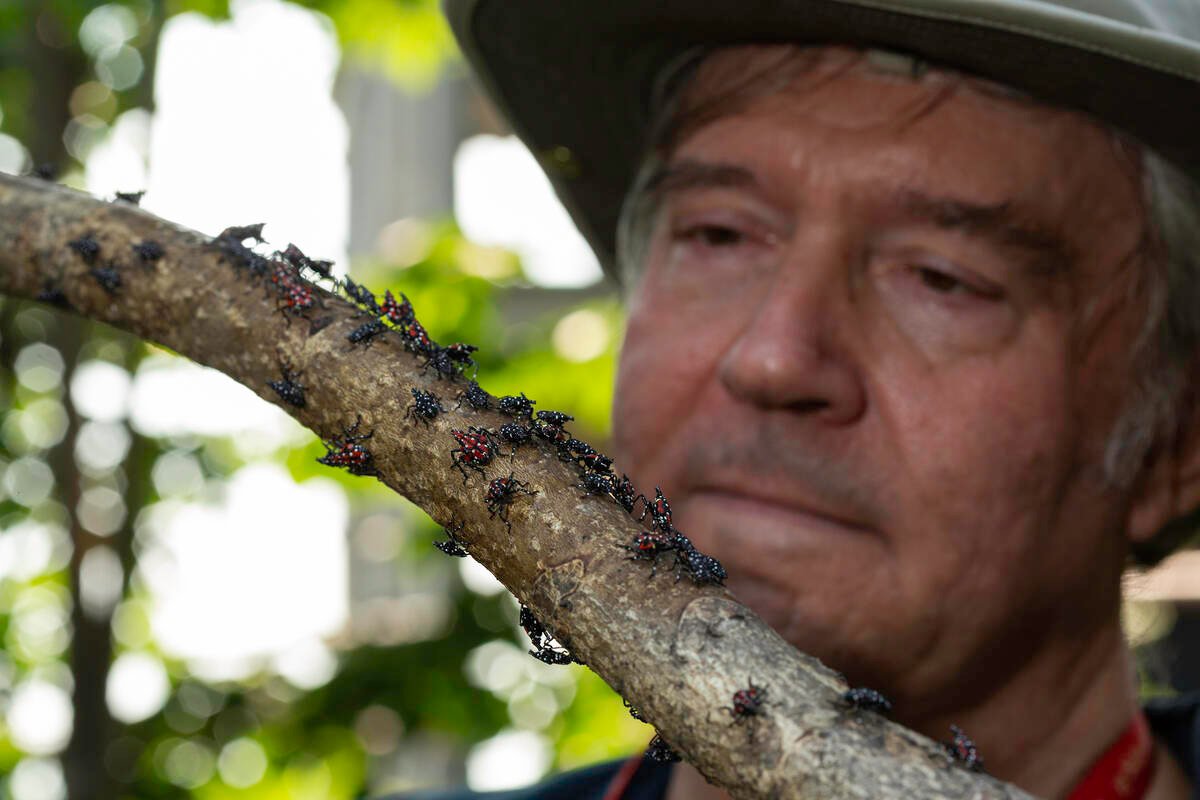
The feeding activity and waste deposition of the spotted lanternfly damage its host plants. As detailed by Invasive Species Centre resources, the nymphs and adults feed on the sap of a wide range of native hardwood and fruit trees – conifers are less preferred – with black walnut trees and grapevines being at the top of the lanternfly’s preference list.
Heavy lanternfly feeding contributes to the death of its host plant by stressing it and causing localized damage. While young plants are more susceptible, it can also contribute to the longer-term decline of older established trees, grapevines, and others plants.
Lanternfly feeding impacts
Chris Duyvelshoff, crop protection advisor for the Ontario Fruit and Vegetable Growers’ Association, said some of the worst affected grape-growing areas in the eastern United States noticed lanternfly feeding activity affected “the fruit of that season, but also weakened the vines themselves.” Younger vines, in particular, would then be at greater risk of death from winter environmental stress.
“There’s the direct impact to current crop, to loss of the vineyard itself,” he said.
Because spotted lanternfly is a large species that like to congregate, the volume of excrement can also be an aesthetic problem for wineries and other agritourism businesses trying to attract people to the farm. If the population gets high enough in a given area, too, other fruit trees, such as apples, can start to be targeted.
Duyvelshoff also draws attention to the link between human movement and the spread of spotted lanternfly.
“It really goes to show with this invasive species is the route of transportation of it. It’s a pest that’s very much moving based on human activity. You see it at border checkpoints, boats, trains,” he says “Those are the modes of transportation, creating linear routes of expansion.”
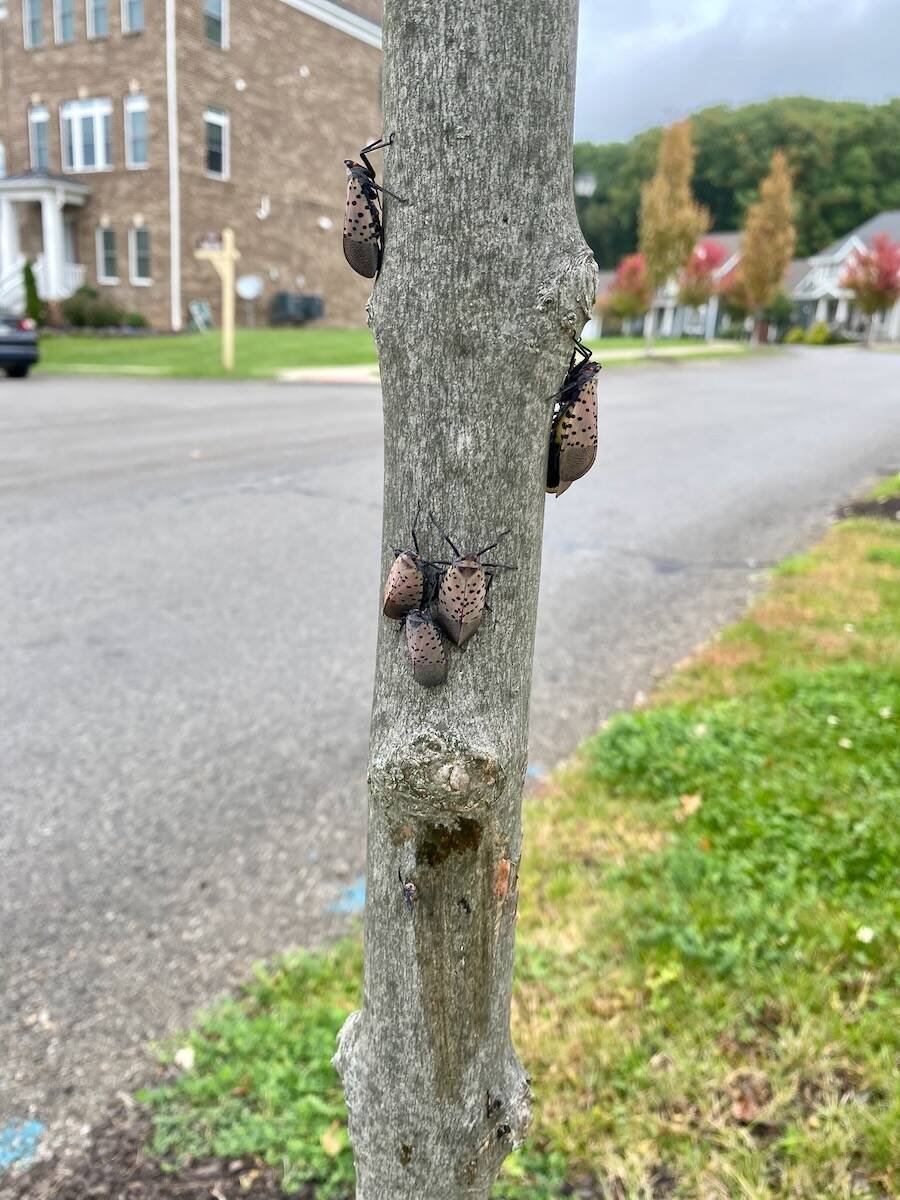
Though not yet considered established in large numbers in Ontario, many sightings of both live and dead specimens have been reported. Posteraro said no economic impact assessment numbers for Ontario currently exist.
“We have a $5.4 billion grape and wine industry. That’s at stake, but we don’t know the numbers,” she says. “It really depends on the severity of infestation and the response tools we have available to us.”
Keara White, grower relations and system administrator with Grape Growers of Ontario, added that the organization is “definitely aware of the possibility of spotted lanternfly becoming established in Ontario and its potential effect on vineyards.” Grape Growers of Ontario works with the provincial agriculture ministry and the Canadian Food Inspection Agency on the file.
“They provide us with updates and communication tools for our members, some of which can be found in the ‘Spotted Lanternfly’ section of our resources webpage,” she said.
Control in the field
Simple actions like checking camping gear and vehicles before leaving an area where spotted lanternfly is established can help reduce human-induced spread, Posteraro advised.
“You can put your car though a high-power carwash. That helps too,” she said, adding anyone who sees a spotted lanternfly in Ontario has to catch the specimen, otherwise the Canadian Food Inspection Agency cannot confirm the sighting.
Controlling the pest in agricultural settings, however, has remained a challenge. Chemical controls do have an impact, although Posteraro identifies Canada’s more stringent rules around crop protection products as a potential barrier for Canadian growers. She is also aware of some biological control methods, including parasitoid wasps and fungal pathogens, but those “are still in the research phase.”
The post Invasive spotted lanternfly a concern for Ontario horticulture appeared first on Farmtario.


