
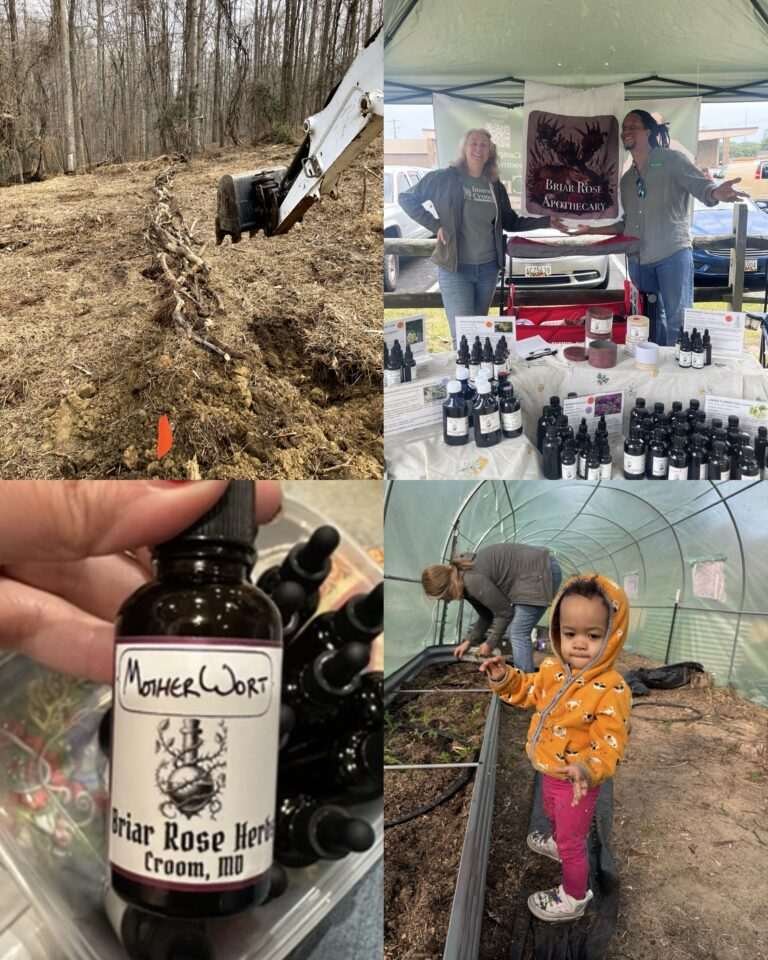
“Build your own table, rather than waiting for a seat at someone else’s.”
Briar Rose Herbs / Meetwe Farm — Croom, Prince George’s County
What inspired you to pursue a career in agriculture, and what keeps you passionate about it today?
My path to agriculture is deeply rooted in my academic foundation and global perspective. I hold a BS in Resource Economics from the University of Delaware, where I first engaged with the critical systems of food, land, and sustainability. This was powerfully complemented by agricultural studies at the Hassan II Institute in Morocco, an experience that broadened my understanding of resilient farming practices and water management in diverse climates. For over twenty years, I channeled this foundational knowledge into large-scale environmental policy, securing funding and leading programs for climate action and clean energy. Today, I bring that full-circle by operating my own farm. Here, I cultivate herbs, actively exploring the intersections I am most passionate about: herbal medicine, food sovereignty, and social justice. My farm is the practical manifestation of my lifelong study—a space where policy meets the soil, and where growing healing plants becomes a direct act of community care and environmental stewardship.
What is the biggest challenge you’ve faced as a woman in farming, and how did you overcome it?
The greatest obstacle was entering agriculture without the traditional pillars of support: no multigenerational knowledge, no family land, and no significant capital. As a woman without that background, the initial barriers—access to land, financing, and practical know-how—felt immense. I overcame this by consciously building what I lacked. I sought knowledge aggressively, leveraging my academic foundation in resource economics and extending it through farmer-led workshops and mentorship. Most crucially, I found and fostered community. I connected with other women farmers, local agricultural networks, and conservation groups. This community became my greatest asset, providing shared resources, collective problem-solving, and the essential encouragement to persevere.
Are you a first-generation farmer, or are you carrying on a family legacy?
I carry the legacy of agriculture in my family, but I am building its future as a first-generation farm owner.
What is one piece of advice you would give to the next generation of young women entering the agricultural field?
Build your own table, rather than waiting for a seat at someone else’s.
What is the most rewarding part of your day-to-day life on the farm?
Raising my daughter on this land and crafting herbal remedies from plants I’ve nurtured.
The post Andrea Crooms appeared first on NASDA.


