

China and the European Union have formed a new alliance aimed at strengthening cooperation on carbon pricing systems, according to Bloomberg reporting. The move shows a widening gap in global climate policy. China and Europe are aligning their carbon markets, while the United States continues to back fossil fuel expansion.
ezstandalone.cmd.push(function () { ezstandalone.showAds(119); });
The coalition was announced in Florence. It aims to improve coordination between major emissions trading systems. It aims to strengthen carbon pricing rules, emissions reporting, and market transparency across regions.
Kurt Vandenberghe, director general for climate at the European Commission, stated during the announcement:
ezstandalone.cmd.push(function () { ezstandalone.showAds(127); });
“[There is a need] to make sure that these emissions trading systems talk to each other so that it becomes much easier for trading these carbon credits, and that also companies are facilitated in working in different jurisdictions.”
Carbon pricing is already widely used globally. Over 40 countries and more than 35 regional or local systems now have carbon taxes or emissions trading schemes, based on global climate policy data.
ezstandalone.cmd.push(function () { ezstandalone.showAds(128); });
This growing network remains fragmented. Prices, rules, and market coverage vary widely between regions. The new China–EU partnership aims to reduce some of this fragmentation and improve compatibility between systems.
Carbon Pricing Becomes a Central Climate Policy Tool
Carbon pricing has become one of the most widely used tools for reducing greenhouse gas emissions. The system places a cost on every ton of CO₂ emitted, pushing companies to lower emissions or invest in cleaner technologies.
ezstandalone.cmd.push(function () { ezstandalone.showAds(129); });
There are two main approaches:
- Carbon taxes
- Emissions trading systems (ETS), where companies buy and sell emission allowances
The European Union operates the world’s most advanced carbon market through its EU Emissions Trading System (EU ETS). The program covers power generation, heavy industry, and aviation within Europe.
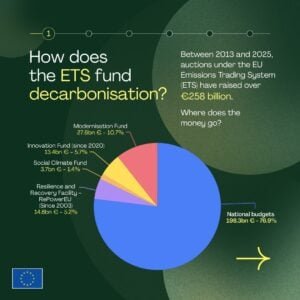
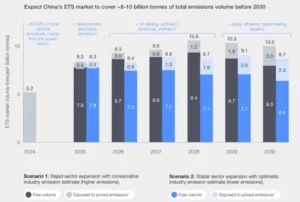
China launched its national ETS in 2021. It is now the largest carbon market in the world based on emissions covered. It primarily targets the power sector, which accounts for about 40% of China’s CO₂ emissions.
ezstandalone.cmd.push(function () { ezstandalone.showAds(130); });
The system covers over 5 billion tonnes of CO₂ each year from the power industry alone. Analysts estimate that once the additional sectors are fully included, China’s ETS could cover between 8.7 and 10.6 billion tonnes of CO₂ by the late 2020s, representing a substantial share of the country’s total emissions.
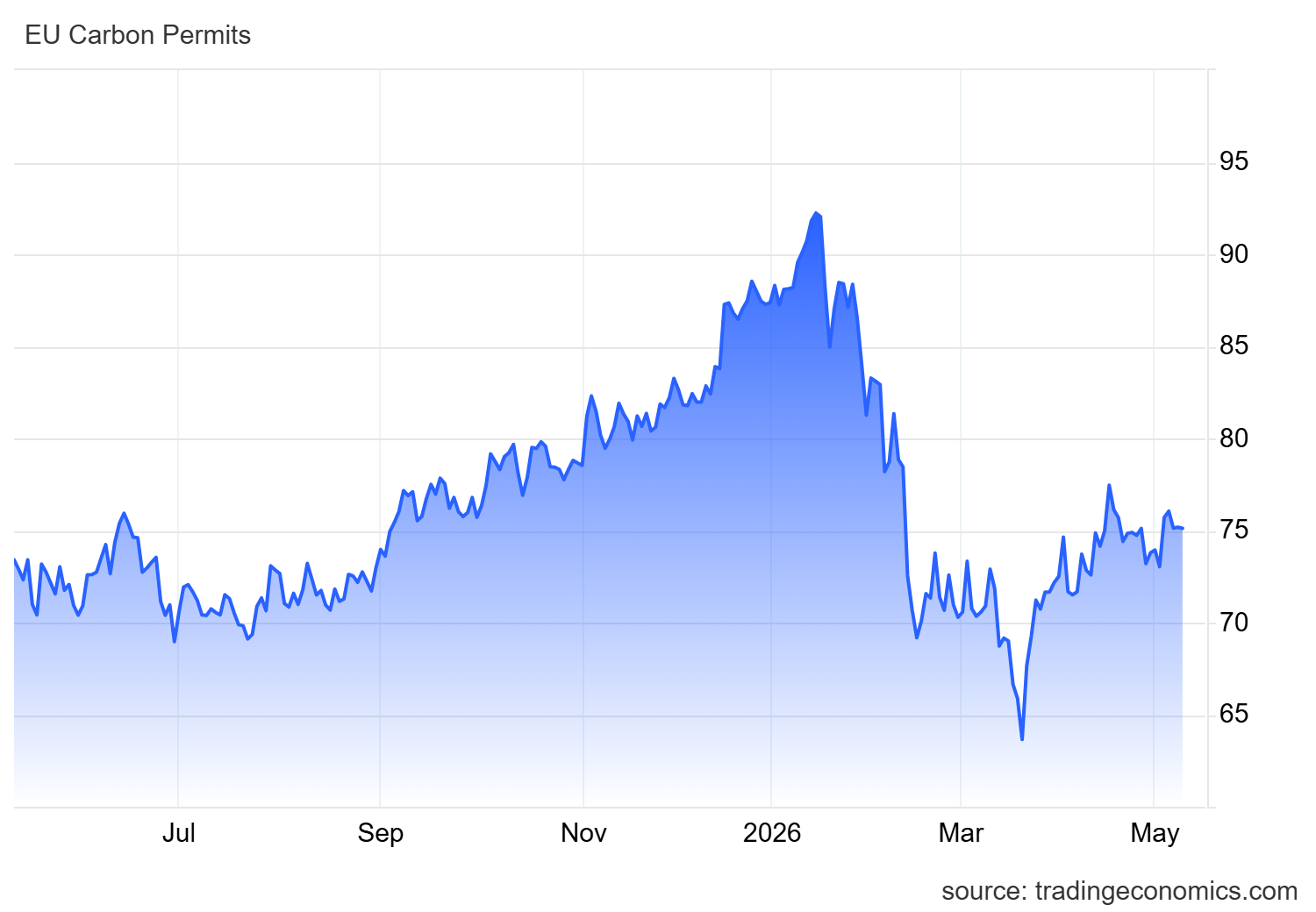
Carbon prices between the two systems remain far apart. In China, prices started at around 48 yuan per ton of CO₂, equal to roughly $7 per ton at launch. European carbon prices have ranged from €70 to €90 per ton in recent years. This makes the EU system one of the priciest carbon markets in the world.
ezstandalone.cmd.push(function () { ezstandalone.showAds(131); });
This large pricing gap is one of the main reasons China and Europe are now seeking closer coordination.
Inside the New China–EU Carbon Alliance
The new carbon alliance between China and the European Union is not designed to merge the two carbon markets. Instead, the partnership focuses on improving compatibility and cooperation between systems.
The initiative centers on:
- Aligning emissions measurement standards,
- Improving monitoring, reporting, and verification (MRV) systems,
- Standardizing carbon accounting rules, and
- Supporting cross-border carbon market cooperation.
ezstandalone.cmd.push(function () { ezstandalone.showAds(132); });
The partnership builds on climate cooperation from the COP30 summit. The countries agreed to better coordinate their carbon pricing systems.
Today, more than 110 carbon pricing instruments operate globally at national and regional levels. However, many of these systems still use different accounting methods, reporting standards, and pricing mechanisms.
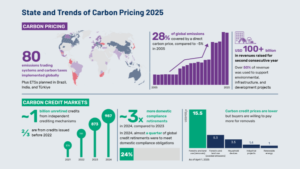
The China–EU partnership seeks to close these gaps. It aims to improve how emissions data and carbon credits are recognized across borders. This could eventually influence international carbon credit trading and future climate-linked trade rules.
ezstandalone.cmd.push(function () { ezstandalone.showAds(133); });
US Climate Policy Direction Moves on a Different Path
While China and Europe deepen carbon pricing cooperation, the United States is moving in another direction. Recent policy trends show stronger support for fossil fuel production and slower progress toward a nationwide carbon pricing system. Many US states have regional carbon markets, but there is no national carbon pricing framework.
This has created three broad climate policy approaches globally. Europe and China are growing their carbon pricing systems. They are also linking these systems more closely to industrial policy.
The United States remains focused on energy production growth with limited carbon pricing adoption. Many emerging economies are building mixed systems. They combine carbon markets with traditional energy policies.
ezstandalone.cmd.push(function () { ezstandalone.showAds(134); });
The divide is becoming increasingly important for global trade. The European Union has launched its Carbon Border Adjustment Mechanism (CBAM). This mechanism adds carbon costs to imported goods, depending on their emissions intensity.
This policy pushes exporting countries to adopt clear emissions reporting and better carbon accounting. They need to do this to stay competitive in global markets.
Carbon Markets Expand, But Global Rules Remain Fragmented
Despite political and regional differences, global carbon markets continue to grow. More than 55 countries now operate some form of carbon pricing system, covering over 28% of global greenhouse gas emissions.
ezstandalone.cmd.push(function () { ezstandalone.showAds(135); });
The EU ETS covers about 40% of emissions in the European Union. In contrast, China’s ETS is the largest in terms of total emissions volume.
However, carbon pricing remains highly uneven across regions. Prices range from less than $10 per ton in some systems to more than $80 per ton in others. This creates uncertainty for multinational companies operating across different markets.
China’s ETS provides broad emissions coverage but still operates at relatively low prices compared with Europe. The EU ETS, by contrast, has become a high-price system that sends stronger decarbonization signals to industry.
ezstandalone.cmd.push(function () { ezstandalone.showAds(136); });
These differences affect investment decisions, carbon credit trading, and long-term corporate decarbonization planning. Companies with global supply chains now face various carbon pricing systems. Each one has its own rules and compliance needs.
Impact on Carbon Credits and Global Trade Systems
The China–EU carbon alliance could significantly reshape global carbon credit markets over time.
If carbon pricing systems align better, the market may gain stronger trust in international carbon credits. This could lead to better liquidity in compliance markets and lower risks of double-counting emissions reductions.
ezstandalone.cmd.push(function () { ezstandalone.showAds(137); });
Improved coordination may also strengthen demand for high-integrity carbon credits that meet stricter reporting standards. At the same time, the expansion of carbon pricing could increase trade complexity if systems are not fully recognized across borders.
Carbon pricing is becoming more closely tied to international trade policy. The EU CBAM adds carbon costs to imported goods. This change reshapes global supply chains and affects production choices.
Will Global Carbon Markets Eventually Align?
The formation of a China–Europe carbon pricing coalition highlights both progress and fragmentation in global climate policy.
ezstandalone.cmd.push(function () { ezstandalone.showAds(138); });
Carbon markets are expanding rapidly and becoming a central climate policy tool in many economies. However, major differences remain in pricing levels, enforcement rules, and market structures.
The global carbon economy is changing due to three main trends:
- More carbon pricing systems in China and Europe.
- Ongoing fossil fuel policies in the United States.
- Mixed or developing carbon frameworks in emerging markets.
ezstandalone.cmd.push(function () { ezstandalone.showAds(139); });
As these systems evolve, a key question is whether global carbon markets will align or stay divided by region and politics. This fragmentation could significantly impact carbon costs, trade flows, industrial competitiveness, and decarbonization strategies for companies, investors, and policymakers in the next decade.
The post China and Europe Build Carbon Pricing Alliance as US Takes a Different Energy Path appeared first on Carbon Credits.


