
Last Updated on May 14, 2026
Meal planning is a great way to reduce both packaging waste and food waste, because you’re thinking ahead. It can also help keep grocery costs down because you’re actively planning the menu for the week, not making impulse buys.
But a lot of people (myself included) fail at it for one simple reason: We’re thinking about meals and not ingredients.
For example, if my meal plan says Tuesday is lasagna night, how will I know if I’m still craving that by Tuesday? Keeping a flexible meal plan will help you succeed.
Once you have a meal plan you love, you can get to actually prepping your ingredients for the week. Here’s how I create a weekly meal planning system that I can actually stick to. Bonus? My tips for actual meal prep!
meal planning vs. prepping
Lets first take a moment to separate these two terms, as I’ll be talking about both.
Meal planning is simply the act of planning out what you’ll eat for the week. This can be in regards to your breakfast, lunch, dinner, or even snacks.
Meal prepping is when you cook your food for the week in advance. If you’d like to meal prep, it’s a good idea to have a meal plan. However, you don’t have to meal prep to meal plan.
Both help you save money and reduce waste in the long run. For example, lets say you want carrot soup on the menu this week. Knowing the ingredients you need to make it helps you stick to a grocery budget. Plus, you can save even more by using up whatever’s already in your fridge!
RELATED: How I Cut My Grocery Bill to $300 a Month
meal planning
how do you create a meal plan?
The first step is to make a master list of all of your favorite recipes. The ones that you love, the ones your family loves, and most importantly – the ones you know how to cook.
Here are a few of my favorites for inspiration:
- Shepherds Pie
- Burgers
- Mac & Cheese
- Quesadillas
- Fajitas
- Chicken/Eggplant Parm
- Lasagna
- Fried Rice
- Beef/Mushroom and Broccoli
- Cheese Steak/Balsamic Mushroom Subs
- Sloppy Lentil Joes
- Caeser Salad
You can write these on a notepad, on your phone, or on the computer. Refer to this master list whenever you’re planning meals for the week – and don’t be afraid to add meals to it over time.
It’s also a good idea to jot down some of your favorite breakfasts, lunches, and snacks – not just dinner. This will help you better plan your grocery haul for the week ahead.
Try to stick to one particular day to grocery shop every week – be it on Tuesday nights or Saturday mornings. Whatever works for you.
You’ll want to check the calendar and make sure there’s no upcoming events in the week ahead. This will keep you aware which nights you won’t be cooking.
You may also want to factor in weather and seasons – for example, I love eating soup on cold days! But hot days, I’d prefer something lighter, like a tofu stir fry.
Now comes the fun part – actually writing your meals for the week! Make sure you have that master list of recipes you made on hand, then start jotting down what dinners you’d like to eat.
You don’t have to set specific days for when you serve these meals, unless you want to. Feel free to shuffle the meals around, depending on what you’re in the mood for.
Next, make a grocery list based on the meals you’ve written down. You can organize the list into sections of produce, pantry, protein, etc.
For me, proteins will include beans, lentils, seitan and hummus. And for produce, I always try to stick to what’s currently in season – like sweet potatoes in the fall, lettuce in the summer.
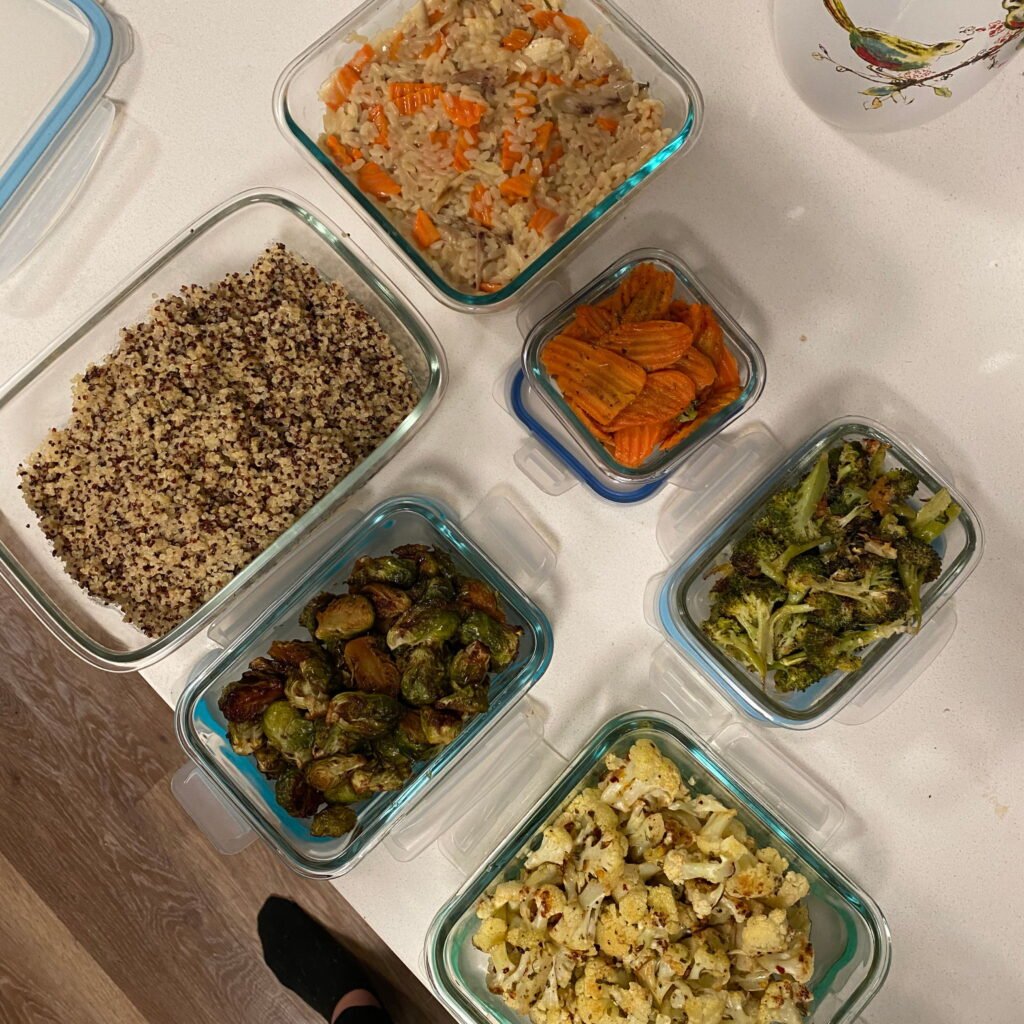
Once you’ve done your shopping, you can come home and prep a few items to make your life easier during the week. For example, if one of your recipes calls for kale, having it washed, chopped, and properly stored will make it super easy to add into your cooking.
what about breakfast, lunches and snacks?
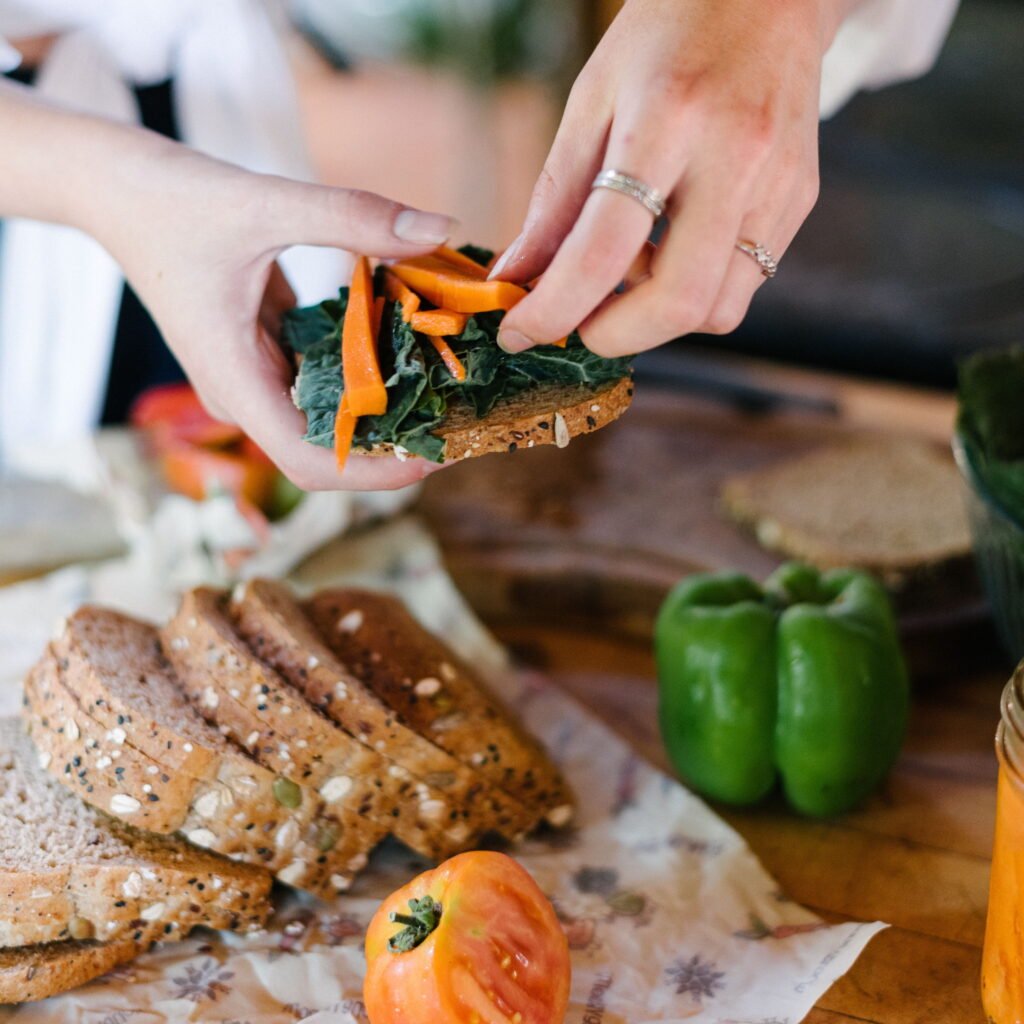
For me, breakfast, lunch and snacks are often more consistent than dinner. I could eat a sandwich every single day and be happy.
Peanut butter and jelly with chips was my go-to lunch from elementary to high school. So I’ve decided to lean into that, focusing on simple breakfasts and lunches that keep me full.
Knowing what you like to eat is a good place to start! I love high protein yogurt jars for breakfast, sandwiches for lunch, sliced apples, hummus, and chopped veggies for snacks.
If I don’t prep these items ahead of time, I have a bad habit of waiting until 2PM to eat. Which leads to really poor food choices.
If you’re also like this, chances are meal planning and prepping doesn’t have to just begin and end with dinner.
Figure out what it is you struggle with most before deciding which foods, ingredients, and meals to prep for the week. Ask yourself what would be more convenient to have ready to grab-and-go: breakfast, lunch, dinner, or snacks? Perhaps a combo of the four?
Your job and schedule can also influence this decision. For example, if you’re working from home, you may have more time to whip up breakfast than someone who needs to be at work at 8AM.

meal prepping
I personally like to meal prep ingredients instead of meals to give myself freedom and reduce waste. This helps get food on the table fast.
And always check your fridge and pantry before grocery shopping. Try planning your menu around what’s already available, then grocery shop for the rest of the ingredients you’ll need to complete each dish.
I recommend dedicating 2-3 hours a week to meal prep. You can make it fun by turning on the TV, listening to music or a podcast. For me, meal prepping means peeling and chopping carrots, washing and cooking my vegetables, etc.
However, feel free to make full-on meals if you know you won’t have time otherwise. I’ll do this with my breakfast yogurt jars, veggie sandwiches, and snacks on a Sunday afternoon.
Setup glass snapware to contain whatever it is you’re making, and always ask yourself if you have a carb, a protein, a fat, and fiber. This will keep your meals balanced and help you stay full longer.
And if you’re short on time, just focus on getting your vegetables all washed, chopped, and stored in glass containers. No need to cook anything. This will make your life so much easier when you go to cook after a long day at work.
mistakes to avoid
Here are a few mistakes to avoid when it comes to meal planning and prep:
- Not checking your weekly schedule first.
- Using containers that don’t seal or close properly.
- Making cuisines and recipes outside your comfort zone / your family’s preferences.
- Making servings too big or too small.
- Trying to do it all (maybe start out by prepping just one or two meals for the week instead of all 5 days)
how to keep it budget-friendly
Definitely work with what’s in season! I find that shopping for tomatoes in summer tends to be cheaper than in winter, because there’s an abundance of them.
Always try to prioritize local farmers markets and CSA boxes whenever possible. You can also try growing your own produce, joining a local community garden, or even just doing an herb container garden to save money.
Also, shopping at low-cost grocery stores or farmers markets can help cut costs. Looking for discounts, coupons, and sales is also ideal.
I love shopping the discount section of my grocery store – sometimes they’ll have imperfect produce at half price, and I always scoop that up first.
You’ll want to also prioritize what’s in your fridge already, and what’s about to go bad. Have some sad looking celery? Toss it into a soup for the week. Stale bread? French toast casserole it is for breakfast.
And factor in leftovers too! If you have some rice that needs to be used up, make sure to prioritize a dish in the beginning of the week that requires it.
That goes double for food scraps – don’t toss out all your vegetable ends and peels. You may be able to make them work overtime by making veggie stock for your meal prepping!
You may also be surprised at what’s edible – like beet tops, carrot tops and celery leaves. Here are some other recipes to help you reduce food waste.
benefits of meal prep
There are so many benefits to meal prepping, but the biggest one is peace of mind. You don’t have to think about what you’ll eat every single day, because half (or all!) the work is done for you.
And, if you’re checking your pantry and fridge before meal prep, you’re probably reducing a lot of food waste. Because you’re going to prioritize using up what you have.
Some more benefits to meal prepping include:
- Big time saver.
- Helps prevent drive thru or take out orders because you have food at your fingertips.
- You’ll know exactly what goes into your food.
- Zero waste food, so little to no waste.
Prefer video content? Check out my tips for crushing meal prep below!
{“@context”:”http://schema.org/”,”@id”:”https://www.goingzerowaste.com/blog/meal-planning-system/#arve-youtube-trx2encyta0″,”@type”:”VideoObject”,”embedURL”:”https://www.youtube-nocookie.com/embed/tRx2Encyta0?feature=oembed&iv_load_policy=3&modestbranding=1&rel=0&autohide=1&playsinline=0&autoplay=0″}
What are your meal planning and prepping tips? Let me know in the comments!
The post My Weekly Meal Planning System That Prevents Food Waste appeared first on Going Zero Waste.


