
There’s something magical about watching children mix muddy “soups,” decorate pretend cupcakes with leaves, and serve nature-inspired meals under the open sky. A simple outdoor play area can suddenly become a world filled with creativity, sensory play, laughter, and discovery. That’s exactly why mud kitchens have become one of the most loved backyard play trends for families.
These playful outdoor stations encourage hands-on learning while helping kids connect with nature in a fun and exciting way. Even better, they don’t need to cost a fortune. Old sinks, wooden pallets, buckets, chalkboards, and recycled furniture can all transform into beautiful play spaces that children adore.
The best part? Every setup feels unique. Some look rustic and farmhouse-inspired, while others feel colorful, modern, or completely whimsical. And once the little chefs begin mixing mud pies and flower potions, the excitement becomes impossible to resist.
Below are inspiring mud kitchen ideas that blend creativity, sensory development, outdoor learning, pretend play, and backyard charm. Some are simple weekend DIY projects, while others create a stunning centerpiece for an outdoor play area. A few may even surprise seasoned parents searching for fresh outdoor activity ideas.
Rustic Pallet Cooking Station
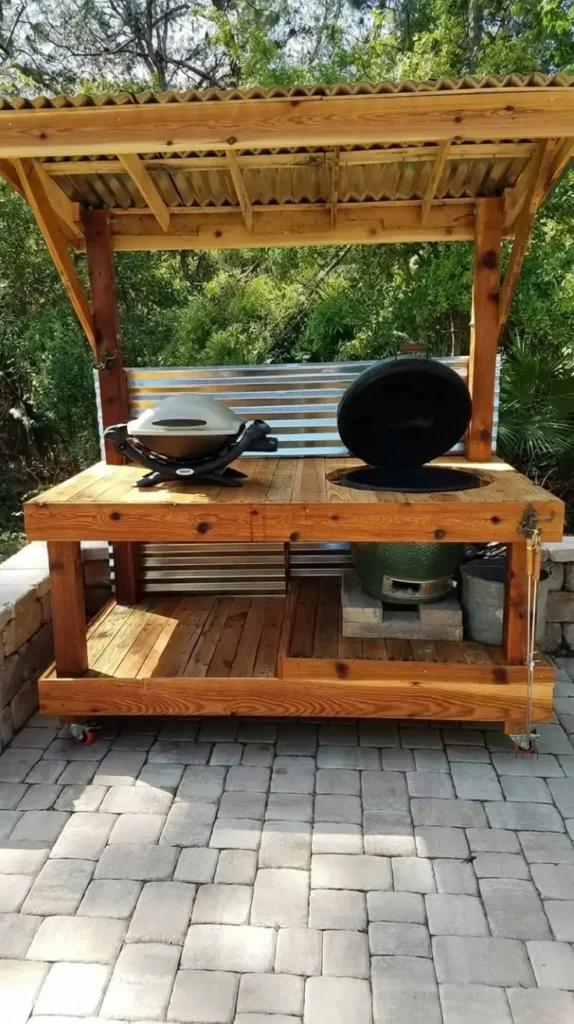
A rustic setup made from reclaimed wooden pallets creates one of the most affordable and charming backyard play spaces. The weathered wood gives the entire area a cozy farmhouse feel while blending beautifully with gardens, patios, and grassy yards. Mason jars filled with pebbles, hanging utensils, and tiny pots instantly make the space feel alive and welcoming.
This style works especially well for families who love DIY outdoor projects because pallets are easy to customize. Shelves can hold old mixing bowls, mud pie trays, and containers filled with sticks, herbs, or flower petals. Hooks attached to the wood allow spatulas and pans to hang neatly, creating a realistic outdoor kitchen feel children absolutely love.
Adding a small chalkboard transforms the station into a pretend café or bakery. Kids can write daily “menus,” draw recipes, or label magical ingredients collected from the garden. This playful touch encourages creativity and early writing skills at the same time.
The natural texture of wood also creates a calming environment. Instead of bright plastic toys, the earthy materials encourage open-ended sensory play. Children often spend hours mixing, scooping, pouring, and pretending without needing screens or complicated gadgets. To make the area even more exciting, place the station near a sandbox, water table, or garden bed. Suddenly, every stone becomes a cookie, every leaf becomes seasoning, and every muddy mixture turns into a masterpiece.
Vintage Sink Play Corner
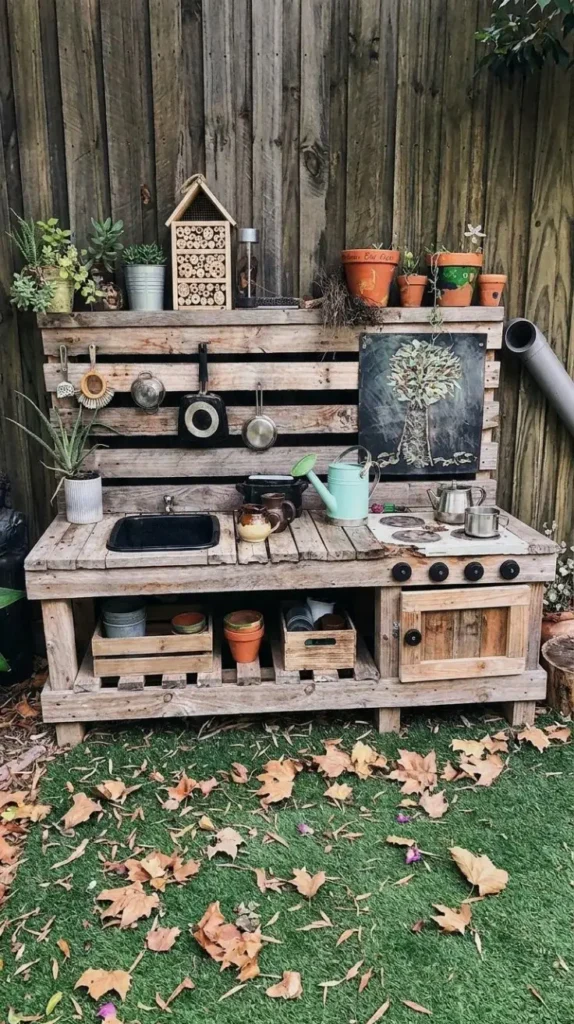
An old sink can become the star of a beautiful outdoor activity zone. Vintage sinks add personality, functionality, and endless opportunities for water play. Whether the sink comes from a thrift store, renovation project, or garage sale, it instantly creates a realistic cooking environment that children find irresistible.
The deep basin allows little ones to mix muddy creations, rinse toy vegetables, or splash water while experimenting with textures. A working faucet connected to a garden hose makes the setup even more interactive. The combination of water and mud creates a sensory experience that keeps children engaged for long stretches of time.
Decorating the surrounding area with flower pots, mini watering cans, and reclaimed wood shelves creates a warm and inviting atmosphere. Metal bowls, wooden spoons, cupcake tins, and measuring cups add layers of imaginative play that feel authentic and exciting.
This idea also supports early childhood learning in subtle ways. Pouring water helps develop motor skills and coordination, while pretend cooking encourages storytelling and social interaction. Children naturally begin assigning roles, creating recipes, and practicing communication during playtime.
Parents often appreciate how adaptable this setup becomes over time. Younger toddlers enjoy splashing and scooping, while older children invent elaborate outdoor restaurants or potion labs. One simple sink can continue inspiring new games season after season. A few climbing vines or string lights nearby can make the entire space feel almost magical by evening. Suddenly, the backyard transforms into a tiny outdoor café filled with muddy masterpieces and endless laughter.
Farmhouse Style Backyard Setup
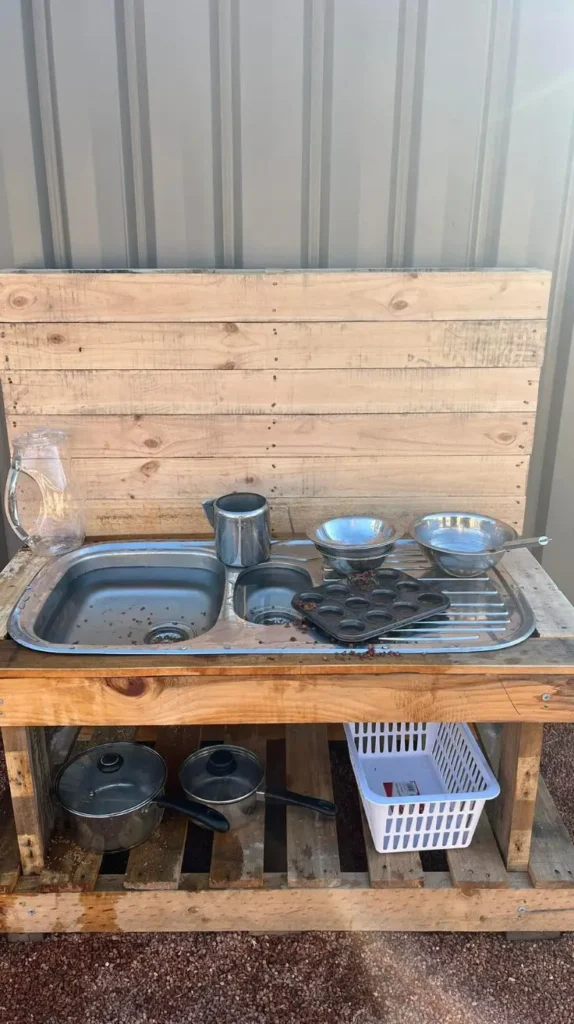
Farmhouse-inspired outdoor play spaces feel warm, timeless, and incredibly inviting. This design combines natural wood tones, galvanized metal buckets, open shelving, and vintage-style accessories to create a cozy environment children instantly gravitate toward.
A sturdy wooden table serves as the main prep area, while nearby crates store utensils, flower petals, leaves, and garden treasures. Small baskets filled with pinecones or herbs add beautiful texture while encouraging sensory exploration. Whitewashed finishes or distressed paint create extra farmhouse charm without making the space feel overly polished.
Adding signs with playful phrases like “Mud Pie Bakery” or “Nature Café” gives the area personality and sparks imaginative storytelling. Kids love pretending they run a tiny restaurant where mud cakes and leaf soup become daily specials.
This setup blends especially well with cottage gardens, gravel patios, or rustic landscaping. The earthy materials encourage children to interact with the natural world instead of relying on flashy toys. Even simple activities like pouring water or mixing dirt become deeply engaging experiences.
Another benefit of farmhouse-inspired designs is durability. Solid wood furniture and metal containers often withstand outdoor weather far better than plastic alternatives. As the play area ages, the weathered appearance actually adds more charm rather than looking worn out. For an extra cozy touch, nearby tree stumps can double as stools or serving tables. Suddenly, children have their own tiny outdoor café where creativity flows as freely as muddy water.
Bright and Colorful Creativity Zone
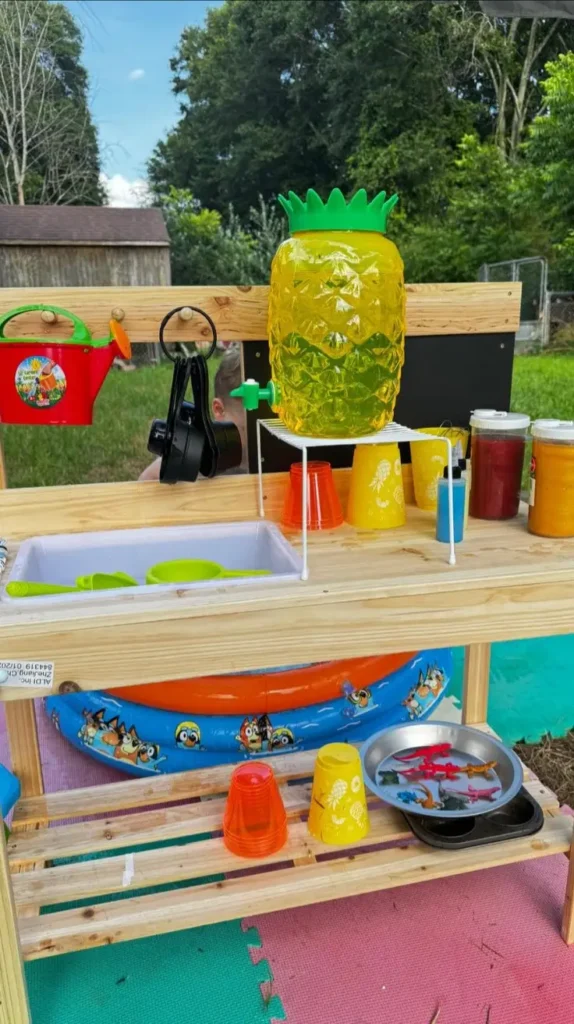
Not every outdoor play area needs rustic tones and neutral colors. A bright and cheerful setup, filled with painted cabinets, rainbow-colored utensils, and vibrant decorations, can create a high-energy environment bursting with personality.
Bold blues, sunny yellows, cheerful reds, and playful greens immediately capture attention and make the area feel vibrant and exciting. Old kitchen cabinets painted in vibrant shades become fun storage spaces for buckets, bowls, toy fruits, and gardening tools.
This playful atmosphere encourages energetic pretend play. Children naturally become more expressive when surrounded by lively colors and whimsical details. Hanging pinwheels, painted flower pots, and colorful bunting make the area feel festive year-round.
Bright setups also photograph beautifully, making them popular for family gardens and play-focused backyard transformations. Even a small patio corner can feel like a miniature outdoor wonderland with the right color palette. Adding sensory bins with sand, water beads, or pebbles increases the educational value while keeping children entertained longer. Mixing textures alongside bright visuals creates a rich sensory experience that supports creative development and curiosity.
One hidden advantage of colorful designs is how easily they adapt to seasonal decorating. Summer themes, fall leaves, Halloween potion stations, or spring flower markets can all refresh the area without major changes. Children often remember these vivid outdoor spaces for years because they feel joyful, energetic, and full of endless possibilities.
Nature-Inspired Woodland Space
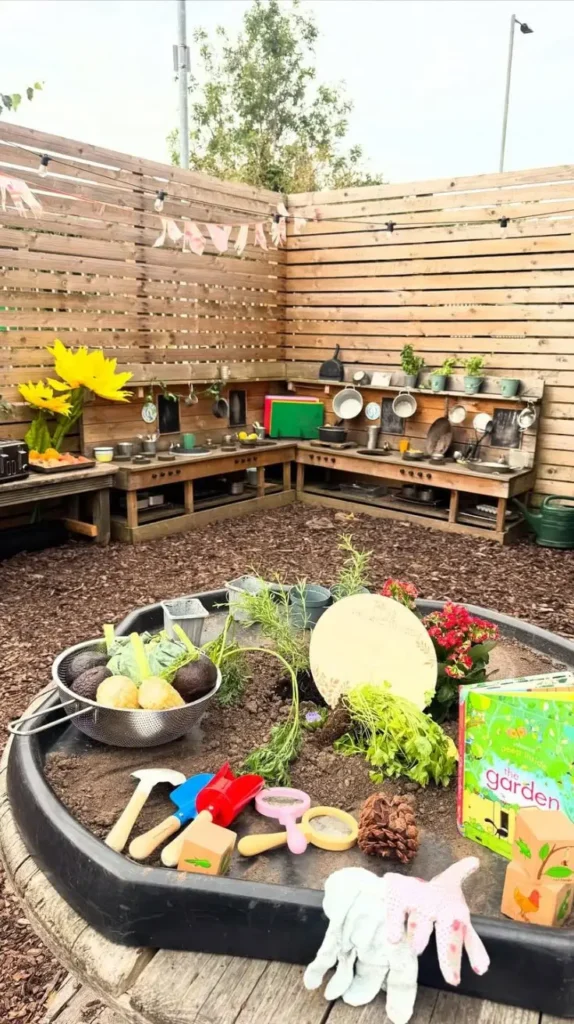
A woodland-themed setup creates a peaceful and enchanting atmosphere where children feel connected to nature. Surrounded by logs, tree stumps, branches, and greenery, this style encourages slow, meaningful outdoor play filled with exploration and creativity.
Instead of relying heavily on manufactured toys, the focus stays on natural materials. Acorns become cookies. Leaves become lettuce. Pebbles become candy toppings. Children naturally begin inventing stories and recipes using whatever they discover outdoors.
Wood slices can serve as plates, while baskets hold pinecones, bark pieces, feathers, and wildflowers. Hanging herbs or dried flowers nearby adds texture and fragrance that deepen the sensory experience. This design works especially well in shaded gardens or under large trees. A canopy of branches creates a cozy hidden world where children feel free to explore and experiment. The environment itself becomes part of the play experience.
Parents often notice calmer and more focused play sessions in nature-inspired spaces. The earthy colors and organic textures create a soothing atmosphere that encourages concentration and imagination without overstimulation.
Adding a small fairy garden or bug hotel nearby introduces another layer of discovery. Children begin paying attention to insects, plants, and seasonal changes while creating pretend meals and muddy concoctions. A woodland-inspired backyard play area doesn’t just entertain children. It quietly teaches appreciation for the natural world in a way that feels magical and effortless.
Garden-Themed Cooking Area
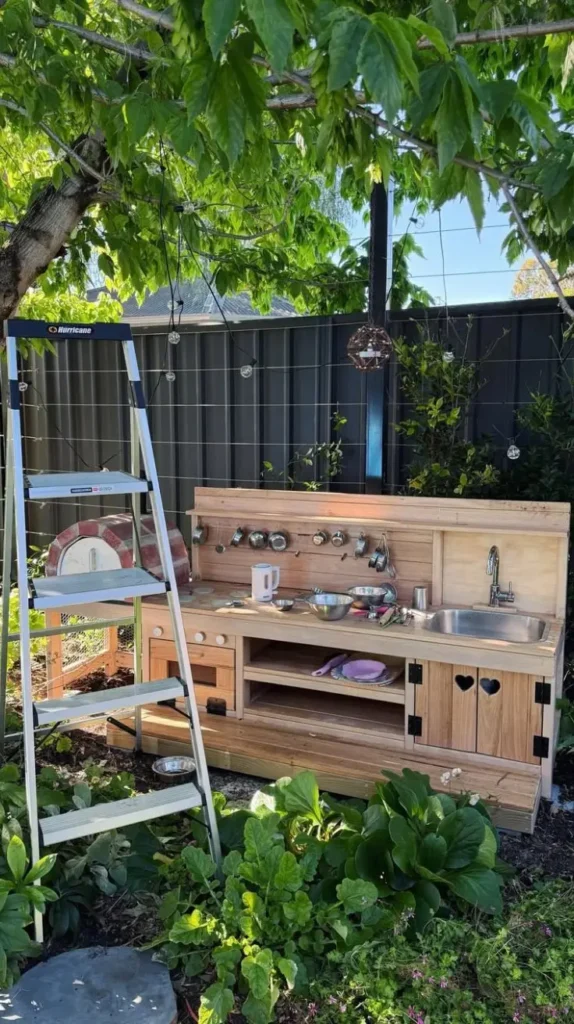
A garden-themed cooking area creates a beautiful connection between outdoor play, nature exploration, and creative learning. Positioned near flower beds, vegetable patches, or herb gardens, this setup encourages children to interact with plants while inventing pretend meals and muddy masterpieces. The entire space feels fresh, calming, and filled with opportunities for discovery.
Small raised garden beds filled with herbs such as mint, basil, rosemary, and lavender make the area even more interactive. Children enjoy collecting leaves, petals, and herbs to use as “ingredients” in pretend soups, cakes, and magical recipes. These natural scents and textures create a sensory-rich environment that feels exciting every single day.
Wooden shelves, baskets, and crates can store gardening tools, toy vegetables, watering cans, and outdoor utensils neatly while keeping the space organized. Chalkboard labels placed near plants or containers add educational value and help children become familiar with flowers, herbs, and vegetables through playful experiences.
This setup naturally encourages responsibility and curiosity. Children begin watering plants, observing insects, and paying attention to seasonal changes around the garden. Those small activities quietly teach patience and appreciation for nature while still feeling playful and fun.
Decorating the area with flower garlands, painted pots, and rustic garden signs gives the space extra charm. A small wooden table nearby can quickly transform into a pretend farm-to-table café where children proudly “serve” freshly gathered garden ingredients to family members or friends.
Another wonderful feature of this design is how beautifully it changes throughout the year. Spring flowers, summer herbs, autumn leaves, and winter branches all create new materials for imaginative outdoor play. Every season brings fresh inspiration, keeping the area exciting and visually appealing over time.
Most importantly, a garden-inspired outdoor play space encourages children to slow down, explore the outdoors, and build a meaningful connection with nature while enjoying endless creative adventures.
Upcycled Furniture Play Spot
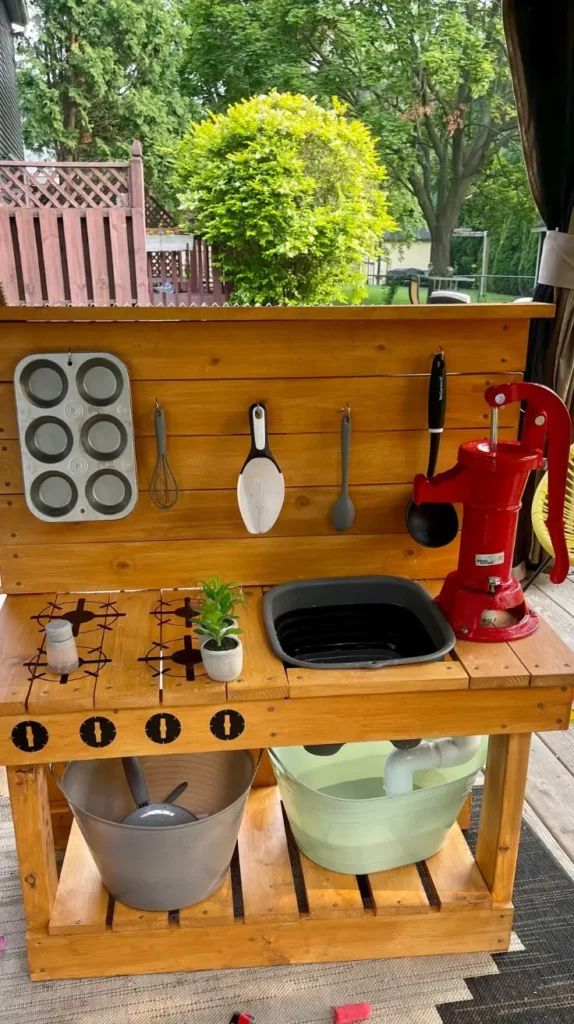
An upcycled furniture play spot proves that old household items can become some of the most charming and creative backyard features imaginable. Instead of throwing away outdated cabinets, dressers, tables, or shelves, families can transform them into functional outdoor play stations filled with personality and warmth. This approach feels both budget-friendly and environmentally conscious while creating a one-of-a-kind play area children adore.
An old dresser can become the perfect pretend cooking station with drawers used to organize bowls, spoons, cupcake tins, toy vegetables, and muddy “ingredients.” Cabinets offer excellent storage for buckets, flower petals, sticks, and outdoor tools. Even worn furniture pieces with chipped paint or weathered edges gain extra character once placed outdoors.
Painting furniture in cheerful colors or soft rustic tones can completely refresh its appearance while helping it blend beautifully into a garden or patio setting. Adding hooks for hanging utensils, mini shelves for containers, or chalkboard panels for menus makes the setup feel realistic and interactive.
Children become deeply engaged in imaginative storytelling when surrounded by realistic-looking furniture. They naturally invent outdoor cafés, bakeries, potion shops, or pretend restaurants using simple backyard materials. Every drawer and shelf becomes part of a larger creative adventure.
This style also allows families to customize the setup based on available space. Compact side tables work well for small patios, while larger cabinets create elaborate outdoor kitchens in bigger backyards. The flexibility makes this idea practical for nearly any home.
Decorative details such as vintage kitchenware, metal bowls, old baking pans, and woven baskets make the area feel cozy and welcoming. Some families even label drawers with playful names like “Magic Ingredients” or “Forest Bakery Supplies” to encourage more imaginative play.
Best of all, repurposing old furniture adds sentimental value to the backyard. A once-forgotten piece suddenly gains a second life filled with laughter, muddy recipes, and unforgettable childhood memories.
Minimalist Outdoor Play Space
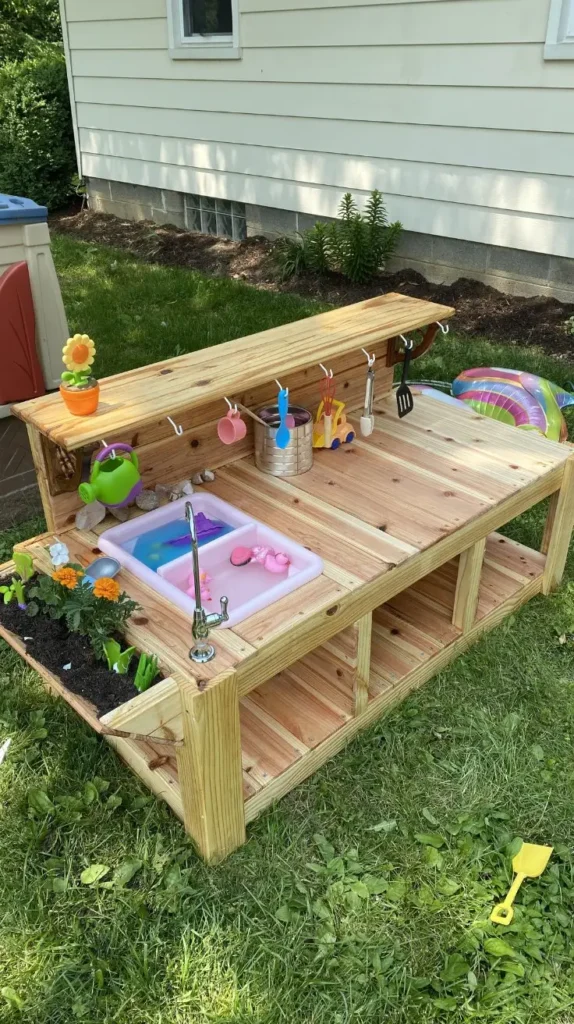
A minimalist outdoor play space creates a calm, organized, and visually appealing environment where children can focus fully on creativity and exploration. Unlike crowded play areas filled with excessive toys and decorations, this style uses simplicity to encourage deeper imaginative play and sensory engagement.
Natural wood tones, soft neutral colors, and uncluttered layouts give the area a peaceful atmosphere that blends beautifully with modern backyards and patios. A simple wooden table, a few metal bowls, and neatly arranged containers often provide more than enough tools for hours of outdoor fun.
Open shelving keeps utensils and materials accessible while maintaining a tidy appearance. Instead of overwhelming children with too many choices, the setup encourages them to use natural items like leaves, dirt, flowers, and sticks in creative ways. Every object becomes more meaningful because the environment feels clean and intentional.
Parents often appreciate how easy minimalist setups are to maintain. Fewer accessories mean less clutter, faster cleanup, and more organized storage. Children can also learn responsibility more easily when materials have clearly defined spaces within the play area.
Despite its simplicity, this style still feels warm and inviting. Small decorative touches such as woven baskets, wooden crates, or a sleek chalkboard wall can add personality without overwhelming the design. A nearby potted plant or herb garden introduces texture and color while strengthening the connection to nature.
Minimalist spaces also tend to create calmer play sessions. Children often spend longer periods focused on storytelling, pretend cooking, and sensory activities because the environment reduces distractions. The slower pace encourages creativity to develop naturally.
Another advantage is flexibility. This style works well in large backyards, compact patios, or urban outdoor spaces because the design stays clean and space-efficient. Families can easily adjust or expand the setup over time without losing the peaceful aesthetic.
Most importantly, a minimalist outdoor play area proves that children do not need flashy toys or complicated gadgets to enjoy meaningful and imaginative experiences outdoors.
Whimsical Fairy Tale Corner
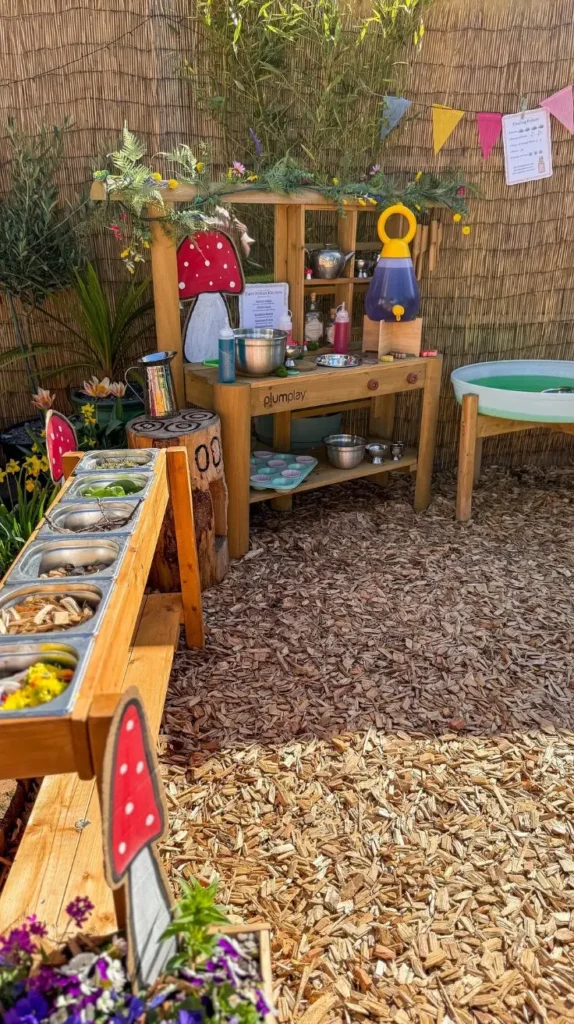
A whimsical fairy tale corner creates a magical outdoor world where creativity, storytelling, and sensory play come together beautifully. This enchanting setup transforms an ordinary backyard space into a dreamy environment filled with tiny details children absolutely adore. From fairy doors attached to trees to glowing lanterns and winding garden paths, every element encourages imaginative adventures.
Natural materials play a major role in creating this magical atmosphere. Wooden stumps become tiny café tables, while flower petals, moss, leaves, and pebbles turn into pretend ingredients for magical recipes and fairy feasts. Children often become completely absorbed in storytelling as they invent fantasy worlds filled with woodland creatures, tiny visitors, and secret garden celebrations.
Decorations such as painted mushrooms, hanging ribbons, wind chimes, climbing vines, and miniature signs make the space feel alive with wonder. Solar-powered lanterns or twinkling lights can create an especially magical atmosphere during evening playtime, transforming the backyard into a glowing storybook setting.
This type of outdoor play area supports emotional expression and creativity in powerful ways. Children naturally create characters, adventures, and imaginary scenarios while interacting with nature and sensory materials. Every muddy pie or flower potion becomes part of a larger magical story unfolding around them.
The whimsical design also encourages longer independent play sessions because the environment feels immersive and emotionally engaging. Instead of quickly losing interest, children continue discovering new ideas and adventures hidden throughout the space.
Adding small features such as fairy houses, tiny bridges, or hidden “treasure” baskets can make the area feel even more exciting over time. Families can easily personalize the setup based on favorite storybook themes, woodland creatures, or fantasy-inspired decorations.
Most importantly, a fairy tale-inspired outdoor space creates unforgettable childhood memories filled with laughter, muddy hands, glowing lanterns, and endless magical adventures under the open sky.


