
The Greenbelt is an economic asset, not a restriction on Ontario’s growth, says a report from the Canadian Agri-Food Policy Institute.
“Ontario’s Greenbelt: The Key to Food Security in the Greater Golden Horseshoe,” written in partnership with the Greenbelt Foundation, argues that the Greenbelt model could help Ontario’s provincial government achieve its development goals, while simultaneously supporting a vibrant agri-food system.
Margaret Zafiriou, report author, economist and the institute’s senior research fellow, highlights the agri-food sector’s significant contribution to Ontario’s gross domestic product and the value of improved food security during uncertain times as critical reasons for increased and more strategic investments in Ontario’s prime farmland regions.
During an institute seminar on April 28, Zafiriou said the concentration of domestic customers, food processing capacity, prime farmland, transport infrastructure, research and educational institutions, and other factors within the Greenbelt boundary combine to make the region a significant “food industry cluster” in North America. “The greenbelt is really a strategic asset … it’s important for our future,” she said.
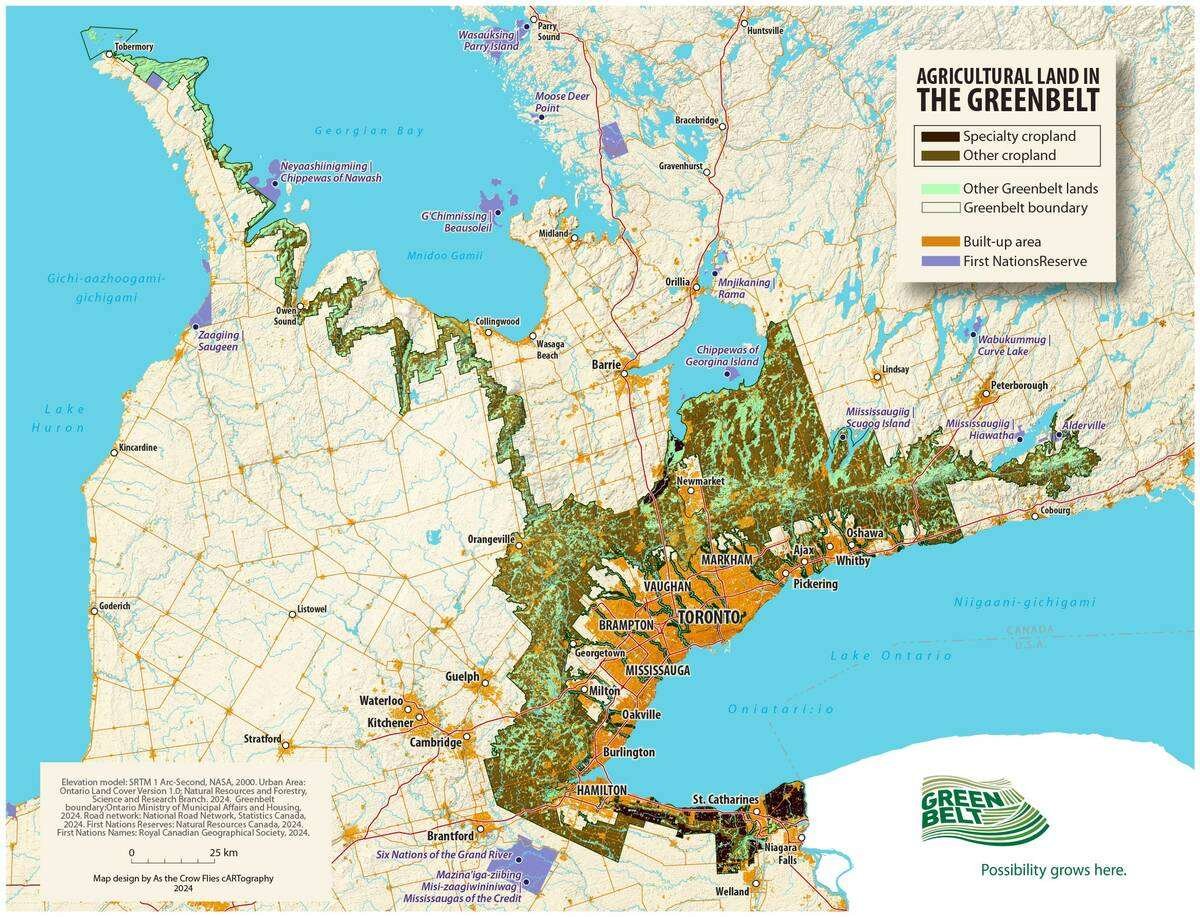
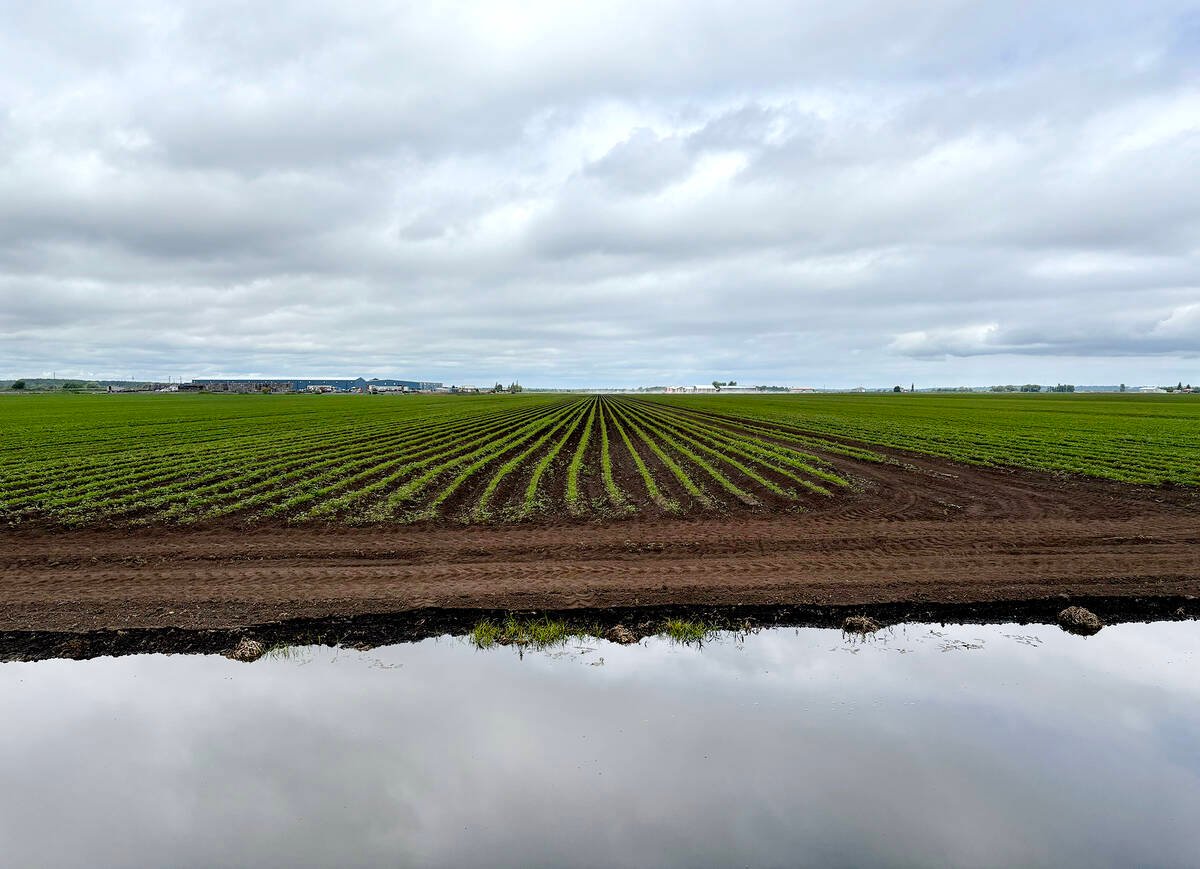
Edward McDonnell, the Greenbelt Foundation’s chief executive officer, cited the Holland Marsh and Niagara’s fruit production regions as examples of unique agricultural systems and conditions within the Greenbelt and their significance to domestic food security. Combined, these “small” but strategically important areas generate billions of dollars annually and create thousands of jobs.
“The Greenbelt sits at the centre of Ontario’s processing capacity … and next to the largest consumer market in the country,” said MacDonald, adding the Greenbelt model has effectively protected the region’s two million acres of prime farmland.
During a subsequent panel discussion, Ontario Fruit and Vegetable Growers’ senior policy and government relations advisor Gordon Stock reiterated the importance of the Greenbelt’s varied farming landscape.
“Even different slopes in terms of field topography can be an advantage,” said Stock. “You’re not going to be growing peach trees in the north. We need to be cognisant of our ability to produce these crops today.”
Stephen Duff, farmer and chief economist with the Ontario Ministry of Agriculture, Food and Agribusiness, said agriculture in the Greenbelt adds around $3 billion to the provincial purse — much of which could not be recreated elsewhere should those lands be forfeited for other uses.
“Most farmland can grow some of the larger commodities we have,” said Duff, but using top-tier land for bulk commodities may not be “best use” from an economic or food security standpoint. This should be considered by the government, he said.
“Not all land is created equal. While all land will support some level of base production, it’s what is its maximum use that’s often missing in the equation.”
In a later interview, Zafiriou hoped the report will motivate policymakers and others to view agri-food as a valuable element within a broader economic and social system. Doing so is crucial for the sector’s longevity — as well as farmland itself — and will serve as a vital way for Ontario to withstand trade headwinds, supply disruptions and other pressures.
Regarding the Ford government’s previous efforts to open the Greenbelt for development, Zafiriou emphasized the need to raise public awareness of the Greenbelt’s economic, social, and environmental significance and to hold the government accountable, particularly at the municipal level, when policymakers opt for short-term thinking.
The Greenbelt Foundation helps educate, gather evidence and share knowledge, said Zafiriou.
“We have to communicate and collaborate. All the stakeholders have to help each other, inform each other about the importance of agriculture,” said Zafiriou. “We need economic growth, but it’s got to be more measured and planned and managed. Agriculture is and can be a significant part.”
The post Report shows Greenbelt supports strategic development in Ontario appeared first on Farmtario.


