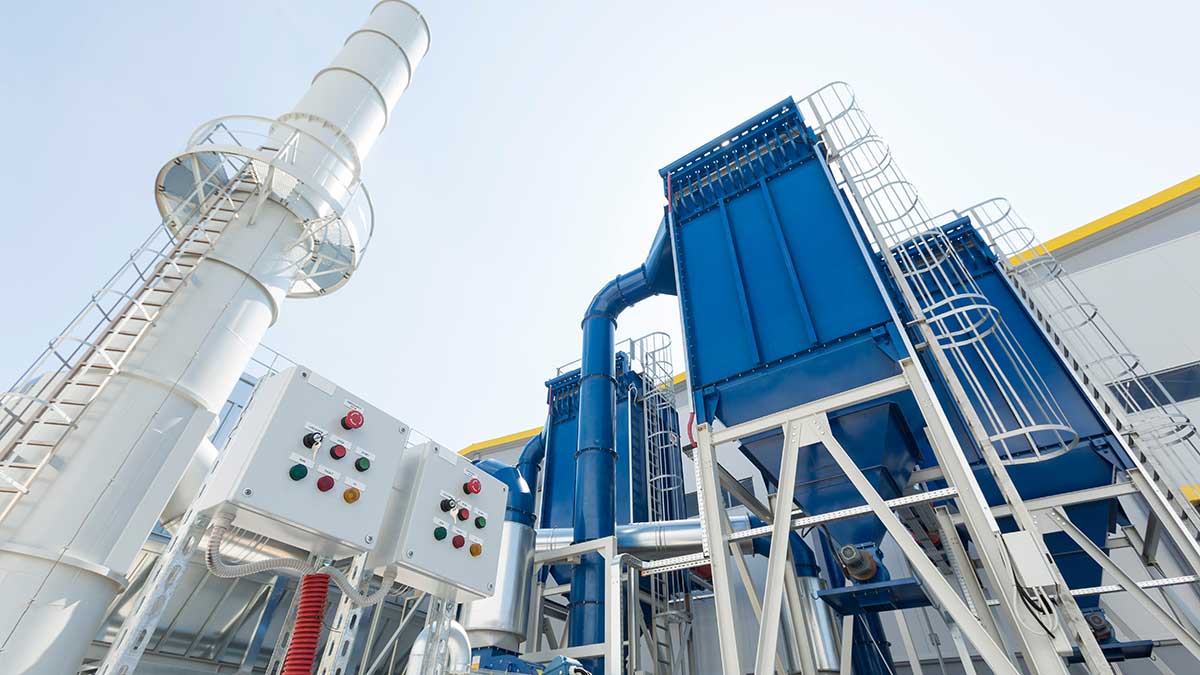
On March 20, 2026, the Environmental Protection Agency proposed a rule change that could fundamentally shift how the federal government regulates a controversial type of plastic recycling called pyrolysis, also known as “advanced recycling.” Currently, the EPA treats pyrolysis plants as incinerators, restricting the release of toxic chemicals. The proposed rule would redefine them as factories, altering longstanding pollution controls.
Though it may seem minor, this rule change would weaken key pollution protections for pyrolysis plants. The result could be increased toxic emissions, with the burden falling on nearby communities—often low-income or predominantly Black, Latino, or Indigenous neighborhoods.
What is pyrolysis?
Pyrolysis involves heating plastic to very high temperatures in a container with little or no oxygen, preventing it from burning as it melts. The plastic breaks down into an oily liquid that can be used to make fuel, or it can be mixed back into the process that creates new plastic. The plastics industry calls this “advanced recycling” or “chemical recycling.” Environmental groups, such as the Ocean Conservancy, have called the process “the latest plastics industry deception.”
There are six pyrolysis plants running in the United States today, in Ohio, Texas, North Carolina, Indiana, and Georgia. More are being built in Arizona and West Virginia. The industry wants to build many more, but says strict EPA rules make it hard to get permits.
Why the rule change matters
The Clean Air Act is the federal law that limits air pollution. One part of it — Section 129 — sets strict rules for incinerators. It requires them to limit nine kinds of pollutants, including dioxins, heavy metals, and tiny particles that lodge deep in human lungs. Pyrolysis plants have been covered by these rules since 2005. The EPA’s new proposal would move them from Section 129 to Section 111, which covers fewer pollutants.
John Walke, a clean air expert at the Natural Resources Defense Council, told the Associated Press that the timing is the real problem. Removing the old rule would happen quickly. Writing a new one takes years. In between, he said, a plant could legally turn off its pollution controls.
“You could have a facility that was controlled on a Monday, preventing those hazardous air pollutants from being emitted into the atmosphere, and on Tuesday, the facility would have legal permission to turn off installed pollution controls,” Walke said. The reason a company would do that, he added, is simple: running pollution control equipment costs money.
James Pew of Earthjustice, a group that takes environmental cases to court, put it more bluntly to Inside Climate News: “As a practical matter, this definition change would mean EPA is completely deregulating a whole class of incinerators, these so-called pyrolysis units. And their pollution is really toxic.”
What the plastics industry says
The American Chemistry Council, which represents plastic companies, has lobbied for this change for years. Ross Eisenberg, who leads its plastics group, told the Associated Press that pyrolysis is not the same as burning. “The definition of incineration is to destroy it, right? You’re literally trying to make it go away,” he said. “That’s not what they’re doing here. They are trying to preserve it and recover the materials, which is recycling, which is manufacturing.”
Eisenberg argues that chemical recycling plants are already heavily regulated, citing other parts of the Clean Air Act that would still cover them, as well as requirements associated with state-level permits.
What scientists have actually found
The science on pyrolysis is at best mixed and can be partisan. A 2023 study by the Department of Energy’s Argonne National Laboratory, published in the Journal of Cleaner Production, found that mixing even a small amount of pyrolysis oil into new plastic production cuts greenhouse gas emissions by 18% to 23% compared to making plastic from scratch. The researchers used real operating data from eight U.S. pyrolysis facilities between 2017 and 2021.
But a 2025 paper in ACS Sustainable Chemistry & Engineering concludes that, depending on the size of the plant and how its emissions are measured, the same process can produce anywhere from 28% less to 30% more greenhouse gas emissions than ordinary fossil-fuel-based plastic production. The paper also notes that pyrolysis facilities release volatile organic compounds, fine particles, and a group of cancer-linked chemicals called polycyclic aromatic hydrocarbons. Those emissions, the authors wrote, fall hardest on communities that are mostly low-income or marginalized.
A 2023 report by Beyond Plastics found that of 11 chemical recycling plants then operating in the U.S., seven were sited in environmental justice communities. Six of those seven were pyrolysis plants.
Pyrolysis can reduce some forms of pollution while creating others, and the people who breathe those other emissions are usually not the ones making decisions about where plants are built.
How the public weighed in
The EPA gave the public 45 days to submit comments, from March 20 to May 4, 2026. Environmental groups organized quickly. A group including the Public Interest Research Group, Environment America, and Environmental Action collected and submitted more than 27,000 comments asking the agency to keep treating pyrolysis as incineration. The groups argue that pyrolysis can release up to 96 different toxic chemicals, including some linked to cancer and harm to developing children.
At a public hearing, a dozen speakers from Moms Clean Air Force testified against the change. Kiya Stanford, the group’s Georgia organizer, said the proposed rule “feels like a move to prioritize polluters over people.”
Judith Enck, a former EPA regional administrator who now runs Beyond Plastics, told Inside Climate News she was puzzled by how the change was announced. “I thought, could it be a mistake, or are they quietly trying to push this through?” she asked. The pyrolysis paragraph was buried inside a 17-page rule about wood waste burning.
Where to follow what happens next
The official record for this rule lives on the federal website regulations.gov, in docket EPA-HQ-OAR-2025-0068. Every public comment, every supporting document, and the EPA’s eventual decision will appear there.
The first comment window closed on May 4. The EPA can still accept late comments, but it doesn’t have to count them. The bigger opportunity for public input is still ahead: the EPA said the comments collected on this docket will help it draft a new, separate rule focused entirely on advanced recycling. That second rule has not yet been published. When it is, the public will get another comment period of at least 30 days, often 45 to 60.
What You Can Do
- Follow the rules’ progress. Go to regulations.gov and search for EPA-HQ-OAR-2025-0068. You can subscribe to email alerts to receive updates when the EPA posts.
- Be ready to comment on the next rule. When the EPA publishes its dedicated pyrolysis rule — likely later this year or next — you will have a chance to submit a public comment. Even a short, clear comment becomes part of the official record.
- Find out if a plant is near you. Pyrolysis plants are operating or under construction in Ohio, Texas, North Carolina, Indiana, Georgia, Arizona, and West Virginia. If you live in one of those areas, state-level air quality rules will matter more than ever.
- Ask brands what “recycled” really means. Some products labeled as containing recycled plastic don’t actually contain recycled molecules. They use a paper accounting system called mass balance. Asking companies to explain their labels is a fair question.
- Use less plastic. The whole debate is about what to do with plastic after it exists. Choosing durable goods, refilling instead of replacing, and skipping single-use packaging keeps plastic out of the system entirely.
When the decision is likely
The current rule has two parts that move on different schedules. The disaster-recovery section involving wood waste is on a fast track. The EPA said it wants to finish that before the 2026 hurricane and wildfire season, which means a final decision is likely between late spring and early summer 2026.
The pyrolysis part will take until next year. The EPA has not announced a target date for its dedicated pyrolysis rule. Based on how quickly the agency is moving and what industry groups have told reporters, a reasonable guess is that a new proposed rule will appear in late 2026 or the first half of 2027, with a final version possibly in 2027 or 2028.
The National Resources Defense Council has announced plans to sue if the rule is finalized, a step that could delay implementation further. The EPA’s upcoming publication of its dedicated pyrolysis rule is the next key moment, as it will determine whether the government continues to uphold or dismantle existing pollution protections. This decision will shape the future of advanced plastic recycling in the U.S.
The post The EPA Is Changing the Rules for Plastic Recycling Plants appeared first on Earth911.
- Source: https://earth911.com/business-policy/the-epa-is-changing-the-rules-for-plastic-recycling-plants/