
In just four years, a combination of 37 different pathogens reduced the profits of Ontario and U.S. corn growers by US$13.8 billion.
That’s according to a study, “Corn Yield Loss Estimates Due to Diseases in the United States and Ontario, Canada, from 2020 to 2023,” published in Plant Health Progress. In evaluating data from Ontario and 29 states, contributors to the analysis estimate disease reduced corn yields by a total 2.5 billion bushels — a number they argue highlights “the significant economic and production risks facing growers each season.”
Why it matters: Understanding how the threat landscape of crop pathogens changes over time helps the sector proactively direct resources where they are, or will be, most needed.
The study analyzed grain yield data from the 2020, 2021, 2022 and 2023 growing seasons. Annual yield losses caused by the 37 pathogens (or pathogen groups) were estimated in each sample region, along with losses associated with grain contaminated by mycotoxins.
Tar spot, fusarium stalk rot and plant-parasitic nematodes were identified as the worst yield offenders. While overall annual losses varied widely by region and year, diseases reduced corn yield by an average of three per cent, or an estimated average economic loss of $37.76 per acre annually across all surveyed locations and years.
That $37.76, however, does not include the added costs incurred from the use of seed treatments, foliar fungicide applications or other means of controlling disease.
“As corn production and crop protection practices evolve, invasive or emerging pathogens are introduced, and environmental conditions continue to deviate from historical averages, new diseases may emerge and become problematic for crop production,” write the authors.
Relatively new or recently emerging corn diseases in the U.S. and Canada include corn stunt, bacterial leaf streak, tar spot, curvularia leaf spot and “a new, unnamed foliar disease.”
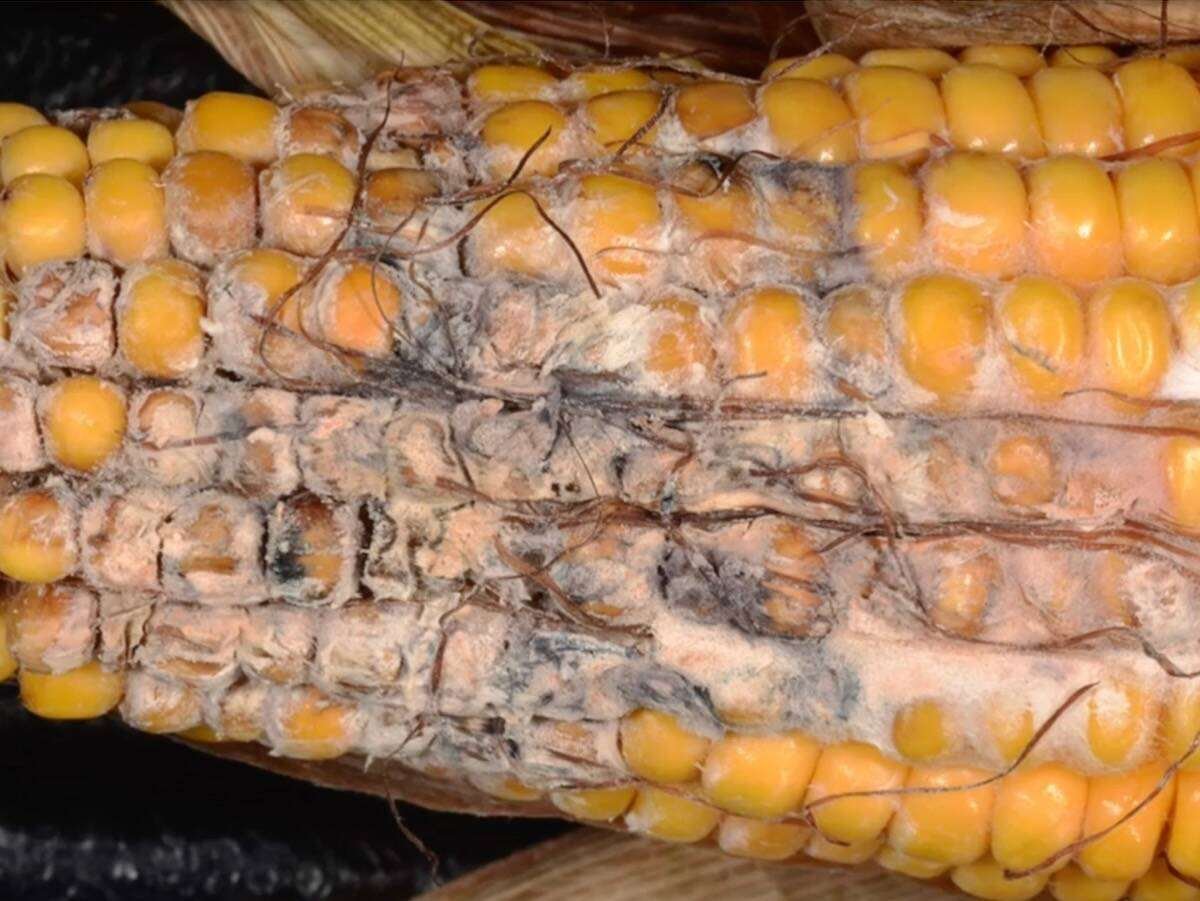
Gibberella ear rot remains one of Ontario’s primary corn diseases. Photo: Purdue University Extension Entomology video screengrab via YouTube
“Corn disease risk and impact are continually changing over the short (annually) and long term (multiple years to decades), necessitating continued assessment of the influence of diseases across the United States and Canada. Annual assessment allows experts to provide meaningful estimates, which may create an immediate opportunity to work toward meeting farmer and industry needs…. For example, tar spot has caused the greatest yield losses in two of the three most current annual disease loss summaries, yet tar spot did not exist in the United States when disease loss estimates began in 2012.”
A changing threat landscape
Significant as $13.8 billion in losses may be, historical trends appear to indicate overall losses from corn diseases are declining over time. For comparison, disease-induced losses across the same geography between 2012 and 2019 have been estimated at US$47.5 billion, or $5.94 billion each year on average — notably higher than the $2.95 billion in yearly average losses from the 2020-2023 period.
Albert Tenuta, field crop pathologist with the Ontario Ministry of Agriculture, Food and Agribusiness, and one of the experts providing the study with data from Ontario, said the apparent positive trend could be the result of better management approaches.
“A lot of the data is coming in from southern United States. Pathogens like grey leaf spot that used to be a major source of economic loss there have subsided,” said Tenuta.
In Ontario, he estimated loss rates have stayed relatively stable, or perhaps dipped slightly, but pressure from Ontario’s top corn diseases — tar spot, gibberella ear rot and northern corn leaf blight — continues.
“Again, it goes back to the regional. I think our losses have stayed pretty stable, or gone down a bit. But then tar spot, for example, it’s ticking back up,” said Tenuta.
Gibberella is a perennial challenge too, given the environmental conditions of the Great Lakes region, while northern corn leaf blight is trending upward thanks to a proliferation of races.
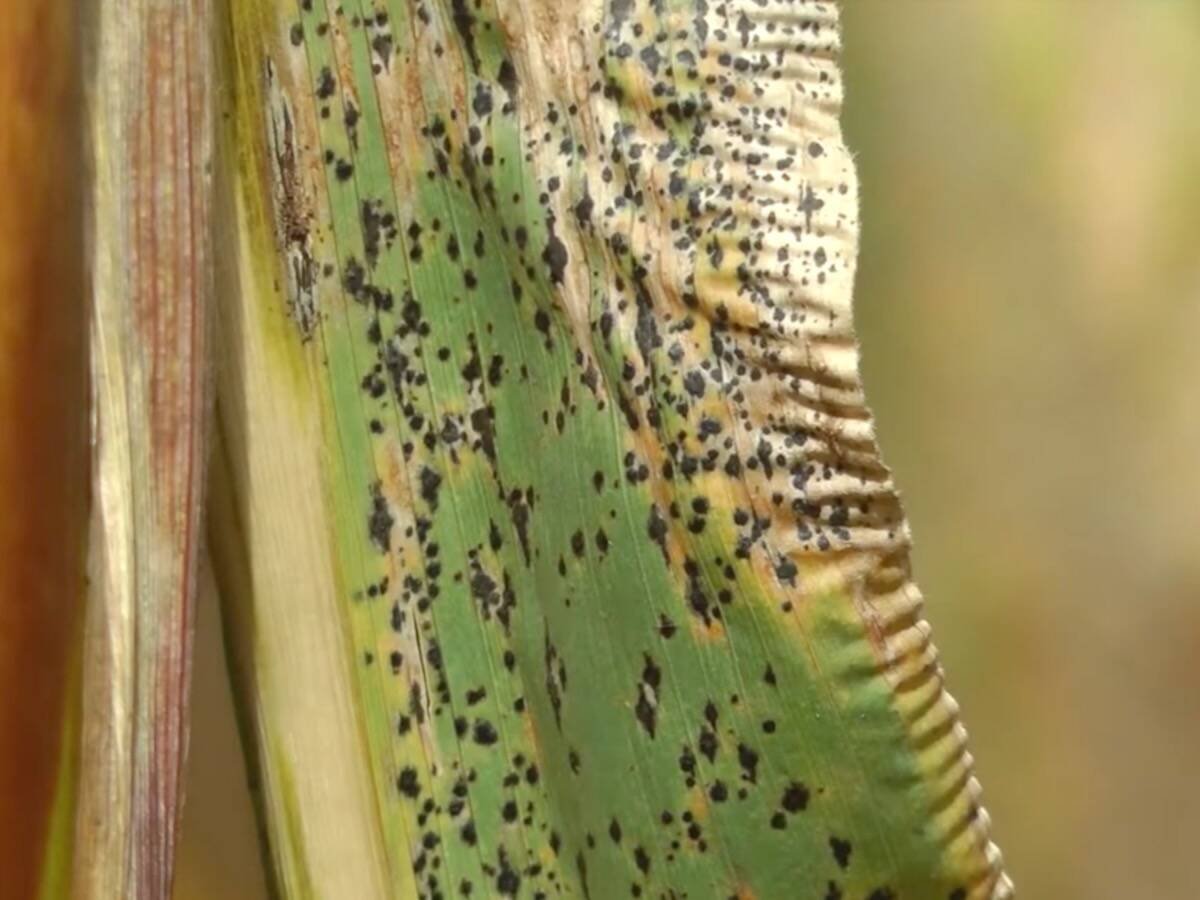
Tar spot did not exist in the U.S. when researchers began quantifying total disease losses, in 2012, but it has gone on to cause the greatest yield losses in two of their three most recent study years. Photo: Michigan State University Field Crops Pathology video screengrab via YouTube
“Thirty-five years ago, when I joined the ministry, there were only a few races. We’re over 30 races now…. Mother Nature always has a game plan to bypass resistance.”
Co-operation critical
Like the authors of the 2020-2023 study, Tenuta said cross-border reporting and analysis is critical to successfully tracking and preparing for changes in the crop disease threat landscape. Research priorities, incorporating new sources of resistance, new seed treatments and control products — it all benefits from knowledge sharing and advanced warning.
“This goes hand in hand with what (OMAFA) does with the DON gibberella survey each year, preparing growers and buyers for the upcoming harvest,” said Tenuta.
He added better communication and co-operation over the last decade-plus were driving some loss reductions despite ever-shifting disease challenges.
Public-private partnerships in variety development have also “done an exceptionally good job” of removing susceptible hybrids and providing growers with the information they need to avoid unnecessary risk.
“Everybody has that common goal to reduce those losses. I think communication and awareness has really grown. I think that’s helped us be better managers and minimize those losses.”
The post Diseases cost North American corn growers 11 figures in four years appeared first on Farmtario.


