
With support from the EFRO-funded project plestic Ready, we’re kicking off the food-grade approval process for Caleyda®. We’re proud to take this next step in scaling our technology and bringing biopolymers from organic side streams to market.
Tackling the Mixed-Culture Challenge for Food-Grade Caleyda
One of the key objectives is the use of a mixed-culture production process, which adds complexity to obtaining food-grade certification. Achieving this for materials made from organic residual streams is an important step, as these streams represent an additional sustainable and cost-effective feedstock for PHA.
Our food-grade approval starts with an exploration phase in which we will explore both the challenges and the solutions needed to move toward certification. We’re proud to collaborate in this phase with companies within the value chain: H&P Moulding, Happy Cups, NHL Stenden, WUR, and SUSPACC.
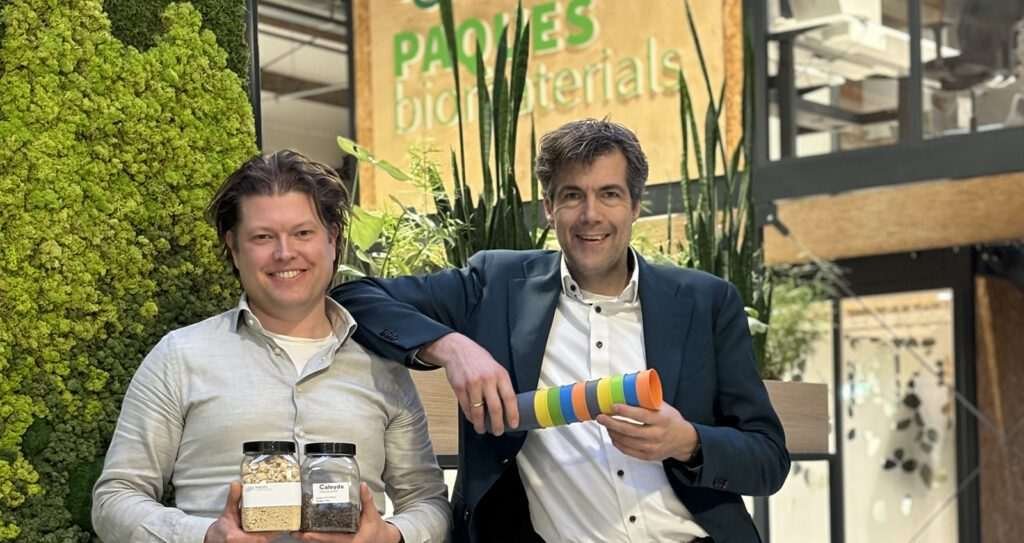
Collaborate to tackle the barriers for entering the market
As a consortium, we applied for a grant, and it has officially been approved as part of the larger plesTic Ready initiative in Northern Netherlands! Within plesTic Ready companies, knowledge institutes, and governments in Northern Netherlands collaborate to tackle the barriers that innovations face when entering the circular plastics market. What makes this initiative unique is its multidisciplinary approach, addressing not just technology but also: Policy, Logistics, Economy, Social acceptance, Innovative design, Corporate & community. Together, these form the foundation of plesTic, enabling innovations to reach the market faster and more successfully.



The post Start process towards Food-Grade Caleyda appeared first on Paques biomaterials.


