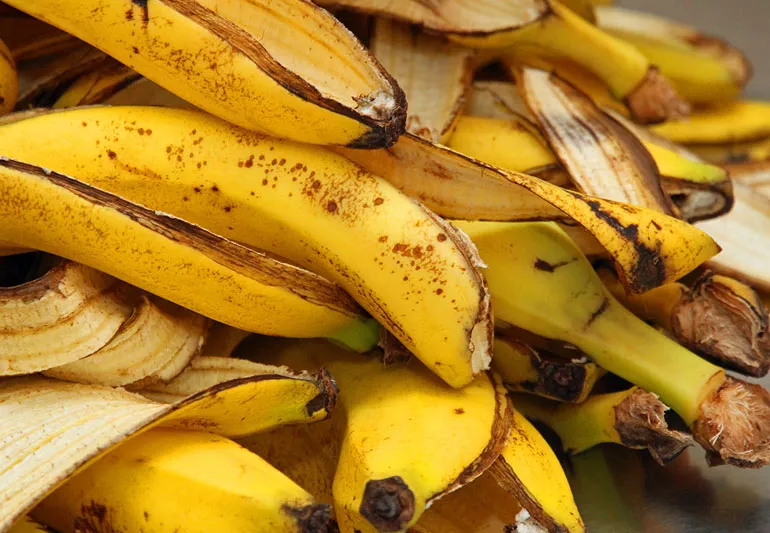
Researchers at St. Edmund’s College in Shillong have made a promising discovery. They developed a biodegradable plastic film using banana peels. This biomaterial naturally decomposes in soil within weeks.
Plastic pollution is a serious environmental problem. It affects soil, water, animals, and ecosystems. Most plastics are not easily biodegradable. They accumulate in landfills, rivers, and oceans, causing long-term damage.
The research team explored how discarded banana peels can be turned into a sustainable alternative. They extracted starch from the peels of Musa acuminata, a common banana variety. This starch was processed into a bioplastic using simple chemicals like hydrochloric acid, glycerol, and sodium hydroxide. The mixture was then oven-dried into thin films.
To test its biodegradability, the team buried pieces of the bioplastic in soil. Over 15 days, the material softened, became brittle, and broke apart. Microbial activity caused more than 27% of its weight to disappear. This shows the bioplastic breaks down quickly in natural conditions.
The team also tested how the material reacts to water and solvents. It absorbed water and softened slightly, but remained stable in solvents like chloroform and methanol. This indicates it has potential for practical use.
The researchers believe banana peel-based bioplastics could become a sustainable option for single-use plastics. They see it as a step toward reducing plastic waste and supporting eco-friendly consumption.
They plan to continue improving the material’s strength and water resistance. Further research could help scale up production for wider use, offering a greener alternative to traditional plastics.
The post Shillong researchers turn banana peels into biodegradable plastic appeared first on World Bio Market Insights.