
The Ontario Beef Research Centre has continued to evolve since its opening in 2019 into what’s now a hotbed of genetics, feed and methane-reduction projects aimed at providing producers with farm-level tools.
The Resilient Canadian Beef: Research to Advance Canada’s Beef Sector day, hosted by the University of Guelph at Elora on May 20, featured a tour of the OBRC and discussions covering climate-focused grazing, data collaboration, genetics and ongoing projects at Beef@Guelph.
The centre was lauded as a world-class facility when it opened in 2019, featuring two cow-calf barns, a handling facility and manure storage. It now houses 280 cows and about 90 replacement heifers, with its pasture capacity increased to 121 hectares in 2020 and a feedlot and precision feed facility were added in 2021.
Why it matters: Ontario’s livestock research facilities continue to adapt and provide insight to the industry’s most pressing challenges.
Dr. Katie Wood, associate professor of animal biosciences at the University of Guelph, said the facility’s closed Angus-Simmental crossbred herd, developed over 75 years from the original herd, is a far cry from the genetics in 2019.
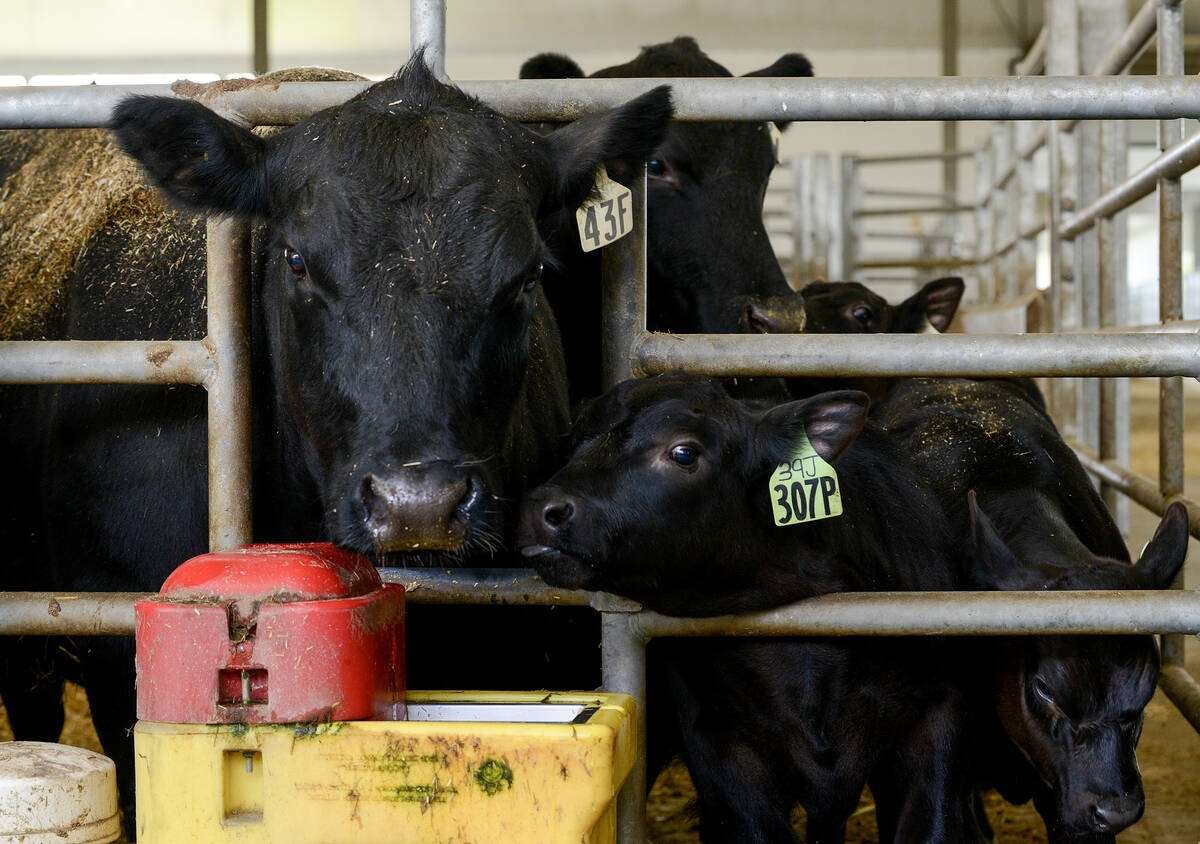
A few Ontario Beef Research Centre Angus-Simmental cross bred cows and calves demonstrate the genetic strength of the breeding program to develop near carbon-copy cattle to facilitate the most accurate research results. Photo: Diana Martin
“If I gave this tour five years ago, the cows would have looked very different,” Wood said. “We had a dog’s breakfast of cow types. We had 500-kilo cows, and we had 1,000-kilo cows, which is great, but it doesn’t make research happen that efficiently.”
From mating to eating trials
The feedlot has a capacity for 280 head and can handle multiple fills per year, depending on project needs, but currently sees one per year.
“All of our steers are usually moved into the feedlot and usually go on to a trial,” said Wood. “Many of those are processed through our own abattoir on campus, which is unique in Canada and certainly in North America, to have the capacity to do basically from mating until eating type research following the animal completely through the supply chain.”
The precision feed facility plays a dual role, supporting beef and dairy feed research to advance feed technology and potentially reduce farm costs.
Wood said having access to a high level of precision and accuracy in nutritional research is important.
The facility features two stationary mixers, one dedicated to beef, the other to dairy, and uses FeedWatch software to provide real-time inventory management, enabling on-time ingredient delivery and predicting inventory levels to support annual planning.
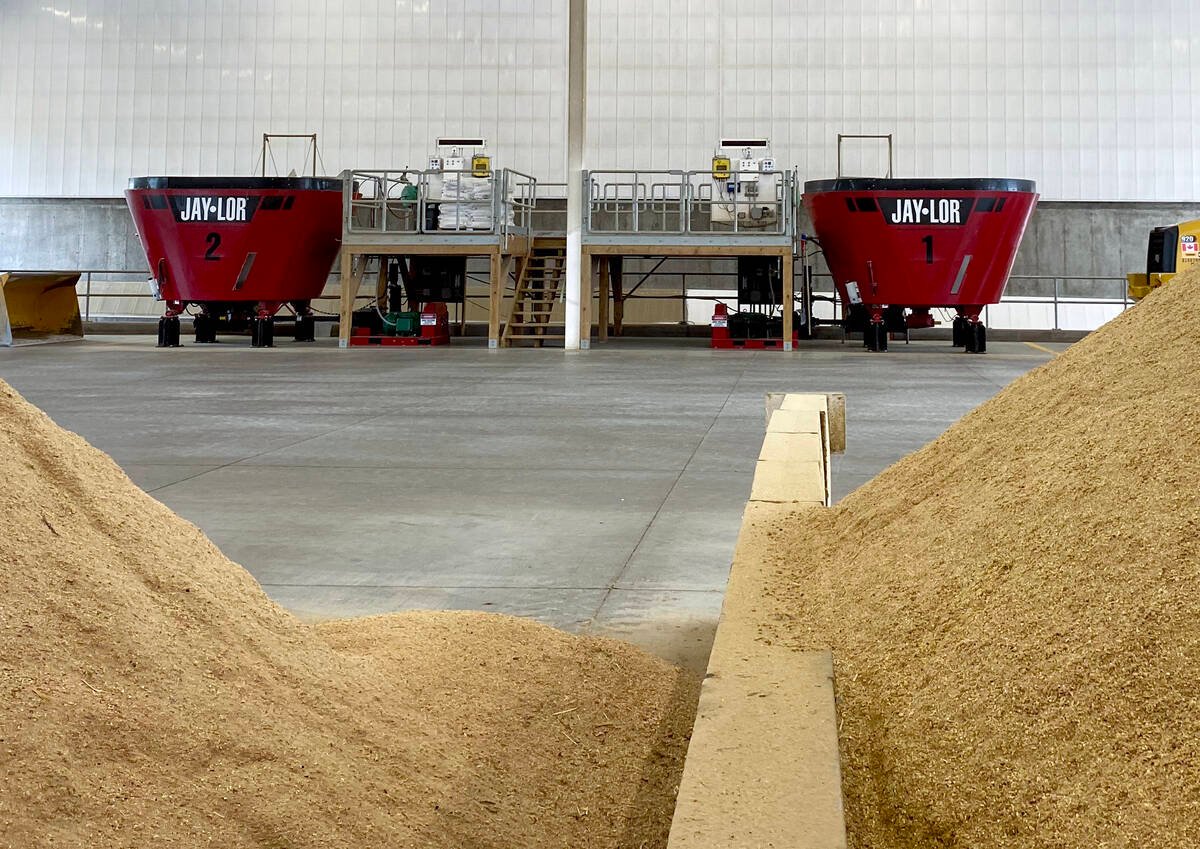
The Ontario Beef Research Centre’s precision feed facility has two mixers, one each for beef and dairy, that use FeedWatch software to craft precise rations. Photo: Diana Martin
With about 970 hectares of feed crops grown, the program and the feed facility, including 27 covered bunk silos, assists in managing narrow harvest windows to maximize quality and consistency within the research programs.
Woods said the computer software allows feed and rations, which can be designed down to the third decimal place of inclusion rate, to be as accurate as possible.
“The accuracy in that measurement has actually led to big feed savings for us,” she said. In one year, savings from a pricey dairy supplement that was subject to losses due to wind, paid for the software keeping track of it, because it was handled in an enclosed facility.
“It was an expensive facility to build, but it certainly has paid off for us,” said Wood.
Methane reduction work
It’s critical to nutrition projects like the one exploring the efficacy of alternate-day dosing for newly approved 3-Nitrooxypropanol (3NOP), a livestock feed supplement aimed at reducing methane emissions, on forage-fed heifers. Despite approval for use, limited 3NOP is being used in dairy or beef herds due to cost.
Unlike current research, which examines different daily dose levels, this project compares a control with no 3NOP doses to daily and alternate-day doses at the same level split within an 89-heifer cohort.
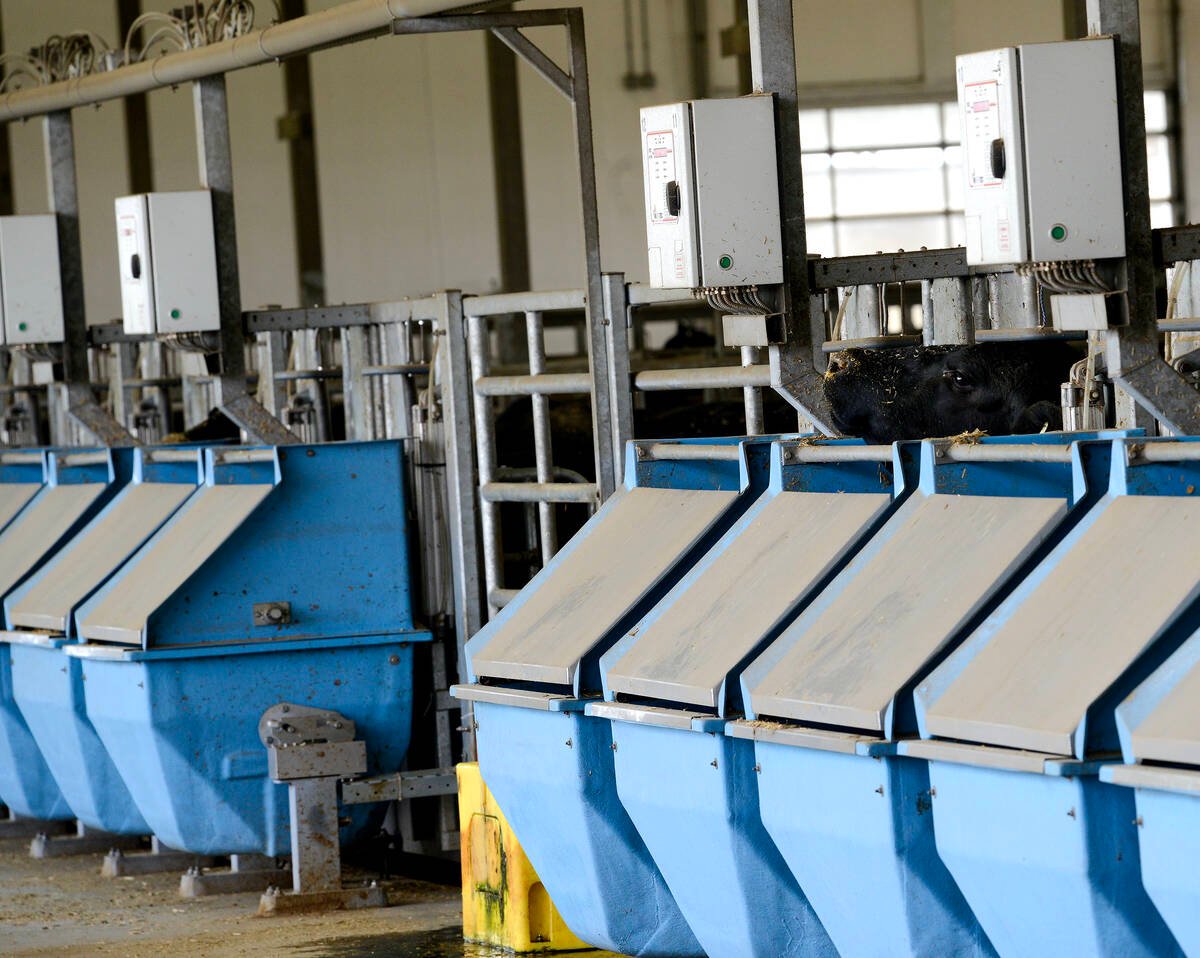
The feeders scan RFID tags and measure how much and how often each cow eats as part of ongoing research at the Ontario Beef Research Centre at Elora. Photo: Diana Martin
The animals had a 21-day adaptation to the base diet before methane measurements using the GreenFeed system began. GreenFeed is an automated, non-intrusive head chamber that reads RFID tags and measures a cow’s enteric methane and CO2 emissions by sampling its exhaled and eructated breath while eating a small amount of pellets.
The research included a double weight taken at the beginning and end of the project, along with ultrasounds of the rib and rump fat to assess performance. Body weight was measured monthly, and between days 44 and 70, rumen and saliva samples were also taken.
The data are currently being analyzed for 3NOP efficacy under an alternate-day feeding schedule.
Fatima Muhammad, a Ph.D. candidate at the University of Guelph’s Centre for Genetic Improvement of Livestock, is researching the multi-omic approaches to understand the genetic and microbial factors influencing methane emissions and feed efficiency in beef cattle fed various dietary treatments.
The 80-cow cohort, ranked by residual feed intake efficiency, was split into two evenly matched herds. One herd was fed an unprocessed diet, the other a processed diet, with a variety of samples measuring processing and feed intake every 14 days, a body weight ultrasound every 28 days and fecal grab samples to assess hindgut microbial populations over 11 weeks. Each animal was genotyped for methane emissions using hair samples to assess genotype contribution and rumen fluid to assess rumen microbial composition.
Muhammad said the data has been collected and is currently being analyzed.
With expanded pasture capacity, research is conducted while the cows and replacement heifers are grazing from mid-May to mid-October.
Dairy-beef research crosses over
During the tour, several research dairy-beef crossover projects were highlighted, including the Net Zero Dairy Genome Project-adjacent research using a national genetic evaluation method to identify methane-reduction traits in dairy cattle.
With beef and dairy sharing a 99 per cent genetic similarity, the project hopes to categorize beef animals as high, medium, or low producers, enabling farmers to use targeted mitigation strategies, including feed additives, more effectively. This approach saves money and reduces overall methane emissions without negatively affecting cattle health or performance.
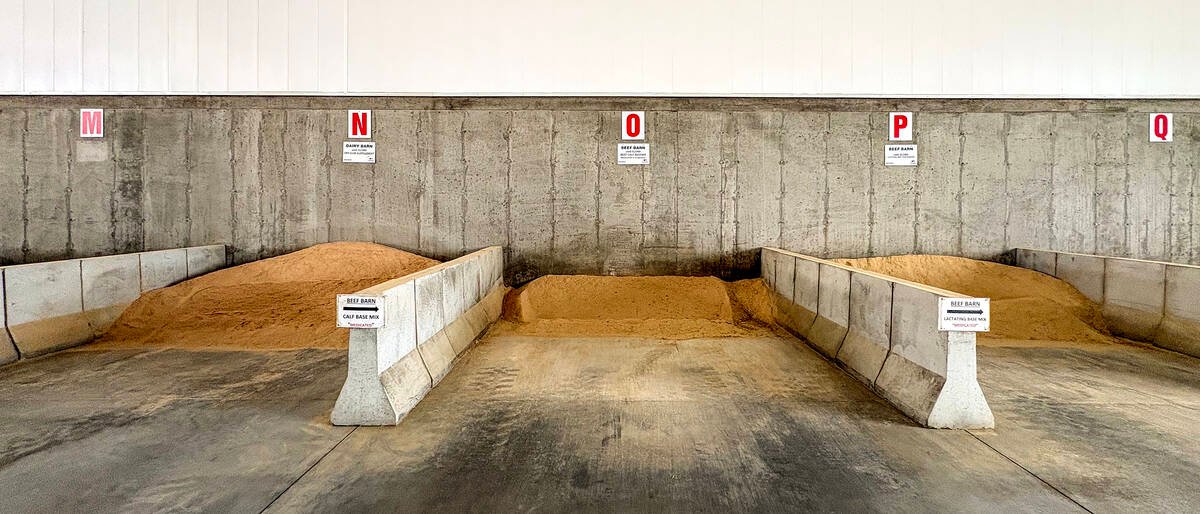
The precision feed facility allows for stored bulk precision ration mixing and inventory management in conjunction with the storage bunkers. Photo: Diana Martin
Agricultural Research and Innovation Ontario’s Jennifer Doelman asked if beef farmers selecting for lower methane-emission genetics would be able to monetize those benefits, like dairy, with the net-zero carbon goal, or see them only through feed efficiencies?
Wood said ideally, the research would provide scientific proof, allowing producers to be paid for their environmental stewardship efforts, such as lowering methane emissions.
Another dairy-based beef research project is exploring the nutritional value of milk-processing byproducts, such as cheese whey, as a replacement for high-moisture corn.
“This started with some feedlots approaching us about what the nutritive value of some of these products were (after drying plants in Eastern Canada closed),” explained Wood. “It was a little bit faster to run it through a dairy cow to collect daily milk as opposed to doing a long-term growth study.”
The research investigated the feed benefits, price point and the most cost-effective method for concentrating whey to potentially lower the currently unsustainable costs to ship it to Western Canada.
“It was so successful, I certainly have future plans to take it into the feedlot,” shared Wood.
She remains excited about the OBRC’s future, saying that while methane emissions are a hot topic for research, water studies are on the horizon.
“We did not, at the time, build the facility to do water intake and water behaviour, but we did leave some areas where we could put in like a water meter and things like that,” she said. “So, again, the adaptability is there.”
The post Ontario Beef Research Centre gains from industry and research collaboration appeared first on Farmtario.


