
For Plattsville farmer Doug Einwechter, having three acres of flood plain planted to trees is a way to make the land more productive.
The land was being “wasted,” he says, adding that it’s also a way to give back and counterbalance the loss of trees elsewhere.
About 40 volunteers with the Middle Grand Chapter of Freshwater Conservation Canada planted trees grown by the Grand River Conservation Authority (GRCA) at Einwechter’s farm on May 9. Funding was provided through the Fisheries and Oceans Canada Habitat Stewardship Program for Aquatic Species at Risk. The mix of species planted included cottonwood, tamarack, willow, cedar, red maple and silver maple.
There are a lot more sites along streams where cattle used to be pastured that would benefit from tree planting, said volunteer Phil Holst, who has co-ordinated more than 100 tree planting and wetland restoration projects on farms in Oxford and Perth Counties and Waterloo Region.
Holst brings together farmers, conservation authorities, funding agencies and volunteers with the goal of carrying out projects that make sense for farmers and are beneficial to nature.
All these small pieces of land add up to quite a few acres all together, he continues. “By using a little bit of land, we get a large effect.”
Increasing forest cover and wetlands reduces surface runoff and increases the percolation of rainfall into the soil to help maintain the water table, said Holst. The trees will also “create wildlife habitat, look great, add value, and make non-productive farmland be productive for the environment.”
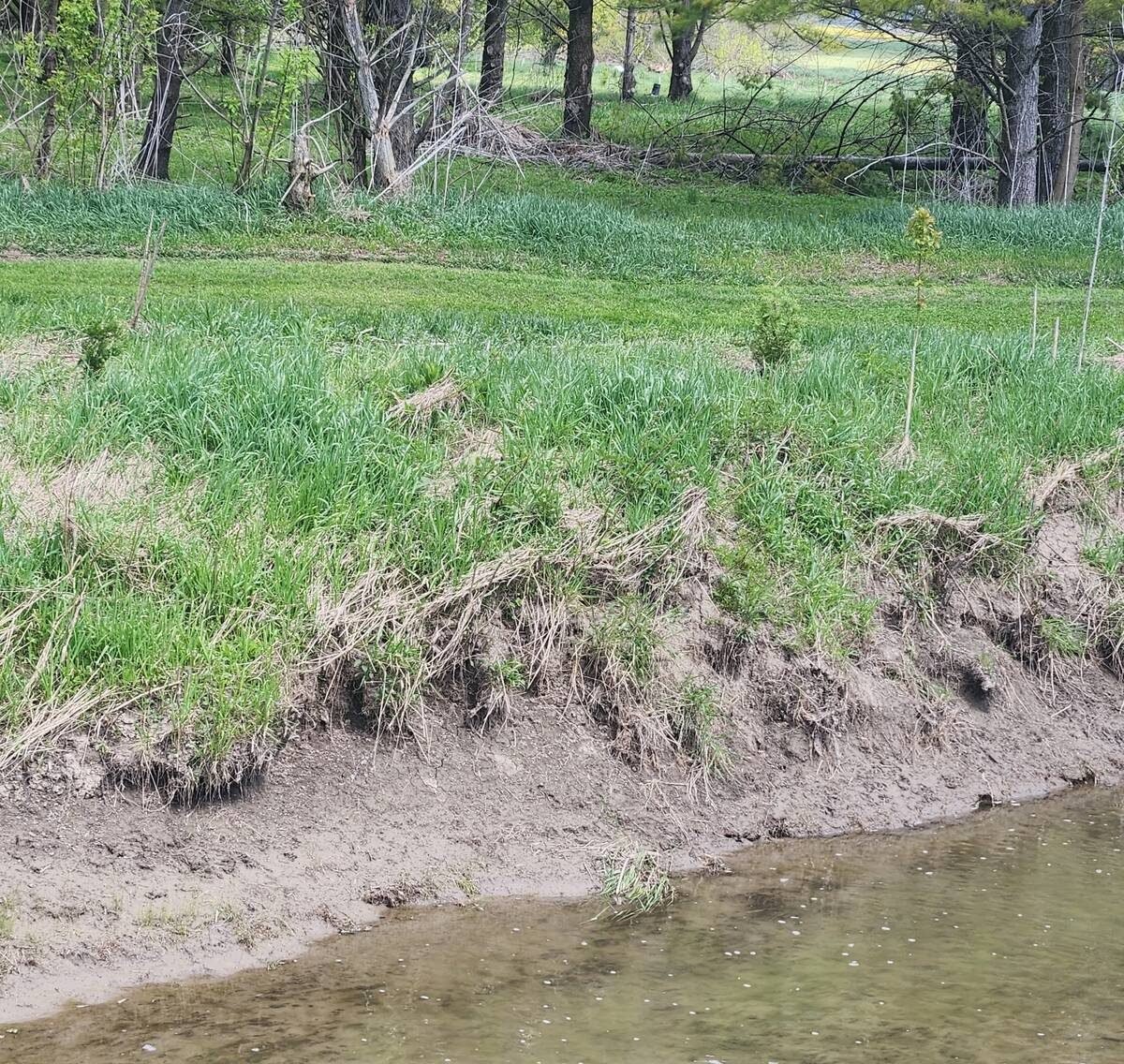
The mission of the Middle Grand Chapter of Freshwater Conservation Canada (a national charity formerly known as Trout Unlimited) is to work in partnership with watershed residents and agencies to conserve, protect and rehabilitate the freshwater ecosystems in the Middle Grand River and its tributaries for current and future generations. Planting trees along streams stabilizes the banks, reduces runoff and erosion, and creates shade that lowers water temperatures to improve fish habitat. Everything is connected, says chapter president Hajnal Kovacs, who has been volunteering with the organization for 10 years.
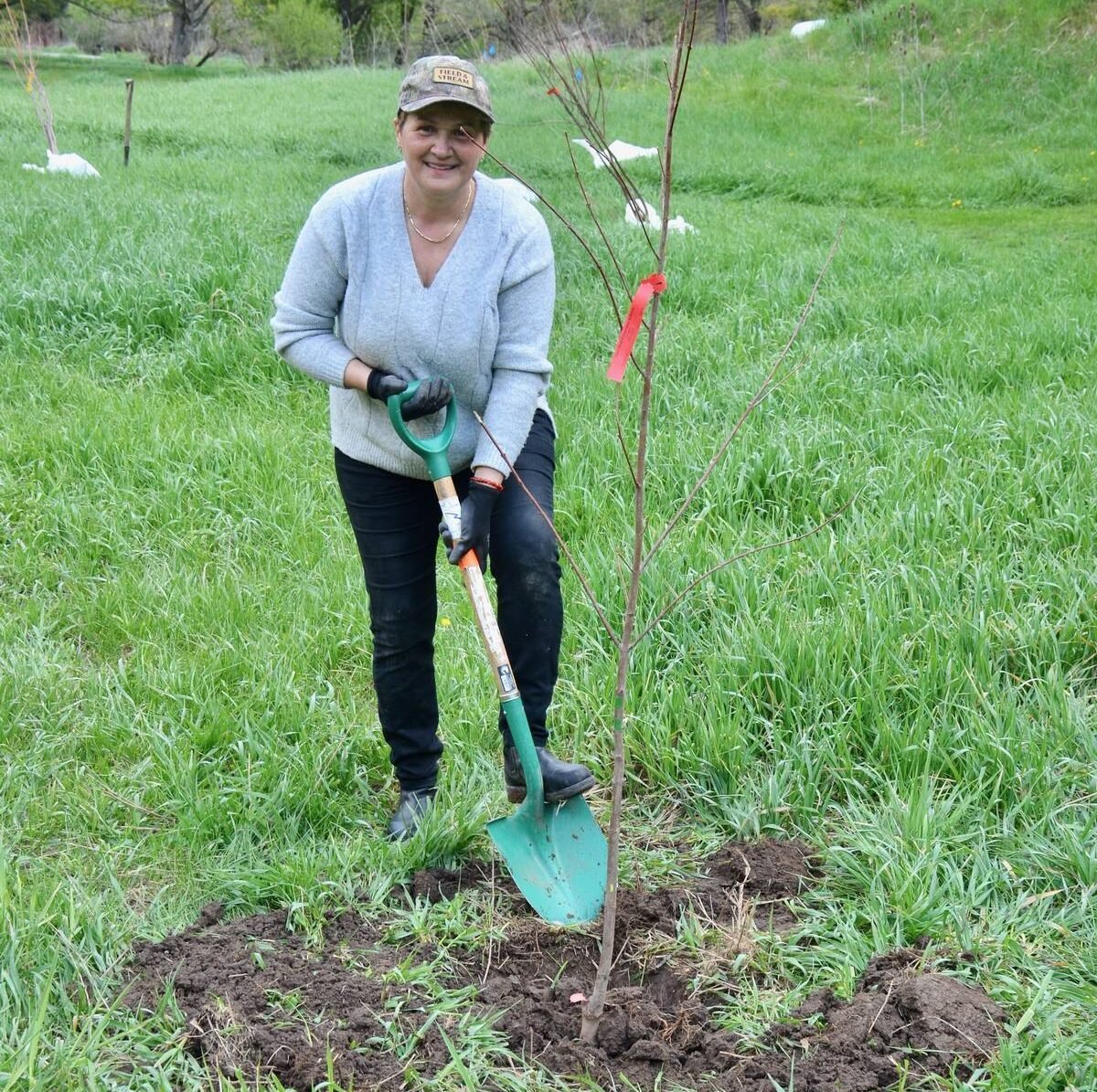
Now in their fourth planting season, Kovacs says the trees planted so far have had an 80 per cent survival rate. Several best management practices are followed to ensure good survival rates are achieved. As much as possible, larger trees (1.5 metres tall), selected for their suitability for the site’s growing conditions, are used. Volunteers receive training to make sure the trees are planted correctly. Trees are flagged to improve visibility. Fibre mulch mats are used to limit competition from the surrounding vegetation and tree guards help protect trees from rodent damage.
Following the planting, Kovacs does an audit “to make sure the quality is there.” At this particular site, the landowner has agreed to mow the area which will also help the trees get established.
Award for thousands of trees planted
The positive impact of the Middle Grand Chapter was recognized recently with the 2025 Oxford Stewardship Award. Over the past three years, the organization planted more than 2,000 trees on farmland along a stretch of Horner’s Creek near Bright. The chapter collaborated closely with the GRCA, Enbridge and local landowners.
In addition to tree planting, Freshwater Conservation Canada also hosts several in-stream restoration work sessions on evenings throughout the summer months. Volunteers sign up via the website to remove debris that is reducing water flow in the streams.
Freshwater Conservation Canada volunteers are passionate and come from all demographic segments including families with young children, university students and retired forestry professionals, said Kovacs. Many cite a desire to “give back” or “do something for the greater good” as their reasons for volunteering. Students are able to gain valuable experience and network connections and children develop an appreciation for nature. “It’s generational work,” said Holst, noting the trees will be there for a long time.
A few years ago, Freshwater Conservation Canada began concluding planting events with a hot lunch for volunteers.
“Planting trees is labour-intensive and it’s often cold and rainy. We don’t want our volunteers driving home hangry,” said Kovacs. It also builds community, especially for those who are new to the organization, and it provides a nice reflection at the end of the event, she adds.
For farmers who are interested in tree planting, if there is a local conservation authority, that would be your best point of contact, said GRCA supervisor of conservation outreach Louise Heyming. Staff often know about the various sources of funding and volunteer labour available through government agencies and community groups. She advises that it’s best not to wait until spring if you are interested in tree planting as plans are made the year before.
The post Adding trees can bring new value to marginal farmland appeared first on Farmtario.


