
The 1.5°C target has been the north star of global climate policy for nearly a decade – was baked into the Paris Agreement, repeated at every COP summit, and printed on more protest signs than anyone can count. But here’s the uncomfortable truth that climate scientists have been quietly – and now not so quietly – admitting: we’re almost certainly going to miss it. So what happens next? Do we declare defeat and spiral into climate despair? Or is there something more useful we can do with that energy?
A recent op-ed published in Nature made a compelling case that the world risks getting trapped in a narrative of failure. That fixating on a temperature number we can no longer control might actually be doing more harm than good – politically, psychologically, and practically. That doesn’t mean climate change stops mattering. It absolutely doesn’t. But it does raise a genuinely important question about where our attention should go from here.
Why the 1.5°C goal slipped out of reach
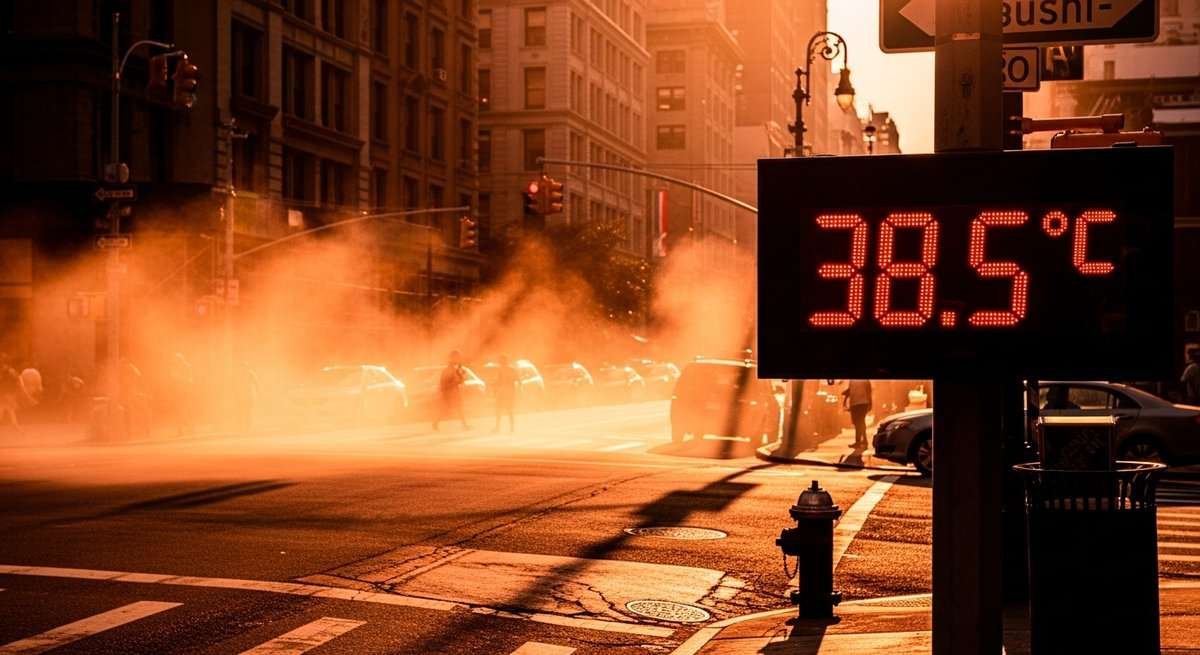
The Paris Agreement, adopted in 2015, set a goal of limiting warming to 1.5°C above pre-industrial levels. It was always ambitious – some would say aspirational to the point of being political rather than scientific & yet for years it served as a global rallying point.
The problem is that emissions didn’t fall fast enough – and unbelievably enough – not only did they not fall but Global greenhouse gas emissions hit record highs in recent years, and the carbon budget consistent with 1.5°C has essentially been burned through. Climate scientists, including those behind the UK’s National Emergency Briefing initiative, have been pulling no punches: the 1.5°C limit is now, for all practical purposes, out of reach in the near term.
That matters, because every fraction of a degree represents real-world consequences. More extreme heat events. Worse flooding. More frequent droughts. Ecosystem collapse in vulnerable regions. The Caspian Sea’s dramatic shrinkage is just one visible sign of what accelerating warming does to the world’s water systems. The stakes are not abstract.
But no single government can directly dial down the global average temperature. And when the number keeps slipping further away, people start to feel hopeless. Hopelessness is arguably the most dangerous outcome of all.
The “clean-energy shift” as a new way of measuring progress

The Nature article proposes something genuinely interesting: a reframe. Instead of obsessing over temperature targets we can’t directly control, what if we measured progress by something more tangible? The authors call it the “clean-energy shift,” comparing how fast clean energy is growing versus how fast total energy demand is growing.
The logic is solid. If clean energy growth outpaces demand growth, then fossil fuels are genuinely being displaced, not just supplemented. According to data from Ember, that crossover may have actually happened. For the first time on record, growth in clean electricity generation in 2025 exceeded growth in global electricity demand. Solar, wind, hydro, nuclear, and storage absorbed almost all new demand, while fossil fuel generation stayed broadly flat.
That’s not “we’ve solved climate change.” Coal consumption in parts of Asia remains enormous. Gas is still central to electricity grids across many countries. But it does suggest we may be approaching a turning point – the kind that energy transitions typically reach right before things start moving faster than anyone expected.
Solar is the poster child for this dynamic. Early IEA projections from the 2000s look almost comical compared to actual deployment today. The world didn’t slightly beat expectations – it obliterated them. Battery storage appears to be entering a similar curve, with Bloomberg NEF reporting that battery prices have fallen roughly 90% over the past fifteen years. When cheap solar meets cheap storage, energy stops being a fuel and starts being a manufactured product. Manufactured products follow learning curves. They get cheaper as they scale. That’s fundamentally different from fossil fuels, where harder-to-reach reserves tend to cost more over time.
Investment is already shifting, even if the politics feel messy
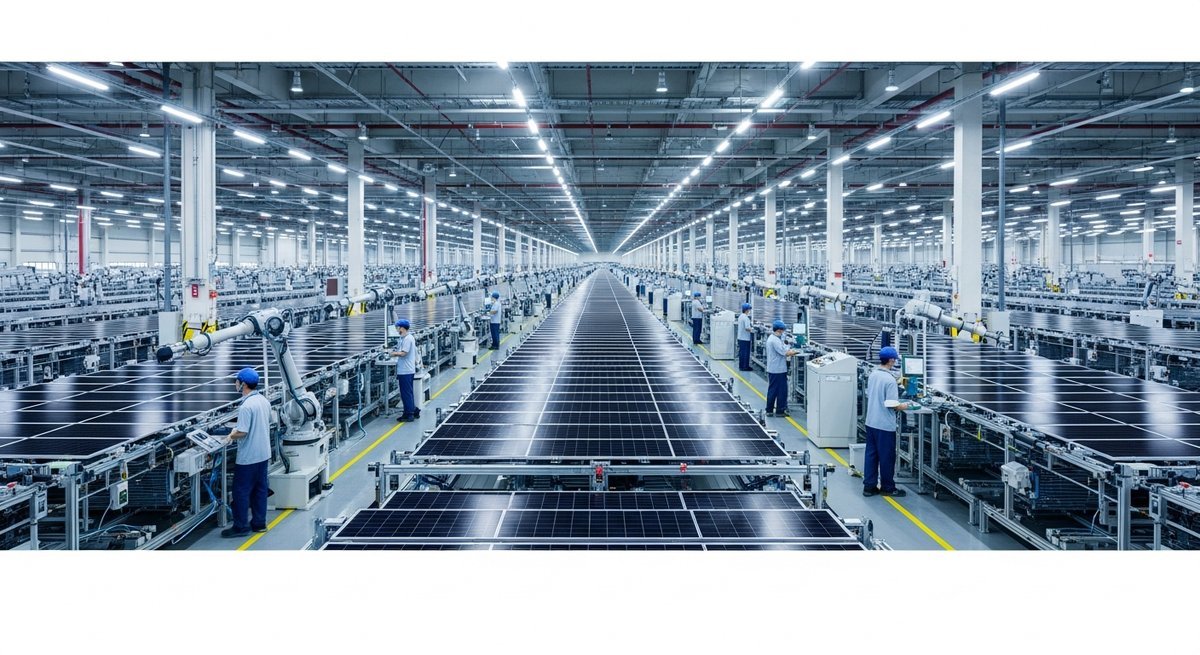
Global clean energy investment is now roughly double global fossil fuel investment. The IEA’s World Energy Investment report confirms this. Every dollar that flows into clean technology manufacturing scales up supply chains, drives down costs, and makes fossil alternatives less economically competitive.
Countries are no longer pursuing clean energy purely out of environmental concern. The EU, China, India, and even the United States – despite considerable political turbulence – are competing aggressively for dominance in clean-energy manufacturing. That’s about jobs, supply chains, strategic advantage, and economic growth. It’s geopolitics, not just environmentalism. And while that might feel cynical, it’s probably the most durable driver of change there is.
China remains the world’s largest emitter by a significant margin. But independent researchers at Carbon Brief have noted that China’s emissions growth appears to be slowing, specifically because of the sheer scale of its domestic clean-energy rollout. That’s not a guarantee of success, but it is evidence that the transition has moved beyond aspiration into hard economic reality.
The UK’s own net zero trajectory offers a useful example of how ambitious climate goals can align with economic opportunity rather than sacrifice. Framing decarbonisation as an industrial rebuilding project, rather than a restriction on growth, changes the political conversation substantially.
What’s still being underestimated
None of this means the job is nearly done. Deforestation continues to release enormous quantities of carbon. Methane emissions remain a major problem across agriculture, livestock, and fossil fuel operations. New satellite-based methane mapping initiatives are helping identify sources that were previously invisible to regulators, which is progress, but the emissions themselves haven’t stopped.
Heavy industry remains stubbornly hard to decarbonise. Aviation and shipping are still almost entirely dependent on fossil fuels. Grid infrastructure in many regions is lagging behind renewable deployment. Energy demand itself could rise dramatically as billions of people across the developing world understandably seek higher living standards.
The authors of the Nature piece make an important distinction: fossil fuels account for roughly 90% of the CO2 problem and represent a one-way transfer of ancient carbon into the atmosphere – fundamentally different from the dynamic carbon flows involved in land use and agriculture. Deforestation and agricultural emissions require their own targeted approaches, not just a blanket carbon price. Sector-specific commitments, like net-zero targets for forestry and pulp industries verified through science-based frameworks, are part of that picture.
The real question isn’t whether the clean-energy transition is happening – it clearly is. The question is whether it can happen fast enough to limit the worst outcomes, while the world also addresses non-fossil sources of emissions still running largely unchecked.
Reframing failure as a starting point
Missing the 1.5°C target is not the same as giving up. Every fraction of a degree still avoided represents fewer lives lost, fewer ecosystems destroyed, fewer cities flooded. The difference between 1.6°C and 2.0°C is enormous in human terms. The difference between 2.0°C and 2.5°C is larger still.
Fixating on a missed milestone to the point of paralysis is one of the more dangerous things that can happen right now. If people become convinced the situation is hopeless, political momentum collapses. Investment collapses. Public engagement collapses. And that becomes a self-fulfilling outcome.
The more productive frame – backed by data, not naive optimism – is to measure what we can build and how fast we can build it. Gigawatts of solar. Kilometres of transmission line. Gigawatt-hours of battery storage. Electric vehicle adoption rates. These are tangible, measurable, and directly influenced by policy choices and investment decisions. They tell us something real about whether we’re winning or losing, far more than a temperature number that lags decades behind our actual emissions decisions.
Climate targets being missed is genuinely serious. It’s not spin to say that the story isn’t over.
Frequently asked questions about missed climate targets
What does it actually mean when a climate target is missed?
Missing a climate target like 1.5°C doesn’t mean a hard cliff edge is crossed. It means that the physical consequences of warming become progressively worse. Each additional fraction of a degree brings more extreme weather, greater biodiversity loss, and higher risks to food and water systems. It’s a sliding scale of harm, not a binary pass or fail.
Is the Paris Agreement still relevant if we miss the 1.5°C goal?
Yes. The Paris Agreement also includes a 2°C limit, and every effort to stay below that remains critically important. The agreement’s broader framework for national commitments, transparency, and international cooperation is still the best multilateral mechanism we have for coordinating climate action.
What is the “clean-energy shift” metric and why does it matter?
It compares the growth rate of clean energy generation against the growth rate of total energy demand. When clean energy grows faster, fossil fuels are genuinely being replaced rather than just supplemented. According to Ember’s data, this crossover appeared to happen for the first time in 2025 – a meaningful milestone even if fossil fuel use in absolute terms remains very high.
What are the biggest remaining obstacles to the clean-energy transition?
- Grid infrastructure investment is lagging behind renewable deployment in many regions
- Heavy industry, aviation, and shipping remain difficult to decarbonise
- Methane from agriculture and fossil fuel operations continues largely unchecked
- Deforestation and land use change still release enormous volumes of carbon
- Rising energy demand from developing economies could outpace clean energy growth
Does missing climate targets mean we should stop setting them?
No. Temperature targets remain scientifically valuable and morally important. The argument isn’t to abandon them, but to also measure progress through metrics that governments, companies, and individuals can more directly influence – like build rates for clean energy infrastructure.
How are countries responding to the reality of missed climate targets?
Responses vary widely. Some governments are doubling down on industrial clean-energy policy, driven partly by economic competition rather than purely environmental motivation. Others are scaling back commitments. The overall trend in investment is positive, with global clean energy investment now roughly double fossil fuel investment according to the IEA, but political consistency remains a major challenge.
Can climate change still be meaningfully limited even after missing the 1.5°C target?
Yes. Limiting warming to 1.7°C is better than 2.0°C. Limiting it to 2.0°C is far better than 2.5°C. The physics of climate change mean that every fraction of a degree avoided translates into real reductions in harm. The fight is not binary, and it doesn’t end because one milestone was missed.
Sources: Nature (clean-energy shift op-ed), Ember (global electricity data 2025), Bloomberg NEF (battery price analysis), IEA World Energy Investment Report
This article is for informational purposes only.
Reference: https://youtu.be/kZjNbZJmgA4?is=YYuQcOxl-G7uOoDr
The post Climate Targets MISSED. What happens now? appeared first on Green.org.


