This is the third in a series of articles about reducing the amount of the most common materials in household waste.
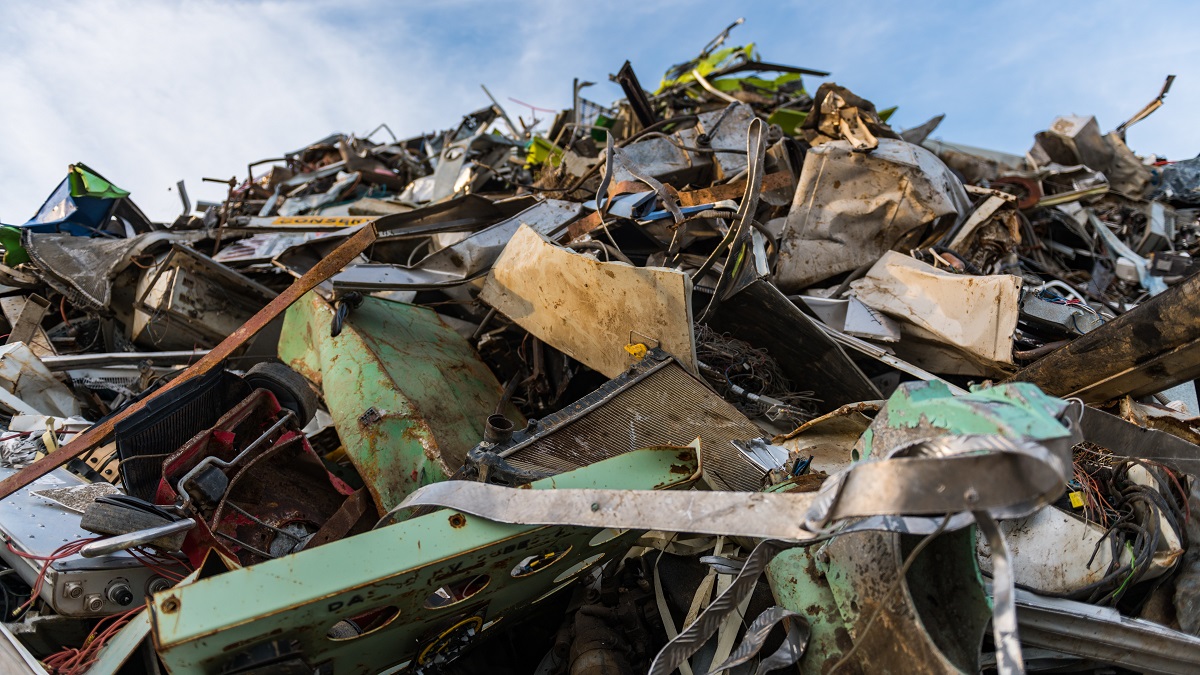
Metal is the fifth most common material in U.S. household trash, behind paper, food, plastics, and yard trimmings, according to the EPA’s most recent national data. Unlike those other heavyweights, metal is inert in a landfill and doesn’t burn, so every can, pan, or appliance that ends up buried just sits there indefinitely while we mine fresh ore to replace it.
That waste is almost entirely avoidable, though future generations may thank us for provisioning mines with ample supplies of metal. Most metal is infinitely recyclable, meaning it can be melted and reformed repeatedly without degrading. Because mining metal is among the world’s most environmentally damaging industries, keeping what’s already been mined in circulation is one of the highest-leverage things a household can do. And companies working to eliminate plastic waste often lean on metal as the durable, recyclable alternative, which makes handling it well even more important.
Sustainability is a journey, not a single choice. Wherever you are on yours, here are the next steps to keep metal out of the garbage.
Metal Waste
Metals are consistently among the most valuable recyclable commodities — you might even be able to make money recycling your scrap. They fall into two families. Ferrous metals such as steel and iron contain iron, can be identified with a magnet, and rank among the most recycled materials on Earth. Nonferrous metals include aluminum, copper, lead, zinc, and tin, along with precious metals like gold and silver and the rare earth elements used in electronics.
Aluminum cans are the most recycled and by far the most valuable beverage container in the U.S., worth roughly $1,338 a ton in the recycling stream compared with $215 for PET plastic and a negative value for glass, the Aluminum Association reports.
Here’s the catch worth: even our best-recycled metal is slipping. Americans recycled just 43% of aluminum cans in 2023, the lowest rate in decades, down from an average around 52% since tracking began in 1990, according to the Aluminum Association and the Can Manufacturers Institute. On average, each of us threw away the equivalent of 15 twelve-packs of cans — about $1.2 billion worth of aluminum in total — instead of recycling them.
But all of us have different habits, and stepping up a level can make a big difference for the environment and our wallets.
Good
It’s good to start with the simplest step: participate in your curbside recycling program. Nearly every curbside program accepts aluminum and steel cans, and many take larger pieces of scrap metal too. Even if your community has no curbside service, search the Earth911 recycling locator to find a metal recycler near you.
If you live in a state with a container deposit return program, often referred to as a “bottle bill,” use it. Deposit return is the single biggest lever on the recycling rate: the 10 states with deposit programs recycle aluminum cans at an average of 68%, versus just 22% in states without them, and eight of the top 10 states for can recycling have a deposit law on the books.
Better
If you’re already recycling your cans, start working on some of the trickier metals.
- Metal lids from steel cans and glass jars, plus steel or aluminum bottle caps, require special handling to be recycled safely — they’re too small to sort loose.
- Reuse aluminum foil for as long as it’s functional. When you can’t reuse it anymore, clean off any food and ball it up so it’s large enough to be captured for recycling.
- The chemical coating on nonstick cookware makes the metal nonrecyclable. As nonstick pans wear out, replace them with cast iron — your cast iron will outlive you.
- Metal paint cans, oil cans, and propane tanks are considered household hazardous waste in most communities. Limited recycling programs exist for propane canisters and leftover paint; use the Earth911 search to find out whether one operates near you.
- Learn how to care for ferrous metals to minimize rust. It extends an object’s useful life and makes recycling easier at the end of it.
- Reuse is just as important as recycling. Whenever possible, buy second-hand. Metal is durable enough to survive several generations of use before it needs to be recycled.
Best
When you’re aiming for zero waste, avoiding metal entirely isn’t the goal. Metal is often the durable, recyclable alternative to worse materials. But if you’re willing to put in the effort, you can do better than “better.”
- Close the loop by buying products made with recycled metal — though it works differently than other materials, because metals don’t carry “recycled content” labels. Aluminum cans now average about 71% recycled content, according to the 2024 industry survey (down slightly from 73% reported for 2016–17). Steel is harder to pin to one number because it depends on how it’s made: basic-oxygen-furnace steel includes roughly 23–30% recycled scrap, while electric-arc-furnace (EAF) steel can be 80% or more recycled content. EAF production now accounts for about 70% of U.S. steel and is headed toward 90% by 2040, so nearly all American steel carries meaningful recycled content, and structural steel often tops 90%.
- For some products, like jewelry, suppliers work specifically with recycled metals. Seek them out.
- Few products are made from a single material. Learn to disassemble items at the end of their life so you can separate the recyclable metal from the parts that have to be thrown away.
- The rare earth elements in electronics make up a tiny share of metal waste but carry an outsized environmental cost — and they’re almost never recovered. Only about 1% of the rare earths in end-of-life products get recycled; the rest is landfilled. Neodymium-iron-boron magnets, the single biggest use of rare earths, get shredded with the devices that hold them, although newer copper-salt recovery methods can recover 90 to 98% of the rare earths from discarded magnets. Take the time to learn about electronics recycling, and fix broken gadgets instead of replacing them.
- Before buying something new, ask whether you really need the smart version or whether a simpler, more easily recyclable low-tech option will do.
- Tossing things in the trash is easy; responsibly disposing of old items is hard. After disassembling a gas grill or similar item for its recyclable parts, a different option starts to look more appealing: use less, period. Understanding a product’s full life cycle often makes buying a new one a lot less tempting.
Related Reading
- Good, Better, Best — Reducing Textile Waste
- Good, Better, Best — Cutting Down Paper Waste
- Good, Better, Best — Eliminating Plastic Waste
Editor’s note: This article was originally published by Gemma Alexander on April 20, 2020, and was substantially updated in June 2026.
The post Good, Better, Best — Reducing Metal Waste appeared first on Earth911.