
With extreme climate change, biodiversity loss, pollution, social inequalities, and geopolitical instability posing increasingly complex challenges, critically questioning the role that technology should play in shaping our shared future is ever more urgent. The conference “Towards a just and habitable world: exploring the role of technology” provided a space for over 300 researchers, scholars and practitioners from all over Europe and beyond, to reflect on current technological systems, and on their capacity to support or hinder transformations towards more sufficiency, equity, and resiliency.
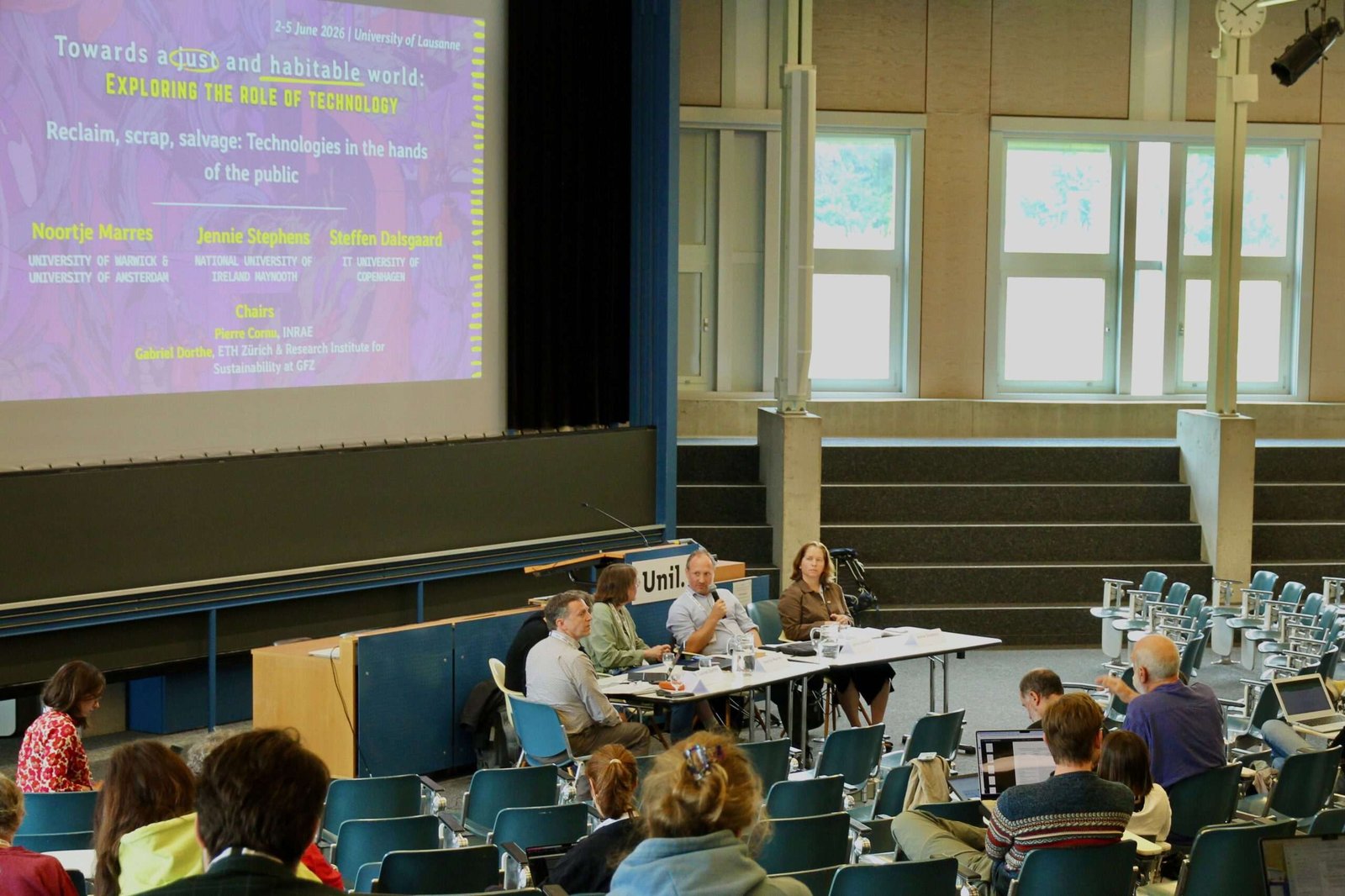
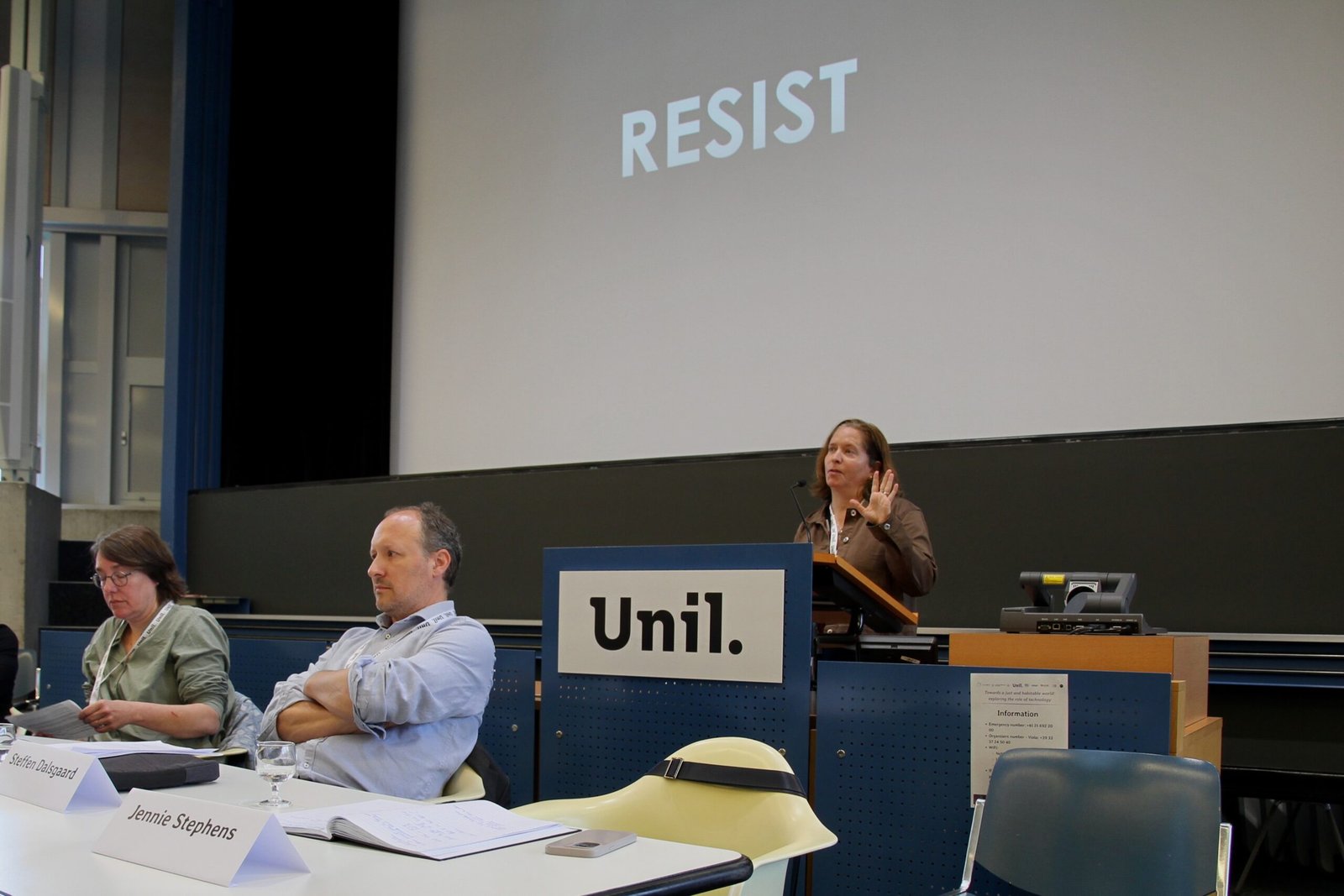
Discussions highlighted the many different perspectives on the role of technology in shaping sustainability. Central to the interdisciplinary discussions were questions of justice, sufficiency and democracy: What kind of technology do we need? Who has control over it? And what kind of futures does it lead us towards? In this context, it emerged clearly that technology is not only a tool – it is also a political choice. The socio-environmental relevance of technology cannot be assessed in isolation from questions of power, justice and democracy. Whether we talk about geoengineering, the challenges of AI for education and academic freedom, or the race towards critical minerals, technology is not neutral; it is shaped by and has a strong impact on socio-political dynamics.
Between the many parallel and plenary sessions, this conference was an opportunity to open critical conversations on different alternatives to dominant techno-solutionist imaginaries, while calling for democratic, grounded and large-scale responses to the hard limits of adaptation. Sufficiency, low-tech, and exnovation approaches, as well as community-driven innovation and imaginaries rooted in indigenous knowledge, ecofeminism, decolonial perspectives took the center stage in many of the parallel sessions. At the same time, questions of ethics of technologies, democracy and prevailing discourses surrounding different governance options were equally important and were explored in different formats throughout the plenary and parallel sessions.
By challenging assumptions of technological inevitability, these critical reflections contribute to outlining alternative possibilities of socio-technical configurations and inform public debates on what technological systems societies choose to maintain, transform or abandon. Meaningful, democratic deliberation about the direction that technology should take is essential to design technologies that do not reproduce long-standing logics of control and extraction and can actively contribute to a more just and habitable world.
The conference “Towards a just and habitable world: exploring the role of technology” was held between 2-5 June at the University of Lausanne; it was organized by the Future Earth Pathways Initiative, the Centre des Politiques de la Terre (Université Paris Cité) and the Centre des Compétences en Durabilité (University of Lausanne).
It was co-organized with DKN (Future Earth German Committee), SRI – SCNAT (Sustainability Research Initiative – Swiss Academy of Sciences) – Future Earth Switzerland, the French National Research Institute for Agriculture, Food and the Environment (INRAE), the French National Center for Scientific Research (CNRS), and the French National Research Institute for Development (IRD).


