
Kingston is now a potential stop along the Alto high-speed rail corridor, shifting the proposed route south and away from the Highway 7 corridor.
Federal transport minister Steven MacKinnon and Alto CEO Martin Imbleau announced the updated route during a joint press conference in Kingston on June 22, coinciding with the release of Alto’s What We Heard report.
The report summarizes feedback gathered during the first phase of a comprehensive 100-day public consultation process, as well as Indigenous consultation activities conducted from October 2025 through June 2026 across the Toronto–Québec City corridor.
In a statement, Imbleau said consultations are ongoing.
“Public input, as well as feedback from organizations, experts and Indigenous communities, is invaluable in helping us refine the project, especially as we chose to engage early in the process,” he said. “Alto’s objective is to develop a project that delivers the greatest collective benefits, while minimizing impacts on communities and the environment.”
Imbleau said technical and environmental analyses are continuing in an effort to present a “more precise alignment this fall that reflects the comments we have received.”
The efforts have done little to quell unrest within the agricultural community. In recent weeks, farmers and agricultural organizations across Ontario and Quebec have voiced concerns about the project’s impact on farmland and livelihoods. The proposed high-speed rail network would span approximately 1,000 kilometres between Toronto and Québec City.
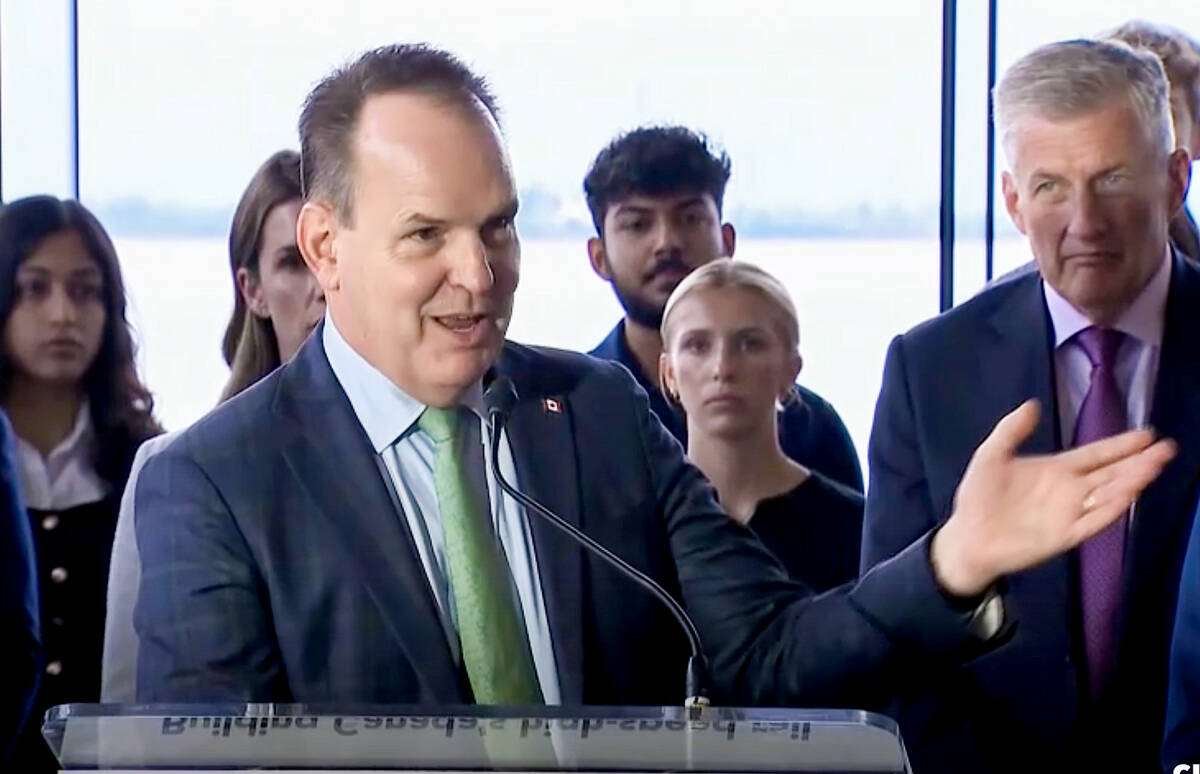
“Canadians shared valuable perspectives through Alto’s consultation process, and we are acting on what we heard. I have asked Alto to further assess an alignment option that could include Kingston as a potential stop as we continue advancing this transformative project for communities across the Toronto–Québec City corridor,” MacKinnon said.
He said the project would be taking a “path least intrusive in aggregate” through negotiations with willing sellers, adding the goal of the project is to acquire land respectfully and in an appropriate manner, noting “there will be expropriations.”
Agricultural producers, landowners and rural communities are concerned that the project could result in the expropriation of farmland, lower property values, disrupted succession plans and impacts on environmentally sensitive lands.
The report noted that questions and concerns have been raised about the potential impact of Bill C-15, which establishes the High-Speed Rail Network Act and allows for the operation of high-speed passenger rail service between Ontario and Quebec.
The act also includes amendments to the expropriation process related to the high-speed rail network, allowing governments to take possession of land more quickly. The report noted that this has raised concerns about good-faith negotiations in the expropriation process, citing the historic impacts of large-scale land expropriations for infrastructure projects that ultimately did not require all of the acquired land, including the Mirabel and Pickering airports, CFB Trenton and LeBreton Flats.
Kathleen O’Connell Renaud, one of the voices behind ALT-NO, an advocacy group leading the opposition to the project, said the latest announcement does little to ease concerns among farmers.
“We’re now up to eight stops. I challenge anyone to find any high-speed rail that has that many stops in it,” O’Connell Renaud told Farmtario, adding that the overall ridership projections do not, in her opinion, justify the project.
On June 10, the organization led a protest on Parliament Hill calling for a halt to the project and greater transparency in the consultation process.
She said Alto has taken a “shock and awe” approach to providing information to those who may be affected by the project, adding that the new route will not lessen the impact on those in the agricultural sector.
“It gives some certainty to the northern potential northern route that they don’t have to worry anymore, but the rest of us still have the same concerns. [MacKinnon] gives kind of a token nod to the sensitive environment areas that they’ll have to be conscious of, and the Indigenous folks that they’ll have to be conscious of their priorities, but we’re still in the same position,” she said.

Recently, representatives from the Ontario Federation of Agriculture (OFA), Christian Farmers Federation of Ontario, National Farmers Union-Ontario, Union des cultivateurs franco-ontariens and L’Union des producteurs agricoles met to discuss Alto’s invitation to sign a collaboration agreement related to the project.
The groups issued a joint statement citing concerns about a lack of transparency and the need for more open communication, consultation and information-sharing before any formal commitments are considered.
In response to the latest announcement, OFA president Drew Spoelstra said the move suggests Alto is listening.
“We understand Minister MacKinnon has directed Alto to investigate a potential stop in Kingston. It is encouraging to see concerns of farmers and rural communities recognized in their press release today, and that minimizing and mitigating negative impact on farmland and agricultural operations is a key priority in their planning process,” Spoelstra said.
He added that the OFA and its partner organizations will continue to engage in the process, raising members’ concerns and questions related to the impact on agriculture, farms and rural communities.
The post Kingston added as potential stop on Alto high-speed rail route appeared first on Farmtario.


