
Engines maxing out at more than 600 horsepower, grain tanks holding 450 to 550 bushels, unload rate of five to six bushels per second.
In other words, class 9 combines do everything in a big way.
That sort of capacity and power is helpful at harvest time, but getting grain in the bin requires more than a monster combine.
To maximize the productivity of those massive and expensive harvesters, farmers need to think about the supporting cast of machines, said Philip Korczak, sales manager of agricultural products for Brandt Industries.
“This increased field productivity places added pressure on in-field grain handling and yard logistics,” Korczak said.
Farmers continue to invest in larger, higher-capacity combines, but their investment in transport augers, swing augers, field belts and grain carts might be lagging.
Korczak said grain harvest, like all of logistics, is an interconnected system.
Choices about combine size, grain cart capacity, number of trucks, hauling distance and load-out speed will determine if the system functions as a cohesive unit.
It’s like a five-man unit in hockey, where the forwards and D-men are connected.
A weak link in the system, on the farm or the ice, can cause headaches and limit performance.
“Modernizing only one part of the fleet, such as upgrading combines without addressing grain handling, can create imbalance,” Korczak said.
Preserving quality
A co-ordinated system that moves large volumes of grain quickly and efficiently provides a great deal of value at harvest time.
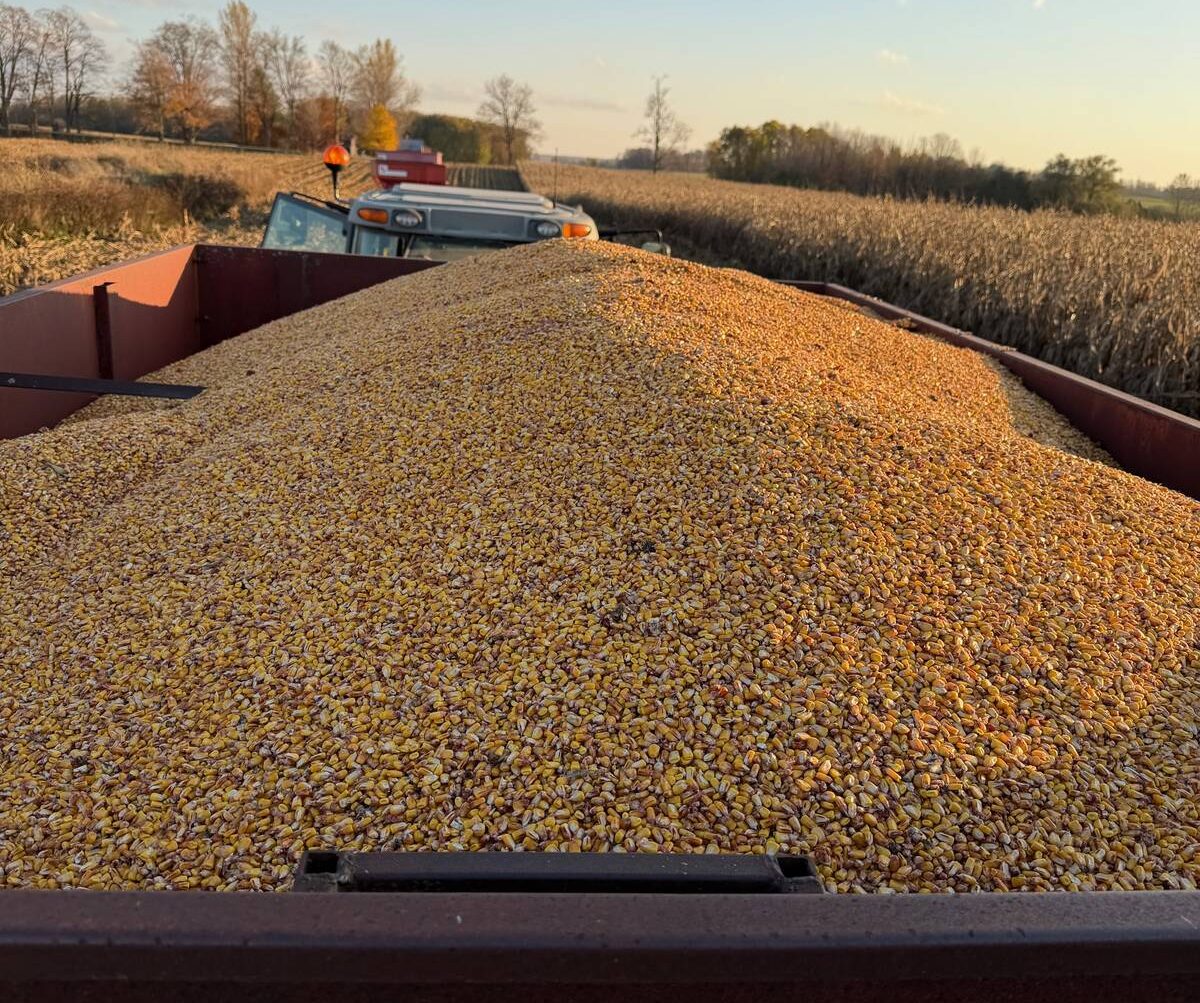
However, with certain crops, including pulses, using the wrong grain handling equipment can compromise quality.
“Depending on the crop, there’s some serious money involved. Any specialty beans that need to go overseas will be rejected if they are not pristine,” said Ron Kleuskens, a technical sales rep for Winnipeg-based AGI.
“Whether it’s Europe, Japan, Taiwan or South Korea, there’s always buyers looking for Canadian crops, but it needs to be the highest quality when it gets there. Unblemished is what it’s all about now.”
Some producers are using field belts and U-trough conveyors to perform the same task as traditional augers.
Those alternatives to augers can operate at higher speeds and with gentler grain handling, Korczak said.
“Depending on the crop, filling a standard Super-B trailer can take up to 30 minutes (with a 10-inch auger),” he said. “Higher-capacity systems can significantly reduce that time, potentially cutting it in half.”
There are many options when it comes to grain carts, augers and the related equipment to move grain, but producers need something that’s specific to their farm and their needs.
The local dealer is a good place to start that conversation, Korczak said.
The post Bigger combines may call for bigger grain carts, trucks, augers, belts appeared first on Farmtario.


